
BuddhistCatholicContemplativeEvangelicalGeneral ChristianHinduJewishLatter-day SaintMuslimNew VisionsProgressive Christian
Beliefs
- Buddhist
- Catholic
- Contemplative
- Evangelical
- General Christian
- Hindu
- Jewish
- Latter-day Saint
- More Voices
- Muslim
- New Visions
- Pagan
- Progressive Christian
Topics
- Religion News
- Food and Religion
- Sports and Religion
- Religious Art
- Religious Music and Entertainment
- Religious Events
- History and Religion
- Style and Religion
- Politics and Religion
- Women in Religion
- Recreation Outdoors and Religion
- Business Finance and Religion
- Careers Workplace and Religion
- Education and Religion
- Family Parenting and Religion
- Health Fitness and Religion
- Home and Religion
- Relationships and Religion
- Technology and Religion
- Travel and Religion
Columnists
- Buddhist Columnists
- Business Finance and Religion Columnists
- Careers Workplace and Religion Columnists
- Catholic Columnists
- Contemplative Columnists
- Education and Religion Columnists
- Evangelists Columnists
- Family Parenting and Religion Columnists
- General Christian Columnists
- Health Fitness and Religion Columnists
- Hindu Columnists
- History and Religion Columnists
- Home and Religion Columnists
- Jewish Columnists
- More Voices Columnists
- Latter Day Columnists
- Muslim Columnists
- New Visions Columnists
- Nonreligious Columnists
- Pagan Columnists
- Politics and Religion Columnists
- Progressive Columnists
- Recreation Outdoors and Religion Columnists
- Relationships and Religion Columnists
- Religion News Columnists
- Religious Art Columnists
- Religious Events Columnists
- Religious Music and Entertainment Columnists
- Sports and Religion Columnists
- Style and Religion Columnists
- Technology and Religion Columnists
- Travel and Religion Columnists
- Women in Religion Columnists
Resource Library
- 2026 Calendar
- Library of World Religions
- The 100 Most Holy Places on Earth
- Patheos Answers
- Podcasts
- Videos
- Faith Leaders Database
- Anglican Episcopalian
- Bahai
- Baptist
- Buddhism
- Christianity
- Confucianism
- Eastern Orthodoxy
- Hinduism
- Holiness and Pentecostal
- ISKCON
- Islam
- Judaism
- Lutheran
- Methodist
- The Church of Jesus Christ of Latter-day Saints
- New Age
- Paganism
- Presbytarian and Reformed
- Protestantism
- Religion Behind the Scenes
- Roman Catholic
- Scientology
- Shia Islam
- Sikhism
- Sufism
- Sunni Islam
- Taoism
- Zen
- See all religions
Research Tools
 Ad-Free & Subscriber Log-In Subscription Support
Follow Patheos 

- Trending:
- Advent
- |
- Forgiveness
- |
- Thanksgiving
- |
- Election
- |
- Seasonal Holidays
- |
- Marriage
 McNamara's Blog
- Home
- Catholic
- The Thirteenth, and Other Great Centuries
The Thirteenth, and Other Great Centuries
Last updated on: October 22, 2013 at 6:21 am by Pat McNamara
The Thirteenth, and Other Great Centuries 2013-10-22T06:21:59-06:00 Pat McNamara
Patheos Explore the world's faith through different perspectives on religion and spirituality! Patheos has the views of the prevalent religions and spiritualities of the world.
 There are two ways of looking at the Catholic Church during the Middle Ages: as an era of monstrous corruption, or as a golden age. Both are prone to exaggeration. This Columbus Day weekend, while doing the fall cleaning, I rediscovered an old gem of a book from the year 1907 titled The Thirteenth, Greatest of Centuries, by one James J. Walsh (1865-1942). A medical doctor who wrote about Church history for Catholic audiences, Walsh’s book definitely falls in the latter category.
For Walsh the 1200’s was a time of unparalleled progress in the spiritual, pastoral, intellectual, and artistic realms. His book, praised by such luminaries as President Theodore Roosevelt, was standard reading in Catholic colleges until the 1950’s. Although its inflated Victorian prose and militant triumphalism hasn’t held up well, it still makes an important point: the Church did have a major role to play in the building of Western Civilization.
And the thirteenth century was, by any standard, an amazing era: the age of Dante, a time when many of Europe’s great Cathedrals and universities came into being and when Thomas Aquinas (1225-1274) produced his forty-volume Summa Theologica. As the nineteenth century historian Frederic Harrison wrote, it was
An era of no special character. It had great thinkers, great rulers, great teachers, great poets, great artists, great moralists, and great workmen. It could not be called the material age, the devotional age, the political age, or the poetical age in any special degree. It was equally poetic, political, artistic, practical, industrial, intellectual, and devotional. And these qualities acted in harmony on a uniform conception of life with a real symmetry of purpose.
The Church emerged from its own “Dark Ages,” a key figure being the brilliant lawyer-theologian Pope Innocent III (1198-1216), elected at age 37. A proud nobleman, one historian writes that he “felt the full majesty of his own office.” A favorite Biblical quote was from Jeremiah: “I have set you over nations and over kingdoms.”
One of Innocent’s greatest achievements was the Fourth Lateran Council of 1215, “the” general council of the Middle Ages. Besides calling for Crusades and condemning heresies, it started the process of systematically organizing and codifying Church teaching. As pope, Innocent also gave approval to grass-roots reform movements like the new mendicant orders, the Franciscans and the Dominicans.
Rather than living in monasteries (many of which had acquired great wealth), mendicants depended on alms and lived among the people. After undergoing a powerful conversion, Francesco di Bernardone (1182-1226) sought a radical reclamation of the Gospel. His Friars Minor (literally “little brothers”) aimed to “observe the holy gospel of our Lord Jesus Christ by giving in obedience, without property, and in chastity. Francis told them to proceed with confidence:
Because in these days the Friars Minor have been given the world for its benefit, so that the elect may behave toward them in such a way as to deserve the praise of the Judge on the last day of the judgment and hear the words: ‘As often as you did it for one of my dear brothers, here, you did it for me.’
Besides internal corruption, other challenges included movements like the Albigensians and the Waldensians, who distorted Church teaching on the body and the sacraments. Domingo Guzman, a Spanish priest, founded the Order of Preachers to travel among the people preaching the Gospel in all its purity. “Zeal,” he said, “must be met with zeal, false sanctity by real sanctity, preaching lies by preaching truth.” Soon his priests became known as the Domini Canes (“hounds of the Lord”).
While monks dominated the first half of the Middle Ages, mendicants dominated the second part. Matthew Arnold, the nineteenth century English author, said of Francis:
He brought religion to the people. He founded the most popular body of ministers of religion that has ever existed in the Church. He transformed monachism [monasticism] by uprooting the stationary monk, delivering him from the bondage of property, and sending him, as a mendicant friar, to be a stranger and a sojourner, not in the wilderness, but in the most crowded haunts of men, to console them and to do them good.
In 1276, the first Dominican Pope was elected Innocent V. (The papal white is actually derived from the Dominican habit.) Twelve years later, Girolamo Masci became Nicholas IV, the first Franciscan Pope.
To form his preachers, Dominic sent them to the best schools, beginning the order’s intellectual tradition. Soon Albert the Great and Thomas Aquinas founded a school of thought integrating philosophy with theology, and reconciling faith with reason by showing their compatibility. Scholasticism (derived from doctores scholastici, “teacher of the arts”) would be the bedrock of Catholic intellectual life for centuries to come.
For Walsh, this was a golden age of Catholic life, and he highlights the Church’s contributions to law and the development of the hospital system. He looks at monarchs like St. Louis IX (1214-1270); the works of literature, notably Dante’s Divine Comedy. But even golden ages have problems; ecclesiastical corruption continued, while monarchs extended their control over the Church. Later the papacy, moved to France, became a tool of the French crown, and it took a formidable woman, St. Catherine of Sienna (1347-1380), to bring it back to Rome.
To call one century the greatest isn’t historically accurate, let alone fair. (And let’s be honest, we do have a few advantages over the Middle Ages, like plumbing and healthcare!) Ultimately, I think Walsh was trying to make the point that the Church is a living thing, a human institution divinely instituted, empowered with Christ’s promise that he would be with us to the end of time. And that should give us encouragement for today. For if, like the little poor man from Assisi, we’re open to receiving the Good News undiluted, we can accomplish great things together. Maybe that’s why Jorge Mario Bergoglio chose the name he did.
Previous Post

August 30, 2013
Bishop Jean Claude Neraz, San Antonio, Texas (1828-1894)
Next Post
October 23, 2013 Catholic Chapel Dedicated at West Point, 1900
Browse Our Archives
Select a Category African-American Catholics Alabama Catholics American Catholic History American Catholic women American History Anniversaries Anti-Catholicism Arkansas Catholics Benedictines Bishops Blessed John Henry Newman Book Reviews Books Boston College Brooklyn churches Brothers California Catholics Capuchins Cardinals Carlo Carretto Carmelites Catholic authors Catholic Cemeteries Catholic Historians Catholic History in Less Than 5 Minutes Catholic musicians Catholic Poetry Catholic Press Catholic School Textbook Catholic University of America Catholic Worker Catholics and Music Catholics and Race Catholics in Politics Catholics in the American Revolution Catholics in the Military Catholics in the Movies Catholics in the South Catholics in the West Catholics on Stage Catjolic Women Catolic Poetry Charles de Foucauld Children's Masses Christian Brothers Christmas Church Reform Civil Rights Movement Civil War Colleges and universities Converts D.C. Catholics Deaf Catholics Dominicans. Dorothy Day English Catholics Florida Catholics Fordham University Franciscans French Catholics Georgetown University German Americans Good Shepherd Sisters Hispanic Catholics Historians and Archivists Holy Cross Fathers Holy Name Society Idaho Catholics Illinois Catholics Indian Wars Indiana Catholics Irish Americans Irish Catholicism Italian Americans Italian Catholics Jesuits Josephite Sisters Kentucky Catholics Know-Nothings Laetare Medal Recipients laity Liturgical Movement Maine Catholics Manhattan College Maryland Catholicism Michigan Catholics Middle Ages Minnesota Catholics Missionaries Mississippi Catholics Missouri Catholics Monasteries Montana Catholics Native Americans New England Catholicism New Jersey Catholics New York Catholics North American College Ohio Catholics Oratorians Oregon Catholics Parish Mission Parishes Passionists Pat McNamara's Books Paulists Pennsylvania Catholics Popes Presidents Priests Quotations Religious Orders Rhode Island Catholics Saints Salesians Seminarians Seminaries Sermons Servants of God Siisters of Charity Sisters of Mercy South Carolina Catholics Spanish-American War Sports St. Francis of Assiai St. John Henry Newman Suplicians Tennessee Catholics Texas Catholics The year in review Thomas Merton Throwback Thursday Photograph Trappists Uncategorized University of Notre Dame Video Presentations Vincentians Virginia Catholics Visitation Nuns Washington West Point West Virginia Catholics West Viriginia Catholics Wisconsin Catholicism Women Religious World War II
Select a Month December 2020 June 2020 May 2020 April 2020 March 2020 March 2019 February 2019 January 2019 December 2018 November 2018 November 2014 October 2014 September 2014 August 2014 July 2014 June 2014 May 2014 December 2013 November 2013 October 2013 August 2013 July 2013 June 2013 May 2013 April 2013 March 2013 February 2013 January 2013 December 2012 November 2012 October 2012 September 2012 August 2012 July 2012 June 2012 April 2012 March 2012 December 2011 November 2011 October 2011 September 2011 August 2011 July 2011 June 2011 May 2011 April 2011 March 2011 February 2011 January 2011 December 2010 November 2010 October 2010 January 2010 December 2009 November 2009 October 2009 September 2009 August 2009 July 2009 June 2009 May 2009 April 2009 March 2009 February 2009 January 2009 December 2008
Follow Us!
TAKE THE
Religious Wisdom Quiz
In 1 Timothy, what must an overseer be?
Select your answer to see how you score.
A miracle worker Ordained by the apostles Above reproach, faithful to his wife, temperate, self-controlled, respectable Wealthy and generous
Related posts from McNamara's Blog
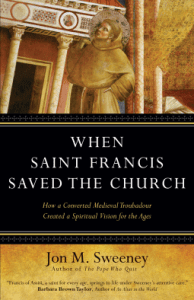
Review of Jon M. Sweeney, "When Saint Francis...

Catholic History in Less Than Five Minutes: Pope...
St. John Henry Newman and the “Special Charm...
American Catholics and Race in 2020: A Church...
TRENDING AT PATHEOS Catholic

Bad Survey Questions Distort Eucharistic Theology
It seems to be the newest thing: someone conducts a bad survey...

If Baptism Washes Away Sin, Why Do Catholics...
The seven sacraments stand as the foundation of Catholic ecclesial life. The...

Far from promoting indifference, inaction, or quietism, Paul consistently tells us to...

The Power of Setting a Good Example
Remember last August when the Chicago White Sox hosted a "Pope Hat...

A Catholic Critique of Biblical Unitarianism
If the statistics are to be believed, Unitarianism is rising worldwide. Although...

How Grandma Tourism Helps Grandparents Live Their Vocation
Grandma, The New Travel Influencer What started as a nostalgia-inspired social media...
view all Catholic blogs
Ad-Free & Subscriber Log-In Subscription Support
- About Us
- 2026 Calendar
- Videos
- Podcasts
- Library of World Religions
- Faith In Media Tracker
- Advertise With Us
- Write for Us
- Privacy Policy
- Terms of Service
- Do Not Sell My Data
- Contact Us
- Radiant Digital
- Manage Newsletter Subscriptions
- Unsubscribe From Notifications
- Sitemap
Copyright 2008-2026, Patheos, part of the Radiant Digital network of media brands. All rights reserved.
Subscription Support Ad-Free & Subscriber Log-In
Follow Patheos