
BuddhistCatholicContemplativeEvangelicalGeneral ChristianHinduJewishLatter-day SaintMuslimNew VisionsProgressive Christian
Beliefs
- Buddhist
- Catholic
- Contemplative
- Evangelical
- General Christian
- Hindu
- Jewish
- Latter-day Saint
- More Voices
- Muslim
- New Visions
- Pagan
- Progressive Christian
Topics
- Religion News
- Food and Religion
- Sports and Religion
- Religious Art
- Religious Music and Entertainment
- Religious Events
- History and Religion
- Style and Religion
- Politics and Religion
- Women in Religion
- Recreation Outdoors and Religion
- Business Finance and Religion
- Careers Workplace and Religion
- Education and Religion
- Family Parenting and Religion
- Health Fitness and Religion
- Home and Religion
- Relationships and Religion
- Technology and Religion
- Travel and Religion
Columnists
- Buddhist Columnists
- Business Finance and Religion Columnists
- Careers Workplace and Religion Columnists
- Catholic Columnists
- Contemplative Columnists
- Education and Religion Columnists
- Evangelists Columnists
- Family Parenting and Religion Columnists
- General Christian Columnists
- Health Fitness and Religion Columnists
- Hindu Columnists
- History and Religion Columnists
- Home and Religion Columnists
- Jewish Columnists
- More Voices Columnists
- Latter Day Columnists
- Muslim Columnists
- New Visions Columnists
- Nonreligious Columnists
- Pagan Columnists
- Politics and Religion Columnists
- Progressive Columnists
- Recreation Outdoors and Religion Columnists
- Relationships and Religion Columnists
- Religion News Columnists
- Religious Art Columnists
- Religious Events Columnists
- Religious Music and Entertainment Columnists
- Sports and Religion Columnists
- Style and Religion Columnists
- Technology and Religion Columnists
- Travel and Religion Columnists
- Women in Religion Columnists
Resource Library
- 2026 Calendar
- Library of World Religions
- The 100 Most Holy Places on Earth
- Patheos Answers
- Podcasts
- Videos
- Faith Leaders Database
- Anglican Episcopalian
- Bahai
- Baptist
- Buddhism
- Christianity
- Confucianism
- Eastern Orthodoxy
- Hinduism
- Holiness and Pentecostal
- ISKCON
- Islam
- Judaism
- Lutheran
- Methodist
- The Church of Jesus Christ of Latter-day Saints
- New Age
- Paganism
- Presbytarian and Reformed
- Protestantism
- Religion Behind the Scenes
- Roman Catholic
- Scientology
- Shia Islam
- Sikhism
- Sufism
- Sunni Islam
- Taoism
- Zen
- See all religions
Research Tools
 Ad-Free & Subscriber Log-In Subscription Support
Ad-Free & Subscriber Log-In Subscription Support
Follow Patheos 

- Trending:
- Forgiveness
- |
- Marriage
- |
- Consciousness
- |
- Death Penalty
- |
- Election
- |
- Halloween
 McNamara's Blog
- Home
- Catholic
- A Sermon on the Apostolate of Conversation, by Father Walter Elliott, C.S.P., 1913
A Sermon on the Apostolate of Conversation, by Father Walter Elliott, C.S.P., 1913
Last updated on: August 4, 2013 at 5:36 am by Pat McNamara
A Sermon on the Apostolate of Conversation, by Father Walter Elliott, C.S.P., 1913 2013-08-04T05:36:17-06:00 Pat McNamara
Patheos Explore the world's faith through different perspectives on religion and spirituality! Patheos has the views of the prevalent religions and spiritualities of the world.
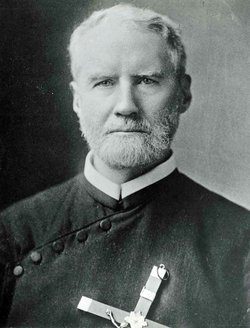 Apostolate of Conversation.
“And the string of his tongue was loosed; and he spoke right.”
To enable us to speak right the Son of God must loosen our tongues by a special grace, sometimes by a miracle of grace; for our conversation is too often friv olous, sometimes uncharitable, seldom devoted to spirit ual things. Not many laymen realize that there is such a thing as an apostolate of conversation. Mere talk there is no such thing to a true-hearted Christian. His very prattle with his children is full of edification as well as happiness. A wise man strives hard to instruct his company as well as to amuse them. The very crumbs from a rich soul s table-talk, feed plentifully another soul hungering for truth.
There is even some advantage in the conversational apostolate over that of the public platform. Conversa tion is the personal force of a man brought to its high est potency. The advantage of truth over error is high est when most concentrated, particularized, segregated from the crowd. The contrast between certitude and doubt is most vivid when exhibited in two or three typical specimens. One at a time is a rule of true progress. My public lecturer is as far above me intellectually as he is physically, when I hear him from his elevated platform in a great assembly. But when he and I are alone he has me at close quarters, he projects truth into my soul at point-blank range. This holds good when he is an or dinary friend, and his only advantage over me is that he is right and knows it, and I am wrong and know it, or at least suspect it. If we are on a footing of equality as to education, and I am wholly unequal to him as to the great verities of time and eternity, then his feeble ness of arm but sets off the mighty force of his weapon ; just a humble neighbor of mine, and yet equipped by his Catholic truth to be my angel of peace and joy in the Holy Ghost. David had no advantage in the armor of Saul and in his spear, ” for he was not accustomed to it ” ( I Kings xvii. 39). But he knew all about the shepherd s sling, and could pick skillfully the right sort of stones from the brook, and thus he could slay Goliath. Many a theo logian s armor and spear fail, where the gentle force of kindly talk wins a godlike victory.
The primary rule of religious talk is not prudence, nor caution, nor reticence, nor peacefulness, but affec tionate interest in your hearer s immortal destiny. The word of command is not, ” Take care,” but ” Forward.” What good can I do him? What happiness can I give him ? What delusion can I save him from ? These are the purposes in hand. If I am not a crank I shall easily be kindly; if I am sincere I cannot help but be truthful
and candid. Say to men, ” Don t bully, don t interrupt, don t sneer,” and you have said enough in the interests of prudence. But you cannot ever say enough to hearten me to take hold of devout topics in ordinary conversation.
At a certain street corner in Rome there is seen to-day a bronze slab with this inscription : ” Here Philip Neri chatted about God.” This commemorates the Saint s street corner apostolate. For sixteen years, all that time only a layman, did Philip talk in the streets to idlers and chance acquaintances about God and heaven and hell and truth and error, and the beauty of virtue, the hatefulness of vice. Only under dire compulsion would he become a priest; and this was not only from humility, but also because his life as a talking layman was so amply fruitful of souls.
In recreation, in business, in the family circle, in the round of daily intercourse of all kinds, a true man is eager for propagating truth. Providence will not fail both to give him opportunity and to bestow upon his zealous conversation a full harvest of souls.
Only a comparatively few public speakers can ever be engaged in the conversion of America. But there can be an uncounted multitude of private talkers nay, there must be whose influence shall necessarily be as universal as efficacious. When an old-stock Catholic recalls the beginnings of his religious life, he forthwith thanks God for the zeal and intelligence of his parents. They were his apostles. St. Augustine, in praying to God for his mother s soul, exclaims : ” She was twice my mother, in the flesh that I might be born into this earthly light, in heart that I might be born into light eternal;” and he speaks of her household as ” a living branch of God s Church.” Nor are mothers and fathers the only quiet, domestic messengers of God s truth. For the same Saint tells of the profound effect of conversation with friends upon his mind in changing from error to truth. Parents and friends, sweet whisperers of love in our childhood, pleas ant traffickers in holiest truth during the friendly converse of early and later days all these are members of the laity; yet are they vicars of Christ for our little circle as long as they stand true with His Vicar of the universal Church.
What man or woman ever was first taught about God by a priest ? or ever so powerfully influenced towards God by any priest as by some devout relative or friend? The Ecclesia docens is centred at Rome; its truth-teaching springs out in fresh waters of life in each diocese and parish ; and yet it depends on humble lay people for the distribution of its healing and cleansing floods in our families and in all private circles of life.
As to method, the simplest is generally the best. And what is the straightest way to every honest heart? It is to offer him a ride in a chariot whose four wheels are the four last things to be remembered. You will never stray far from the road to doctrinal persuasion, if you keep in that holy vehicle. Men want salvation ; and all the adornments of controversy, as well as all its funda mentals, are valued in proportion to their bearing on the mighty issues of death, judgment, hell, and heaven. The lessons of Calvary are the prime theses of all learning. Show, therefore, that for a man to be wrong as to truth means to be astray as to salvation, and true doctrine is placed where it belongs: inseparably joined to a happy death.
Rev. Walter Elliott, C.S.P., Parish Sermons on Moral and Spiritual Subjects for All Sundays and Feasts of Obligation (New York: Paulist Press, 1913), 322-324.
Previous Post

July 24, 2013
Bishop Ignatius Persico, O.F.M. Cap. (1823-1896), Savannah, Georgia
Next Post
August 13, 2013 Fordham's First Jesuit President
Browse Our Archives
Select a Category African-American Catholics Alabama Catholics American Catholic History American Catholic women American History Anniversaries Anti-Catholicism Arkansas Catholics Benedictines Bishops Blessed John Henry Newman Book Reviews Books Boston College Brooklyn churches Brothers California Catholics Capuchins Cardinals Carlo Carretto Carmelites Catholic authors Catholic Cemeteries Catholic Historians Catholic History in Less Than 5 Minutes Catholic musicians Catholic Poetry Catholic Press Catholic School Textbook Catholic University of America Catholic Worker Catholics and Music Catholics and Race Catholics in Politics Catholics in the American Revolution Catholics in the Military Catholics in the Movies Catholics in the South Catholics in the West Catholics on Stage Catjolic Women Catolic Poetry Charles de Foucauld Children's Masses Christian Brothers Christmas Church Reform Civil Rights Movement Civil War Colleges and universities Converts D.C. Catholics Deaf Catholics Dominicans. Dorothy Day English Catholics Florida Catholics Fordham University Franciscans French Catholics Georgetown University German Americans Good Shepherd Sisters Hispanic Catholics Historians and Archivists Holy Cross Fathers Holy Name Society Idaho Catholics Illinois Catholics Indian Wars Indiana Catholics Irish Americans Irish Catholicism Italian Americans Italian Catholics Jesuits Josephite Sisters Kentucky Catholics Know-Nothings Laetare Medal Recipients laity Liturgical Movement Maine Catholics Manhattan College Maryland Catholicism Michigan Catholics Middle Ages Minnesota Catholics Missionaries Mississippi Catholics Missouri Catholics Monasteries Montana Catholics Native Americans New England Catholicism New Jersey Catholics New York Catholics North American College Ohio Catholics Oratorians Oregon Catholics Parish Mission Parishes Passionists Pat McNamara's Books Paulists Pennsylvania Catholics Popes Presidents Priests Quotations Religious Orders Rhode Island Catholics Saints Salesians Seminarians Seminaries Sermons Servants of God Siisters of Charity Sisters of Mercy South Carolina Catholics Spanish-American War Sports St. Francis of Assiai St. John Henry Newman Suplicians Tennessee Catholics Texas Catholics The year in review Thomas Merton Throwback Thursday Photograph Trappists Uncategorized University of Notre Dame Video Presentations Vincentians Virginia Catholics Visitation Nuns Washington West Point West Virginia Catholics West Viriginia Catholics Wisconsin Catholicism Women Religious World War II
Select a Month December 2020 June 2020 May 2020 April 2020 March 2020 March 2019 February 2019 January 2019 December 2018 November 2018 November 2014 October 2014 September 2014 August 2014 July 2014 June 2014 May 2014 December 2013 November 2013 October 2013 August 2013 July 2013 June 2013 May 2013 April 2013 March 2013 February 2013 January 2013 December 2012 November 2012 October 2012 September 2012 August 2012 July 2012 June 2012 April 2012 March 2012 December 2011 November 2011 October 2011 September 2011 August 2011 July 2011 June 2011 May 2011 April 2011 March 2011 February 2011 January 2011 December 2010 November 2010 October 2010 January 2010 December 2009 November 2009 October 2009 September 2009 August 2009 July 2009 June 2009 May 2009 April 2009 March 2009 February 2009 January 2009 December 2008
Follow Us!
TAKE THE
Religious Wisdom Quiz
Which prophet's book names the birthplace of the Messiah?
Select your answer to see how you score.
Obadiah Jonah Micah Amos
Related posts from McNamara's Blog
From West Point to the Priesthood: Father George...
Isaac Hecker: Who He is, Why He Matters
How to Preach Missions to Non-Catholics
TRENDING AT PATHEOS Catholic

Creation, Preservation, and Teleology in Catholic Theology
As I write this, it is very early Monday morning. Like millions...

The Parable Of The Sower And The Word...
One of Christ’s most famous parables is that of the sower who...

Rejecting Doom: Christian Hope And Human Action
Christianity is a religion of hope. We are to have hope and...

Why I Choose the Eucharist Over the Sermon
Choose the Eucharist, Not the Sermon What are we supposed to get...

5 Design Elements Found in Spiritually Rooted Homes
Putting Spirituality Into Home Decor Our homes are more than our living...

Credo: A Story of God Told with the...
About 10 years ago, I began to imagine a personal "Credo" that...
view all Catholic blogs
Ad-Free & Subscriber Log-In Subscription Support
- About Us
- 2026 Calendar
- Videos
- Podcasts
- Library of World Religions
- Faith In Media Tracker
- Advertise With Us
- Write for Us
- Privacy Policy
- Terms of Service
- Do Not Sell My Data
- Contact Us
- Radiant Digital
- Manage Newsletter Subscriptions
- Unsubscribe From Notifications
- Sitemap
Copyright 2008-2026, Patheos. All rights reserved.
Subscription Support Ad-Free & Subscriber Log-In
Follow Patheos