
BuddhistCatholicContemplativeEvangelicalGeneral ChristianHinduJewishLatter-day SaintMuslimNew VisionsProgressive Christian
Beliefs
- Buddhist
- Catholic
- Contemplative
- Evangelical
- General Christian
- Hindu
- Jewish
- Latter-day Saint
- More Voices
- Muslim
- New Visions
- Pagan
- Progressive Christian
Topics
- Religion News
- Food and Religion
- Sports and Religion
- Religious Art
- Religious Music and Entertainment
- Religious Events
- History and Religion
- Style and Religion
- Politics and Religion
- Women in Religion
- Recreation Outdoors and Religion
- Business Finance and Religion
- Careers Workplace and Religion
- Education and Religion
- Family Parenting and Religion
- Health Fitness and Religion
- Home and Religion
- Relationships and Religion
- Technology and Religion
- Travel and Religion
Columnists
- Buddhist Columnists
- Business Finance and Religion Columnists
- Careers Workplace and Religion Columnists
- Catholic Columnists
- Contemplative Columnists
- Education and Religion Columnists
- Evangelists Columnists
- Family Parenting and Religion Columnists
- General Christian Columnists
- Health Fitness and Religion Columnists
- Hindu Columnists
- History and Religion Columnists
- Home and Religion Columnists
- Jewish Columnists
- More Voices Columnists
- Latter Day Columnists
- Muslim Columnists
- New Visions Columnists
- Nonreligious Columnists
- Pagan Columnists
- Politics and Religion Columnists
- Progressive Columnists
- Recreation Outdoors and Religion Columnists
- Relationships and Religion Columnists
- Religion News Columnists
- Religious Art Columnists
- Religious Events Columnists
- Religious Music and Entertainment Columnists
- Sports and Religion Columnists
- Style and Religion Columnists
- Technology and Religion Columnists
- Travel and Religion Columnists
- Women in Religion Columnists
Resource Library
- 2026 Calendar
- Library of World Religions
- The 100 Most Holy Places on Earth
- Patheos Answers
- Podcasts
- Videos
- Faith Leaders Database
- Anglican Episcopalian
- Bahai
- Baptist
- Buddhism
- Christianity
- Confucianism
- Eastern Orthodoxy
- Hinduism
- Holiness and Pentecostal
- ISKCON
- Islam
- Judaism
- Lutheran
- Methodist
- The Church of Jesus Christ of Latter-day Saints
- New Age
- Paganism
- Presbytarian and Reformed
- Protestantism
- Religion Behind the Scenes
- Roman Catholic
- Scientology
- Shia Islam
- Sikhism
- Sufism
- Sunni Islam
- Taoism
- Zen
- See all religions
Research Tools
 Ad-Free & Subscriber Log-In Subscription Support
Ad-Free & Subscriber Log-In Subscription Support
Follow Patheos 

- Trending:
- Forgiveness
- |
- Marriage
- |
- Consciousness
- |
- Death Penalty
- |
- Election
- |
- Halloween
 McNamara's Blog
- Home
- Catholic
- A Look at the Trappists, 1908
A Look at the Trappists, 1908
Last updated on: July 6, 2013 at 5:11 am by Pat McNamara
A Look at the Trappists, 1908 2013-07-06T05:11:29-06:00 Pat McNamara
Patheos Explore the world's faith through different perspectives on religion and spirituality! Patheos has the views of the prevalent religions and spiritualities of the world.
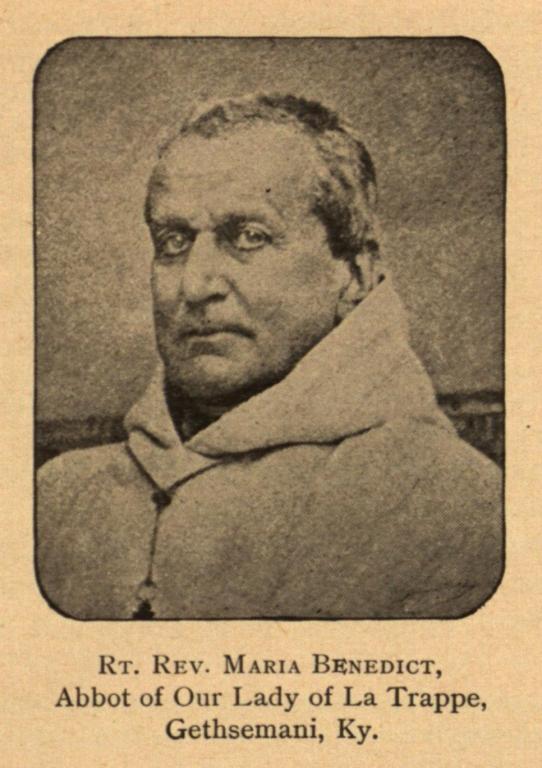 The Trappists, or Reformed Cistercians are a branch of the Order of Citeaux. They possess several monasteries in America, three of which are situated in the United States. The Order took its name from the Abbey of Notre Dame de la Maison-Dieu, of La Trappe, founded in 1140 by Rotron, Count of Perche. After various viscissitudes the Abbey finally degenerated, and when near ruin God in his own wisdom, sent relief in the person of Armand Jean le Bouthillier de Rance. This celebrated man was bom in 1626, of noble family. According to an abuse, quite common in that age, the child, being destined for the Church, was loaded with preferment by his father, and though only ten years old, he was made commendatory abbot of La Trappe, and two other abbeys, prior of two priories, and canon of Notre Dame at Paris, and his income was very large. He was ordained priest in 165 1, by his uncle, the Archbishop of Tours, whose co- adjutor he hoped to become some day. However, his youthful worldliness was gradually shaken by a series of striking mishaps—the death of a cousin, his own remarkable escape from a violent death, and a disappointment to his ambition, were among the results of his entering into himself, and recognizing the vanity of the world. In 1660, he resigned all his benefices, except the Abbey of La Trappe, disposed of his patrimony, and donated the greater part of his wealth to the Hotel Dieu, or great hospital at Paris. He then repaired to La Trappe, and he determined to bring back the monastery to the first spirit of the Order of Citeaux. By degrees he introduced the most austere practices, and he himself gave the example of all that he prescribed to his religious.
When De Rance first came to the Abbey, the state of things was deplorable; the monks had ceased to live in community, and if they met at all it was for pleasure parties. De Rance had great difficulty in restoring order and regularity in the Community. Still he was unsatisfied; an ideal had been in his mind for some time in which were blended the union with God through contemplation and prayer, bodily mortification, and severance from causes of distraction. Finally the austerities of his life impaired his health, and De Rance resigned the duties of his office to Don Zozionus. He died October 20, 1700. During the eighteenth century, the Abbey of La Trappe was the edification of the Church in France, and served as a retreat for men of all ranks who desired to spend some time in solitude. In 1790, the Order was suppressed with all other congregations by the Constituent Assembly of France, but the great majority of the monks remained faithful to their vocation, and they went to Switzerland, and entered the monastery of Val Sainte, and Don Augustin was appointed superior. After God, the Order of Trappists owe their preservation to this wise and holy man. In 1806, Napoleon permitted the Trappists to return to France but later he withdrew his approval and protection for some reason, and Don Augustin fled to America, where he established two houses, which, however, did not long exist. After the fall of Napoleon, Don Augustin returned to La Trappe Abbey, and after founding several new houses, died at Lyons, July 16, 1827.
The monks of La Trappe, for the most part, resisted the sophistries of Jansenism. From the monastery of Val Sainte, Trappist filiations spread the austere rule of the Order into Spain, Belgium, Piedmont, England and Ireland.
In 1848, Trappists from the Abbey of Melleraye in France, founded the present Abbey of Gethsemani in Kentucky. The Order has also a monastery at New Melleraye, in the diocese of Dubuque, Iowa, and the Monastery of Our Lady of the Valley, Lonsdale, R. I. The mother house of the Order is at Citeaux, near Dijon, France. Don Augustin was the founder of a female branch of the Order, which he established at Bas Volais, in France, in 1786, aided by his sister. When the monks sought refuge in this country, some of the sisters came also, and founded a community, but they returned to France in a few years. There exists a Third Order of La Trappe, in which the Religious devote their lives to the education of youth. The Community of Trappist Nuns at Tracadie, Nova Scotia, belongs to this Third Order, and they follow closely the Rule of the monks.
The discipline of La Trappe is very severe, as the following account will show. In summer the Religious go to rest at eight; in winter at seven. They get up at two o’clock in the night to go to Matins, which usually last till half-past four, because they add the Office of the Blessed Virgin to the regular office, and between the two make half an hour’s meditation. After Matins, in summer time they may go and rest in their cells till Prime; in winter they go into a common room near the stove, where each reads to himself. At half-past five they say Prime, and then go to Chapter, which usually lasts half an hour. At seven they go to work; the cowl is put off, and the under garment tucked up; some dig, others carry stones—each according to the task assigned to him, for they are not free to choose the kind of work which they like best. The abbot himself works, and often takes up the most abject sort of employment. Their indoor work when the weather does not allow outdoor labor, includes carpentry, joinery, copying, binding, sweeping and other work. When they have worked an hour and a half they go to Office; Tierce is said, followed by Mass; then Sext, after which an interval of reading in their own cells is allowed. At eleven they go to the refectory—fast days an hour later. This is a large room, with a long table on each side. The Abbot’s table is laid for six; guests are entertained at it, if they ask to be present. There are no table cloths, but the tables are kept scrupulously clean. Each monk has his napkin, mug, knife, fork and spoon. The repast consists of brown bread, vegetable soup, a mess of carrots or spinach, two apples or pears, and beer or cider. At one o’clock they return to work, for an hour and a half to two hours. The recall being sounded, every monk takes off his boots, puts away his tools, puts on his cowl, and retires to his cell, where he reads and meditates until Vespers, at four o’clock. At five a collation of dry bread, fruit and beer, is served. Then there is a short rest in the cells when they go to the chapter, and listen to spiritual reading till six, when Compline is said. At seven a bell rings, and they go to their dormitories; they sleep on straw mattresses in their ordinary clothes. The most trying part of all the discipline is the strict rule of silence, no monk being allowed to talk. The Abbot and the guest master are the only persons in the convent who are permitted to speak to strangers. The dead are buried in their habits. The annual fast is from September 14th until Easter. Besides the choir brothers, who are or meant to be, priests, and the lay brothers, oblates are also received—persons who do not wish to take the vows, but conform strictly to the Rule during their residence in the monastery. Novices are received after two years probation; three years more are required for profession. There are nearly three thousand, five hundred members of the Order in the world, and fifty-five monasteries.
The life of a Trappist is a continual death to self, a continual inmolation of self-will, and the absolute obedience to the superior.
Theodore Mayhew, Henry Coyle and Frank S. Hickey, eds., Our Church, Her Children and Her Institutions (Boston: Angel Guardian Press, 1908), 138-141.
Next Post

July 8, 2013 School Days, 1848: A Reminiscence
Browse Our Archives
Select a Category African-American Catholics Alabama Catholics American Catholic History American Catholic women American History Anniversaries Anti-Catholicism Arkansas Catholics Benedictines Bishops Blessed John Henry Newman Book Reviews Books Boston College Brooklyn churches Brothers California Catholics Capuchins Cardinals Carlo Carretto Carmelites Catholic authors Catholic Cemeteries Catholic Historians Catholic History in Less Than 5 Minutes Catholic musicians Catholic Poetry Catholic Press Catholic School Textbook Catholic University of America Catholic Worker Catholics and Music Catholics and Race Catholics in Politics Catholics in the American Revolution Catholics in the Military Catholics in the Movies Catholics in the South Catholics in the West Catholics on Stage Catjolic Women Catolic Poetry Charles de Foucauld Children's Masses Christian Brothers Christmas Church Reform Civil Rights Movement Civil War Colleges and universities Converts D.C. Catholics Deaf Catholics Dominicans. Dorothy Day English Catholics Florida Catholics Fordham University Franciscans French Catholics Georgetown University German Americans Good Shepherd Sisters Hispanic Catholics Historians and Archivists Holy Cross Fathers Holy Name Society Idaho Catholics Illinois Catholics Indian Wars Indiana Catholics Irish Americans Irish Catholicism Italian Americans Italian Catholics Jesuits Josephite Sisters Kentucky Catholics Know-Nothings Laetare Medal Recipients laity Liturgical Movement Maine Catholics Manhattan College Maryland Catholicism Michigan Catholics Middle Ages Minnesota Catholics Missionaries Mississippi Catholics Missouri Catholics Monasteries Montana Catholics Native Americans New England Catholicism New Jersey Catholics New York Catholics North American College Ohio Catholics Oratorians Oregon Catholics Parish Mission Parishes Passionists Pat McNamara's Books Paulists Pennsylvania Catholics Popes Presidents Priests Quotations Religious Orders Rhode Island Catholics Saints Salesians Seminarians Seminaries Sermons Servants of God Siisters of Charity Sisters of Mercy South Carolina Catholics Spanish-American War Sports St. Francis of Assiai St. John Henry Newman Suplicians Tennessee Catholics Texas Catholics The year in review Thomas Merton Throwback Thursday Photograph Trappists Uncategorized University of Notre Dame Video Presentations Vincentians Virginia Catholics Visitation Nuns Washington West Point West Virginia Catholics West Viriginia Catholics Wisconsin Catholicism Women Religious World War II
Select a Month December 2020 June 2020 May 2020 April 2020 March 2020 March 2019 February 2019 January 2019 December 2018 November 2018 November 2014 October 2014 September 2014 August 2014 July 2014 June 2014 May 2014 December 2013 November 2013 October 2013 August 2013 July 2013 June 2013 May 2013 April 2013 March 2013 February 2013 January 2013 December 2012 November 2012 October 2012 September 2012 August 2012 July 2012 June 2012 April 2012 March 2012 December 2011 November 2011 October 2011 September 2011 August 2011 July 2011 June 2011 May 2011 April 2011 March 2011 February 2011 January 2011 December 2010 November 2010 October 2010 January 2010 December 2009 November 2009 October 2009 September 2009 August 2009 July 2009 June 2009 May 2009 April 2009 March 2009 February 2009 January 2009 December 2008
Follow Us!
TAKE THE
Religious Wisdom Quiz
How many disciples did Jesus call as His closest followers?
Select your answer to see how you score.
Twenty Twelve Seven Ten
Related posts from McNamara's Blog

St. John Henry Newman and the “Special Charm...

American Catholics and Race in 2020: A Church...

“It’s About Time They Got Here”: Catholics and the...

The Struggle for an African American Priesthood
TRENDING AT PATHEOS Catholic

Rejecting Doom: Christian Hope And Human Action
Christianity is a religion of hope. We are to have hope and...

It’s What Comes From Within Which Matters
One of the most difficult things for us to understand is why...

Why I Choose the Eucharist Over the Sermon
Choose the Eucharist, Not the Sermon What are we supposed to get...

5 Design Elements Found in Spiritually Rooted Homes
Putting Spirituality Into Home Decor Our homes are more than our living...

Credo: A Story of God Told with the...
About 10 years ago, I began to imagine a personal "Credo" that...

The Anatomy of Divine Revelation in Catholic Thought
The claim that God has made Himself known to human beings is...
view all Catholic blogs
Ad-Free & Subscriber Log-In Subscription Support
- About Us
- 2026 Calendar
- Videos
- Podcasts
- Library of World Religions
- Faith In Media Tracker
- Advertise With Us
- Write for Us
- Privacy Policy
- Terms of Service
- Do Not Sell My Data
- Contact Us
- Radiant Digital
- Manage Newsletter Subscriptions
- Unsubscribe From Notifications
- Sitemap
Copyright 2008-2026, Patheos. All rights reserved.
Subscription Support Ad-Free & Subscriber Log-In
Follow Patheos