
BuddhistCatholicContemplativeEvangelicalGeneral ChristianHinduJewishLatter-day SaintMuslimNew VisionsProgressive Christian
Beliefs
- Buddhist
- Catholic
- Contemplative
- Evangelical
- General Christian
- Hindu
- Jewish
- Latter-day Saint
- More Voices
- Muslim
- New Visions
- Pagan
- Progressive Christian
Topics
- Religion News
- Food and Religion
- Sports and Religion
- Religious Art
- Religious Music and Entertainment
- Religious Events
- History and Religion
- Style and Religion
- Politics and Religion
- Women in Religion
- Recreation Outdoors and Religion
- Business Finance and Religion
- Careers Workplace and Religion
- Education and Religion
- Family Parenting and Religion
- Health Fitness and Religion
- Home and Religion
- Relationships and Religion
- Technology and Religion
- Travel and Religion
Columnists
- Buddhist Columnists
- Business Finance and Religion Columnists
- Careers Workplace and Religion Columnists
- Catholic Columnists
- Contemplative Columnists
- Education and Religion Columnists
- Evangelists Columnists
- Family Parenting and Religion Columnists
- General Christian Columnists
- Health Fitness and Religion Columnists
- Hindu Columnists
- History and Religion Columnists
- Home and Religion Columnists
- Jewish Columnists
- More Voices Columnists
- Latter Day Columnists
- Muslim Columnists
- New Visions Columnists
- Nonreligious Columnists
- Pagan Columnists
- Politics and Religion Columnists
- Progressive Columnists
- Recreation Outdoors and Religion Columnists
- Relationships and Religion Columnists
- Religion News Columnists
- Religious Art Columnists
- Religious Events Columnists
- Religious Music and Entertainment Columnists
- Sports and Religion Columnists
- Style and Religion Columnists
- Technology and Religion Columnists
- Travel and Religion Columnists
- Women in Religion Columnists
Resource Library
- 2026 Calendar
- Library of World Religions
- The 100 Most Holy Places on Earth
- Patheos Answers
- Podcasts
- Videos
- Faith Leaders Database
- Anglican Episcopalian
- Bahai
- Baptist
- Buddhism
- Christianity
- Confucianism
- Eastern Orthodoxy
- Hinduism
- Holiness and Pentecostal
- ISKCON
- Islam
- Judaism
- Lutheran
- Methodist
- The Church of Jesus Christ of Latter-day Saints
- New Age
- Paganism
- Presbytarian and Reformed
- Protestantism
- Religion Behind the Scenes
- Roman Catholic
- Scientology
- Shia Islam
- Sikhism
- Sufism
- Sunni Islam
- Taoism
- Zen
- See all religions
Research Tools
 Ad-Free & Subscriber Log-In Subscription Support
Ad-Free & Subscriber Log-In Subscription Support
Follow Patheos 

- Trending:
- Forgiveness
- |
- Marriage
- |
- Consciousness
- |
- Death Penalty
- |
- Election
- |
- Halloween
 McNamara's Blog
- Home
- Catholic
- Student Reminiscences of 1820’s Georgetown
Student Reminiscences of 1820’s Georgetown
Last updated on: June 16, 2013 at 5:55 am by Pat McNamara
Student Reminiscences of 1820’s Georgetown 2013-06-16T05:55:22-06:00 Pat McNamara
Patheos Explore the world's faith through different perspectives on religion and spirituality! Patheos has the views of the prevalent religions and spiritualities of the world.
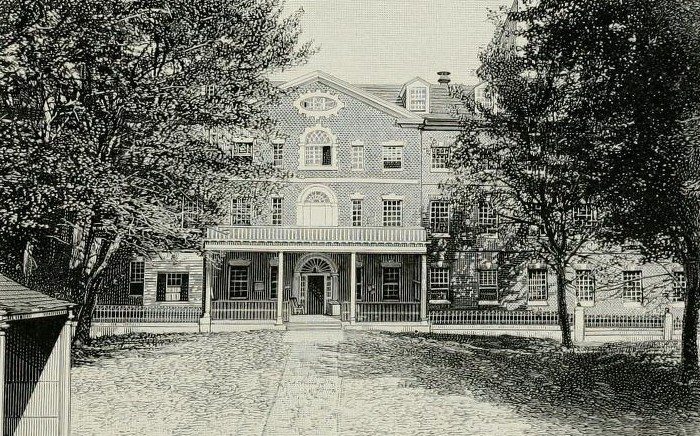 RECOLLECTIONS, GEORGETOWN COLLEGE IN 1820. Woodstock Letters (1885): 264-267.
About the middle of the afternoon of September 15th or 16th, 1820, the stage from Baltimore rumbled into the yard of Georgetown College and set down a lot of unfortunates. Amongst them was your humble servant. It is 65 years since, and perhaps a few reminiscences of college and college life may not be without some interest to you. We were all well known to the Revd. Enoch Fenwick, who had for so many years been the pastor of St. Peter’s church, Baltimore, and who was then in his first year as President of the College. His kind smile and welcome took from us much of the rough edge of exile and made us feel at home.
The staff of the college, as well as I recollect, was Revd. Father Fenwick, Rector, and Father Cary, a Frenchman, I think, our Minister, and good old Fr. McElroy was treasurer. There was also a Fr. De Theux, who spent most of his time at the old college and did not come (except in the confessional) much in contact with the boys. Mr. Grace and Mr. Newton, scholastics, wielded their batons as prefects, and with Dr. Henry in the infirmary, Br. Drain in the refectory, Br. De Meyer as cook, and Br. Jordan as baker, who died at Newton in 1828, made up the executive officers of the College. I beg his pardon; but old Dick who lived at the gate and gave us our polished shoes on Sundays and Wednesdays of each week should have been named as one, in his own opinion, not the least in importance. I can hear him now in his darky magniloquence setting forth that one pair of boots was the equivalent of two pairs of shoes.
For teachers we had in rhetoric and philosophy, which were combined in the graduating class, Father Baxter, a full-blooded Englishman; he was very kind with all. He was in truth a rhetorician, and his sermons to us boys were, many of them, masterpieces. Two of them especially are still fresh in my mind. One was a Good-Friday sermon; the other a rehearsal, as it were, which he delivered in the College Chapel on the Sunday before the dedication of the Cathedral at Baltimore. Starting with the “Twelve Ignorant Fishermen” of Jerusalem on Pentecost, he went rapidly over the prospects of the church from country to country, coming back once in a while to the “twelve ignorant fishermen,” which formed the key-note to the symphony.
Then there came for the other classes Mr. Van de Velde, afterwards Bishop of Chicago, Mr. Neill, Mr. Finnegan, who is still living at Conewago; Mr. McCarthy, a mercurial little Irishman, had charge of the third grammar class and counted me amongst his victims, whilst the rudimentals were consigned to Brother Moberly who with his dogwood jackanapes, as he called it, ruled over his class in one of the rooms off the long passage. In mathematics and its kindred sciences we had Father Toomey, and he was succeeded by Fr. Levins. Both were men of great abilities, but they passed away from the College in a manner that baffled our boyish curiosity. In my second year I had Mr. Finnegan as teacher and was there when he became unwell. My last two years were under Mr. Callaghan of Baltimore. He was a fine belles-lettres scholar, and had a better gift of imparting knowledge than any teacher I ever had. He did not remain in the Society. He drifted about Washington for a few years as a translator and copyist in some of the departments and disappeared.
I wonder if the “College Journalists” know that away in those far off ages we had our college paper, “The Minerva.” It was in manuscript; the contributions were by the rhetoricians, and at the time we thought them quite equal to many of the printed pages that came to our notice. But the labor of copying it to be read to the boys trenched so heavily on recreation that with all its talent it only survived a few issues. Perhaps, in some pigeon-hole about the College you might unearth a copy. About that time there was a learned newspaper discussion in Washington, on some chemical question. One of the writers called himself “Jem the Sawyer.” I have forgotten the other nom de plume, but after a while Fr. Levins came out as Philo Junior and demolished them both. We college boys took it, each and every one, as a personal triumph.
Our day at College commenced in summer a 5, and in winter at 5:30 A.M., by a run out to the pump for a wash. A long line of roller towels was hung between two locust trees nearly opposite the College door. In the winter of ’22 and ’23, luxuries began to creep in, and we had a wash-room extemporized in the small boys play-room, but in the summer we took our ablutions at the nozzle of the pump. Morning prayer, Mass and studies took up the time till breakfast. Our bill of fare at that meal was monotonous—bread and coffee. Butter was an unknown factor in our menu, except occasionally at dinner on fish-days, and semi-occasionally, if I may use the word, at breakfast, for Christmas, Easter, and the Sunday that closed our annual retreat. After a short recreation of half an hour, classes commenced, and went on regularly until about 11:30, when after half an hour’s recreation we had dinner. No doubt the food was good and wholesome, for we all throve on it, but to us, all the meat was sheep meat, and the teas was known as shoe-string tea. Some wag of a boy saw Souchong on a tea-chest, and gave the name a free translation as above. But the coffee was too good to have a nickname; every boy of us relished his two bowls every morning. A short visit to the chapel after dinner was followed by recreation for an hour and a half. During the first hour the study-room was locked, and no one was allowed to have a book of any kind, a very good rule, but in our case a useless precaution; for I don’t think any of us were given to private study. A half hour’s study was followed by the afternoon classes till about four, when we had our piece of bread, and I can see the boys even now, climbing up and reaching for the toothsome bottom crust. A recreation of an hour and a half was followed by Rosary and evening studies, then supper of bread and tea. We had recreation in the play-rooms till 8 o’clock, when after night prayers in the chapel we went to the dormitory, and very soon all were sleeping the sleep of tired school-boys.
The college records will show that in these years the number of scholars was very small, and my memory is that the discipline was very lax. In 1821, I think, Frs. Dzierozymski and Sacchi came over. Father Zero, as we called him, was mostly with the Jesuits in the old college. Fr. Sacchi tried (but not with success) to improve the college discipline. It was not until the return of Frs. Mulledy, Fenwick, Ryder and Young and under their administration the College lifted up its head again, and continued to thrive until the war which took away all its Southern scholars. Since the war, it has again resumed its prestige, and now the spires of the University say to those in its study-rooms and classes: Sic itur ad astra.
Georgetown College need not blush when she looks at the records of her students. To say nothing of the many distinguished Jesuits that have come from within her walls, she cane point with pride to many of her sons that adorn both the legal and medical professions, and many a hillock in the South covers the remains of some gallant soldier, who drew his first patriotic instincts during the years he spent at the College.
Of all my school-mates I can only call to mind as still living, the Hon. Charles J. Faulkner of Va., Dr. De Loughery and Austin Jenkins of Baltimore. Mr. W.W. Corcoran of Washington, Hon. John H.B. Latrobe and professor Clarke of Baltimore had been there and left before my time. From them you might get some memoirs of college days and experiences much more to your purpose than anything that I have given you.
J.W.J.
Previous Post

June 15, 2013
The Brothers of the Sacred Heart (1820)
Next Post
June 17, 2013 “The Church Would Look Foolish Without Them”: José Navarro, Boise, Idaho
Browse Our Archives
Select a Category African-American Catholics Alabama Catholics American Catholic History American Catholic women American History Anniversaries Anti-Catholicism Arkansas Catholics Benedictines Bishops Blessed John Henry Newman Book Reviews Books Boston College Brooklyn churches Brothers California Catholics Capuchins Cardinals Carlo Carretto Carmelites Catholic authors Catholic Cemeteries Catholic Historians Catholic History in Less Than 5 Minutes Catholic musicians Catholic Poetry Catholic Press Catholic School Textbook Catholic University of America Catholic Worker Catholics and Music Catholics and Race Catholics in Politics Catholics in the American Revolution Catholics in the Military Catholics in the Movies Catholics in the South Catholics in the West Catholics on Stage Catjolic Women Catolic Poetry Charles de Foucauld Children's Masses Christian Brothers Christmas Church Reform Civil Rights Movement Civil War Colleges and universities Converts D.C. Catholics Deaf Catholics Dominicans. Dorothy Day English Catholics Florida Catholics Fordham University Franciscans French Catholics Georgetown University German Americans Good Shepherd Sisters Hispanic Catholics Historians and Archivists Holy Cross Fathers Holy Name Society Idaho Catholics Illinois Catholics Indian Wars Indiana Catholics Irish Americans Irish Catholicism Italian Americans Italian Catholics Jesuits Josephite Sisters Kentucky Catholics Know-Nothings Laetare Medal Recipients laity Liturgical Movement Maine Catholics Manhattan College Maryland Catholicism Michigan Catholics Middle Ages Minnesota Catholics Missionaries Mississippi Catholics Missouri Catholics Monasteries Montana Catholics Native Americans New England Catholicism New Jersey Catholics New York Catholics North American College Ohio Catholics Oratorians Oregon Catholics Parish Mission Parishes Passionists Pat McNamara's Books Paulists Pennsylvania Catholics Popes Presidents Priests Quotations Religious Orders Rhode Island Catholics Saints Salesians Seminarians Seminaries Sermons Servants of God Siisters of Charity Sisters of Mercy South Carolina Catholics Spanish-American War Sports St. Francis of Assiai St. John Henry Newman Suplicians Tennessee Catholics Texas Catholics The year in review Thomas Merton Throwback Thursday Photograph Trappists Uncategorized University of Notre Dame Video Presentations Vincentians Virginia Catholics Visitation Nuns Washington West Point West Virginia Catholics West Viriginia Catholics Wisconsin Catholicism Women Religious World War II
Select a Month December 2020 June 2020 May 2020 April 2020 March 2020 March 2019 February 2019 January 2019 December 2018 November 2018 November 2014 October 2014 September 2014 August 2014 July 2014 June 2014 May 2014 December 2013 November 2013 October 2013 August 2013 July 2013 June 2013 May 2013 April 2013 March 2013 February 2013 January 2013 December 2012 November 2012 October 2012 September 2012 August 2012 July 2012 June 2012 April 2012 March 2012 December 2011 November 2011 October 2011 September 2011 August 2011 July 2011 June 2011 May 2011 April 2011 March 2011 February 2011 January 2011 December 2010 November 2010 October 2010 January 2010 December 2009 November 2009 October 2009 September 2009 August 2009 July 2009 June 2009 May 2009 April 2009 March 2009 February 2009 January 2009 December 2008
Follow Us!
TAKE THE
Religious Wisdom Quiz
True or False: The book of Lamentations contains seven chapters.
Select your answer to see how you score.
TRUE FALSE
Related posts from McNamara's Blog
General Sherman Speaks at Notre Dame, 1865
Saint Aloysius Gonzaga: A Reflection for Troubled Times
“I No Longer Call You Slaves”: Race, Religion,...
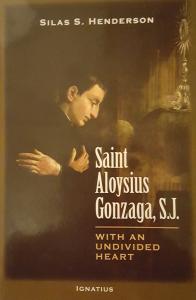
New Biography of St. Aloysius Hits the Mark
TRENDING AT PATHEOS Catholic

Rejecting Doom: Christian Hope And Human Action
Christianity is a religion of hope. We are to have hope and...

It’s What Comes From Within Which Matters
One of the most difficult things for us to understand is why...

Why I Choose the Eucharist Over the Sermon
Choose the Eucharist, Not the Sermon What are we supposed to get...

5 Design Elements Found in Spiritually Rooted Homes
Putting Spirituality Into Home Decor Our homes are more than our living...

Credo: A Story of God Told with the...
About 10 years ago, I began to imagine a personal "Credo" that...

The Anatomy of Divine Revelation in Catholic Thought
The claim that God has made Himself known to human beings is...
view all Catholic blogs
Ad-Free & Subscriber Log-In Subscription Support
- About Us
- 2026 Calendar
- Videos
- Podcasts
- Library of World Religions
- Faith In Media Tracker
- Advertise With Us
- Write for Us
- Privacy Policy
- Terms of Service
- Do Not Sell My Data
- Contact Us
- Radiant Digital
- Manage Newsletter Subscriptions
- Unsubscribe From Notifications
- Sitemap
Copyright 2008-2026, Patheos. All rights reserved.
Subscription Support Ad-Free & Subscriber Log-In
Follow Patheos