
BuddhistCatholicContemplativeEvangelicalGeneral ChristianHinduJewishLatter-day SaintMuslimNew VisionsProgressive Christian
Beliefs
- Buddhist
- Catholic
- Contemplative
- Evangelical
- General Christian
- Hindu
- Jewish
- Latter-day Saint
- More Voices
- Muslim
- New Visions
- Pagan
- Progressive Christian
Topics
- Religion News
- Food and Religion
- Sports and Religion
- Religious Art
- Religious Music and Entertainment
- Religious Events
- History and Religion
- Style and Religion
- Politics and Religion
- Women in Religion
- Recreation Outdoors and Religion
- Business Finance and Religion
- Careers Workplace and Religion
- Education and Religion
- Family Parenting and Religion
- Health Fitness and Religion
- Home and Religion
- Relationships and Religion
- Technology and Religion
- Travel and Religion
Columnists
- Buddhist Columnists
- Business Finance and Religion Columnists
- Careers Workplace and Religion Columnists
- Catholic Columnists
- Contemplative Columnists
- Education and Religion Columnists
- Evangelists Columnists
- Family Parenting and Religion Columnists
- General Christian Columnists
- Health Fitness and Religion Columnists
- Hindu Columnists
- History and Religion Columnists
- Home and Religion Columnists
- Jewish Columnists
- More Voices Columnists
- Latter Day Columnists
- Muslim Columnists
- New Visions Columnists
- Nonreligious Columnists
- Pagan Columnists
- Politics and Religion Columnists
- Progressive Columnists
- Recreation Outdoors and Religion Columnists
- Relationships and Religion Columnists
- Religion News Columnists
- Religious Art Columnists
- Religious Events Columnists
- Religious Music and Entertainment Columnists
- Sports and Religion Columnists
- Style and Religion Columnists
- Technology and Religion Columnists
- Travel and Religion Columnists
- Women in Religion Columnists
Resource Library
- 2026 Calendar
- Library of World Religions
- The 100 Most Holy Places on Earth
- Patheos Answers
- Podcasts
- Videos
- Faith Leaders Database
- Anglican Episcopalian
- Bahai
- Baptist
- Buddhism
- Christianity
- Confucianism
- Eastern Orthodoxy
- Hinduism
- Holiness and Pentecostal
- ISKCON
- Islam
- Judaism
- Lutheran
- Methodist
- The Church of Jesus Christ of Latter-day Saints
- New Age
- Paganism
- Presbytarian and Reformed
- Protestantism
- Religion Behind the Scenes
- Roman Catholic
- Scientology
- Shia Islam
- Sikhism
- Sufism
- Sunni Islam
- Taoism
- Zen
- See all religions
Research Tools
 Ad-Free & Subscriber Log-In Subscription Support
Ad-Free & Subscriber Log-In Subscription Support
Follow Patheos 

- Trending:
- Forgiveness
- |
- Marriage
- |
- Consciousness
- |
- Death Penalty
- |
- Election
- |
- Halloween
 McNamara's Blog
- Home
- Catholic
- A Sermon on Gratitude, 1915
A Sermon on Gratitude, 1915
Last updated on: June 23, 2013 at 6:03 am by Pat McNamara
A Sermon on Gratitude, 1915 2013-06-23T06:03:53-06:00 Pat McNamara
Patheos Explore the world's faith through different perspectives on religion and spirituality! Patheos has the views of the prevalent religions and spiritualities of the world.
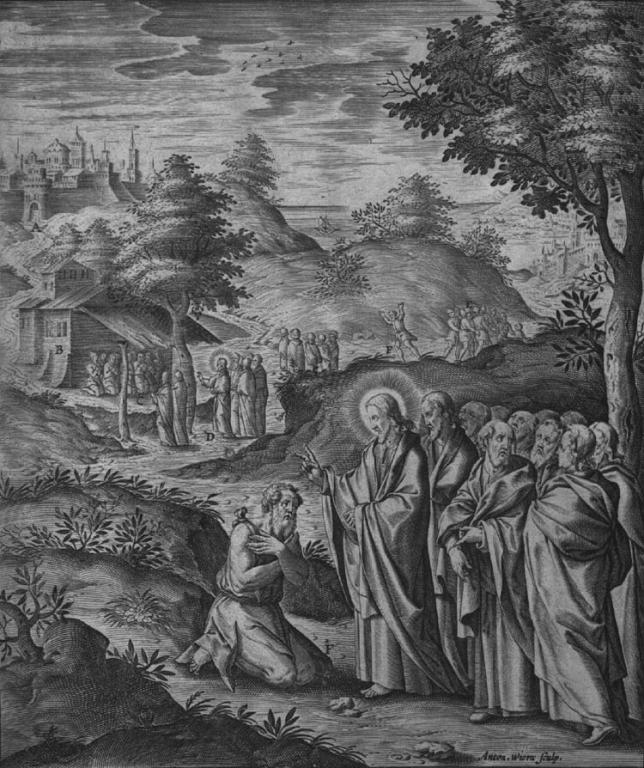 XLVII.—Gratitude. Luke, XVII., 11-19 (XIII. Sunday After Pentecost.)
It is our strict duty to be thankful to God and men for favors received, and not only to feel our gratitude, but to express it in word and deed. The gospel that I have just now read to you, reminds us of this duty, for in it Our Saviour complains bitterly of men’s ingratitude. Out of ten whom He cured that day only one went back to thank Him. And Jesus said: “Were not ten made clean? And where are the nine? There is not found to return and give glory to God, but this stranger.”
It was a very great miracle that those nine were thankless for. Leprosy is an incurable disease, at least the doctors can do nothing with it. Once it lays hold of its victim, beginning on the outside, and from the skin gradually rotting its way inwards through flesh and bone, the physicians can only order the sick man removed to a leper-hospital, where other will not catch the disease from him and where he may be made as comfortable as possible until death relieves him.
Hospitals are an invention of Christianity and are all directly or indirectly a result of Our Divine Saviour’s teachings. There were no hospitals in His time; and hence the poor lepers had to shift for themselves. They were forbidden to enter any town or village and were forced to live as best they could out in the waste and desert places. Sometimes they dwelt alone in these solitary regions, and sometimes they lived together in groups. They were forbidden to come near to any healthy person, and if one should approach them, it was their duty to shout and warn him. Because this disease was as contagious and incurable as it is now.
Yet Our Divine Lord could cure it, as He could do all things. He did cure it over and over again. And so on that day, when the ten lepers all grouped together stood afar off, not daring to come nearer, and shouted to Him: “Jesus, Master, have mercy on us!” He simply spoke to them, and they were healed.
Certainly they should have been extremely thankful, for the favor granted them was a very great one. One of them was thankful, and expressed his gratitude. “One of them when he saw that he was made clean,” the gospel tells us, “went back, and with a loud voice glorifying God,” and fell upon his face before Our Saviour’s blessed feet, “giving thanks, and this was a Samaritan.” And Jesus said: “Were not ten made clean? And where are the nine? There is no one found to return and give glory to God, but this stranger.”
Let us ask ourselves today: Can it be so bad as this with us? Is it possible that among us only one out of ten properly give thanks to God for His blessings and favors?
To be thankful to God, is a solemn duty for us. “Be ye filled with the Holy Ghost,” wrote St. Paul, “giving thanks always for all things in the Name of Our Lord Jesus Christ and to God the Father” (EPHES. V, 18-20). “In all things give thanks,” he wrote again, “for this is the will of God” (I THES. V, 18). And a thousand years before St. Paul had written his inspired epistles, the royal prophet said: “Know ye that the Lord, He is God: He made us and not we ourselves. We are the people and the sheep of His pasture. Go ye into His gates with praise, into His court with hymns: and be thankful to Him” (PS. XCIX, 3, 4).
God strictly requires this of us, that we should “be thankful to Him.” A considerable part of our prayer should be thanksgiving, especially at Mass and at Benediction of the Blessed Sacrament. And even during the ordinary work-days of our lives “My God, I thank Thee!” or “Thanks be to God!” should be a common phrase on our lips and a frequent thought in our hearts.
It is our duty to give thanks not only to God, but to men. We must show our thankfulness even to the stranger who does any little courtesy to us. Good manners and good breeding are founded almost as largely on gratitude, as on humility; for gratitude is a law of nature, which no one can break without being unnatural. An ungrateful friend is inhuman. An ungrateful child is a monster and a freak. “he that rendereth evil for good,” says Holy Scripture, “evil shall not depart from his house” (PROV. XVII, 13). And those who are thankless towards men, will likewise be ingrates towards God. “He that loveth not his brother, whom he seeth, how can he love God, Whom he seeth not?” (I John, IV, 20).
So let us learn this lesson of today’s gospel, or re-learn it if we have perhaps known and forgotten it, to be grateful to men but above all to be grateful to God. We know that He is kind even “to the unthankful and to the evil” (LUKE VI, 35). But He is still kinder to those who do not forget to give Him thanks. We lose many new blessings by beginning to be thankful for the old ones. How much more powerful our prayers would be and how many more favors would they draw down from heaven, if we had only been careful to fitly thank God for His favors already received!
During that solemn part of the Mass when the priest is reciting or singing the Preface, these are the words of thanksgiving which the Church is sending up to God by his mouth: “Truly meet it is, right and wholesome, for us always and everywhere to give thanks to Thee, Holy Lord, Almighty Father, Eternal God, through Christ Our Lord! Through Whom the angels praise Thy majesty, the dominions adore it, the powers tremble, the heavens and the virtues of the heavens, with the blessed seraphim, exultantly with one heart glorify It. With whom, we beseech Thee, bid our voices be admitted, while we say in suppliant confession: Holy, Holy, Holy Lord God of Sabaoth! Heaven and earth are full of Thy glory. Hosanna in the highest! Blessed is He that cometh in the Name of the Lord! Hosanna in the highest!”
“What shall I render to the Lord for all the things that He hath rendered unto me,” exclaimed King David (Ps. CXV, 3). We can at least render “thanks, the sweetest, kindest, readiest recompense.” We can say with Holy Tobias: “I bless Thee, O Lord God of Israel, because Thou hast chastised me and Thou hast saved me!” (TOBIAS, XI, 17). When we notice the many good things of our chequered lives, we can frequently ejaculate with our lips or in our hearts: “Blessed be God,” “Blessed be His Holy Name,” “My God, I thank Thee!”; and at the end of every make a short thanksgiving with the sign of the cross; and at Mass with our Holy Communion, at Benediction, and in our longer prayers, not only adore God and humble ourselves before Him, not only express our faith, hope, love and sorrow for sin, not only offer ourselves to Him with all we do and have and are, and make good resolutions, and beg favors for ourselves and others, but also thank Him for the favors and blessings He has already poured out upon us.
“Were not ten made clean? And where are the nine?,” said Our Divine Saviour. “There is no one found to return and give glory to God, but this stranger.”
May we never be thankless or heartless like those nine ingrates. But even as we so often thank friends or acquaintances or strangers here upon this earth for their little kindnesses to us, so over and over again let us raise our minds and hearts above this earth in a fervent “Thanks be to God!” May we thank Him while life lasts for the life which He has given; and thank Him when death comes, as the royal David did, for that very death, which is but the door or the stepping-stone to the vastly greater life that follows after it: “Turn, O soul, into thy rest, for the Lord hath been bountiful to thee! For He hath delivered my soul from death, my eyes from tears, my feet from falling. I will please the Lord in the land of the living” (PS., CXIV, 7-9).
Rev. Michael V. McDonough, One Year With God: Sixty Sermons and Meditations, For Pulpit and Pious Reading (Boston: Angel Guardian Press, 1915), 201-203.
Previous Post

June 22, 2013
The De La Salle Christian Brothers
Next Post
June 24, 2013 Brooklyn's Unfinished Cathedral, 1894
Browse Our Archives
Select a Category African-American Catholics Alabama Catholics American Catholic History American Catholic women American History Anniversaries Anti-Catholicism Arkansas Catholics Benedictines Bishops Blessed John Henry Newman Book Reviews Books Boston College Brooklyn churches Brothers California Catholics Capuchins Cardinals Carlo Carretto Carmelites Catholic authors Catholic Cemeteries Catholic Historians Catholic History in Less Than 5 Minutes Catholic musicians Catholic Poetry Catholic Press Catholic School Textbook Catholic University of America Catholic Worker Catholics and Music Catholics and Race Catholics in Politics Catholics in the American Revolution Catholics in the Military Catholics in the Movies Catholics in the South Catholics in the West Catholics on Stage Catjolic Women Catolic Poetry Charles de Foucauld Children's Masses Christian Brothers Christmas Church Reform Civil Rights Movement Civil War Colleges and universities Converts D.C. Catholics Deaf Catholics Dominicans. Dorothy Day English Catholics Florida Catholics Fordham University Franciscans French Catholics Georgetown University German Americans Good Shepherd Sisters Hispanic Catholics Historians and Archivists Holy Cross Fathers Holy Name Society Idaho Catholics Illinois Catholics Indian Wars Indiana Catholics Irish Americans Irish Catholicism Italian Americans Italian Catholics Jesuits Josephite Sisters Kentucky Catholics Know-Nothings Laetare Medal Recipients laity Liturgical Movement Maine Catholics Manhattan College Maryland Catholicism Michigan Catholics Middle Ages Minnesota Catholics Missionaries Mississippi Catholics Missouri Catholics Monasteries Montana Catholics Native Americans New England Catholicism New Jersey Catholics New York Catholics North American College Ohio Catholics Oratorians Oregon Catholics Parish Mission Parishes Passionists Pat McNamara's Books Paulists Pennsylvania Catholics Popes Presidents Priests Quotations Religious Orders Rhode Island Catholics Saints Salesians Seminarians Seminaries Sermons Servants of God Siisters of Charity Sisters of Mercy South Carolina Catholics Spanish-American War Sports St. Francis of Assiai St. John Henry Newman Suplicians Tennessee Catholics Texas Catholics The year in review Thomas Merton Throwback Thursday Photograph Trappists Uncategorized University of Notre Dame Video Presentations Vincentians Virginia Catholics Visitation Nuns Washington West Point West Virginia Catholics West Viriginia Catholics Wisconsin Catholicism Women Religious World War II
Select a Month December 2020 June 2020 May 2020 April 2020 March 2020 March 2019 February 2019 January 2019 December 2018 November 2018 November 2014 October 2014 September 2014 August 2014 July 2014 June 2014 May 2014 December 2013 November 2013 October 2013 August 2013 July 2013 June 2013 May 2013 April 2013 March 2013 February 2013 January 2013 December 2012 November 2012 October 2012 September 2012 August 2012 July 2012 June 2012 April 2012 March 2012 December 2011 November 2011 October 2011 September 2011 August 2011 July 2011 June 2011 May 2011 April 2011 March 2011 February 2011 January 2011 December 2010 November 2010 October 2010 January 2010 December 2009 November 2009 October 2009 September 2009 August 2009 July 2009 June 2009 May 2009 April 2009 March 2009 February 2009 January 2009 December 2008
Follow Us!
TAKE THE
Religious Wisdom Quiz
What famous prayer did Jesus teach His followers?
Select your answer to see how you score.
The Shema Psalm 23 The Lord’s Prayer The Prayer of Jabez
Related posts from McNamara's Blog
All Saints Day Homily, St. Paul the Apostle,...
Feast of Corpus Christi, a Sermon by Father...
Sermon for Children's Mass, Pentecost Sunday, 1900
TRENDING AT PATHEOS Catholic

The Parable Of The Sower And The Word...
One of Christ’s most famous parables is that of the sower who...

Rejecting Doom: Christian Hope And Human Action
Christianity is a religion of hope. We are to have hope and...

Why I Choose the Eucharist Over the Sermon
Choose the Eucharist, Not the Sermon What are we supposed to get...

5 Design Elements Found in Spiritually Rooted Homes
Putting Spirituality Into Home Decor Our homes are more than our living...

Credo: A Story of God Told with the...
About 10 years ago, I began to imagine a personal "Credo" that...

The Anatomy of Divine Revelation in Catholic Thought
The claim that God has made Himself known to human beings is...
view all Catholic blogs
Ad-Free & Subscriber Log-In Subscription Support
- About Us
- 2026 Calendar
- Videos
- Podcasts
- Library of World Religions
- Faith In Media Tracker
- Advertise With Us
- Write for Us
- Privacy Policy
- Terms of Service
- Do Not Sell My Data
- Contact Us
- Radiant Digital
- Manage Newsletter Subscriptions
- Unsubscribe From Notifications
- Sitemap
Copyright 2008-2026, Patheos. All rights reserved.
Subscription Support Ad-Free & Subscriber Log-In
Follow Patheos