
BuddhistCatholicContemplativeEvangelicalGeneral ChristianHinduJewishLatter-day SaintMuslimNew VisionsProgressive Christian
Beliefs
- Buddhist
- Catholic
- Contemplative
- Evangelical
- General Christian
- Hindu
- Jewish
- Latter-day Saint
- More Voices
- Muslim
- New Visions
- Pagan
- Progressive Christian
Topics
- Religion News
- Food and Religion
- Sports and Religion
- Religious Art
- Religious Music and Entertainment
- Religious Events
- History and Religion
- Style and Religion
- Politics and Religion
- Women in Religion
- Recreation Outdoors and Religion
- Business Finance and Religion
- Careers Workplace and Religion
- Education and Religion
- Family Parenting and Religion
- Health Fitness and Religion
- Home and Religion
- Relationships and Religion
- Technology and Religion
- Travel and Religion
Columnists
- Buddhist Columnists
- Business Finance and Religion Columnists
- Careers Workplace and Religion Columnists
- Catholic Columnists
- Contemplative Columnists
- Education and Religion Columnists
- Evangelists Columnists
- Family Parenting and Religion Columnists
- General Christian Columnists
- Health Fitness and Religion Columnists
- Hindu Columnists
- History and Religion Columnists
- Home and Religion Columnists
- Jewish Columnists
- More Voices Columnists
- Latter Day Columnists
- Muslim Columnists
- New Visions Columnists
- Nonreligious Columnists
- Pagan Columnists
- Politics and Religion Columnists
- Progressive Columnists
- Recreation Outdoors and Religion Columnists
- Relationships and Religion Columnists
- Religion News Columnists
- Religious Art Columnists
- Religious Events Columnists
- Religious Music and Entertainment Columnists
- Sports and Religion Columnists
- Style and Religion Columnists
- Technology and Religion Columnists
- Travel and Religion Columnists
- Women in Religion Columnists
Resource Library
- 2026 Calendar
- Library of World Religions
- The 100 Most Holy Places on Earth
- Patheos Answers
- Podcasts
- Videos
- Faith Leaders Database
- Anglican Episcopalian
- Bahai
- Baptist
- Buddhism
- Christianity
- Confucianism
- Eastern Orthodoxy
- Hinduism
- Holiness and Pentecostal
- ISKCON
- Islam
- Judaism
- Lutheran
- Methodist
- The Church of Jesus Christ of Latter-day Saints
- New Age
- Paganism
- Presbytarian and Reformed
- Protestantism
- Religion Behind the Scenes
- Roman Catholic
- Scientology
- Shia Islam
- Sikhism
- Sufism
- Sunni Islam
- Taoism
- Zen
- See all religions
Research Tools
 Ad-Free & Subscriber Log-In Subscription Support
Ad-Free & Subscriber Log-In Subscription Support
Follow Patheos 

- Trending:
- Forgiveness
- |
- Marriage
- |
- Consciousness
- |
- Death Penalty
- |
- Election
- |
- Halloween
 McNamara's Blog
- Home
- Catholic
- Former Episcopal Priest Discusses His Conversion to Catholicism, 1897
Former Episcopal Priest Discusses His Conversion to Catholicism, 1897
Last updated on: February 15, 2013 at 4:40 am by Pat McNamara
Former Episcopal Priest Discusses His Conversion to Catholicism, 1897 2013-02-15T04:40:24-07:00 Pat McNamara
Patheos Explore the world's faith through different perspectives on religion and spirituality! Patheos has the views of the prevalent religions and spiritualities of the world.
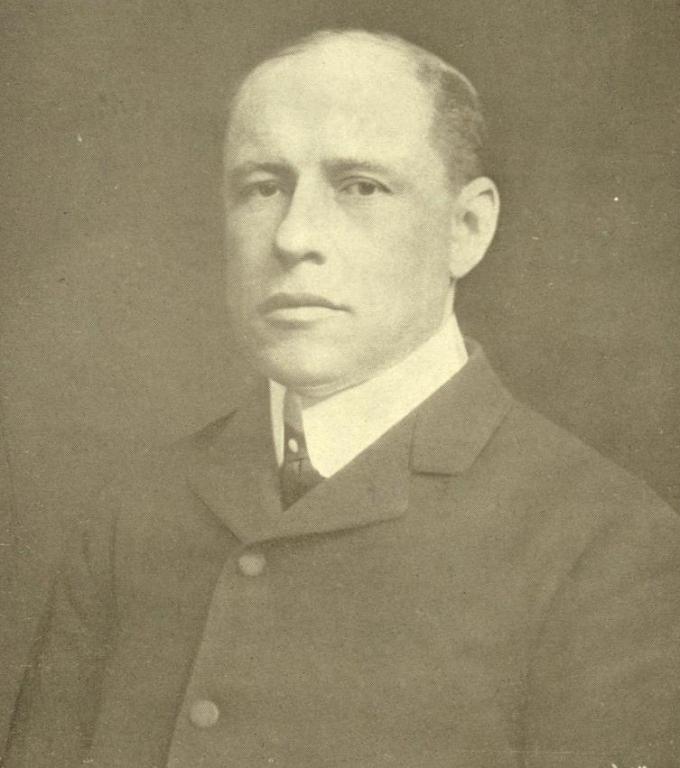 MR. ADAMS’ CONVERSION–
The ex-Epsicopalian Clergyman Tells How He was Led to Embrace Catholicism
(The Brooklyn Eagle, February 22, 1897, 2.)
Henry Austin Adams, M.A., told the story of his conversion to the Roman Catholic Church before a large audience in the Amphion theater last evening. The lecture was accompanied with a vocal and musical entertainment under the auspices of the United Societies of Sts. Peter and Paul Church, and was for the benefit of the parochial school attached to the church. The Rev, Dr. Sylvester Malone presided.
Mr. Adams began by referring to the fact that his mother was a Catholic, and that when three weeks old he was baptized at a Catholic font. He was the seventh son, and, according to the Spanish tradition would in any case have been intended for the Church. When, later in life, he returned to the Church, after having been separated from it, most of his friends, if they spoke to him at all, carefully avoided the subject of religion; a little later they were willing to allude to the change, and still later were even eager to draw him out on the subject.
The lecturer proceeded to say: “Although I had to sacrifice the interests of friendship, relatives and ambition, I have absolutely nothing to say in antagonism of or in criticism of any of our separated brethren. My mother died when I was a mere child and my father followed my mother before my teens, dying of a broken heart. I was sent as a boy to Baltimore, one of the greatest Catholic cities in the country, where I was brought up by two devout old women and distant relations of my father. They were Methodists. Although surrounded by Catholic institutions, home influences led me to look upon the priests as sneaking, dangerous sort of men bossed from Italy.”
It was afterward agreed that he should attend the Church of the Ascension, Baltimore, “a sound Protestant church with no ritualistic nonsense.” Sometime later he had casually visited St. Luke’s Episcopalian Church.
“This was a ritualistic church,” the lecturer proceeded to say. “The altar was filled with blazing lights, and when I entered I saw the ministering priests, felt the whiff of incense and heard the voices of vested children joining in the vespers. It was a Catholic church, although not Roman Catholic.”
Mr. Adams then proceeded to describe how he had discovered a gap between the high and the low church. At the age of 17 he was admitted to the seminary in New York, where he was graduated at 22, too soon for ordination. He then went to England.
“In England,” he continued, “everything was all right. I found a thoroughly organized and devoted clergy. But the moment I crossed the channel and stepped on the continent I found I had no religion at all. But four months afterward spent in the east end of London with Father Bennett served to strengthen me, and I came back for ordination, filled with enthusiasm for the Episcopalian Church. Success attended me from the start, and my first sermon was in the diocese of Massachusetts. It was a good old time Protestant parish. The pulpit was moth eaten. I had an altar placed in the church, with candles and crucifix, said mass in vestments and began teaching them their duty exactly as Father Malone has been teaching you these many years. I was not there a year. (Laughter.) I was then sent to Trinity Church, New York, under the leadership of the eminent rector of that famous parish. It was a metropolitan pulpit, with no special parochial duties. From Sunday to Sunday I spoke to the people of Trinity Church. My reading deepened with each visit to Oxford and the continent and I began to understand more truly the philosophy of history. As I learned the truths of the Catholic Church, and as they appealed to my conscience the troubles of the wretched years which followed began. If the Episcopal Church had been telling the truth for 300 years she had not been telling it for the 1,200 years which had preceded. Bishop Potter, the suave and amiable Bishop of New York, I found was willing to let you stand in your head if you avoided scandal. I found that if one of my parishioners left my church for another in New York he was taught something entirely different from what I taught. The Rev. Heber Newton said, ‘We shall rise to better things.’ Dr. Rainsford taught a materialistic, muscular Christianity, mingled with golf and the missions of the church, and so on. Finally, I felt that I was a little pope all by myself. Then the terrible question arose in my mind, ‘Have you been misleading the people for twelve long years?’ Then I told my trouble to the Rev. William Johnston of the Church of the Redeemer, New York, and it was arranged that I should become his curate and that he should become my rector. After six months he came to me and said: ‘If you continue this longer you will go crazy. Go away.’ In two weeks I was crossing the ocean. Sitting one night, soon after, in the coffee house of a little inn in the north, reading a Scottish paper, I came across a humorous little story. It described how a parson of the new and the old church were discussing their beliefs. They went at it tooth and nail, hour after hour, arguing and hair-splitting, and introducing the arguments on either side of “the knee kirk, the woe kirk, and the kirk without the steeple,” and the “old kirk, the cold kirk, and the kirk without the people.” They could arrive at no settlement of the dispute, and and finally resolved to leave the decision to the first man who came along. He was an Irishman, and and as he consented to the referee they both argued their sides of the case before him for two hours. When the time was up the Irishman said, ‘Well, your rivirance,” turning to the old light, “you are an old man,” and, turning to the other, ‘you are a new light. I have heard of moonlight, starlight, sunlight, lamplight, gaslight and thim new electric lights, fireflies, will o’ the wisp lights, but be jabbers between the two of you there seems to be no light at all.’
A few days later, the lecturer concluded, although he had never expressed his intention to his wife, he received a cablegram from her, stating: ‘The children and I were baptized into the Catholic Church yesterday.’ Shortly afterward, the Rev. Mr. Adams concluded, he was baptized by Cardinal Newman. The lecturer was repeatedly applauded.
When he had concluded Father Malone said that the lecture should in no respect be considered a challenge. If there was one trait more than another that was admired in America it was straightforwardness and the courage to express one’s convictions, and the lecturer had possessed that admirable trait, while he had spoken without giving to the many Protestants in the audience any cause for offense.
Previous Post

February 14, 2013
Nathaniel Hawthorne's Daughter Becomes Nun, 1899
Next Post
February 18, 2013 Did the Jesuits Assassinate Lincoln?
Browse Our Archives
Select a Category African-American Catholics Alabama Catholics American Catholic History American Catholic women American History Anniversaries Anti-Catholicism Arkansas Catholics Benedictines Bishops Blessed John Henry Newman Book Reviews Books Boston College Brooklyn churches Brothers California Catholics Capuchins Cardinals Carlo Carretto Carmelites Catholic authors Catholic Cemeteries Catholic Historians Catholic History in Less Than 5 Minutes Catholic musicians Catholic Poetry Catholic Press Catholic School Textbook Catholic University of America Catholic Worker Catholics and Music Catholics and Race Catholics in Politics Catholics in the American Revolution Catholics in the Military Catholics in the Movies Catholics in the South Catholics in the West Catholics on Stage Catjolic Women Catolic Poetry Charles de Foucauld Children's Masses Christian Brothers Christmas Church Reform Civil Rights Movement Civil War Colleges and universities Converts D.C. Catholics Deaf Catholics Dominicans. Dorothy Day English Catholics Florida Catholics Fordham University Franciscans French Catholics Georgetown University German Americans Good Shepherd Sisters Hispanic Catholics Historians and Archivists Holy Cross Fathers Holy Name Society Idaho Catholics Illinois Catholics Indian Wars Indiana Catholics Irish Americans Irish Catholicism Italian Americans Italian Catholics Jesuits Josephite Sisters Kentucky Catholics Know-Nothings Laetare Medal Recipients laity Liturgical Movement Maine Catholics Manhattan College Maryland Catholicism Michigan Catholics Middle Ages Minnesota Catholics Missionaries Mississippi Catholics Missouri Catholics Monasteries Montana Catholics Native Americans New England Catholicism New Jersey Catholics New York Catholics North American College Ohio Catholics Oratorians Oregon Catholics Parish Mission Parishes Passionists Pat McNamara's Books Paulists Pennsylvania Catholics Popes Presidents Priests Quotations Religious Orders Rhode Island Catholics Saints Salesians Seminarians Seminaries Sermons Servants of God Siisters of Charity Sisters of Mercy South Carolina Catholics Spanish-American War Sports St. Francis of Assiai St. John Henry Newman Suplicians Tennessee Catholics Texas Catholics The year in review Thomas Merton Throwback Thursday Photograph Trappists Uncategorized University of Notre Dame Video Presentations Vincentians Virginia Catholics Visitation Nuns Washington West Point West Virginia Catholics West Viriginia Catholics Wisconsin Catholicism Women Religious World War II
Select a Month December 2020 June 2020 May 2020 April 2020 March 2020 March 2019 February 2019 January 2019 December 2018 November 2018 November 2014 October 2014 September 2014 August 2014 July 2014 June 2014 May 2014 December 2013 November 2013 October 2013 August 2013 July 2013 June 2013 May 2013 April 2013 March 2013 February 2013 January 2013 December 2012 November 2012 October 2012 September 2012 August 2012 July 2012 June 2012 April 2012 March 2012 December 2011 November 2011 October 2011 September 2011 August 2011 July 2011 June 2011 May 2011 April 2011 March 2011 February 2011 January 2011 December 2010 November 2010 October 2010 January 2010 December 2009 November 2009 October 2009 September 2009 August 2009 July 2009 June 2009 May 2009 April 2009 March 2009 February 2009 January 2009 December 2008
Follow Us!
TAKE THE
Religious Wisdom Quiz
How did God stop the people from building the Tower of Babel?
Select your answer to see how you score.
Sent a flood Destroyed the tower with fire Confused their language Struck them with blindness
Related posts from McNamara's Blog

St. John Henry Newman and the “Special Charm...
John Wayne and the Catholic Church
McNamara's Catholic Poets: Monsignor Robert Hugh Benson
TRENDING AT PATHEOS Catholic

Rejecting Doom: Christian Hope And Human Action
Christianity is a religion of hope. We are to have hope and...

It’s What Comes From Within Which Matters
One of the most difficult things for us to understand is why...

Why I Choose the Eucharist Over the Sermon
Choose the Eucharist, Not the Sermon What are we supposed to get...

5 Design Elements Found in Spiritually Rooted Homes
Putting Spirituality Into Home Decor Our homes are more than our living...

Credo: A Story of God Told with the...
About 10 years ago, I began to imagine a personal "Credo" that...

The Anatomy of Divine Revelation in Catholic Thought
The claim that God has made Himself known to human beings is...
view all Catholic blogs
Ad-Free & Subscriber Log-In Subscription Support
- About Us
- 2026 Calendar
- Videos
- Podcasts
- Library of World Religions
- Faith In Media Tracker
- Advertise With Us
- Write for Us
- Privacy Policy
- Terms of Service
- Do Not Sell My Data
- Contact Us
- Radiant Digital
- Manage Newsletter Subscriptions
- Unsubscribe From Notifications
- Sitemap
Copyright 2008-2026, Patheos. All rights reserved.
Subscription Support Ad-Free & Subscriber Log-In
Follow Patheos