
BuddhistCatholicContemplativeEvangelicalGeneral ChristianHinduJewishLatter-day SaintMuslimNew VisionsProgressive Christian
Beliefs
- Buddhist
- Catholic
- Contemplative
- Evangelical
- General Christian
- Hindu
- Jewish
- Latter-day Saint
- More Voices
- Muslim
- New Visions
- Pagan
- Progressive Christian
Topics
- Religion News
- Food and Religion
- Sports and Religion
- Religious Art
- Religious Music and Entertainment
- Religious Events
- History and Religion
- Style and Religion
- Politics and Religion
- Women in Religion
- Recreation Outdoors and Religion
- Business Finance and Religion
- Careers Workplace and Religion
- Education and Religion
- Family Parenting and Religion
- Health Fitness and Religion
- Home and Religion
- Relationships and Religion
- Technology and Religion
- Travel and Religion
Columnists
- Buddhist Columnists
- Business Finance and Religion Columnists
- Careers Workplace and Religion Columnists
- Catholic Columnists
- Contemplative Columnists
- Education and Religion Columnists
- Evangelists Columnists
- Family Parenting and Religion Columnists
- General Christian Columnists
- Health Fitness and Religion Columnists
- Hindu Columnists
- History and Religion Columnists
- Home and Religion Columnists
- Jewish Columnists
- More Voices Columnists
- Latter Day Columnists
- Muslim Columnists
- New Visions Columnists
- Nonreligious Columnists
- Pagan Columnists
- Politics and Religion Columnists
- Progressive Columnists
- Recreation Outdoors and Religion Columnists
- Relationships and Religion Columnists
- Religion News Columnists
- Religious Art Columnists
- Religious Events Columnists
- Religious Music and Entertainment Columnists
- Sports and Religion Columnists
- Style and Religion Columnists
- Technology and Religion Columnists
- Travel and Religion Columnists
- Women in Religion Columnists
Resource Library
- 2026 Calendar
- Library of World Religions
- The 100 Most Holy Places on Earth
- Patheos Answers
- Podcasts
- Videos
- Faith Leaders Database
- Anglican Episcopalian
- Bahai
- Baptist
- Buddhism
- Christianity
- Confucianism
- Eastern Orthodoxy
- Hinduism
- Holiness and Pentecostal
- ISKCON
- Islam
- Judaism
- Lutheran
- Methodist
- The Church of Jesus Christ of Latter-day Saints
- New Age
- Paganism
- Presbytarian and Reformed
- Protestantism
- Religion Behind the Scenes
- Roman Catholic
- Scientology
- Shia Islam
- Sikhism
- Sufism
- Sunni Islam
- Taoism
- Zen
- See all religions
Research Tools
 Ad-Free & Subscriber Log-In Subscription Support
Ad-Free & Subscriber Log-In Subscription Support
Follow Patheos 

- Trending:
- Forgiveness
- |
- Marriage
- |
- Consciousness
- |
- Death Penalty
- |
- Election
- |
- Halloween
 McNamara's Blog
- Home
- Catholic
- Our Lady of Perpetual Help, Boston (1871)
Our Lady of Perpetual Help, Boston (1871)
Last updated on: August 1, 2012 at 6:21 am by Pat McNamara
Our Lady of Perpetual Help, Boston (1871) 2012-08-01T06:21:10-06:00 Pat McNamara
Patheos Explore the world's faith through different perspectives on religion and spirituality! Patheos has the views of the prevalent religions and spiritualities of the world.
 Parish of Our Lady of Perpetual Help, Commonly Called “The Mission Church”
Under the charge of the Redemptorist Fathers, or Priests of the Congregation of the Most Holy Redeemer, this church was organized. They are a religious order, founded in 1732 by St. Alphonsus de Liguori, Bishop of St. Agatha, in the Kingdom of Naples, Italy. The object of the order is, principally, to give missions and similar religious exercises in which work they have been engaged in this country for over sixty years.
Right Rev. James A. Healy, Bishop of Portland, when Pastor of St. James’s Church in Boston, recognized the vast amount of good that was being done by these Fathers and induced them to establish a house in the vicinity, the nearest house then being in New York City. According to his wishes, Very Rev. Joseph Helmpraecht, the Provincial Superior of the Redemptorists, purchased the present property on Tremont Street, Roxbury, known then as the Franklin Gardens.
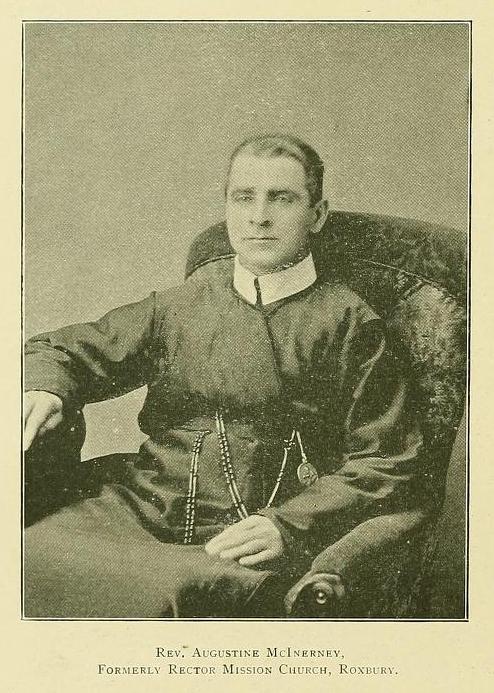 The church was dedicated to Our Blessed Lady of Perpetual Help and was blessed by the first superior, Rev. Joseph Wissel, on January 29, 1871. The small bell summoned not only the neighboring Catholics, but people from all over the city and neighboring towns flocked to this church, where the sermons of powerful speakers and veteran missionaries packed the edifice. So great and eager were the crowds that came to hear the word of God that they were satisfied to sit in groups before the doors and windows rather than return home disappointed when they could not get into the church. For seven years the people worshipped in this humble church, during which time they became very much attached to it. Although it was not a parish church, but a mission church, where the Fathers preached and administered the sacraments of penance and communion only to those who frequented it, indiscriminately, wherever they came from, and from which church the Fathers went forth to preach missions in other places, the faithful, nevertheless, clung to it and seemed to think that it was sufficient to supply all their spiritual wants.
The crowds constantly proved the inadequateness of the frame church to answer to the demands of the faithful, which induced the Fathers to take steps toward erecting a larger church that would be sufficiently large to accommodate the faithful at all times as well as to be a monument to their zeal and fervor. The corner-stone was laid on May 28, 1876, by His Grace Archbishop Williams. The sermon was preached by the Right Rev. Bishop Healy, of Portland, Maine. An event which makes the day still more memorable was the burning of the convent of the Fathers during the following night. As no clue to the cause of the fire could be learned, the popular feeling has pointed ever since to incendiarism. The dedication of the present church took place on April 8, 1878. Rev. James Fitton, one of Boston’s pioneer priests, and author of Sketches of the Church in New England, preached a most eloquent sermon.
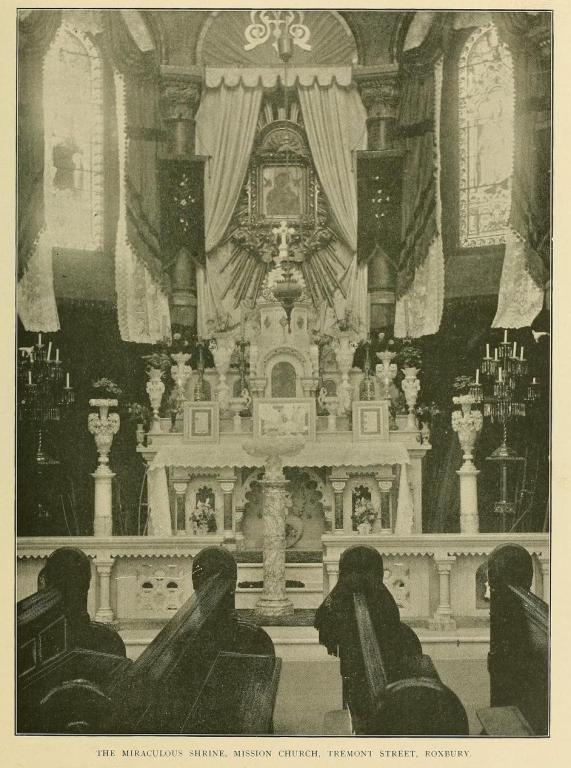 One of the principal attractions of the Mission Church is the noted Shrine of Our Lady of Perpetual Help, to whom the church is dedicated. This shrine is remarkable for the miraculous character of the image of Our Blessed Lady venerated there, and the frequent miracles and favors obtained there. The picture is a copy of the original miraculous image which was venerated in the Island of Crete, hundreds of years ago, and was finally placed in the Church of the Redemptorist Fathers, in Rome, by the late Pope Pius the IX. Wherever the Redemptorists have a church or a chapel a copy of this picture will be seen over some altar especially dedicated to it.
Many are the favors granted to those honoring this fond image of the Blessed Mother, so that it has become more or less familiar now to most Catholics. Few seem to be the sanctuaries, however, that have met with more favor at the hands of the Mother of God, than this one of Our Lady at the Mission Church. Great was the devotion of the people to it from the very beginning, when the present picture was placed over the altar in the old framed church. Since it has been removed to the present beautiful shrine, miracles of an astounding character have contributed to its fame and prestige. Fresh in the minds of the people is still the miraculous cure of Miss Grace Hanley, now Sister Mary of Perpetual Help of the Sisters of Jesus and Mary, daughter of Col. Patrick Hanley. She had been a cripple from her fourth year, on account of an accident that occurred to her. At the age of sixteen, after finishing a novena to Our Blessed Lady for her cure, and when approaching the altar with the aid of crutches and the assistance of her relatives, she suddenly cast her crutches aside and walked to the altar perfectly cured. She is at present teaching in a convent at Claremont, N.H.
When the district surrounding the church had become thickly populated, whereas the people could not receive all the mecessary spiritual assistance from the Mission Church, as it was not a parish church, His Grace, Archbishop Williams, recognizing the need of such a church in the vicinity, proposed to the Fathers the erection of their church into a regular canonical parish. The proposition was received with favor by the Fathers, who on April 8, 1883, announced to the people the limits of the parish and forthwith took their entire spiritual care into their hands.
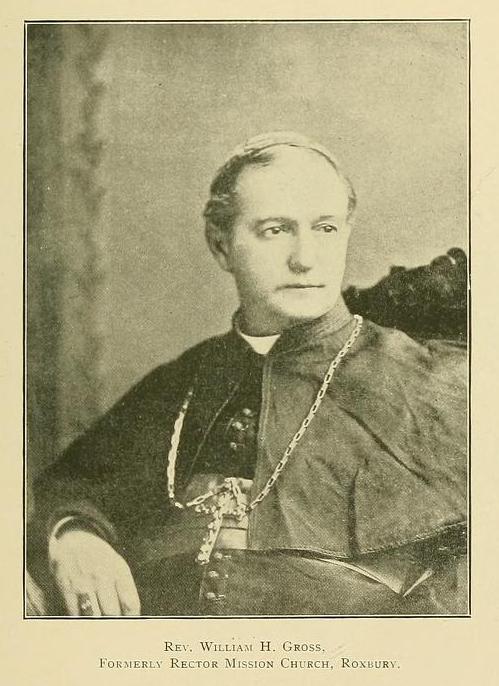 The school’s corner-stone was laid April 8, 1888, by His Grace, Archbishop Williams. There are at present 1,250 children in the school. The teachers, to the number of twenty, are the School Sisters of Notre Dame, taken from the two provinces of the order, Baltimore and Milwaukee. The following organizations are connected with the parish: the Arch-Confraternity of the Holy Family, with four branches for both married and single women and men, numbering over 2,000 members; the Conference of St. Vincent De Paul, for the care of the poor of the parish; the Sacred Heart League, embracing about 5,000 members; the Junior Holy Family, for the boys and girls of the parish, having upwards of 700 members; the Young Men’s Mission Church Association; the Young Ladies’ Charitable Society, and the Catholic Educational Society of Our Lady of Perpetual Help.The growth of the parish has been almost phenomenal. From a few souls who lived in the neighborhood of the church at the date of its inception it had grown to number, in 1890, 9,300 souls.
One Hundred Years of Progress: A Graphic, Historical, and Pictorial Account of the Catholic Church of New England, Archdiocese of Boston (Boston: Illustrated Publishing Company, 1895), 155-164.
NOTE: The above has been edited in the interest of blogging brevity.
Previous Post

July 31, 2012
"You Jesuits Are Everywhere"
Next Post
August 3, 2012 "The Happiness of Being a Catholic"
Browse Our Archives
Select a Category African-American Catholics Alabama Catholics American Catholic History American Catholic women American History Anniversaries Anti-Catholicism Arkansas Catholics Benedictines Bishops Blessed John Henry Newman Book Reviews Books Boston College Brooklyn churches Brothers California Catholics Capuchins Cardinals Carlo Carretto Carmelites Catholic authors Catholic Cemeteries Catholic Historians Catholic History in Less Than 5 Minutes Catholic musicians Catholic Poetry Catholic Press Catholic School Textbook Catholic University of America Catholic Worker Catholics and Music Catholics and Race Catholics in Politics Catholics in the American Revolution Catholics in the Military Catholics in the Movies Catholics in the South Catholics in the West Catholics on Stage Catjolic Women Catolic Poetry Charles de Foucauld Children's Masses Christian Brothers Christmas Church Reform Civil Rights Movement Civil War Colleges and universities Converts D.C. Catholics Deaf Catholics Dominicans. Dorothy Day English Catholics Florida Catholics Fordham University Franciscans French Catholics Georgetown University German Americans Good Shepherd Sisters Hispanic Catholics Historians and Archivists Holy Cross Fathers Holy Name Society Idaho Catholics Illinois Catholics Indian Wars Indiana Catholics Irish Americans Irish Catholicism Italian Americans Italian Catholics Jesuits Josephite Sisters Kentucky Catholics Know-Nothings Laetare Medal Recipients laity Liturgical Movement Maine Catholics Manhattan College Maryland Catholicism Michigan Catholics Middle Ages Minnesota Catholics Missionaries Mississippi Catholics Missouri Catholics Monasteries Montana Catholics Native Americans New England Catholicism New Jersey Catholics New York Catholics North American College Ohio Catholics Oratorians Oregon Catholics Parish Mission Parishes Passionists Pat McNamara's Books Paulists Pennsylvania Catholics Popes Presidents Priests Quotations Religious Orders Rhode Island Catholics Saints Salesians Seminarians Seminaries Sermons Servants of God Siisters of Charity Sisters of Mercy South Carolina Catholics Spanish-American War Sports St. Francis of Assiai St. John Henry Newman Suplicians Tennessee Catholics Texas Catholics The year in review Thomas Merton Throwback Thursday Photograph Trappists Uncategorized University of Notre Dame Video Presentations Vincentians Virginia Catholics Visitation Nuns Washington West Point West Virginia Catholics West Viriginia Catholics Wisconsin Catholicism Women Religious World War II
Select a Month December 2020 June 2020 May 2020 April 2020 March 2020 March 2019 February 2019 January 2019 December 2018 November 2018 November 2014 October 2014 September 2014 August 2014 July 2014 June 2014 May 2014 December 2013 November 2013 October 2013 August 2013 July 2013 June 2013 May 2013 April 2013 March 2013 February 2013 January 2013 December 2012 November 2012 October 2012 September 2012 August 2012 July 2012 June 2012 April 2012 March 2012 December 2011 November 2011 October 2011 September 2011 August 2011 July 2011 June 2011 May 2011 April 2011 March 2011 February 2011 January 2011 December 2010 November 2010 October 2010 January 2010 December 2009 November 2009 October 2009 September 2009 August 2009 July 2009 June 2009 May 2009 April 2009 March 2009 February 2009 January 2009 December 2008
Follow Us!
TAKE THE
Religious Wisdom Quiz
Which book of the Bible has the longest chapter?
Select your answer to see how you score.
Isaiah Genesis Psalms Jeremiah
Related posts from McNamara's Blog
Father Anthony Ciampi, S.J. (1816-1893)

St. John Henry Newman and the “Special Charm...

American Catholics and Race in 2020: A Church...

“It’s About Time They Got Here”: Catholics and the...
TRENDING AT PATHEOS Catholic

The Parable Of The Sower And The Word...
One of Christ’s most famous parables is that of the sower who...

Rejecting Doom: Christian Hope And Human Action
Christianity is a religion of hope. We are to have hope and...

Why I Choose the Eucharist Over the Sermon
Choose the Eucharist, Not the Sermon What are we supposed to get...

5 Design Elements Found in Spiritually Rooted Homes
Putting Spirituality Into Home Decor Our homes are more than our living...

Credo: A Story of God Told with the...
About 10 years ago, I began to imagine a personal "Credo" that...

The Anatomy of Divine Revelation in Catholic Thought
The claim that God has made Himself known to human beings is...
view all Catholic blogs
Ad-Free & Subscriber Log-In Subscription Support
- About Us
- 2026 Calendar
- Videos
- Podcasts
- Library of World Religions
- Faith In Media Tracker
- Advertise With Us
- Write for Us
- Privacy Policy
- Terms of Service
- Do Not Sell My Data
- Contact Us
- Radiant Digital
- Manage Newsletter Subscriptions
- Unsubscribe From Notifications
- Sitemap
Copyright 2008-2026, Patheos. All rights reserved.
Subscription Support Ad-Free & Subscriber Log-In
Follow Patheos