
BuddhistCatholicContemplativeEvangelicalGeneral ChristianHinduJewishLatter-day SaintMuslimNew VisionsProgressive Christian
Beliefs
- Buddhist
- Catholic
- Contemplative
- Evangelical
- General Christian
- Hindu
- Jewish
- Latter-day Saint
- More Voices
- Muslim
- New Visions
- Pagan
- Progressive Christian
Topics
- Religion News
- Food and Religion
- Sports and Religion
- Religious Art
- Religious Music and Entertainment
- Religious Events
- History and Religion
- Style and Religion
- Politics and Religion
- Women in Religion
- Recreation Outdoors and Religion
- Business Finance and Religion
- Careers Workplace and Religion
- Education and Religion
- Family Parenting and Religion
- Health Fitness and Religion
- Home and Religion
- Relationships and Religion
- Technology and Religion
- Travel and Religion
Columnists
- Buddhist Columnists
- Business Finance and Religion Columnists
- Careers Workplace and Religion Columnists
- Catholic Columnists
- Contemplative Columnists
- Education and Religion Columnists
- Evangelists Columnists
- Family Parenting and Religion Columnists
- General Christian Columnists
- Health Fitness and Religion Columnists
- Hindu Columnists
- History and Religion Columnists
- Home and Religion Columnists
- Jewish Columnists
- More Voices Columnists
- Latter Day Columnists
- Muslim Columnists
- New Visions Columnists
- Nonreligious Columnists
- Pagan Columnists
- Politics and Religion Columnists
- Progressive Columnists
- Recreation Outdoors and Religion Columnists
- Relationships and Religion Columnists
- Religion News Columnists
- Religious Art Columnists
- Religious Events Columnists
- Religious Music and Entertainment Columnists
- Sports and Religion Columnists
- Style and Religion Columnists
- Technology and Religion Columnists
- Travel and Religion Columnists
- Women in Religion Columnists
Resource Library
- 2026 Calendar
- Library of World Religions
- The 100 Most Holy Places on Earth
- Patheos Answers
- Podcasts
- Videos
- Faith Leaders Database
- Anglican Episcopalian
- Bahai
- Baptist
- Buddhism
- Christianity
- Confucianism
- Eastern Orthodoxy
- Hinduism
- Holiness and Pentecostal
- ISKCON
- Islam
- Judaism
- Lutheran
- Methodist
- The Church of Jesus Christ of Latter-day Saints
- New Age
- Paganism
- Presbytarian and Reformed
- Protestantism
- Religion Behind the Scenes
- Roman Catholic
- Scientology
- Shia Islam
- Sikhism
- Sufism
- Sunni Islam
- Taoism
- Zen
- See all religions
Research Tools
 Ad-Free & Subscriber Log-In Subscription Support
Ad-Free & Subscriber Log-In Subscription Support
Follow Patheos 

- Trending:
- Forgiveness
- |
- Marriage
- |
- Consciousness
- |
- Death Penalty
- |
- Election
- |
- Halloween
 McNamara's Blog
- Home
- Catholic
- Sermon at a Children’s Mass, 1900
Sermon at a Children’s Mass, 1900
Last updated on: January 9, 2011 at 6:51 am by Pat McNamara
Sermon at a Children’s Mass, 1900 2011-01-09T06:51:00-07:00 Pat McNamara
Patheos Explore the world's faith through different perspectives on religion and spirituality! Patheos has the views of the prevalent religions and spiritualities of the world.
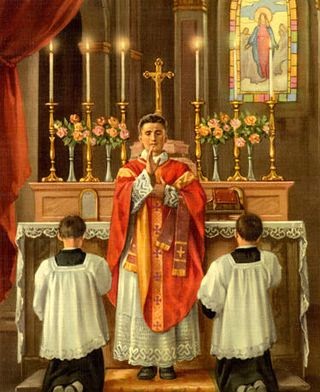
FIRST SUNDAY AFTER EPIPHANY
Gospel. Luke ii. 42-52
THE FINDING IN THE TEMPLE
This day’s Gospel is especially adapted for children, who can draw from it, even in their humble way of thinking, many useful lessons. When Jesus was twelve years old, having come to the use of reason according to human judgment, He went to Jerusalem with His parents. Mary thought that Jesus was with Joseph, and Joseph thought He was with Mary, so, not at all uneasy, they journeyed homeward. When they came together, it became evident that the Child Jesus was lost or left in Jerusalem. Realize, if you can, the dreadful anguish of the heart of Mary at that time. To feel with her on this occasion, we should keep before our minds the tender love she bore Jesus.
My dear children, have you ever lost Jesus? Who knows how often? How many times have you ignominiously put Him out of your hearts by sin? You have brought the devil in with great pomp, and placed the demon on the throne which God should occupy. Mary and Joseph lost Our Lord Jesus without their fault; you lost Him because you made up your minds you would no longer keep company with Jesus. And when you had put away this beloved Jesus did you feel the loss? I know that young people who for the first time have lost Jesus by sin really feel that they have committed a horrible crime.
They are tormented in mind, and troubled within themselves, fearing, indeed, that the house may tumble over their heads and crush them, or that the earth may open and swallow them. They can find no rest, until they have recourse to confession and have driven out the devil and reinstated Our Lord. But there are many youths, on the contrary, who do not feel the sting of conscience, or are surprised if they do; who never consider their horrible condition, and remain in it for months and years. Jesus is always near them, even when sent away, and looks to get back into the soul. His voice is not silent. He tells the poor sinner to open his heart, that He wants to enter there.
But many have made a compact with the devil; they have sworn fealty to him and him they wish to serve and no other, because he gives them so many opportunities of gratifying their passions. These souls think they may let Jesus stand beside them, unnoticed, until the end of their lives and that then they will be converted. But they will not find Him then, because they have abused the grace of God. If any of you have lost Our Lord, lose no time in finding Him at once. And you, my good young people, who have kept Our Lord in your hearts, O, keep Him there with tenderness and love, as your greatest treasure; beg of Him most sincerely to keep you near Him.
Cultivate in your souls the virtues of humility, obedience, purity, patience, mortification, and charity, that Jesus, charmed by these precious virtues, may remain with you always. My dear young people, if your parents were to look for you during the day or night, would they find you in church or in good company, passing the time in pious conversation? Or would they find you with bad company, engagedi in bad conversation, drinking, cursing, blaspheming, perhaps?
As soon as Mary saw Jesus she said to Him, “Son, why hast Thou done so to us? Behold. Thy father and I have sought Thee sorrowing.” Our Lord answered her: “How is it that you sought Me? Did you not know that I must be about My Father’s business?” This answer has a very deep meaning. Jesus was the Son of Mary and had come into the world to work for the honor of God His Father, and to do great things for His service.
The Child Jesus gives us a great example; He teaches us a great lesson: how we should act toward our parents. We must rather obey God than them, when there is question of the glory and honor of God. You must not be afraid to go to your parents, and lay before them the will of God as you understand it. Sometimes parents are very worldly, and enemies of God’s glory in regard to their children; they have views of the future for them which are not at all of God, and consequently should not be followed.
There are parents who would rather see their children miserably unhappy for life than to see them become religious dedicated to the service of God. For example, if any of you my dear young people, feel that God calls you, that you are fitted for the religious life, that you have patience and fortitude to persevere, then follow the call from God. Many young men who have served the altar from early youth have felt that they had a vocation to consecrate themselves to God; but they resisted, remained in the world, fell into sin, and were lost to their faith. Some young women who have the vocation, instead of leaving the paternal roof and going into a convent, marry and live unhappily to the end of their days.
Had these young people consecrated themselves to God they would have done much for the glory of God, they would have been glorious instruments in promoting the interests of the Church.
St. Stanislaus Kostka considered it one of the greatest faults of his life, that, having felt for certain the call of God in his heart to leave the world, he waited for six months, at the risk of abusing the Lord’s friendship and the inestimable grace of the divine vocation.
Beg of God with heartfelt sincerity to let you know His holy will; pray to Mary, your angel guardian, and the saints of paradise, that they may intercede with the Holy Ghost for you, so that you may know your duty. Take counsel with your confessor, do not act foolishly, but when you are once certain of what you should do, cut off all ties, howsoever tender they be, and whatever else might place obstacles in the way. Turn a deaf ear to the devil, the world, and the flesh; be prompt as was the boy Samuel, who when God called him, jumped from bed several times, saying, “Here I am, Lord; you have called me.”
Jesus returned with Mary and Joseph to Nazareth, to the humble station that He held. The Gospel tells us in very short words what was His principal occupation during these years of His boyhood and youth; He obeyed His parents. Children, headstrong, willful, and independent, learn from Jesus obedience to your parents. Do not cause them to weep over your bad lives, bringing their gray hairs in sorrow to the grave. Honor your parents, love them with a tender and true love, be their delight, and you will have such a reward from God as will astonish you.
But let us make our reflections. Do our youths grow in piety, devotion, wisdom, and love of God as they advance in years? While children they are good and lovable, but as they reach the years of manhood or womanhood what becomes of their innocence, their obedience, their loveliness? They have made themselves the slaves of the devil; the devil does not practice such virtues and neither do they.
What has become of your devotion? You used to say your beads, and pray morning and night, and had devotion to the Blessed Virgin. Do you still pray to her, or do you not consider this, as well as all other devotions, foolish practices? You had a very tender conscience as a child; the least sin would give you concern, you had much to confess; now it seems that sin does not disturb you, you are as gay after a great sin as if nothing had happened; you do not feel the qualms of conscience, you never go to confession any more. Why do you not act as formerly?
The fact is, you have already partially lost your faith, and be assured it will not be long before you will have lost it altogether. Such then is the wickedness of your life. In a few years you will be hardened in sin, you will be worse than the Turks or the pagans. How many such youths are there? Who would believe it unless they had seen it with their own eyes? What a feeling of disappointment it is to all religious educators, when they see all their efforts wasted.
You young people, who are still good, pray for them that Our Lord may convert them and bring them back to a sense of their duty. Recommend to Our Lord those who were your companions in doing good, but now, by their bad example, would make you, too, unfaithful to God. St. Celarinus had a sister who had yielded to the fury of the persecution, and offered sacrifice to the idols. When he heard of this miserable fear, he clothed himself in sackcloth and fasted severely; even on Easter days he did not cease praying to God that the grace of conversion might be granted her, and he resolved to do this penance until he saw her again reconciled to the Church. St. Dominic prayed whole nights for the conversion of sinners and did penances for them. St. Francis Xavier was so zealous for the conversion of sinners that he went about the city of Molacca ringing a bell and crying out in a loud voice, that all should pray for those in mortal sin.
Do you also pray for those companions of your own age who once were brothers and sisters of Our Lord, but now are slaves of Satan? Who at one time went with you to the banquet of the immaculate Lamb, but now live in union with the devil? As for ourselves, stand firm in your faith, be vigilant that you may not fall into the sins of the wicked, grow in grace, in purity, in virtue, in wisdom, in the love of God, and you shall be dear to Our Lord, dear to all mankind, and it will be said of you as it was said of Jesus: “He grew in wisdom, in age, and in grace before God and men.”
Rev. Raphael Frasinetti, Sermons for Children’s Masses, According to the Sundays and Principal Festivals of the Year, With Advice to the Young on the Last Day of the Scholastic Year, and After a Retreat (New York: Benziger Brothers, 1900).
Note: Some of the text’s “verbosity” has been edited to fit the dimensions of a blog entry. Please be assured that nothing substantial (or interesting) has been omitted.
Previous Post

January 9, 2011
Catholic Poetry
Next Post
January 10, 2011 Quote of the Day
Browse Our Archives
Select a Category African-American Catholics Alabama Catholics American Catholic History American Catholic women American History Anniversaries Anti-Catholicism Arkansas Catholics Benedictines Bishops Blessed John Henry Newman Book Reviews Books Boston College Brooklyn churches Brothers California Catholics Capuchins Cardinals Carlo Carretto Carmelites Catholic authors Catholic Cemeteries Catholic Historians Catholic History in Less Than 5 Minutes Catholic musicians Catholic Poetry Catholic Press Catholic School Textbook Catholic University of America Catholic Worker Catholics and Music Catholics and Race Catholics in Politics Catholics in the American Revolution Catholics in the Military Catholics in the Movies Catholics in the South Catholics in the West Catholics on Stage Catjolic Women Catolic Poetry Charles de Foucauld Children's Masses Christian Brothers Christmas Church Reform Civil Rights Movement Civil War Colleges and universities Converts D.C. Catholics Deaf Catholics Dominicans. Dorothy Day English Catholics Florida Catholics Fordham University Franciscans French Catholics Georgetown University German Americans Good Shepherd Sisters Hispanic Catholics Historians and Archivists Holy Cross Fathers Holy Name Society Idaho Catholics Illinois Catholics Indian Wars Indiana Catholics Irish Americans Irish Catholicism Italian Americans Italian Catholics Jesuits Josephite Sisters Kentucky Catholics Know-Nothings Laetare Medal Recipients laity Liturgical Movement Maine Catholics Manhattan College Maryland Catholicism Michigan Catholics Middle Ages Minnesota Catholics Missionaries Mississippi Catholics Missouri Catholics Monasteries Montana Catholics Native Americans New England Catholicism New Jersey Catholics New York Catholics North American College Ohio Catholics Oratorians Oregon Catholics Parish Mission Parishes Passionists Pat McNamara's Books Paulists Pennsylvania Catholics Popes Presidents Priests Quotations Religious Orders Rhode Island Catholics Saints Salesians Seminarians Seminaries Sermons Servants of God Siisters of Charity Sisters of Mercy South Carolina Catholics Spanish-American War Sports St. Francis of Assiai St. John Henry Newman Suplicians Tennessee Catholics Texas Catholics The year in review Thomas Merton Throwback Thursday Photograph Trappists Uncategorized University of Notre Dame Video Presentations Vincentians Virginia Catholics Visitation Nuns Washington West Point West Virginia Catholics West Viriginia Catholics Wisconsin Catholicism Women Religious World War II
Select a Month December 2020 June 2020 May 2020 April 2020 March 2020 March 2019 February 2019 January 2019 December 2018 November 2018 November 2014 October 2014 September 2014 August 2014 July 2014 June 2014 May 2014 December 2013 November 2013 October 2013 August 2013 July 2013 June 2013 May 2013 April 2013 March 2013 February 2013 January 2013 December 2012 November 2012 October 2012 September 2012 August 2012 July 2012 June 2012 April 2012 March 2012 December 2011 November 2011 October 2011 September 2011 August 2011 July 2011 June 2011 May 2011 April 2011 March 2011 February 2011 January 2011 December 2010 November 2010 October 2010 January 2010 December 2009 November 2009 October 2009 September 2009 August 2009 July 2009 June 2009 May 2009 April 2009 March 2009 February 2009 January 2009 December 2008
Follow Us!
TAKE THE
Religious Wisdom Quiz
What famous prayer did Jesus teach His followers?
Select your answer to see how you score.
The Shema Psalm 23 The Lord’s Prayer The Prayer of Jabez
Related posts from McNamara's Blog

St. John Henry Newman and the “Special Charm...

American Catholics and Race in 2020: A Church...

“It’s About Time They Got Here”: Catholics and the...

The Struggle for an African American Priesthood
TRENDING AT PATHEOS Catholic

The Parable Of The Sower And The Word...
One of Christ’s most famous parables is that of the sower who...

Rejecting Doom: Christian Hope And Human Action
Christianity is a religion of hope. We are to have hope and...

Why I Choose the Eucharist Over the Sermon
Choose the Eucharist, Not the Sermon What are we supposed to get...

5 Design Elements Found in Spiritually Rooted Homes
Putting Spirituality Into Home Decor Our homes are more than our living...

Credo: A Story of God Told with the...
About 10 years ago, I began to imagine a personal "Credo" that...

The Anatomy of Divine Revelation in Catholic Thought
The claim that God has made Himself known to human beings is...
view all Catholic blogs
Ad-Free & Subscriber Log-In Subscription Support
- About Us
- 2026 Calendar
- Videos
- Podcasts
- Library of World Religions
- Faith In Media Tracker
- Advertise With Us
- Write for Us
- Privacy Policy
- Terms of Service
- Do Not Sell My Data
- Contact Us
- Radiant Digital
- Manage Newsletter Subscriptions
- Unsubscribe From Notifications
- Sitemap
Copyright 2008-2026, Patheos. All rights reserved.
Subscription Support Ad-Free & Subscriber Log-In
Follow Patheos