
BuddhistCatholicContemplativeEvangelicalGeneral ChristianHinduJewishLatter-day SaintMuslimNew VisionsProgressive Christian
Beliefs
- Buddhist
- Catholic
- Contemplative
- Evangelical
- General Christian
- Hindu
- Jewish
- Latter-day Saint
- More Voices
- Muslim
- New Visions
- Pagan
- Progressive Christian
Topics
- Religion News
- Food and Religion
- Sports and Religion
- Religious Art
- Religious Music and Entertainment
- Religious Events
- History and Religion
- Style and Religion
- Politics and Religion
- Women in Religion
- Recreation Outdoors and Religion
- Business Finance and Religion
- Careers Workplace and Religion
- Education and Religion
- Family Parenting and Religion
- Health Fitness and Religion
- Home and Religion
- Relationships and Religion
- Technology and Religion
- Travel and Religion
Columnists
- Buddhist Columnists
- Business Finance and Religion Columnists
- Careers Workplace and Religion Columnists
- Catholic Columnists
- Contemplative Columnists
- Education and Religion Columnists
- Evangelists Columnists
- Family Parenting and Religion Columnists
- General Christian Columnists
- Health Fitness and Religion Columnists
- Hindu Columnists
- History and Religion Columnists
- Home and Religion Columnists
- Jewish Columnists
- More Voices Columnists
- Latter Day Columnists
- Muslim Columnists
- New Visions Columnists
- Nonreligious Columnists
- Pagan Columnists
- Politics and Religion Columnists
- Progressive Columnists
- Recreation Outdoors and Religion Columnists
- Relationships and Religion Columnists
- Religion News Columnists
- Religious Art Columnists
- Religious Events Columnists
- Religious Music and Entertainment Columnists
- Sports and Religion Columnists
- Style and Religion Columnists
- Technology and Religion Columnists
- Travel and Religion Columnists
- Women in Religion Columnists
Resource Library
- 2026 Calendar
- Library of World Religions
- The 100 Most Holy Places on Earth
- Patheos Answers
- Podcasts
- Videos
- Faith Leaders Database
- Anglican Episcopalian
- Bahai
- Baptist
- Buddhism
- Christianity
- Confucianism
- Eastern Orthodoxy
- Hinduism
- Holiness and Pentecostal
- ISKCON
- Islam
- Judaism
- Lutheran
- Methodist
- The Church of Jesus Christ of Latter-day Saints
- New Age
- Paganism
- Presbytarian and Reformed
- Protestantism
- Religion Behind the Scenes
- Roman Catholic
- Scientology
- Shia Islam
- Sikhism
- Sufism
- Sunni Islam
- Taoism
- Zen
- See all religions
Research Tools
 Ad-Free & Subscriber Log-In Subscription Support
Ad-Free & Subscriber Log-In Subscription Support
Follow Patheos 

- Trending:
- Forgiveness
- |
- Marriage
- |
- Consciousness
- |
- Death Penalty
- |
- Election
- |
- Halloween
 For Puck's Sake
- Home
- Pagan
- Another Look At “To Be Silent”
Another Look At “To Be Silent”
Last updated on: May 24, 2020 at 9:43 pm by Mat Auryn
Another Look At “To Be Silent” 2020-05-24T21:43:22+00:00 Mat Auryn
Patheos Explore the world's faith through different perspectives on religion and spirituality! Patheos has the views of the prevalent religions and spiritualities of the world.

Image Credit: Dmitry Pochitalin | Standard License
“To Be Silent” is perhaps the most misunderstood tenet of the Witch’s Pyramid (also called the Powers of the Magus / Four Powers of the Sphinx). These Four Pillars were codified and presented first by French Occultist Eliphas Levi in the 1800s in his book Transcendental Magic: Its Doctrine and Ritual, which predates modern witchcraft. “To Be Silent” doesn’t mean that you shouldn’t tell people that you’re a witch or a magician or about any spell that you’ve ever cast after it’s manifested.
“To Be Silent” may be better worded as “To Be Still” and a great way to understand this tenet is actually from a Bible verse “Be still, and know that I am God” (Psalms 46:10). Regardless of your feelings about the Bible, Christian Magick has had a huge influence on Western magickal traditions and theory including that of Modern Witchcraft. The Psalms, in particular, have well been established by magicians as a powerful Grimoire in and of itself, and you need not look any further than European or American folk magicians to see it still being employed effectively in what we as witches might term a “spell.”
So what does that all mean? On one level “To Be Silent” is about being in a meditative receptive state. To achieve this, we need to be internally Silent and Still after our magic has been cast. In my book Psychic Witch, I discuss the levels of reality that a spell moves back and forth through for manifestation and how we can consciously direct that and how to avoid interfering with it. We consciously take control of our thoughts and direct them with clear focus and will while spellcasting. Once the spell has been cast we try to consciously forget it. We don’t obsess, dwell, or doubt it. Doing so brings it back into the mental realm and weakens and delays the process of manifestation. In other words, we get out of our own way. Likewise, we don’t tell others about a spell we’ve cast until it has manifested, because we also don’t want other people’s mental energy affecting its manifestation with their doubts or thoughts on the spell.
At the last step of our manifestation process, we release it completely from our own energy fields out to the Universe to reach the “Divine” level of reality, which is where the real magick occurs to be manifested, regardless of how we interpret or name that “Divine” level of reality. In other words, “Be still, and know that I am God.” We let go of our working and trust that The Divine/God/Goddess/Universe/Collective Unconscious/Whatever will make it so. We can also see this as understanding that we are a part of that divinity as a Microcosm (as discussed in Psychic Witch as well) and what we Will through our divinity will occur. “As I Will it, So Mote It Be.” Be still, and know that you are God.
One theory, which I suspect may have some truth to it, is that the interpretation of “To Be Silent” meaning to be secret about one’s involvement within the Craft may have originated during the times of Gardner (and perhaps before) when there was not only an extremely adverse public opinion to Witchcraft, but there were literally anti-witchcraft laws in place at the time, so secrecy of one’s Craft was an absolute must to ensure the safety of the witches. But whether this origin of its interpretation is true or not, I have no idea. I can only speculate, but it would make sense.
View this post on Instagram
A post shared by Mat Auryn (@matauryn) on May 17, 2020 at 2:58pm PDT
Ways To Support My Work:

About Mat Auryn
Mat Auryn is a witch, professional psychic, and occult teacher. He is the author of 'Psychic Witch: A Metaphysical Guide To Meditation, Magick, and Manifestation'. He is a High Priest in the Sacred Fires Tradition of Witchcraft. As a psychic witch, Mat has had the honor and privilege of studying under some of the most prominent witchcraft teachers, elders, and witchcraft traditions. He runs the blog For Puck’s Sake on Patheos Pagan, is a content creator for Modern Witch, has a column in Witches & Pagans Magazine entitled 'Extra-Sensory Witchcraft', and a column in Horns Magazine. He has been featured in various magazines, radio shows, podcasts, books, anthologies, and other periodicals. You can read more about the author here.
Previous Post

April 3, 2020
In Praise of the Holy Hag
Next Post

June 5, 2020 Confronting The Collective Shadow
Browse Our Archives
Select a Category Book Reviews Deck Reviews Interviews Musings Uncategorized
Select a Month December 2021 November 2021 October 2021 August 2021 March 2021 December 2020 November 2020 October 2020 September 2020 August 2020 June 2020 May 2020 April 2020 February 2020 January 2020 December 2019 November 2019 October 2019 September 2019 August 2019 July 2019 June 2019 May 2019 April 2019 March 2019 February 2019 January 2019 December 2018 November 2018 October 2018 September 2018 August 2018 July 2018 June 2018 May 2018 April 2018 March 2018 February 2018 January 2018 December 2017 November 2017 October 2017 September 2017 August 2017 July 2017 June 2017 May 2017 April 2017
Follow Us!
TAKE THE
Religious Wisdom Quiz
What did Moses' staff turn into as a sign for Pharaoh?
Select your answer to see how you score.
A serpent A frog A branch A dove
Related posts from For Puck's Sake
How to Spot a Spiritual Impersonator Scam on...
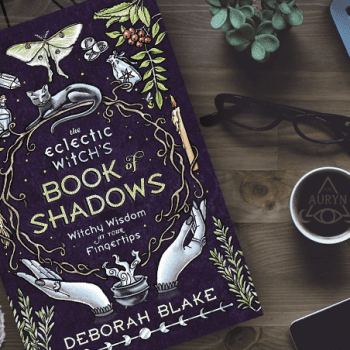
Review: The Eclectic Witch's Book of Shadows
TRENDING AT PATHEOS Pagan

I was recently chatting with someone on Instagram. She asked me what...

While there are many people who share their results, the end of...

On July 23, I saw Christopher Nolan's The Odyssey which is Homer’s...

As I write this two big events have just finished up. One...

Restoring the Watershed of Divine Love
Perhaps cooperation is not something we manufacture through legislation, ideology, or moral...

Many UUs don’t pray because of bad experiences in a previous religion,...
view all Pagan blogs
Ad-Free & Subscriber Log-In Subscription Support
- About Us
- 2026 Calendar
- Videos
- Podcasts
- Library of World Religions
- Faith In Media Tracker
- Advertise With Us
- Write for Us
- Privacy Policy
- Terms of Service
- Do Not Sell My Data
- Contact Us
- Radiant Digital
- Manage Newsletter Subscriptions
- Unsubscribe From Notifications
- Sitemap
Copyright 2008-2026, Patheos. All rights reserved.
Subscription Support Ad-Free & Subscriber Log-In
Follow Patheos