
BuddhistCatholicContemplativeEvangelicalGeneral ChristianHinduJewishLatter-day SaintMuslimNew VisionsProgressive Christian
Beliefs
- Buddhist
- Catholic
- Contemplative
- Evangelical
- General Christian
- Hindu
- Jewish
- Latter-day Saint
- More Voices
- Muslim
- New Visions
- Pagan
- Progressive Christian
Topics
- Religion News
- Food and Religion
- Sports and Religion
- Religious Art
- Religious Music and Entertainment
- Religious Events
- History and Religion
- Style and Religion
- Politics and Religion
- Women in Religion
- Recreation Outdoors and Religion
- Business Finance and Religion
- Careers Workplace and Religion
- Education and Religion
- Family Parenting and Religion
- Health Fitness and Religion
- Home and Religion
- Relationships and Religion
- Technology and Religion
- Travel and Religion
Columnists
- Buddhist Columnists
- Business Finance and Religion Columnists
- Careers Workplace and Religion Columnists
- Catholic Columnists
- Contemplative Columnists
- Education and Religion Columnists
- Evangelists Columnists
- Family Parenting and Religion Columnists
- General Christian Columnists
- Health Fitness and Religion Columnists
- Hindu Columnists
- History and Religion Columnists
- Home and Religion Columnists
- Jewish Columnists
- More Voices Columnists
- Latter Day Columnists
- Muslim Columnists
- New Visions Columnists
- Nonreligious Columnists
- Pagan Columnists
- Politics and Religion Columnists
- Progressive Columnists
- Recreation Outdoors and Religion Columnists
- Relationships and Religion Columnists
- Religion News Columnists
- Religious Art Columnists
- Religious Events Columnists
- Religious Music and Entertainment Columnists
- Sports and Religion Columnists
- Style and Religion Columnists
- Technology and Religion Columnists
- Travel and Religion Columnists
- Women in Religion Columnists
Resource Library
- 2026 Calendar
- Library of World Religions
- The 100 Most Holy Places on Earth
- Patheos Answers
- Podcasts
- Videos
- Faith Leaders Database
- Anglican Episcopalian
- Bahai
- Baptist
- Buddhism
- Christianity
- Confucianism
- Eastern Orthodoxy
- Hinduism
- Holiness and Pentecostal
- ISKCON
- Islam
- Judaism
- Lutheran
- Methodist
- The Church of Jesus Christ of Latter-day Saints
- New Age
- Paganism
- Presbytarian and Reformed
- Protestantism
- Religion Behind the Scenes
- Roman Catholic
- Scientology
- Shia Islam
- Sikhism
- Sufism
- Sunni Islam
- Taoism
- Zen
- See all religions
Research Tools
 Ad-Free & Subscriber Log-In Subscription Support
Ad-Free & Subscriber Log-In Subscription Support
Follow Patheos 

- Trending:
- Forgiveness
- |
- Marriage
- |
- Consciousness
- |
- Death Penalty
- |
- Election
- |
- Halloween
 For Puck's Sake
- Home
- Pagan
- Exploring Your Shadow With The Tarot
Exploring Your Shadow With The Tarot
Last updated on: August 2, 2019 at 4:40 pm by Mat Auryn
Exploring Your Shadow With The Tarot 2019-08-02T16:40:02+00:00 Mat Auryn
Patheos Explore the world's faith through different perspectives on religion and spirituality! Patheos has the views of the prevalent religions and spiritualities of the world.

Image Credit: Dmitry Cherevko | Standard License
This post is inspired by Paige at The Fat Feminist Witch. Her podcast has quickly become one of my favorites. I was listening to her episode entitled “Emotional Witchcraft” where she talks about emotional self-care and the Shadow and discusses the book Light Magic for Dark Times: More than 100 Spells, Rituals, and Practices for Coping in a Crisis by Lisa Marie Basile and Joanna DeVoe’s Shadow Work Course. What really struck me about this episode is when Paige starts discussing the Tarot drawing parallels with exploring her own aspects of her shadow self with the Queen of Swords archetype.
I can’t believe I had never thought about that before! As I have discussed on this blog before, the shadow self, contrary to most people’s understanding of it, is not necessarily completely negative aspects of ourselves. It can include empowering parts of ourselves that we’re rejecting and suppressing out of either shame or fear. One of the main components of performing shadow work is not to just acknowledge and then try to fight or conquer the shadow, but rather to repurpose it as something that assists you so that you’re no longer rejecting an aspect of yourself but rather giving it a healthier role within your psyche and life. This is a task that people really struggle with. Many people get to the point of identifying aspects of their shadows but are unsure about what to do next or how they can give it a different role.
“The elements that we feel shame around or suppress are often elements of primordial human consciousness that serve certain purposes. Seductiveness, manipulation, obsession with power, vanity, the impulse for domination, envy, etc. — these aspects may seem repugnant to us and we may wish to push them away from ourselves. But they have developed as means of getting our needs met. We can learn from them by releasing shame around them, seeking the core lesson within them, accepting them, and figuring out how to manifest them in ways that are actually helpful to ourselves and others. So, for example, let’s say someone has a shadow obsession with vanity. They may overly fixate on their physical form or criticize others unconsciously. But, if they could learn to see the core of that shadow element — that there is beauty within us waiting to be unlocked and expressed — then they could see that their fear is actually wrapped around something quite exquisite. And then, perhaps, they could use the gift of that lesson not to neurotically exert control over their own physical form or police others, but to beautify themselves and the world with love.”
– Sarah Lynne Bowman, Ph. D.
Integrating The Shadow Self (For Puck’s Sake Interview)
This is why the tarot is absolutely brilliant as a start. The tarot contains sixteen archetypes ready to be explored – the court cards. Each court card embodies both positive and negative traits of the same archetypal character — or rather healthy and unhealthy expressions of that core energy. By exploring the tarot court cards in this manner you can kill two birds with one stone. You gain a deeper understanding and connection with the court cards (which are usually a tarot reader’s biggest struggle) as well as help heal and reintegrate your shadow in a healthy manner.
Take out the six court cards and set them aside and shuffle them. I suggest drawing one card a month, since shadow work is something that should be explored slowly and in-depth. Spend that month exploring the card. Research the positive and negative meanings of that court card archetype. Even if you’re a tarot master, sometimes someone else will frame a meaning of a card that will switch on the epiphany lightbulb over your head. Think about the unhealthy or unbalanced aspects of that card. Think about who you know that embodies that energy, both within your life and fictional characters. Think about how you embody those negative traits.
Also think about the positive aspects of that card’s traits when they’re being used in a healthy manner. Repeat the same process of thinking about others that embody this as well as ways that you embody this. Meditate on how you can reframe and repurpose those aspects of this archetypal energy within your own life so that it’s serving a healthy and balanced expression. Spend time dialoguing with this part of your shadow to create allies out of the aspects of yourself you’ve marginalized to the shadows of your consciousness. Keep a record of your thoughts and exploration in a journal and see how much you can uncover about yourself.
Related Articles
Misconceptions About Shadow Work
Integrating The Shadow Self
Things That Ruin Occult Podcasts
Thinking Like A Tarot Reader
Divination As Devotion
Unsolicited Deck Pics & Reviews
Dialoguing With The Shadow Self Ritual
Connect With Me:
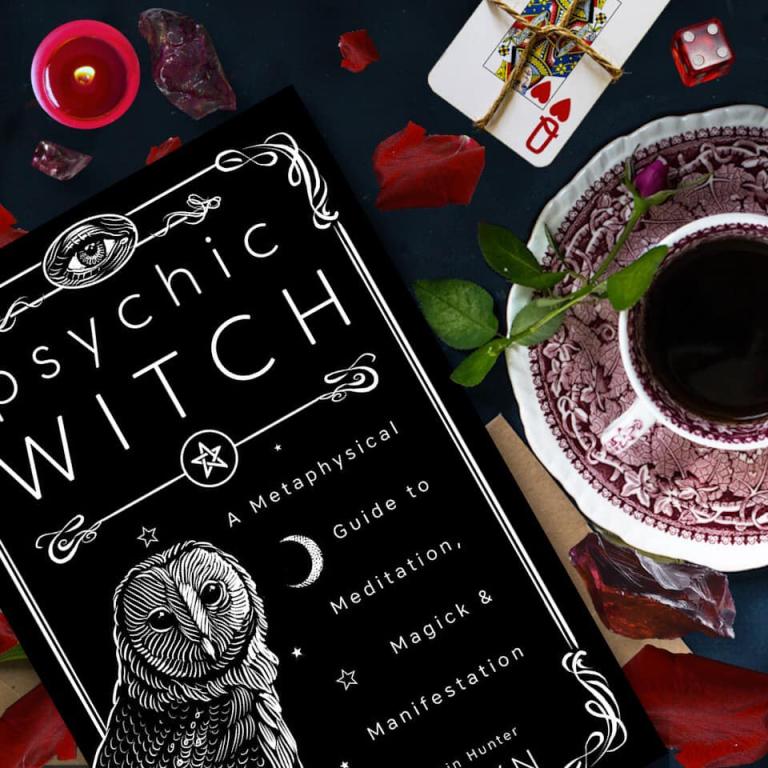
Click Below To Purchase My Book:
Previous Post
January 9, 2019
Review: Weave The Liminal
Next Post
January 15, 2019 Review: The Robin Wood Tarot
Browse Our Archives
Select a Category Book Reviews Deck Reviews Interviews Musings Uncategorized
Select a Month December 2021 November 2021 October 2021 August 2021 March 2021 December 2020 November 2020 October 2020 September 2020 August 2020 June 2020 May 2020 April 2020 February 2020 January 2020 December 2019 November 2019 October 2019 September 2019 August 2019 July 2019 June 2019 May 2019 April 2019 March 2019 February 2019 January 2019 December 2018 November 2018 October 2018 September 2018 August 2018 July 2018 June 2018 May 2018 April 2018 March 2018 February 2018 January 2018 December 2017 November 2017 October 2017 September 2017 August 2017 July 2017 June 2017 May 2017 April 2017
Follow Us!
TAKE THE
Religious Wisdom Quiz
Who said, "Lord, I believe; help my unbelief!"
Select your answer to see how you score.
Peter The father of a sick boy Thomas Mary
Related posts from For Puck's Sake

How to Spot a Spiritual Impersonator Scam on...


The Titanic Women of Llewellyn

Becoming A Part of Witch History At The...
TRENDING AT PATHEOS Pagan

I was recently chatting with someone on Instagram. She asked me what...

While there are many people who share their results, the end of...

On July 23, I saw Christopher Nolan's The Odyssey which is Homer’s...

As I write this two big events have just finished up. One...

Restoring the Watershed of Divine Love
Perhaps cooperation is not something we manufacture through legislation, ideology, or moral...

Many UUs don’t pray because of bad experiences in a previous religion,...
view all Pagan blogs
Ad-Free & Subscriber Log-In Subscription Support
- About Us
- 2026 Calendar
- Videos
- Podcasts
- Library of World Religions
- Faith In Media Tracker
- Advertise With Us
- Write for Us
- Privacy Policy
- Terms of Service
- Do Not Sell My Data
- Contact Us
- Radiant Digital
- Manage Newsletter Subscriptions
- Unsubscribe From Notifications
- Sitemap
Copyright 2008-2026, Patheos. All rights reserved.
Subscription Support Ad-Free & Subscriber Log-In
Follow Patheos