
BuddhistCatholicContemplativeEvangelicalGeneral ChristianHinduJewishLatter-day SaintMuslimNew VisionsProgressive Christian
Beliefs
- Buddhist
- Catholic
- Contemplative
- Evangelical
- General Christian
- Hindu
- Jewish
- Latter-day Saint
- More Voices
- Muslim
- New Visions
- Pagan
- Progressive Christian
Topics
- Religion News
- Food and Religion
- Sports and Religion
- Religious Art
- Religious Music and Entertainment
- Religious Events
- History and Religion
- Style and Religion
- Politics and Religion
- Women in Religion
- Recreation Outdoors and Religion
- Business Finance and Religion
- Careers Workplace and Religion
- Education and Religion
- Family Parenting and Religion
- Health Fitness and Religion
- Home and Religion
- Relationships and Religion
- Technology and Religion
- Travel and Religion
Columnists
- Buddhist Columnists
- Business Finance and Religion Columnists
- Careers Workplace and Religion Columnists
- Catholic Columnists
- Contemplative Columnists
- Education and Religion Columnists
- Evangelists Columnists
- Family Parenting and Religion Columnists
- General Christian Columnists
- Health Fitness and Religion Columnists
- Hindu Columnists
- History and Religion Columnists
- Home and Religion Columnists
- Jewish Columnists
- More Voices Columnists
- Latter Day Columnists
- Muslim Columnists
- New Visions Columnists
- Nonreligious Columnists
- Pagan Columnists
- Politics and Religion Columnists
- Progressive Columnists
- Recreation Outdoors and Religion Columnists
- Relationships and Religion Columnists
- Religion News Columnists
- Religious Art Columnists
- Religious Events Columnists
- Religious Music and Entertainment Columnists
- Sports and Religion Columnists
- Style and Religion Columnists
- Technology and Religion Columnists
- Travel and Religion Columnists
- Women in Religion Columnists
Resource Library
- 2026 Calendar
- Library of World Religions
- The 100 Most Holy Places on Earth
- Patheos Answers
- Podcasts
- Videos
- Faith Leaders Database
- Anglican Episcopalian
- Bahai
- Baptist
- Buddhism
- Christianity
- Confucianism
- Eastern Orthodoxy
- Hinduism
- Holiness and Pentecostal
- ISKCON
- Islam
- Judaism
- Lutheran
- Methodist
- The Church of Jesus Christ of Latter-day Saints
- New Age
- Paganism
- Presbytarian and Reformed
- Protestantism
- Religion Behind the Scenes
- Roman Catholic
- Scientology
- Shia Islam
- Sikhism
- Sufism
- Sunni Islam
- Taoism
- Zen
- See all religions
Research Tools
 Ad-Free & Subscriber Log-In Subscription Support
Ad-Free & Subscriber Log-In Subscription Support
Follow Patheos 

- Trending:
- Forgiveness
- |
- Marriage
- |
- Consciousness
- |
- Death Penalty
- |
- Election
- |
- Halloween
 For Puck's Sake
- Home
- Pagan
- Saint Lucia: Lilith in Disguise
Saint Lucia: Lilith in Disguise
Last updated on: December 6, 2019 at 4:22 pm by Mat Auryn
Saint Lucia: Lilith in Disguise 2019-12-06T16:22:09+00:00 Mat Auryn
Patheos Explore the world's faith through different perspectives on religion and spirituality! Patheos has the views of the prevalent religions and spiritualities of the world.

Image Credit: Christina Zetterberg | CC0 License
Saint Lucia (or Saint Lucy) is a Christian Martyr who is celebrated on St. Lucy’s Day, a feast on December 13th in Scandinavian countries, where young girls make a procession dressed in white and boys wear wizard like conical hats with stars on them. In this procession one girl is representative of Saint Lucia and wears a red sash and a crown of candles (so that her hands are free to carry food for her feast), remaining silent while the other children sing hymns to honor Saint Lucia. Saint Lucia is honored as a light-bringer who brings vision and light to “the blind” and the feast represents light overcoming darkness, which is an almost universal Winter Solstice theme based on astronomy. The name Lucia / Lucy shares the Latin root Lux, meaning light, with Lucifer the morning-star and fallen star.

Image Source: Wikimedia
In Catholicism, Saint Lucia’s story is that she was a young Christian girl who had a marriage with a wealthy pagan arranged by her mother. St. Lucia decided to give a large portion of her dowry to the poor. Her fiance heard about this and was outraged and reported her to the Governor of Syracuse who ordered that she burn a sacrifice to the image of the Emperor as retribution. When St. Lucia refused. She was to be burned at the stake but the wood refused to burn. She was tortured and had her eyes removed from her head – and most iconography has her either holding her eyes or her eyes on a plate. Before she was finally killed by a sword, she accurately prophecized the death of both the Governor of Syracuse and the Emperor. Not being raised Catholic myself, I first came across Saint Lucia in American folk magick, where she is worked with and prayed to for psychic ability and the gifts of prophecy.
As we know with many regions that become Christianized or dual-faith, the Paganism and Christianity starts to become very blurred. Old Pagan customs blend into newer Christian ones and older deities and spirits begin to merge with the newer Christian saints. There are several theories about Saint Lucia’s origins in Scandinavian countries. Some link her to Sol or Sunna, and others with Holda and Berchta, who were also celebrated during the Winter Solstice time in these regions. However, one of the most interesting connections that I’ve come across is in The Luminous Stone: Lucifer in Western Esotericism anthology edited by Daniel Schulke and Michael Howard. In it, Swedish ethnologist and occult researcher Fredrik Eytzinger has a chapter on Saint Lucia entitled “Saint Lucifer and the Black Arts.”
In parts of Norway, she’s associated with the various hidden folk of the region and its said that between St. Lucy’s Day and Yule that trolls, witches and evil spirits roam wild in a procession called Lussiferda, where St. Lucia under the name Lussi is a witch and demoness leading the event. In The Luminous Stone, Eytzinger discusses how folks in the western parts of Sweden refuse to take part in St. Lucy’s Feast and that she was either seen as a form of Lilith or as a female embodiment of Lucifer. There are many interesting comparisons with Lilith being the mother of the Hidden Folk and demons in Jewish folklore and with Lucia being associated with the Hidden Folk of Sweden and Norway.
This idea shared with Diana and Aradia (who is an avatar embodiment and daughter of Diana) from the Gospel of Aradia who are often linked Herodias, Lilith, and Holda, who as mentioned before is also linked with Saint Lucia. All of these figures are also seen in various degrees as the Witch Queen archetype goddess of the Witch’s Sabbath. Diana in the Gospel of Aradia is seen as the mother of the Hidden Folk and consort of Lucifer and is linked to the cat, which is historically tied to witchcraft. Interestingly enough, on Saint Lucia’s Day, it is tradition to bake buns called Lussekatter, which translates to “Lucia cats” as the buns resemble cat-tails. I highly suggest checking out The Luminous Stone (which is a fantastic anthology in general) for more of Eytzinger’s connections between Saint Lucia, Lilith, and Lucifer in Scandinavia.
Related Articles:
Mat Auryn – This Fashionista Cat Devours People To Celebrate Yule
Mat Auryn – The Child-Eating Scarecrow Of Christmas
Mat Auryn -The Mischievous Tomte Spirits of Yule
Mat Auryn – A Brief History of The Krampus
Mat Auryn – What Is The Winter Solstice?
Mat Auryn – Seasonal Depression & The Winter Solstice
Connect With Me:

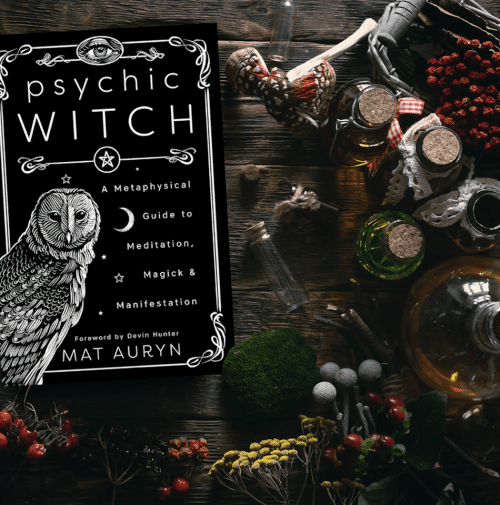
Click Below To Purchase My Book:

Previous Post

December 12, 2018
This Fashionista Cat Devours People To Celebrate Yule
Next Post

December 14, 2018 Hexenhäuschen: Origin Of The Witch's Gingerbread House
Browse Our Archives
Select a Category Book Reviews Deck Reviews Interviews Musings Uncategorized
Select a Month December 2021 November 2021 October 2021 August 2021 March 2021 December 2020 November 2020 October 2020 September 2020 August 2020 June 2020 May 2020 April 2020 February 2020 January 2020 December 2019 November 2019 October 2019 September 2019 August 2019 July 2019 June 2019 May 2019 April 2019 March 2019 February 2019 January 2019 December 2018 November 2018 October 2018 September 2018 August 2018 July 2018 June 2018 May 2018 April 2018 March 2018 February 2018 January 2018 December 2017 November 2017 October 2017 September 2017 August 2017 July 2017 June 2017 May 2017 April 2017
Follow Us!
TAKE THE
Religious Wisdom Quiz
True or False: Micah prophesied that the Messiah would be born in Bethlehem.
Select your answer to see how you score.
TRUE FALSE
Related posts from For Puck's Sake

How to Spot a Spiritual Impersonator Scam on...

Review: The Eclectic Witch's Book of Shadows

TRENDING AT PATHEOS Pagan

I was recently chatting with someone on Instagram. She asked me what...

While there are many people who share their results, the end of...

On July 23, I saw Christopher Nolan's The Odyssey which is Homer’s...

As I write this two big events have just finished up. One...

Restoring the Watershed of Divine Love
Perhaps cooperation is not something we manufacture through legislation, ideology, or moral...

Many UUs don’t pray because of bad experiences in a previous religion,...
view all Pagan blogs
Ad-Free & Subscriber Log-In Subscription Support
- About Us
- 2026 Calendar
- Videos
- Podcasts
- Library of World Religions
- Faith In Media Tracker
- Advertise With Us
- Write for Us
- Privacy Policy
- Terms of Service
- Do Not Sell My Data
- Contact Us
- Radiant Digital
- Manage Newsletter Subscriptions
- Unsubscribe From Notifications
- Sitemap
Copyright 2008-2026, Patheos. All rights reserved.
Subscription Support Ad-Free & Subscriber Log-In
Follow Patheos