
BuddhistCatholicContemplativeEvangelicalGeneral ChristianHinduJewishLatter-day SaintMuslimNew VisionsProgressive Christian
Beliefs
- Buddhist
- Catholic
- Contemplative
- Evangelical
- General Christian
- Hindu
- Jewish
- Latter-day Saint
- More Voices
- Muslim
- New Visions
- Pagan
- Progressive Christian
Topics
- Religion News
- Food and Religion
- Sports and Religion
- Religious Art
- Religious Music and Entertainment
- Religious Events
- History and Religion
- Style and Religion
- Politics and Religion
- Women in Religion
- Recreation Outdoors and Religion
- Business Finance and Religion
- Careers Workplace and Religion
- Education and Religion
- Family Parenting and Religion
- Health Fitness and Religion
- Home and Religion
- Relationships and Religion
- Technology and Religion
- Travel and Religion
Columnists
- Buddhist Columnists
- Business Finance and Religion Columnists
- Careers Workplace and Religion Columnists
- Catholic Columnists
- Contemplative Columnists
- Education and Religion Columnists
- Evangelists Columnists
- Family Parenting and Religion Columnists
- General Christian Columnists
- Health Fitness and Religion Columnists
- Hindu Columnists
- History and Religion Columnists
- Home and Religion Columnists
- Jewish Columnists
- More Voices Columnists
- Latter Day Columnists
- Muslim Columnists
- New Visions Columnists
- Nonreligious Columnists
- Pagan Columnists
- Politics and Religion Columnists
- Progressive Columnists
- Recreation Outdoors and Religion Columnists
- Relationships and Religion Columnists
- Religion News Columnists
- Religious Art Columnists
- Religious Events Columnists
- Religious Music and Entertainment Columnists
- Sports and Religion Columnists
- Style and Religion Columnists
- Technology and Religion Columnists
- Travel and Religion Columnists
- Women in Religion Columnists
Resource Library
- 2026 Calendar
- Library of World Religions
- The 100 Most Holy Places on Earth
- Patheos Answers
- Podcasts
- Videos
- Faith Leaders Database
- Anglican Episcopalian
- Bahai
- Baptist
- Buddhism
- Christianity
- Confucianism
- Eastern Orthodoxy
- Hinduism
- Holiness and Pentecostal
- ISKCON
- Islam
- Judaism
- Lutheran
- Methodist
- The Church of Jesus Christ of Latter-day Saints
- New Age
- Paganism
- Presbytarian and Reformed
- Protestantism
- Religion Behind the Scenes
- Roman Catholic
- Scientology
- Shia Islam
- Sikhism
- Sufism
- Sunni Islam
- Taoism
- Zen
- See all religions
Research Tools
 Ad-Free & Subscriber Log-In Subscription Support
Ad-Free & Subscriber Log-In Subscription Support
Follow Patheos 

- Trending:
- Forgiveness
- |
- Marriage
- |
- Consciousness
- |
- Death Penalty
- |
- Election
- |
- Halloween
 For Puck's Sake
- Home
- Pagan
- Review: The Path of Paganism
Review: The Path of Paganism
Last updated on: September 27, 2017 at 1:59 pm by Mat Auryn
Review: The Path of Paganism 2017-09-27T13:59:18+00:00 Mat Auryn
Patheos Explore the world's faith through different perspectives on religion and spirituality! Patheos has the views of the prevalent religions and spiritualities of the world.
John Beckett’s writing is always level-headed, humble, grounded, wise and insightful. So it was no surprise to me that his first book The Path of Paganism: An Experience-Based Guide to Modern Pagan Practice kept this same spirit. The book is divided into main areas of focus consisting of contemplating the foundation of what Paganism is, putting those beliefs into practice, having an intermediate practice that goes beyond the 101, stepping into leadership, priesthood and “what comes next” which has a focus on continuing and mastering your spiritual education. Beckett writes, “Much of the “advanced” religious practice (in any tradition) isn’t all that advanced. It’s simply the basics, done over and over so many times it becomes intuitive. It’s not glamorous and it’s not exciting. It just works.”
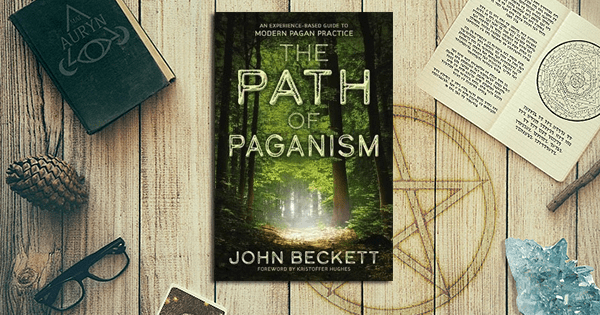
Image Credit: Dustin Lee | Edited by: Mat Auryn | CC0 License
Beckett states that defining Paganism is pretty much impossible with its myriad of traditions and eclecticism and provides a “big tent” inclusive model with room for everyone, consisting of four main poles holding up that big tent to explain to the types of Paganism. These poles are those who are Natured-Centered, Deity-Centered, Community-Centered, and Self-Centered. These poles create a Venn diagram of intersection creating 13 different types of Pagans. With this understanding of Paganism, we can begin to have a framework of discussion and it’s from this foundation that Beckett shares the wisdom of his experience and ruminations for the book.
One of the things that I like about Beckett’s writing is that he has a very balanced approach, acknowledging religious and spiritual experiences as well as rationality. He tackles issues such as lore and myth versus unverified personal gnosis, an emphasis that bad science makes bad religion, our relationship with nature and society as Pagans and our relationship with ourselves, our gods, ancestors, and our spirits – but most of all our relationship with our spiritual practice.
The beauty of Beckett’s broad scope is that any Pagan can read the book and get something out of it, whether one is a Druid, Wiccan, Heathen, Hellenic Polytheist, a Pantheist, an Atheistic Pagan or anyone else whose practices a belief system that would fall under Paganism. There are plenty of rituals and tips for building and deepening a personal practice. Each chapter closes with profound questions for contemplation that anyone can reflect on to help strengthen what the reader personally believes and strengthen their own practice.
Previous Post
September 5, 2017
Review: The Phosphorous Grove
Next Post

September 7, 2017 Gods & Spirits Are Not Correspondences
Browse Our Archives
Select a Category Book Reviews Deck Reviews Interviews Musings Uncategorized
Select a Month December 2021 November 2021 October 2021 August 2021 March 2021 December 2020 November 2020 October 2020 September 2020 August 2020 June 2020 May 2020 April 2020 February 2020 January 2020 December 2019 November 2019 October 2019 September 2019 August 2019 July 2019 June 2019 May 2019 April 2019 March 2019 February 2019 January 2019 December 2018 November 2018 October 2018 September 2018 August 2018 July 2018 June 2018 May 2018 April 2018 March 2018 February 2018 January 2018 December 2017 November 2017 October 2017 September 2017 August 2017 July 2017 June 2017 May 2017 April 2017
Follow Us!
TAKE THE
Religious Wisdom Quiz
A shepherd leads his flock beside still waters and through the valley of death's shadow. What is this shepherd's identity?
Select your answer to see how you score.
The Prophet The Lord The Apostles David
Related posts from For Puck's Sake

Review: The Eclectic Witch's Book of Shadows

TRENDING AT PATHEOS Pagan

I was recently chatting with someone on Instagram. She asked me what...

While there are many people who share their results, the end of...

On July 23, I saw Christopher Nolan's The Odyssey which is Homer’s...

As I write this two big events have just finished up. One...

Restoring the Watershed of Divine Love
Perhaps cooperation is not something we manufacture through legislation, ideology, or moral...

Many UUs don’t pray because of bad experiences in a previous religion,...
view all Pagan blogs
Ad-Free & Subscriber Log-In Subscription Support
- About Us
- 2026 Calendar
- Videos
- Podcasts
- Library of World Religions
- Faith In Media Tracker
- Advertise With Us
- Write for Us
- Privacy Policy
- Terms of Service
- Do Not Sell My Data
- Contact Us
- Radiant Digital
- Manage Newsletter Subscriptions
- Unsubscribe From Notifications
- Sitemap
Copyright 2008-2026, Patheos. All rights reserved.
Subscription Support Ad-Free & Subscriber Log-In
Follow Patheos