
BuddhistCatholicContemplativeEvangelicalGeneral ChristianHinduJewishLatter-day SaintMuslimNew VisionsProgressive Christian
Beliefs
- Buddhist
- Catholic
- Contemplative
- Evangelical
- General Christian
- Hindu
- Jewish
- Latter-day Saint
- More Voices
- Muslim
- New Visions
- Pagan
- Progressive Christian
Topics
- Religion News
- Food and Religion
- Sports and Religion
- Religious Art
- Religious Music and Entertainment
- Religious Events
- History and Religion
- Style and Religion
- Politics and Religion
- Women in Religion
- Recreation Outdoors and Religion
- Business Finance and Religion
- Careers Workplace and Religion
- Education and Religion
- Family Parenting and Religion
- Health Fitness and Religion
- Home and Religion
- Relationships and Religion
- Technology and Religion
- Travel and Religion
Columnists
- Buddhist Columnists
- Business Finance and Religion Columnists
- Careers Workplace and Religion Columnists
- Catholic Columnists
- Contemplative Columnists
- Education and Religion Columnists
- Evangelists Columnists
- Family Parenting and Religion Columnists
- General Christian Columnists
- Health Fitness and Religion Columnists
- Hindu Columnists
- History and Religion Columnists
- Home and Religion Columnists
- Jewish Columnists
- More Voices Columnists
- Latter Day Columnists
- Muslim Columnists
- New Visions Columnists
- Nonreligious Columnists
- Pagan Columnists
- Politics and Religion Columnists
- Progressive Columnists
- Recreation Outdoors and Religion Columnists
- Relationships and Religion Columnists
- Religion News Columnists
- Religious Art Columnists
- Religious Events Columnists
- Religious Music and Entertainment Columnists
- Sports and Religion Columnists
- Style and Religion Columnists
- Technology and Religion Columnists
- Travel and Religion Columnists
- Women in Religion Columnists
Resource Library
- 2026 Calendar
- Library of World Religions
- The 100 Most Holy Places on Earth
- Patheos Answers
- Podcasts
- Videos
- Faith Leaders Database
- Anglican Episcopalian
- Bahai
- Baptist
- Buddhism
- Christianity
- Confucianism
- Eastern Orthodoxy
- Hinduism
- Holiness and Pentecostal
- ISKCON
- Islam
- Judaism
- Lutheran
- Methodist
- The Church of Jesus Christ of Latter-day Saints
- New Age
- Paganism
- Presbytarian and Reformed
- Protestantism
- Religion Behind the Scenes
- Roman Catholic
- Scientology
- Shia Islam
- Sikhism
- Sufism
- Sunni Islam
- Taoism
- Zen
- See all religions
Research Tools
 Ad-Free & Subscriber Log-In Subscription Support
Ad-Free & Subscriber Log-In Subscription Support
Follow Patheos 

- Trending:
- Forgiveness
- |
- Marriage
- |
- Consciousness
- |
- Death Penalty
- |
- Election
- |
- Halloween
 For Puck's Sake
- Home
- Pagan
- A Beginner’s Guide to Invoking Pentagrams
A Beginner’s Guide to Invoking Pentagrams
Last updated on: April 20, 2020 at 5:36 pm by Mat Auryn
A Beginner’s Guide to Invoking Pentagrams 2020-04-20T17:36:38+00:00 Mat Auryn
Patheos Explore the world's faith through different perspectives on religion and spirituality! Patheos has the views of the prevalent religions and spiritualities of the world.
The invoking and banishing pentagrams come from the ceremonial traditions to bring in an elemental force into the circle or working. In the witchcraft traditions we wouldn’t really call this invoking, rather we would call this evoking because we are not calling this energy into our body but rather our magick circle. But in the ceremonial traditions they view the circle as an extension of their body, so when they’re calling something into the circle they’re invoking it. The invoking and banishing pentagrams can be seen as “keys”, but I see them more as portals. The invoking pentagrams open up a portal for a specific elemental energy to come through and the banishing pentagrams close a portal’s flow of a specific elemental energy.

Image Credit: TookaPic | Edited by Mat Auryn | CC0 License
In ritual these pentagrams are drawn when calling upon elemental guardians who will be in charge of the portals and controlling via their own discernment how much energy to allow through that portal based on their own expertise of that element and the working itself. These pentagrams can also be used without calling upon a guardian if you aren’t performing a ritual to control the elemental energies of a place or object. When we speak of the five elements – Earth, Air, Fire, Water and Spirit/Aether – we are not necessarily talking about literal elements of nature, which can be a common misconception for people. We are talking about the different forms of energy that compose the Universe at a subtle energy level.
The elements rather, are names of different types of energy – and these energies are symbolized by their earthly counterpart to explain how that energy works and to try to describe their quality. This is because as humans, we do not have a very precise way to describe energy as we perceive it, as our vocabulary for it is very underdeveloped. This is true also for things like taste and smell if you think about it. Think about how people describe complex tastes such as wine. They’ll use words like “earthy”, “fruity”, “buttery”, “toasty”, “flamboyant”, “sharp”, “oaked”, “charcoal”, “velvety” and many others. This is because the brain doesn’t have precise words within our language for what it’s experiencing so it tries to reference words that somehow describe the quality of what they’re tasting the best it can.
For example, I will try to explain the element of Water to the best of my ability: Water is an energy that has a flowing feeling to it and a cooler temperature about it without being as cold feeling as the element of Earth but a heaviness like Earth yet a weightlessness like Air. The fact that water flows, is cooler, has a heaviness to it yet a weightlessness (sort of like being submerged) is why the word “Water” is such a good description of it. But notice how hard it is to try to explain the element without referring to the other elements? This is because my brain is trying to make sense of descriptions of qualities of energy that do not exist. We can see the elements on various levels, including even the physical, but also various levels of existence such as qualities of being human (mind, body, feelings, desire) and also we find that certain spirits seem to have a nature that aligns more with a form of an element or various elements.
Before invoking a pentagram, it’s important to really connect with each element first on a deep level and understand how that energy feels. Once you’re properly attuned to that element you can then summon that feeling from within you and channel it out through your finger, visualizing a white, blue or white-blue energy “painting” upon the air before you – or you can visualize your finger erasing or “sucking in” that light energy to banish the pentagram. Aside from any words or tones of evocation, just like when casting the magick circle, conjuring up the feeling of the energy and visualizing the energy are both very important “keys” to these pentagrams as much as meaning what you are saying.
A great way to practice visualizing your ability to channel and “paint” with this energy upon the air is to enter into the mindful meditative state, conjure the feelings desired, open your eyes and draw a foot-sized “O” of Light in front of you with your projective hand and then suck it back into your receptive hand like a vacuum sucking up smoke in the air. Keep doing this until you can clearly see and hold the image of the “O” you drew in front of you with your eyes open. Alternate this exercise by doing it with your eyes closed and then your eyes open.
Here is a video I made to help simplify and understand how to remember which pentagrams are which:
Ways To Support My Work:
Previous Post
July 11, 2017
Review: The Devil's Dozen
Next Post
July 12, 2017 Review: Ecstatic Witchcraft
Browse Our Archives
Select a Category Book Reviews Deck Reviews Interviews Musings Uncategorized
Select a Month December 2021 November 2021 October 2021 August 2021 March 2021 December 2020 November 2020 October 2020 September 2020 August 2020 June 2020 May 2020 April 2020 February 2020 January 2020 December 2019 November 2019 October 2019 September 2019 August 2019 July 2019 June 2019 May 2019 April 2019 March 2019 February 2019 January 2019 December 2018 November 2018 October 2018 September 2018 August 2018 July 2018 June 2018 May 2018 April 2018 March 2018 February 2018 January 2018 December 2017 November 2017 October 2017 September 2017 August 2017 July 2017 June 2017 May 2017 April 2017
Follow Us!
TAKE THE
Religious Wisdom Quiz
Which Christian group follows the teachings of John Calvin?
Select your answer to see how you score.
Presbyterian Orthodox Quaker Catholic
Related posts from For Puck's Sake

How to Spot a Spiritual Impersonator Scam on...
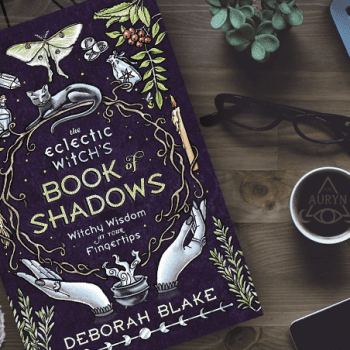
Review: The Eclectic Witch's Book of Shadows
TRENDING AT PATHEOS Pagan

I was recently chatting with someone on Instagram. She asked me what...

While there are many people who share their results, the end of...

On July 23, I saw Christopher Nolan's The Odyssey which is Homer’s...

As I write this two big events have just finished up. One...

Restoring the Watershed of Divine Love
Perhaps cooperation is not something we manufacture through legislation, ideology, or moral...

Many UUs don’t pray because of bad experiences in a previous religion,...
view all Pagan blogs
Ad-Free & Subscriber Log-In Subscription Support
- About Us
- 2026 Calendar
- Videos
- Podcasts
- Library of World Religions
- Faith In Media Tracker
- Advertise With Us
- Write for Us
- Privacy Policy
- Terms of Service
- Do Not Sell My Data
- Contact Us
- Radiant Digital
- Manage Newsletter Subscriptions
- Unsubscribe From Notifications
- Sitemap
Copyright 2008-2026, Patheos. All rights reserved.
Subscription Support Ad-Free & Subscriber Log-In
Follow Patheos