
BuddhistCatholicContemplativeEvangelicalGeneral ChristianHinduJewishLatter-day SaintMuslimNew VisionsProgressive Christian
Beliefs
- Buddhist
- Catholic
- Contemplative
- Evangelical
- General Christian
- Hindu
- Jewish
- Latter-day Saint
- More Voices
- Muslim
- New Visions
- Pagan
- Progressive Christian
Topics
- Religion News
- Food and Religion
- Sports and Religion
- Religious Art
- Religious Music and Entertainment
- Religious Events
- History and Religion
- Style and Religion
- Politics and Religion
- Women in Religion
- Recreation Outdoors and Religion
- Business Finance and Religion
- Careers Workplace and Religion
- Education and Religion
- Family Parenting and Religion
- Health Fitness and Religion
- Home and Religion
- Relationships and Religion
- Technology and Religion
- Travel and Religion
Columnists
- Buddhist Columnists
- Business Finance and Religion Columnists
- Careers Workplace and Religion Columnists
- Catholic Columnists
- Contemplative Columnists
- Education and Religion Columnists
- Evangelists Columnists
- Family Parenting and Religion Columnists
- General Christian Columnists
- Health Fitness and Religion Columnists
- Hindu Columnists
- History and Religion Columnists
- Home and Religion Columnists
- Jewish Columnists
- More Voices Columnists
- Latter Day Columnists
- Muslim Columnists
- New Visions Columnists
- Nonreligious Columnists
- Pagan Columnists
- Politics and Religion Columnists
- Progressive Columnists
- Recreation Outdoors and Religion Columnists
- Relationships and Religion Columnists
- Religion News Columnists
- Religious Art Columnists
- Religious Events Columnists
- Religious Music and Entertainment Columnists
- Sports and Religion Columnists
- Style and Religion Columnists
- Technology and Religion Columnists
- Travel and Religion Columnists
- Women in Religion Columnists
Resource Library
- 2026 Calendar
- Library of World Religions
- The 100 Most Holy Places on Earth
- Patheos Answers
- Podcasts
- Videos
- Faith Leaders Database
- Anglican Episcopalian
- Bahai
- Baptist
- Buddhism
- Christianity
- Confucianism
- Eastern Orthodoxy
- Hinduism
- Holiness and Pentecostal
- ISKCON
- Islam
- Judaism
- Lutheran
- Methodist
- The Church of Jesus Christ of Latter-day Saints
- New Age
- Paganism
- Presbytarian and Reformed
- Protestantism
- Religion Behind the Scenes
- Roman Catholic
- Scientology
- Shia Islam
- Sikhism
- Sufism
- Sunni Islam
- Taoism
- Zen
- See all religions
Research Tools
 Ad-Free & Subscriber Log-In Subscription Support
Ad-Free & Subscriber Log-In Subscription Support
Follow Patheos 

- Trending:
- Forgiveness
- |
- Marriage
- |
- Consciousness
- |
- Death Penalty
- |
- Election
- |
- Halloween
 For Puck's Sake
- Home
- Pagan
- Witchsplaining & How To Avoid It
Witchsplaining & How To Avoid It
Last updated on: April 17, 2020 at 8:31 pm by Mat Auryn
Witchsplaining & How To Avoid It 2020-04-17T20:31:38+00:00 Mat Auryn
Patheos Explore the world's faith through different perspectives on religion and spirituality! Patheos has the views of the prevalent religions and spiritualities of the world.

Image Credit: Pexels | CC0 License
The term “witchsplaining” is derived from other terms such as “mansplaining” and “whitesplaining”. While some may not like this term, it’s definitely being used in the Witchcraft community for a few years now and doesn’t seem like it’s going anywhere. Regardless of what term we want to use for it, the concept itself definitely exists. Simply put, ‘splaining is to explain or comment in a condescending, overconfident, and often inaccurate or oversimplified manner, from the perspective of the group one identifies with while disregarding the background of the person being ‘splained to.
Witchsplaining is just that, when a witch explains or comments on something to “educate” or “correct” another witch on the “proper way” to do something or the history of something, undermining the background of the witch being ‘splained to. Witchsplaining is all too common, and I’ve been guilty of it now and again myself, but it’s easy to fix by simply taking a moment of mindful awareness and asking yourself a few questions before you speak.
- Did they ask?
Did they ask you specifically about it or are you giving unsolicited advice and input? - Are they open to your input?
If they didn’t ask, are they open to your input? - Did you ask permission?
This is as simple as asking. You can change “Well, actually…” to “May I share some advice?” - Are you responsible for their education?
Are they formally training under you? Are they studying your tradition? Why do you care how they practice their Craft? - Do you know their level of experience within the Craft?
Are you sure how far along the path they are? Are they still beginning their seeking or have they been practicing for many years? While you may have been studying formally within a tradition for a few years, they may have been studying solitary for decades. - Do you know the tradition they practice?
Different traditions do things differently. For example, in some traditions the wand is associated with fire while in others its air. Some traditions correspond elements to different directions. There isn’t a universally “correct” association for it. Wiccans tend to associate it with fire while Feri Tradition associates it with air. Different traditions do things differently. - Are you making assumptions about them?
Are you making assumptions of their level of experience or knowledge? Are you assuming they want your guidance? I have seen way too many people make assumptions about a witch and begin witchsplaining to them without realizing that they’re an author/teacher or elder within the Craft. - Is it a matter of semantics?
Sometimes, it’s just a matter of terminology and definitions. For example, the definition of “ego” differs in psychology than it does in spirituality. Your definition for a word or term may not be universal. - Does it pass through the three gates?
Rumi is credited with wisdom about three gates of speech. “Before you speak, let your words pass through three gates: At the first gate, ask yourself ‘Is is true?’ At the second gate ask, ‘Is it necessary?’ At the third gate ask, ‘Is it kind?'” - What is the goal of the conversation?
Are you coming from a place of trying to look like an expert? Are you coming from a place of genuinely wanting to help someone? Are you coming from a place of humility and understanding that you don’t know everything? Are you trying to start a debate? - Are you phrasing it as a perspective?
One of the best ways to keep your ego in check when discussing different methods and ideas is to claim them as your perspective and not as the dogmatic way to do things. This looks like “In my perspective…” and “In my tradition…” and “The way I do this…” and “What I read and/or learned…” and “Something that’s really helped me out is…”. Recognize that they have different methods, techniques, teachings or perspectives without proclaiming it the “right” way to do it.
Ways To Support My Work:






Previous Post
May 26, 2017
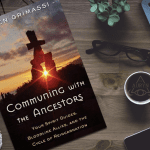
Review: Communing With The Ancestors
Next Post

May 27, 2017 Review: The Witch's Book of Shadows
Browse Our Archives
Select a Category Book Reviews Deck Reviews Interviews Musings Uncategorized
Select a Month December 2021 November 2021 October 2021 August 2021 March 2021 December 2020 November 2020 October 2020 September 2020 August 2020 June 2020 May 2020 April 2020 February 2020 January 2020 December 2019 November 2019 October 2019 September 2019 August 2019 July 2019 June 2019 May 2019 April 2019 March 2019 February 2019 January 2019 December 2018 November 2018 October 2018 September 2018 August 2018 July 2018 June 2018 May 2018 April 2018 March 2018 February 2018 January 2018 December 2017 November 2017 October 2017 September 2017 August 2017 July 2017 June 2017 May 2017 April 2017
Follow Us!
TAKE THE
Religious Wisdom Quiz
What does "Messiah" mean?
Select your answer to see how you score.
Savior Teacher Sacrifice Anointed One
Related posts from For Puck's Sake
How to Spot a Spiritual Impersonator Scam on...

Review: The Eclectic Witch's Book of Shadows
TRENDING AT PATHEOS Pagan

I was recently chatting with someone on Instagram. She asked me what...

While there are many people who share their results, the end of...

On July 23, I saw Christopher Nolan's The Odyssey which is Homer’s...

As I write this two big events have just finished up. One...

Restoring the Watershed of Divine Love
Perhaps cooperation is not something we manufacture through legislation, ideology, or moral...

Many UUs don’t pray because of bad experiences in a previous religion,...
view all Pagan blogs
Ad-Free & Subscriber Log-In Subscription Support
- About Us
- 2026 Calendar
- Videos
- Podcasts
- Library of World Religions
- Faith In Media Tracker
- Advertise With Us
- Write for Us
- Privacy Policy
- Terms of Service
- Do Not Sell My Data
- Contact Us
- Radiant Digital
- Manage Newsletter Subscriptions
- Unsubscribe From Notifications
- Sitemap
Copyright 2008-2026, Patheos. All rights reserved.
Subscription Support Ad-Free & Subscriber Log-In
Follow Patheos