
BuddhistCatholicContemplativeEvangelicalGeneral ChristianHinduJewishLatter-day SaintMuslimNew VisionsProgressive Christian
Beliefs
- Buddhist
- Catholic
- Contemplative
- Evangelical
- General Christian
- Hindu
- Jewish
- Latter-day Saint
- More Voices
- Muslim
- New Visions
- Pagan
- Progressive Christian
Topics
- Religion News
- Food and Religion
- Sports and Religion
- Religious Art
- Religious Music and Entertainment
- Religious Events
- History and Religion
- Style and Religion
- Politics and Religion
- Women in Religion
- Recreation Outdoors and Religion
- Business Finance and Religion
- Careers Workplace and Religion
- Education and Religion
- Family Parenting and Religion
- Health Fitness and Religion
- Home and Religion
- Relationships and Religion
- Technology and Religion
- Travel and Religion
Columnists
- Buddhist Columnists
- Business Finance and Religion Columnists
- Careers Workplace and Religion Columnists
- Catholic Columnists
- Contemplative Columnists
- Education and Religion Columnists
- Evangelists Columnists
- Family Parenting and Religion Columnists
- General Christian Columnists
- Health Fitness and Religion Columnists
- Hindu Columnists
- History and Religion Columnists
- Home and Religion Columnists
- Jewish Columnists
- More Voices Columnists
- Latter Day Columnists
- Muslim Columnists
- New Visions Columnists
- Nonreligious Columnists
- Pagan Columnists
- Politics and Religion Columnists
- Progressive Columnists
- Recreation Outdoors and Religion Columnists
- Relationships and Religion Columnists
- Religion News Columnists
- Religious Art Columnists
- Religious Events Columnists
- Religious Music and Entertainment Columnists
- Sports and Religion Columnists
- Style and Religion Columnists
- Technology and Religion Columnists
- Travel and Religion Columnists
- Women in Religion Columnists
Resource Library
- 2026 Calendar
- Library of World Religions
- The 100 Most Holy Places on Earth
- Patheos Answers
- Podcasts
- Videos
- Faith Leaders Database
- Anglican Episcopalian
- Bahai
- Baptist
- Buddhism
- Christianity
- Confucianism
- Eastern Orthodoxy
- Hinduism
- Holiness and Pentecostal
- ISKCON
- Islam
- Judaism
- Lutheran
- Methodist
- The Church of Jesus Christ of Latter-day Saints
- New Age
- Paganism
- Presbytarian and Reformed
- Protestantism
- Religion Behind the Scenes
- Roman Catholic
- Scientology
- Shia Islam
- Sikhism
- Sufism
- Sunni Islam
- Taoism
- Zen
- See all religions
Research Tools
 Ad-Free & Subscriber Log-In Subscription Support
Ad-Free & Subscriber Log-In Subscription Support
Follow Patheos 

- Trending:
- Forgiveness
- |
- Marriage
- |
- Consciousness
- |
- Death Penalty
- |
- Election
- |
- Halloween
 Catholic and Enjoying It!
- Home
- Catholic
- Everybody knows that Christmas is really just a warmed-over Celebration of the Feast of the Sol Invictus
Everybody knows that Christmas is really just a warmed-over Celebration of the Feast of the Sol Invictus
Last updated on: December 13, 2016 at 11:57 am by Mark Shea
Everybody knows that Christmas is really just a warmed-over Celebration of the Feast of the Sol Invictus 2016-12-13T11:57:27-07:00 Mark Shea
Patheos Explore the world's faith through different perspectives on religion and spirituality! Patheos has the views of the prevalent religions and spiritualities of the world.
Guess what? Everybody’s wrong!
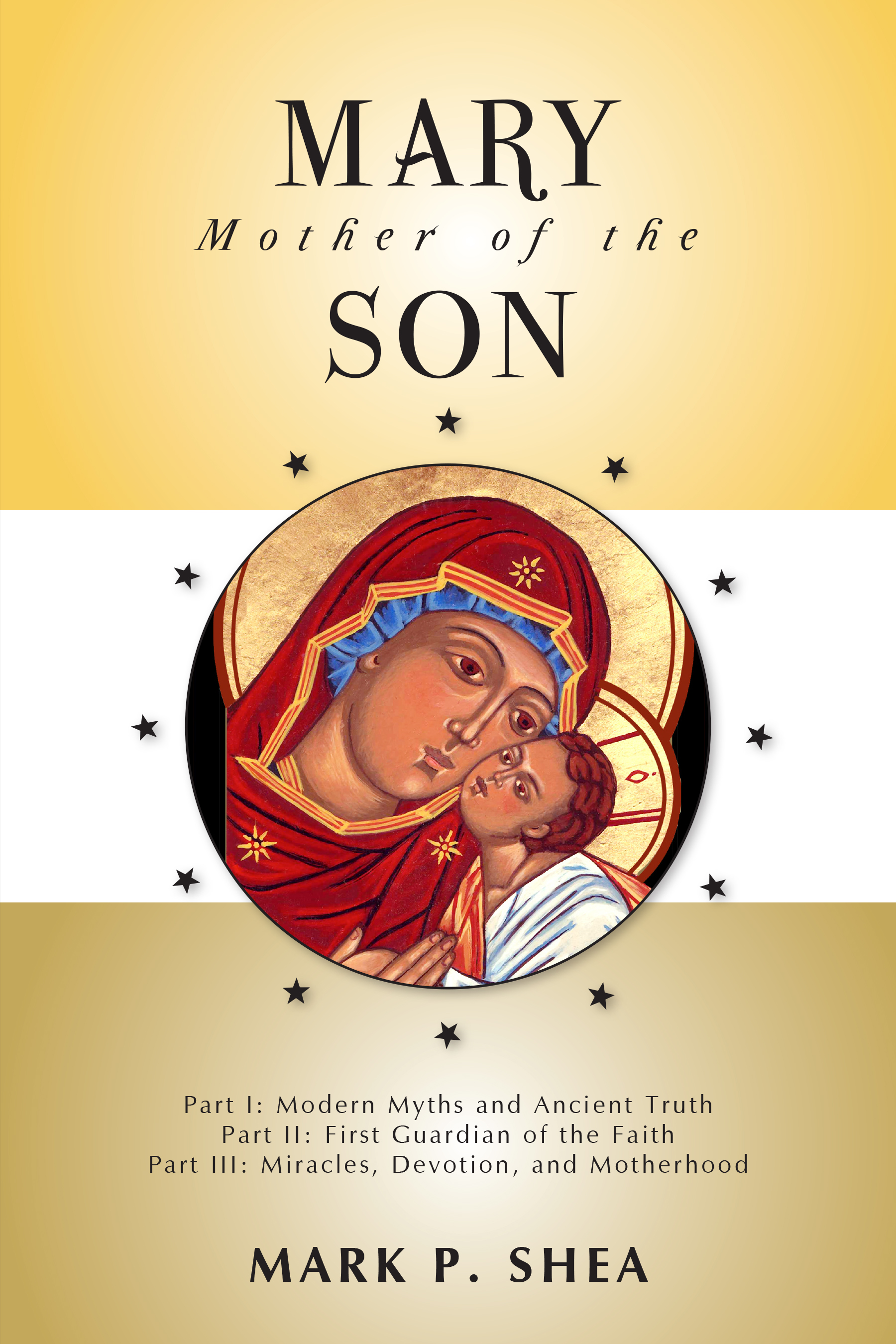
Another little excerpt from my book Mary, Mother of the Son (sans footnotes, but trust me, the citations are all in order):
Pseudo-Knowledge and “Pagan Christmas”
Time was when I, like most people, took it for granted the winter solstice and, in particular, the Roman Feast of the Birth of the Unconquered Sun were simply pagan celebrations that hung around into Christian times. In fact, when I set out to write this book I still thought this. But I discovered the reality is far more complicated and interesting. Indeed, it turns out this widely assumed “fact” that “everybody knows” is probably another sample of pseudo-knowledge. For according to William Tighe, a church history specialist at Pennsylvania’s Muhlenberg College, “the pagan festival of the ‘Birth of the Unconquered Sun’ instituted by the Roman Emperor Aurelian on 25 December 274, was almost certainly an attempt to create a pagan alternative to a date that was already of some significance to Roman Christians. Thus the ‘pagan origins of Christmas’ is a myth without historical substance.”
For the fact is, our records of a tradition associating Jesus’ birth with December 25 are decades older than any records concerning a pagan feast on that day.
[T]he definitive “Handbook of Biblical Chronology” by professor Jack Finegan (Hendrickson, 1998 revised edition) cites an important reference in the “Chronicle” written by Hippolytus of Rome three decades before Aurelian launched his festival. Hippolytus said Jesus’ birth “took place eight days before the kalends of January,” that is, Dec. 25.
Tighe said there’s evidence that as early as the second and third centuries, Christians sought to fix the birth date to help determine the time of Jesus’ death and resurrection for the liturgical calendar—long before Christmas also became a festival.
To make a long and complicated story short, there was agitation in the early Church concerning, not Jesus’ birthday, but the day upon which the historical Good Friday and Easter fell. It finally ended up that, in the Eastern Church, the tradition focused on April 6 as the date for the original Good Friday, while in the Western Church it was widely held that the date was March 25. Why does this matter? Tighe continues:
At this point, we have to introduce a belief that seems to have been widespread in Judaism at the time of Christ, but which, as it is nowhere taught in the Bible, has completely fallen from the awareness of Christians. The idea is that of the “integral age” of the great Jewish prophets: the idea that the prophets of Israel died on the same dates as their birth or conception.
This notion is a key factor in understanding how some early Christians came to believe that December 25th is the date of Christ’s birth. The early Christians applied this idea to Jesus, so that March 25th and April 6th were not only the supposed dates of Christ’s death, but of his conception or birth as well. There is some fleeting evidence that at least some first- and second-century Christians thought of March 25th or April 6th as the date of Christ’s birth, but rather quickly the assignment of March 25th as the date of Christ’s conception prevailed.
It is to this day commemorated almost universally among Christians as the Feast of the Annunciation, when the Archangel Gabriel brought the good tidings of a savior to the Virgin Mary, upon whose acquiescence the Eternal Word of God (“Light of Light, True God of True God, begotten of the Father before all ages”) forthwith became incarnate in her womb. What is the length of pregnancy? Nine months. Add nine months to March 25th and you get December 25th; add it to April 6th and you get January 6th. December 25th is Christmas, and January 6th is Epiphany.
And because these traditional, albeit competing, birth dates were already being revered in the rapidly growing Church, the emperor of a failing pagan empire instituted the Feast of the Unconquered Sun not only as an “effort to use the winter solstice to make a political statement, but also almost certainly [as] an attempt to give a pagan significance to a date already of importance to Roman Christians.”
In addition to this there’s another small, but telling, point. We also find St. John Chrysostom (a patriarch of Constantinople who died in 407 A.D.) noted that Christians had celebrated December 25 from the Church’s early days. Chrysostom reinforced his point with an argument that used Scripture, not pagan mythology, for corroboration:
Luke 1 says Zechariah was performing priestly duty in the Temple when an angel told his wife Elizabeth she would bear John the Baptist. During the sixth month of Elizabeth’s pregnancy, Mary learned about her conception of Jesus and visited Elizabeth “with haste.”
The 24 classes of Jewish priests served one week in the Temple, and Zechariah was in the eighth class. Rabbinical tradition fixed the class on duty when the Temple was destroyed in A.D. 70 and, calculating backward from that, Zechariah’s class would have been serving Oct. 2-9 in 5 B.C. So Mary’s conception visit six months later might have occurred the following March and Jesus’ birth nine months afterward.
So how did it become “common knowledge” that Christmas is really just a warmed-over pagan festival? It happened through a series of ironies capped by yet another example of pseudo-knowledge.
The first irony is the reaction of the Christians of the late Roman Empire to Aurelian’s attempt to co-opt Christmas and make it a pagan day of celebration. Instead of fighting with Sun-worshipers who were trying to rip off their feast, early Christians simply “re-appropriate[d] the pagan ‘Birth of the Unconquered Sun’ to refer, on the occasion of the birth of Christ, to the rising of the ‘Sun of Salvation’ or the ‘Sun of Justice.'” Mark that, because we shall return to it.
The next irony happens in the 17th and 18th centuries, when the myth of “pagan Christmas” really took hold.
Paul Ernst Jablonski, a German Protestant, wished to show that the celebration of Christ’s birth on December 25th was one of the many “paganizations” of Christianity that the Church of the fourth century embraced, as one of many “degenerations” that transformed pure apostolic Christianity into Catholicism. Dom Jean Hardouin, a Benedictine monk, tried to show that the Catholic Church adopted pagan festivals for Christian purposes without paganizing the Gospel.
In the Julian calendar, created in 45 B.C. under Julius Caesar, the winter solstice fell on December 25th, and it therefore seemed obvious to Jablonski and Hardouin that the day must have had a pagan significance before it had a Christian one.
Note that: Jablonski began, not with evidence, but with an assumption that the winter solstice must have had a pagan significance before it had a Christian one. In other words, Jablonski simply noticed a correspondence between the Julian calendar’s solstice and Christmas and assumed the pagan feast must have been the prior one even though he had no proof for his theory. Meanwhile, Hardouin, rather than challenge that assumption, simply went along with it. And it’s upon these two authors that the entire myth about Christmas being a warmed-over pagan Sun-worshiping feast is based.
But in fact, the date [December 25] had no religious significance in the Roman pagan festal calendar before Aurelian’s time, nor did the cult of the sun play a prominent role in Rome before him.
There were two temples of the sun in Rome, one of which (maintained by the clan into which Aurelian was born or adopted) celebrated its dedication festival on August 9th, the other of which celebrated its dedication festival on August 28th. But both of these cults fell into neglect in the second century, when eastern cults of the sun, such as Mithraism, began to win a following in Rome. And in any case, none of these cults, old or new, had festivals associated with solstices or equinoxes.
What Can We Learn From This?
It is vital we not get bogged down in minutiae and miss the blazingly obvious. So, for instance, we must not get distracted by the irrelevant question of whether Roman Christians were right to place Jesus’ birthday on December 25. Nor should we waste time saying, “Ah ha! Some early Christians relied on the unbiblical Jewish tradition of ‘integral age’ or Chrysostom’s ‘rabbinic tradition’!” Again, granted: the date of Christmas isn’t found in Scripture. But that isn’t what matters.
The crucial thing is not, “Did the early Christians get the date of Christmas right?” It is, rather, “What mattered to them as they determined the date of Christmas?” And when you look at that, you again immediately realize that what dominates their minds is not Diana, Isis, sun worship, or anything else in the pagan religious world. What interests them is, from our modern multicultural perspective, stunningly insular. Their debates are consumed, not by longing for goddess worship, or pagan mythology, or a desire to import Isis and Diana into the Faith, but the exact details of the New Testament record of Jesus’ death, alloyed with a Jewish—-not pagan—-theory about when Jewish—-not pagan—-prophets die. They don’t care a bit how pagan priests ordered their worship in the Temple of Diana at Ephesus. They care intensely about how Levitical priests ordered their worship in the Temple of Solomon at Jerusalem. These Christians are completely riveted on Scripture and details of Jewish and Christian history and tradition. They don’t give a hoot what sun worshipers, Osiris devotees, or Isis fans might think.
A Common Objection
At this point some people object, “But you yourself acknowledge the early Christians ‘re-appropriated the pagan “Birth of the Unconquered Sun”‘ to refer to the birth of Christ”. True. That is, I’m willing to grant that when Aurelian tried to co-opt a Christian holy day by designating it as the date for a pagan festival, Christians checkmated Aurelius by refusing to allow him to claim a sort of copyright on the Sun for paganism. Instead, they insisted on returning the Sun to the service of God its Creator—Whom Scripture calls the True Light of the World and a Sun and a Shield—and did not make the blunder of worshiping the creature. They behaved rather like modern Christians who offer punning riffs on current cultural phenomena (“Jesus: He’s the Real Thing” “Christ: Don’t Leave Earth Without Him,” etc.). Exactly what they did not do is take passages of Scripture which referred to Jesus and apply them to Apollo or some other pagan deity. Nor did they look to Apollo or some other pagan deity to tell them about Jesus; they knew perfectly well Jesus could be represented as the Sun of Justice and Light of the World long before Aurelius invented his pagan festival. That’s because early Christians were behaving in a way perfectly consistent with Scripture, becoming “all things to all men” (1 Corinthians 9:22), not “holding the form of religion while denying the power of it” (2 Timothy 3:5).
This matters immensely because it bears directly on the first moment when the early Catholic Church really did borrow something from pagans. And not just any pagans, mind you, but actual adherents of Babylonian Mystery Religion. And most amazingly, the early Catholics’ decision to do so receives the complete approval of, and even hearty defense by… Evangelicals.
Why do these Evangelicals enthusiastically endorse the testimony of Babylonian Mystery religionists? I can’t give away everything! You can order the book either in Dead Tree Version here (signed by me and everything) or you can get it for your Kindle here.
Previous Post

December 12, 2016
Who are your big influences?
Next Post
December 13, 2016 Trying to Learn New Habits of Honoring People
Browse Our Archives
Select a Category Uncategorized
Select a Month May 2020 April 2020 March 2020 February 2020 January 2020 December 2019 November 2019 October 2019 September 2019 August 2019 July 2019 June 2019 May 2019 April 2019 March 2019 February 2019 January 2019 December 2018 November 2018 October 2018 September 2018 August 2018 July 2018 June 2018 May 2018 April 2018 March 2018 February 2018 January 2018 December 2017 November 2017 October 2017 September 2017 August 2017 July 2017 June 2017 May 2017 April 2017 March 2017 February 2017 January 2017 December 2016 November 2016 October 2016 September 2016 August 2016 July 2016 June 2016 May 2016 December 2015 November 2015 October 2015 September 2015 August 2015 July 2015 June 2015 May 2015 April 2015 March 2015 February 2015 January 2015 December 2014 November 2014 October 2014 September 2014 August 2014 July 2014 June 2014 May 2014 April 2014 March 2014 February 2014 January 2014 December 2013 November 2013 October 2013 September 2013 August 2013 July 2013 June 2013 May 2013 April 2013 March 2013 February 2013 January 2013 December 2012 November 2012 October 2012 September 2012 August 2012 July 2012 June 2012 May 2012 April 2012 March 2012 February 2012 January 2012 December 2011 November 2011 October 2011 September 2011 August 2011 July 2011 June 2011 May 2011 April 2011 March 2011 February 2011 January 2011 December 2010 November 2010 October 2010 September 2010 August 2010 July 2010 June 2010 May 2010 April 2010 March 2010 February 2010 January 2010 December 2009 November 2009 October 2009 September 2009 August 2009 July 2009 June 2009 May 2009 April 2009 March 2009 February 2009 January 2009 September 2006 June 2006 July 2005 April 2005 May 2002 April 2002 0000
Follow Us!
TAKE THE
Religious Wisdom Quiz
Who led the first group of exiles back to Jerusalem to rebuild the Temple?
Select your answer to see how you score.
Haggai Nehemiah Zerubbabel Ezra
Related posts from Catholic and Enjoying It!


Your Entertainment for a Saturday

Building Bridges of Trust vs. Winning

TRENDING AT PATHEOS Catholic

Rejecting Doom: Christian Hope And Human Action
Christianity is a religion of hope. We are to have hope and...

It’s What Comes From Within Which Matters
One of the most difficult things for us to understand is why...

Why I Choose the Eucharist Over the Sermon
Choose the Eucharist, Not the Sermon What are we supposed to get...

5 Design Elements Found in Spiritually Rooted Homes
Putting Spirituality Into Home Decor Our homes are more than our living...

Credo: A Story of God Told with the...
About 10 years ago, I began to imagine a personal "Credo" that...

The Anatomy of Divine Revelation in Catholic Thought
The claim that God has made Himself known to human beings is...
view all Catholic blogs
Ad-Free & Subscriber Log-In Subscription Support
- About Us
- 2026 Calendar
- Videos
- Podcasts
- Library of World Religions
- Faith In Media Tracker
- Advertise With Us
- Write for Us
- Privacy Policy
- Terms of Service
- Do Not Sell My Data
- Contact Us
- Radiant Digital
- Manage Newsletter Subscriptions
- Unsubscribe From Notifications
- Sitemap
Copyright 2008-2026, Patheos. All rights reserved.
Subscription Support Ad-Free & Subscriber Log-In
Follow Patheos