
BuddhistCatholicContemplativeEvangelicalGeneral ChristianHinduJewishLatter-day SaintMuslimNew VisionsProgressive Christian
Beliefs
- Buddhist
- Catholic
- Contemplative
- Evangelical
- General Christian
- Hindu
- Jewish
- Latter-day Saint
- More Voices
- Muslim
- New Visions
- Pagan
- Progressive Christian
Topics
- Religion News
- Food and Religion
- Sports and Religion
- Religious Art
- Religious Music and Entertainment
- Religious Events
- History and Religion
- Style and Religion
- Politics and Religion
- Women in Religion
- Recreation Outdoors and Religion
- Business Finance and Religion
- Careers Workplace and Religion
- Education and Religion
- Family Parenting and Religion
- Health Fitness and Religion
- Home and Religion
- Relationships and Religion
- Technology and Religion
- Travel and Religion
Columnists
- Buddhist Columnists
- Business Finance and Religion Columnists
- Careers Workplace and Religion Columnists
- Catholic Columnists
- Contemplative Columnists
- Education and Religion Columnists
- Evangelists Columnists
- Family Parenting and Religion Columnists
- General Christian Columnists
- Health Fitness and Religion Columnists
- Hindu Columnists
- History and Religion Columnists
- Home and Religion Columnists
- Jewish Columnists
- More Voices Columnists
- Latter Day Columnists
- Muslim Columnists
- New Visions Columnists
- Nonreligious Columnists
- Pagan Columnists
- Politics and Religion Columnists
- Progressive Columnists
- Recreation Outdoors and Religion Columnists
- Relationships and Religion Columnists
- Religion News Columnists
- Religious Art Columnists
- Religious Events Columnists
- Religious Music and Entertainment Columnists
- Sports and Religion Columnists
- Style and Religion Columnists
- Technology and Religion Columnists
- Travel and Religion Columnists
- Women in Religion Columnists
Resource Library
- 2026 Calendar
- Library of World Religions
- The 100 Most Holy Places on Earth
- Patheos Answers
- Podcasts
- Videos
- Faith Leaders Database
- Anglican Episcopalian
- Bahai
- Baptist
- Buddhism
- Christianity
- Confucianism
- Eastern Orthodoxy
- Hinduism
- Holiness and Pentecostal
- ISKCON
- Islam
- Judaism
- Lutheran
- Methodist
- The Church of Jesus Christ of Latter-day Saints
- New Age
- Paganism
- Presbytarian and Reformed
- Protestantism
- Religion Behind the Scenes
- Roman Catholic
- Scientology
- Shia Islam
- Sikhism
- Sufism
- Sunni Islam
- Taoism
- Zen
- See all religions
Research Tools
 Ad-Free & Subscriber Log-In Subscription Support
Ad-Free & Subscriber Log-In Subscription Support
Follow Patheos 

- Trending:
- Forgiveness
- |
- Marriage
- |
- Consciousness
- |
- Death Penalty
- |
- Election
- |
- Halloween
 Catholic and Enjoying It!
- Home
- Catholic
- An offering for April 4
An offering for April 4
Last updated on: December 29, 2014 at 1:47 am by Mark Shea
An offering for April 4 2014-12-29T01:47:18-07:00 Mark Shea
Patheos Explore the world's faith through different perspectives on religion and spirituality! Patheos has the views of the prevalent religions and spiritualities of the world.
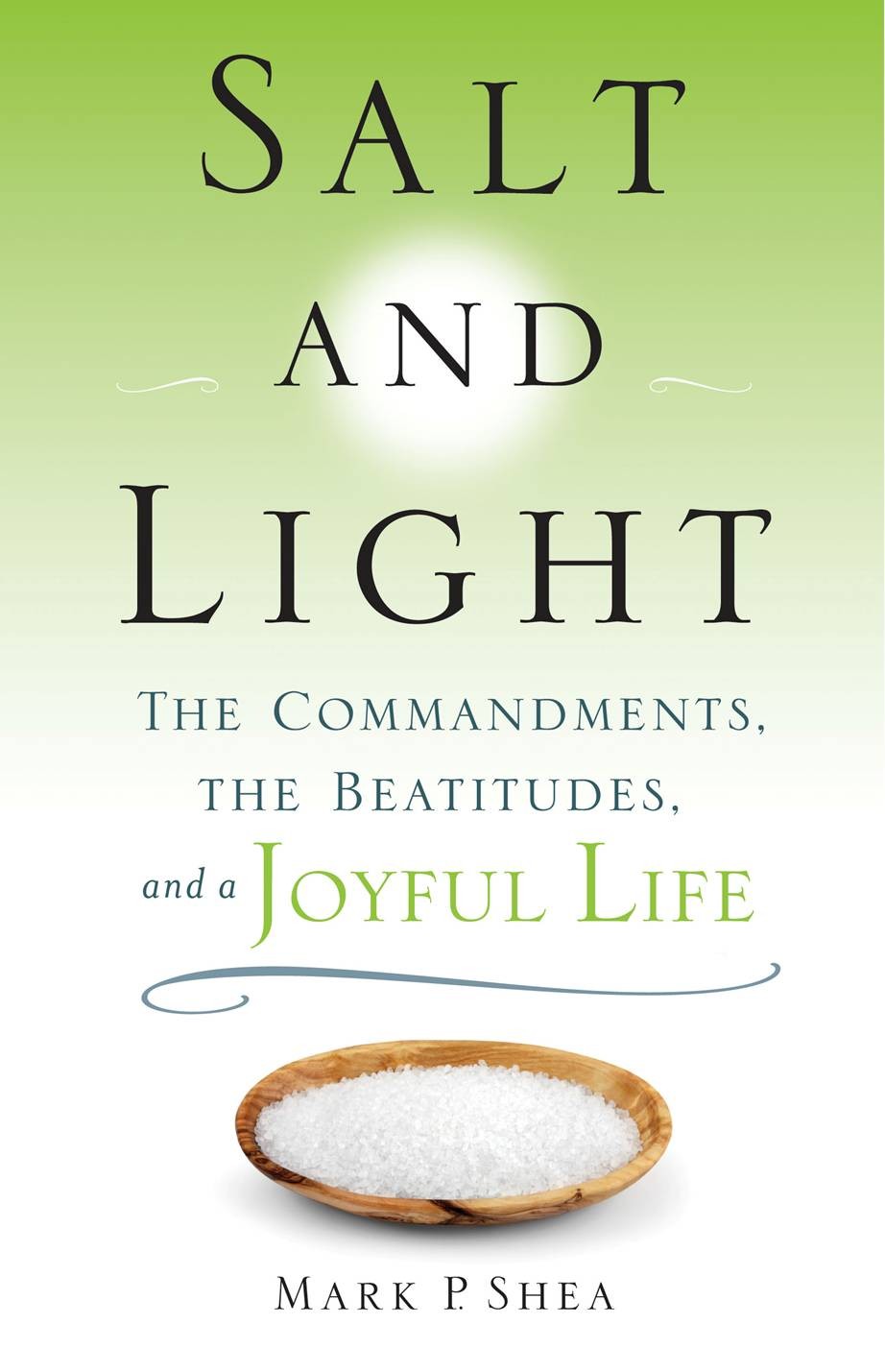
From my book Salt and Light: The Commandments, the Beatitudes and a Joyful Life:
Blessed Are Those Persecuted for Righteousness’ Sake
When I was in fourth grade, a rerun of The Twilight Zone was interrupted by a news bulletin announcing that somebody named Martin Luther King had been shot. I had not the foggiest idea who that might be, but I could tell from my mom’s worried face that he must be somebody important.
The next day, at the beginning of school, Mr. Vaughn asked us how many people had heard that Martin Luther King had been killed the night before. More than half the kids in the class cheered. I still had no clue who the man was, but my Mom and Dad had raised me to think that it was wrong to cheer when somebody gets shot and killed. It left a bad taste in my mouth.
It was my first experience with martyrdom for righteousness’ sake. And as with many an onlooker, my response was at the most basic level a simple perception of injustice. Looking at the circumstances of King’s death, I concluded, “Surely this was an innocent man.” As a fourth-grader, I had no grand theory of race relations in the United States, no knowledge of our tortured history, and not the slightest idea of who King was, what he stood for, who killed him, or why. I just knew that he was, by all accounts, a decent sort who was gunned down while taking the evening air on a motel balcony.
I mention this incident because it seems to me that this beatitude appeals to the human conscience at such primal roots. Jesus pronounces a blessing on those who are persecuted not for the Gospel’s sake but merely for righteousness’ sake—for being decent sorts; for sticking up for the kid being bullied; for being not St. Lawrence or St. Maximilian Kolbe but any Jack or Jill outgunned by city hall, any fighter in a noble but lost cause, anybody who ever went down swinging for the right side—even if that right side was just your little brother, wrongly accused of raiding the cookie jar.
The point of the beatitude is that such people are still connected to heaven, even when they don’t realize it. Such folk bear witness to ultimate things like truth, justice, and love, even when they are fighting for what many an onlooker may regard as light years from such “religious” stuff as the “kingdom of heaven.” Jesus himself is taken by many onlookers not as a spiritual figure but as a decent bloke who got the short end of the stick. Long before all the details are worked out, the full biographical details learned, the background filled in, and the gigantic implications seen in full, there is, in the persecution of Christ, the simple, elemental awareness that a great wrong has been done, a recognition that “certainly this man was innocent!” (Luke 23:47).
It was the inescapable conclusion not just of the pagan Roman tasked with carrying out the crucifixion but of swelling numbers of converts in ancient Rome. They were driven to the conviction that, whatever else might be going on, the followers of Jesus were innocent and did not deserve the insane cruelties being meted out to them by the mob. Indeed, the stark contrast of the martyrs’ noble courage and the bizarre hatred of their persecutors filled onlookers with shame, repentance, and faith, first in the goodness of their victims and then in the goodness of the Christ for whom they gave their lives.
We see this juxtaposition in a sort of chemical purity in some of the moments of the Passion. The sheer gratuitous cruelty of the crowning with thorns, for instance, has always struck me in the way it evokes both pity for Jesus and a sort of embarrassed disgust, not just with the thugs who conceive and execute such a satanic parody of human creativity and whimsy but with our whole race.
I sometimes fancy that at the end of the world, there will be a vast tribunal composed of all the angels and archangels, as well as all the unfallen races that may dot the planets orbiting the stars of the night sky: the hrossa, ETs, Oyarsa, and sundry other creatures whom God, in his wisdom, may have made and quarantined from us by the immense distances of space. When we all meet up at the inauguration of the new heaven and the new earth, they will be excited to meet at last the inhabitants of the Silent Planet called Earth, the one it is rumored was favored by a visit from God himself long ago. The excitement will be palpable. Who, they will ask, are these blessed creatures of Earth, and what beautiful tale will they tell of the festal celebration they gave the Beautiful One when he descended to be among them?
“What did you do to welcome him?” they will ask in expectant wonder. And we, God help us, will have to tell them the whole appalling story, that in addition to running him through a kangaroo court, subjecting him to horsewhipping and jeers from a mob of boobs and morons, and the typical dull-meat-cleaver justice of a bureaucracy, we paused before spiking him naked to a cross—just for one exquisite moment—to focus our hatred into a sharp, crystalline needle of special attentiveness: a sadistic little crown of thorns to press down on the head of a man already trembling with shock and blood loss. Imagine the burning shame of having to tell that story to perfect childlike innocence.
It’s the special vindictiveness, the attention to detail, the diabolical perversion of playfulness, the pure malice of the thing that removes from our race forever the ability to say, “I just never realized. Had I but known. Just following orders….” We shall have to look the choirs of heaven in the eye and say, “We come of the species that does that—and does it to perfect innocence.”
The crucifixion, in short, is itself the demonstration of why God had to make recourse to such a desperate sacrifice to save us. It shows us what our species is capable of—and the mercy of God that is even greater.
Of course, we try to muffle this awful reality by shrouding it in time. We assure ourselves that people did this because they were barbarians living a long time ago. Those of us with small imaginations genuinely believe that, unlike our ancestors, we would not hate, persecute, and kill saints. We imagine we are two thousand years smarter and better than the people who put Jesus to death, just as Jesus’s hearers imagined that they would not have killed the prophets (see Matthew 23:29–30). We think ourselves wiser than the people who despised Paul, Perpetua, Felicity, and Joan of Arc.
The reality is that saying, “But this is the third millennium!” is exactly the same as saying, “But this is Tuesday, July 7!” It’s nonsense, and it completely overlooks the fact that we have done it again and again and again and again to Christ’s followers and to the weakest and most vulnerable among us, in spite of his identification with “the least of these” (Matthew 25:40, 45). We did it to the black man, we did it to the red man, we did it to the Jew, we do it in unimaginable numbers to unborn babies, and we’ll do it to a saint in a heartbeat. That’s because saints still come to us in very repulsive forms, challenging our deepest and most cherished loves—and bigotries. They are antidotes to the popular lies of the age. And as Chesterton noted, because they are antidotes they are often mistaken for poison.
Jesus endured just such hatred. He and his followers were assured by all the leading authorities that his lot was with the wicked and that anyone who followed him would share his fate among the “accursed” who hung from the tree of the cross (see Deuteronomy 21:23). But God has an altogether different opinion—and he always has the last word. He called Jesus his beloved Son and gave him kingship, not only over heaven but over the whole universe as well.
The promise of the beatitude is that anybody who attempts righteousness and sticks with it while the whole world calls him a fool, blasphemer, coward, nigger lover, fetus fetishist, homophobe, friend of faggots, peacenik, self-righteous snob—or any of the other names pride assigns to attempted virtue—shall share in God’s kingdom. And the paradoxical sign of our share in that kingship will be our share in his sufferings and the hatred of the enemies we are called to love and forgive (see Luke 6:27).
In the end, even such hate cannot touch our union with Jesus. We are called and graced to pray for those who despitefully use us—as he did. That is true union with him, and it is toward union with him that all the beatitudes are ordered. That’s why the beatitude of those persecuted for righteousness is inextricably linked to the beatitude of those persecuted for Christ.
Previous Post

April 3, 2014
Now This is How Noah Debates Should be Done
Next Post
April 4, 2014 There's a Little Moment in Jurassic Park I Think of
Browse Our Archives
Select a Category Uncategorized
Select a Month May 2020 April 2020 March 2020 February 2020 January 2020 December 2019 November 2019 October 2019 September 2019 August 2019 July 2019 June 2019 May 2019 April 2019 March 2019 February 2019 January 2019 December 2018 November 2018 October 2018 September 2018 August 2018 July 2018 June 2018 May 2018 April 2018 March 2018 February 2018 January 2018 December 2017 November 2017 October 2017 September 2017 August 2017 July 2017 June 2017 May 2017 April 2017 March 2017 February 2017 January 2017 December 2016 November 2016 October 2016 September 2016 August 2016 July 2016 June 2016 May 2016 December 2015 November 2015 October 2015 September 2015 August 2015 July 2015 June 2015 May 2015 April 2015 March 2015 February 2015 January 2015 December 2014 November 2014 October 2014 September 2014 August 2014 July 2014 June 2014 May 2014 April 2014 March 2014 February 2014 January 2014 December 2013 November 2013 October 2013 September 2013 August 2013 July 2013 June 2013 May 2013 April 2013 March 2013 February 2013 January 2013 December 2012 November 2012 October 2012 September 2012 August 2012 July 2012 June 2012 May 2012 April 2012 March 2012 February 2012 January 2012 December 2011 November 2011 October 2011 September 2011 August 2011 July 2011 June 2011 May 2011 April 2011 March 2011 February 2011 January 2011 December 2010 November 2010 October 2010 September 2010 August 2010 July 2010 June 2010 May 2010 April 2010 March 2010 February 2010 January 2010 December 2009 November 2009 October 2009 September 2009 August 2009 July 2009 June 2009 May 2009 April 2009 March 2009 February 2009 January 2009 September 2006 June 2006 July 2005 April 2005 May 2002 April 2002 0000
Follow Us!
TAKE THE
Religious Wisdom Quiz
What was Paul's native language?
Select your answer to see how you score.
Hebrew Aramaic Greek Latin
Related posts from Catholic and Enjoying It!
The Marian Helpers Center in Stockbridge, MA


Donna-Marie Cooper O'Boyle sez....

TRENDING AT PATHEOS Catholic

The Parable Of The Sower And The Word...
One of Christ’s most famous parables is that of the sower who...

Rejecting Doom: Christian Hope And Human Action
Christianity is a religion of hope. We are to have hope and...

Why I Choose the Eucharist Over the Sermon
Choose the Eucharist, Not the Sermon What are we supposed to get...

5 Design Elements Found in Spiritually Rooted Homes
Putting Spirituality Into Home Decor Our homes are more than our living...

Credo: A Story of God Told with the...
About 10 years ago, I began to imagine a personal "Credo" that...

The Anatomy of Divine Revelation in Catholic Thought
The claim that God has made Himself known to human beings is...
view all Catholic blogs
Ad-Free & Subscriber Log-In Subscription Support
- About Us
- 2026 Calendar
- Videos
- Podcasts
- Library of World Religions
- Faith In Media Tracker
- Advertise With Us
- Write for Us
- Privacy Policy
- Terms of Service
- Do Not Sell My Data
- Contact Us
- Radiant Digital
- Manage Newsletter Subscriptions
- Unsubscribe From Notifications
- Sitemap
Copyright 2008-2026, Patheos. All rights reserved.
Subscription Support Ad-Free & Subscriber Log-In
Follow Patheos