
BuddhistCatholicContemplativeEvangelicalGeneral ChristianHinduJewishLatter-day SaintMuslimNew VisionsProgressive Christian
Beliefs
- Buddhist
- Catholic
- Contemplative
- Evangelical
- General Christian
- Hindu
- Jewish
- Latter-day Saint
- More Voices
- Muslim
- New Visions
- Pagan
- Progressive Christian
Topics
- Religion News
- Food and Religion
- Sports and Religion
- Religious Art
- Religious Music and Entertainment
- Religious Events
- History and Religion
- Style and Religion
- Politics and Religion
- Women in Religion
- Recreation Outdoors and Religion
- Business Finance and Religion
- Careers Workplace and Religion
- Education and Religion
- Family Parenting and Religion
- Health Fitness and Religion
- Home and Religion
- Relationships and Religion
- Technology and Religion
- Travel and Religion
Columnists
- Buddhist Columnists
- Business Finance and Religion Columnists
- Careers Workplace and Religion Columnists
- Catholic Columnists
- Contemplative Columnists
- Education and Religion Columnists
- Evangelists Columnists
- Family Parenting and Religion Columnists
- General Christian Columnists
- Health Fitness and Religion Columnists
- Hindu Columnists
- History and Religion Columnists
- Home and Religion Columnists
- Jewish Columnists
- More Voices Columnists
- Latter Day Columnists
- Muslim Columnists
- New Visions Columnists
- Nonreligious Columnists
- Pagan Columnists
- Politics and Religion Columnists
- Progressive Columnists
- Recreation Outdoors and Religion Columnists
- Relationships and Religion Columnists
- Religion News Columnists
- Religious Art Columnists
- Religious Events Columnists
- Religious Music and Entertainment Columnists
- Sports and Religion Columnists
- Style and Religion Columnists
- Technology and Religion Columnists
- Travel and Religion Columnists
- Women in Religion Columnists
Resource Library
- 2026 Calendar
- Library of World Religions
- The 100 Most Holy Places on Earth
- Patheos Answers
- Podcasts
- Videos
- Faith Leaders Database
- Anglican Episcopalian
- Bahai
- Baptist
- Buddhism
- Christianity
- Confucianism
- Eastern Orthodoxy
- Hinduism
- Holiness and Pentecostal
- ISKCON
- Islam
- Judaism
- Lutheran
- Methodist
- The Church of Jesus Christ of Latter-day Saints
- New Age
- Paganism
- Presbytarian and Reformed
- Protestantism
- Religion Behind the Scenes
- Roman Catholic
- Scientology
- Shia Islam
- Sikhism
- Sufism
- Sunni Islam
- Taoism
- Zen
- See all religions
Research Tools
 Ad-Free & Subscriber Log-In Subscription Support
Ad-Free & Subscriber Log-In Subscription Support
Follow Patheos 

- Trending:
- Forgiveness
- |
- Marriage
- |
- Consciousness
- |
- Death Penalty
- |
- Election
- |
- Halloween
 Catholic and Enjoying It!
- Home
- Catholic
- This Seems Like a Promising Effort
This Seems Like a Promising Effort
Last updated on: December 29, 2014 at 8:46 pm by Mark Shea
This Seems Like a Promising Effort 2014-12-29T20:46:13-07:00 Mark Shea
Patheos Explore the world's faith through different perspectives on religion and spirituality! Patheos has the views of the prevalent religions and spiritualities of the world.
The Covenants of the Prophet Muhammad with the Christians of the World
Now that Christians are being persecuted in their most ancient lands, The Covenants of the Prophet Muhammad with the Christians of the World could not be more timely. The Prophet’s treaties with Christians, which Dr. John Andrew Morrow has rediscovered in obscure collections and often newly translated—providing also powerful arguments for their validity—uniformly state that Muslims are not to attack peaceful Christian communities but defend them “until the End of the World.” The “Covenants Initiative” within the book represents a movement by Muslims, both prominent and unknown, in support of Christians under attack. These treaties, authored by Muhammad himself, desperately need to be better known among Christians, Muslims, and the general public.
(View the Covenants and the Initiative at www.covenantsoftheprophet.com)“This narrative has the power to unite Muslim and Christian communities. A work of scholarship, its release is timely, and its content critical in fostering mutual respect and religious freedom.”—IMAM FEISAL ABDUL RAUF, Chairman, Cordoba Initiative
“In his indispensable contribution to the study of the Abrahamic faiths, John Andrew Morrow tells the story of how the Prophet Muhammad used his desert experiences of hospitality and protection to bring Muslims and Christians together. Morrow quotes the Prophet’s instruction—as relevant today as in his time: ‘With the People of the Book there is to be no strife.’”—JOSEPH HOBBS, University of Missouri
“These letters from the Prophet Muhammad to Christian communities can serve to inspire both Muslims and Christians about our ability to live together as God’s people, as friends, as neighbors, and as custodians of the same small planet.”—OMID SAFI, University of North Carolina
“A useful source for all those interested in the cultural and religious history of the Muslim world and the cultural relationship between Islam and Christianity. It will be very helpful in strengthening tolerance, goodwill, and better understanding between different civilizations; and it opens new horizons for further studies.”—AIDA GASIMOVA, Baku State University
“With painstaking effort and much dedication invested in this groundbreaking work, Professor Morrow will surely manage to attract the attention of Islamic studies students and specialists. Indeed, the book is a genuine call for reconsidering the relationship among the three revealed Abrahamic faiths of Christianity, Judaism and Islam.”—AMAR SELLAM, Mohamed I University
“This book documents what is possibly the third foundational source of Islam: the Prophet’s treaties and covenants among people of the Abrahamic faiths. Dr. Morrow brings forth exceptionally important findings that dictate peaceful coexistence among Jews, Christians, and Muslims, and includes multiple translations for comparison of how the Prophet and his followers treated Christians and Jews with respect and care, far beyond a mere tolerance.”—BRIDGET BLOMFIELD, University of Nebraska
“These covenants are not merely historical documents; they remain valid, binding covenants for all Muslims from the moment of their inception until the end of time. Dr. Morrow’s work has illuminated a new horizon of Islamic public international law and promotes further scholarly investigation of the covenants.”—HISHAM M. RAMADAN, S.J.D., Kwantlen Polytechnic University
“The Covenants of the Prophet Muhammad is a timely, pioneering, and penetrating study that sheds much light on the thoughts and the policy of the Prophet Muhammad.”
—MOHAMED ELKOUCHE, Mohamed I UniversityJOHN ANDREW MORROW completed his Honors BA, MA, and PhD at the University of Toronto, as well as post-doctoral studies in Arabic in Morocco and at the University of Utah’s Middle East Center. Besides his academic training, he has also completed the full cycle of traditional Islamic seminary studies. He has served as a faculty member and administrator at numerous colleges and universities, and has authored and edited many books, including the Encyclopedia of Islamic Herbal Medicine (McFarland, 2011), Religion and Revolution: Spiritual and Political Islam in Ernesto Cardenal (Cambridge Scholars Publishing, 2012), and Islamic Images and Ideas: Essays on Sacred Symbolism (McFarland, 2013).
Islam is not going away anytime soon. So while I am all for evangelizing Islam (and this is, in fact, happening in unprecedented ways in our time, due to both Christian creativity and to the inevitable mixing of cultures that comes of mass global communications), I am also in favor of whatever intiatives can be taken so that Muslims are put in touch with the more benign features of their own tradition and made less sympathetic to the extreme, crazy, and murderous aspects of it. What Catholics often forget is that we are the weirdo in the larger religious picture of things in that we have an actual Magisterium that says, “This is Catholic, that is not.” Most religious traditions, including the other two Abrahamic religions Judaism and Islam (not to mention the myriad protestantisms) have no Magisterium. They just have whatever the loudest voice, strongest arm, biggest subculture or most money *say* is the essence of their Tradition. And even in a Magisterial Church like ours, powerful sociological and political forces can drive a lot of people to ignore the teaching of the Magisterium when it is inconvenient. Same with Islam. Radical Islam’s main targets are typically *other Muslims*, which means there is a war on for what “Islam” means. On the whole, I’d just as soon have Muslims around me saying “The Prophet said to defend the Christians” than the ones who think they please Allah by acts of mass murder. And one of the best recruiting tools the radical nutjobs have are things like indiscriminate drone strikes on innocent Muslims, aided and abetted by a mentality that says, “They’re all the same!”
No. They are not:
In the name of the compassionate and merciful God,
Ragheed, my brother,
I ask your forgiveness for not being with you when those criminals opened fire against you and your brothers. The bullets that have gone through your pure and innocent body have also gone through my heart and soul.
You were one of the first people I met when I arrived to Rome. We met in the halls of the Angelicum and we would drink our cappuccino in the university’s cafeteria. You impressed me with your innocence, joy, your pure and tender smile that never left you.
I always picture you smiling, joyful and full of zest for life. Ragheed is to me innocence personified; a wise innocence that carries in its heart the sorrows of his unhappy people. I remember the time, in the university’s dining room, when Iraq was under embargo and you told me that the price of a single cappuccino would have satisfied the needs of an Iraqi family for a whole day.
You told me this as if you were feeling guilty for being far away from your persecuted people and unable to share in their sufferings …
In fact, you returned to Iraq, not only to share the suffering and destiny of your people but also to join your blood to the blood of thousands of Iraqis killed each day. I will never forget the day of your ordination [Oct. 13, 2001] in the [Pontifical] Urbanian University … with tears in your eyes, you told me: “Today, I have died to self” … a hard thing to say.
I didn’t understand it right away, or maybe I didn’t take it as seriously as I should have. … But today, through your martyrdom, I have understood that phrase. … You have died in your soul and body to be raised up in your beloved, in your teacher, and so that Christ would be raised up in you, despite the sufferings, sorrows, despite the chaos and madness.
In the name of what god of death have they killed you? In the name of which paganism have they crucified you? Did they truly know what they were doing?
O God, we don’t ask you for revenge or retaliation. We ask you for victory, a victory of justice over falsehood, life over death, innocence over treachery, blood over the sword. … Your blood will not have been shed in vain, dear Ragheed, because with it you have blessed the soil of your country. And from heaven, your tender smile will continue to light the darkness of our nights and announce to us a better tomorrow.
I ask your forgiveness, brother, for when the living get together they think they have all the time in the world to talk, visit, and share feelings and thoughts. You had invited me to Iraq … I dreamed of that visit, of visiting your house, your parents, your office. … It never occurred to me that it would be your tomb that one day I would visit or that it would be verses from my Quran that I would recite for the repose of your soul …
One day, before your first trip to Iraq after a prolonged absence, I went with you to buy souvenirs and presents for your family. You spoke with me of your future work: “I would like to preside over the people on the base of charity before justice” — you said.
It was difficult for me to imagine you a “canonical judge” … And today your blood and your martyrdom have spoken for you, a verdict of fidelity and patience, of hope against all suffering, of survival, in spite of death, in spite of everything.
Brother, your blood hasn’t been shed in vain, and your church’s altar wasn’t a masquerade. … You assumed your role with deep seriousness until the end, with a smile that would never be extinguished … ever.
Your loving brother,
Adnam Mokrani
Rome, June 4, 2007
Professor of Islamic Studies in the Institute for the Study of Religion and Culture,
Pontifical Gregorian University
Previous Post

November 5, 2013
Eternal Memory
Next Post
November 5, 2013 Oh the Humanity!
Browse Our Archives
Select a Category Uncategorized
Select a Month May 2020 April 2020 March 2020 February 2020 January 2020 December 2019 November 2019 October 2019 September 2019 August 2019 July 2019 June 2019 May 2019 April 2019 March 2019 February 2019 January 2019 December 2018 November 2018 October 2018 September 2018 August 2018 July 2018 June 2018 May 2018 April 2018 March 2018 February 2018 January 2018 December 2017 November 2017 October 2017 September 2017 August 2017 July 2017 June 2017 May 2017 April 2017 March 2017 February 2017 January 2017 December 2016 November 2016 October 2016 September 2016 August 2016 July 2016 June 2016 May 2016 December 2015 November 2015 October 2015 September 2015 August 2015 July 2015 June 2015 May 2015 April 2015 March 2015 February 2015 January 2015 December 2014 November 2014 October 2014 September 2014 August 2014 July 2014 June 2014 May 2014 April 2014 March 2014 February 2014 January 2014 December 2013 November 2013 October 2013 September 2013 August 2013 July 2013 June 2013 May 2013 April 2013 March 2013 February 2013 January 2013 December 2012 November 2012 October 2012 September 2012 August 2012 July 2012 June 2012 May 2012 April 2012 March 2012 February 2012 January 2012 December 2011 November 2011 October 2011 September 2011 August 2011 July 2011 June 2011 May 2011 April 2011 March 2011 February 2011 January 2011 December 2010 November 2010 October 2010 September 2010 August 2010 July 2010 June 2010 May 2010 April 2010 March 2010 February 2010 January 2010 December 2009 November 2009 October 2009 September 2009 August 2009 July 2009 June 2009 May 2009 April 2009 March 2009 February 2009 January 2009 September 2006 June 2006 July 2005 April 2005 May 2002 April 2002 0000
Follow Us!
TAKE THE
Religious Wisdom Quiz
This chapter in Psalms declares the blessed man who meditates on God's law day and night is like a tree planted by streams. What is its number?
Select your answer to see how you score.
Psalm 1 Psalm 23 Psalm 119 Psalm 100
Related posts from Catholic and Enjoying It!


A nice little horror story for Halloween...
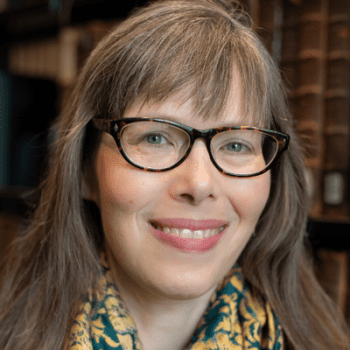
The Adventures of Dawn Eden Goldstein, Part 1

Some books and a video about a heroic...
TRENDING AT PATHEOS Catholic

Rejecting Doom: Christian Hope And Human Action
Christianity is a religion of hope. We are to have hope and...

It’s What Comes From Within Which Matters
One of the most difficult things for us to understand is why...

Why I Choose the Eucharist Over the Sermon
Choose the Eucharist, Not the Sermon What are we supposed to get...

5 Design Elements Found in Spiritually Rooted Homes
Putting Spirituality Into Home Decor Our homes are more than our living...

Credo: A Story of God Told with the...
About 10 years ago, I began to imagine a personal "Credo" that...

The Anatomy of Divine Revelation in Catholic Thought
The claim that God has made Himself known to human beings is...
view all Catholic blogs
Ad-Free & Subscriber Log-In Subscription Support
- About Us
- 2026 Calendar
- Videos
- Podcasts
- Library of World Religions
- Faith In Media Tracker
- Advertise With Us
- Write for Us
- Privacy Policy
- Terms of Service
- Do Not Sell My Data
- Contact Us
- Radiant Digital
- Manage Newsletter Subscriptions
- Unsubscribe From Notifications
- Sitemap
Copyright 2008-2026, Patheos. All rights reserved.
Subscription Support Ad-Free & Subscriber Log-In
Follow Patheos