
BuddhistCatholicContemplativeEvangelicalGeneral ChristianHinduJewishLatter-day SaintMuslimNew VisionsProgressive Christian
Beliefs
- Buddhist
- Catholic
- Contemplative
- Evangelical
- General Christian
- Hindu
- Jewish
- Latter-day Saint
- More Voices
- Muslim
- New Visions
- Pagan
- Progressive Christian
Topics
- Religion News
- Food and Religion
- Sports and Religion
- Religious Art
- Religious Music and Entertainment
- Religious Events
- History and Religion
- Style and Religion
- Politics and Religion
- Women in Religion
- Recreation Outdoors and Religion
- Business Finance and Religion
- Careers Workplace and Religion
- Education and Religion
- Family Parenting and Religion
- Health Fitness and Religion
- Home and Religion
- Relationships and Religion
- Technology and Religion
- Travel and Religion
Columnists
- Buddhist Columnists
- Business Finance and Religion Columnists
- Careers Workplace and Religion Columnists
- Catholic Columnists
- Contemplative Columnists
- Education and Religion Columnists
- Evangelists Columnists
- Family Parenting and Religion Columnists
- General Christian Columnists
- Health Fitness and Religion Columnists
- Hindu Columnists
- History and Religion Columnists
- Home and Religion Columnists
- Jewish Columnists
- More Voices Columnists
- Latter Day Columnists
- Muslim Columnists
- New Visions Columnists
- Nonreligious Columnists
- Pagan Columnists
- Politics and Religion Columnists
- Progressive Columnists
- Recreation Outdoors and Religion Columnists
- Relationships and Religion Columnists
- Religion News Columnists
- Religious Art Columnists
- Religious Events Columnists
- Religious Music and Entertainment Columnists
- Sports and Religion Columnists
- Style and Religion Columnists
- Technology and Religion Columnists
- Travel and Religion Columnists
- Women in Religion Columnists
Resource Library
- 2026 Calendar
- Library of World Religions
- The 100 Most Holy Places on Earth
- Patheos Answers
- Podcasts
- Videos
- Faith Leaders Database
- Anglican Episcopalian
- Bahai
- Baptist
- Buddhism
- Christianity
- Confucianism
- Eastern Orthodoxy
- Hinduism
- Holiness and Pentecostal
- ISKCON
- Islam
- Judaism
- Lutheran
- Methodist
- The Church of Jesus Christ of Latter-day Saints
- New Age
- Paganism
- Presbytarian and Reformed
- Protestantism
- Religion Behind the Scenes
- Roman Catholic
- Scientology
- Shia Islam
- Sikhism
- Sufism
- Sunni Islam
- Taoism
- Zen
- See all religions
Research Tools
 Ad-Free & Subscriber Log-In Subscription Support
Follow Patheos 

- Trending:
- Advent
- |
- Forgiveness
- |
- Thanksgiving
- |
- Election
- |
- Seasonal Holidays
- |
- Marriage
 Pastor Mark Driscoll
- Home
- Evangelical
- Couples Fall Out of Forgiveness Long Before They Fall Out of Love
Couples Fall Out of Forgiveness Long Before They Fall Out of Love
Last updated on: October 12, 2017 at 8:01 am by Mark Driscoll
Couples Fall Out of Forgiveness Long Before They Fall Out of Love 2017-10-12T08:01:07-04:00 Mark Driscoll
Patheos Explore the world's faith through different perspectives on religion and spirituality! Patheos has the views of the prevalent religions and spiritualities of the world.
Fortunately, the wife who had racked up secret debt confessed the whole truth to her husband and—as an act of repentance—cut up the credit card, never to repeat that sin again. And he forgave her. He communicated his appreciation that she had finally told him the truth and admitted that her keeping a secret from him hurt him more than spending the money. Together, they devised a plan to pay off the debt and did so. He never speaks of the matter, as he does not want to shame her for something he has forgiven. And the only reason we know the story is that she tells it freely. Because once she repented and he forgave her, a burden was lifted, thereby enabling her to be honest without feeling condemned or ashamed.
When we sin against our spouses, we cause them to suffer. When we sin, we are supposed to apologize, ask forgiveness, and try to make things right.
When we are sinned against, we need to forgive quickly. Jesus’ words on this are haunting: “Forgive us our sins, for we also forgive everyone who is indebted to us.” We cannot simply ask God to forgive our sins; we must also extend that same forgiveness to others.
Forgiveness is a gospel issue. In our hurt and woundedness, we can lose sight of the truth that no one has been sinned against more than God. No one has been more wounded, grieved, hurt, betrayed, and mistreated more than God. Furthermore, we each have contributed to the pain that God experiences, as all sin is ultimately against God. This means that God could be the most embittered person.
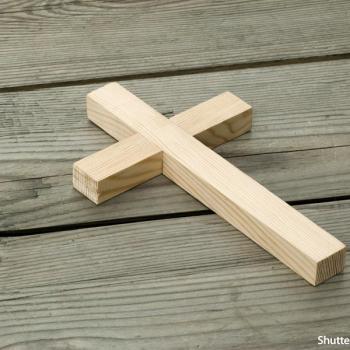
Instead, He came as Jesus and took our place to suffer for our sins, pronouncing forgiveness from the cross.
Therefore, our forgiveness of our spouses has very little, if anything, to do with them. Instead, it has everything to do with God. As an act of worship, we must respond to our sinful spouses as God has responded to our sin—with forgiveness—because it is a gospel issue. We cannot accept forgiveness from God without extending it to our spouses.
The Bible commands spouses to be in the ongoing habit of “forgiving one another, even as God in Christ forgave you.”a How did God forgive believers in Christ? We caused Him to suffer unjustly, and He received it without bitterness, forgave us, pursued us, and wants good for us. This means that if I accept God’s forgiveness of my sins but refuse to forgive my spouse of his or her sins, I am in effect saying by my actions that my spouse’s sin against me is worse than my sin against God.
It is important to note, however, what forgiveness is not:
- Forgiveness is not denying, approving, or diminishing sin that is committed against us. We cannot say we are fine, that it was no big deal, or that, since it was in the past, we’ve just moved on. We must be honest about the reality of the sin if we want the forgiveness to be equally earnest. In forgiving, we are, in fact, saying our spouses are wrong, we do not approve of their sin, and that it really is a big deal and not a trivial matter to us.
- Forgiveness is not naivety. Naive people are prone to live as if the world were not filled with depraved sinners capable of evil; they often become naive by not really looking at the sinfulness of sin, including their own. Such people are not forgiving sin as much as they are ignoring it.
- Forgiveness is not enabling sin. To forgive people is not to remain stuck in their cycle of sin, thus being complicit and enabling their continued transgression.
- Forgiveness is not waiting for someone to acknowledge sin, apologize, and repent. The sad truth is that some people will never fully repent, and others never at all. Others we will never see again, or they will die before we hear an apology. We forgive because it is what God requires and what we need, not because our offenders have apologized.
- Forgiveness is not forgetting about sin committed against us. It is actually impossible to completely forget such things. This is why when God says, “Their sin I will remember no more,” it does not mean that He has no memory, but rather that He continually chooses not to bring it up or keep it in the forefront of His thinking. Indeed, because God is omniscient (all-knowing) it is, in fact, impossible for Him to actually forget something.
- Forgiveness is not dying emotionally and no longer feeling the pain of the transgression. Rather, forgiveness allows us to feel the appropriate depth of grievous pain but choose by grace not to be continually paralyzed or defined by it.
- Forgiveness is not a one-time event. Those who have been sinned against commonly have seasons when they feel afresh the pain of past hurts and have to forgive their transgressors yet again.
- Forgiveness is not reconciliation. It takes one sinner to repent, and one victim to forgive, but it takes both to reconcile. Therefore, unless there is both repentance by the sinner and forgiveness by the victim, reconciliation cannot occur, which means the relationship remains continually broken until reconciliation does occur. Forgiveness is the beginning of potential reconciliation but is not in and of itself reconciliation. Forgiveness takes a moment. The trust that reconciliation requires is gained slowly and lost quickly.
- Forgiveness is not neglecting justice. In fact, if a crime has been committed, we can simultaneously forgive someone and call the police to arrest him or her. God will deal with every sin of every human being justly. For those who repent of sin and come to faith in Jesus Christ, justice came at the cross of Jesus, when our Savior suffered and died in our place for our sins. For those who do not repent of sin and come to faith in Jesus Christ, their justice will come in the punishment that is assigned to them in the conscious eternal torments of hell. By not seeking vengeance, we are not neglecting justice, but rather trusting God for perfect justice and getting ourselves out of the middle between the sinner and God. Romans 12:19 instructs precisely this: “Beloved, do not avenge yourselves, but rather give place to wrath; for it is written, ‘Vengeance is Mine, I will repay,’ says the Lord.” We know that we are not bitter when we actually want those who have sinned against us to be maturing Christians and, in addition to praying for them, we forgive them in hopes of showing them the gospel of grace.
Forgiveness is loving despite sin. Just as God forgives not just undeserving but ill-deserving sinners, we must too. We do not forgive our spouses because they are good or deserving, but rather because God is good and deserving. Forgiveness includes wanting good for the spouse who sinned against you, being able to pray for his or her well-being, and not keeping a record of wrongs against your spouse like a pile of rocks to throw when convenient. Forgiveness is an ongoing lifestyle that is incredibly costly to us and lived out of love for God and others.
How about you? Have you experienced the forgiveness of all your sins through Jesus Christ? Have you shared that forgiveness with your spouse by forgiving them as God forgives you?
Note: this blog is adapted from the Driscoll’s book Real Marriage
Previous Post

January 4, 2017
How is Your Friendship with Your Boyfriend, Girlfriend, or Spouse?
Next Post
January 18, 2017 How to Have a Godly Fight with Your Spouse
Browse Our Archives
Select a Category Ask Pastor Mark Blog Daily Devotions Sermons Uncategorized
Select a Month July 2020 June 2020 May 2020 April 2020 March 2020 February 2020 January 2020 December 2019 November 2019 October 2019 September 2019 October 2018 September 2018 July 2018 June 2018 May 2018 April 2018 March 2018 February 2018 January 2018 December 2017 November 2017 October 2017 September 2017 August 2017 July 2017 June 2017 May 2017 April 2017 March 2017 February 2017 January 2017 December 2016 November 2016 October 2016 September 2016 August 2016 July 2016 June 2016 May 2016 April 2016 March 2016 February 2016 January 2016 December 2015 November 2015 October 2015 September 2015 August 2015 July 2015 June 2015 May 2015 April 2015 December 2014
Follow Us!
TAKE THE
Religious Wisdom Quiz
What qualification does Paul give for elders, saying they must be the husband of how many wives?
Select your answer to see how you score.
One wife No more than three wives As many as he can support Two wives
Related posts from Pastor Mark Driscoll
God’s Fatherly Heart on the George Floyd Horror
4 Things You Need to Know About the...

What Mark Driscoll and Family Have Been Up...

Not Everyone Dies and Goes to a “Better...
TRENDING AT PATHEOS Evangelical

Making Stones Into Bread: Choosing the “Right” Work
I was on my online arts ministry Zoom meeting with the International...

Ukraine’s exhausted Christians face fifth winter of war
By Julian Lukins The full-scale war in Ukraine is taking “a serious...

Russell Brand's Conviction is not anti-Christian Persecution
How do we shed the reputation that the Church is OK with...

Have you ever caught yourself saying, “I’ll do it tomorrow,” or “Now...

Write Your Story: A Great Way to Find...
A few month’s back, my son was scrolling around Facebook and saw...

Throughout history, people have pursued pleasure, possessions, relationships, and success in an...
view all Evangelical blogs
Ad-Free & Subscriber Log-In Subscription Support
- About Us
- 2026 Calendar
- Videos
- Podcasts
- Library of World Religions
- Faith In Media Tracker
- Advertise With Us
- Write for Us
- Privacy Policy
- Terms of Service
- Do Not Sell My Data
- Contact Us
- Radiant Digital
- Manage Newsletter Subscriptions
- Unsubscribe From Notifications
- Sitemap
Copyright 2008-2026, Patheos, part of the Radiant Digital network of media brands. All rights reserved.
Subscription Support Ad-Free & Subscriber Log-In
Follow Patheos