
BuddhistCatholicContemplativeEvangelicalGeneral ChristianHinduJewishLatter-day SaintMuslimNew VisionsProgressive Christian
Beliefs
- Buddhist
- Catholic
- Contemplative
- Evangelical
- General Christian
- Hindu
- Jewish
- Latter-day Saint
- More Voices
- Muslim
- New Visions
- Pagan
- Progressive Christian
Topics
- Religion News
- Food and Religion
- Sports and Religion
- Religious Art
- Religious Music and Entertainment
- Religious Events
- History and Religion
- Style and Religion
- Politics and Religion
- Women in Religion
- Recreation Outdoors and Religion
- Business Finance and Religion
- Careers Workplace and Religion
- Education and Religion
- Family Parenting and Religion
- Health Fitness and Religion
- Home and Religion
- Relationships and Religion
- Technology and Religion
- Travel and Religion
Columnists
- Buddhist Columnists
- Business Finance and Religion Columnists
- Careers Workplace and Religion Columnists
- Catholic Columnists
- Contemplative Columnists
- Education and Religion Columnists
- Evangelists Columnists
- Family Parenting and Religion Columnists
- General Christian Columnists
- Health Fitness and Religion Columnists
- Hindu Columnists
- History and Religion Columnists
- Home and Religion Columnists
- Jewish Columnists
- More Voices Columnists
- Latter Day Columnists
- Muslim Columnists
- New Visions Columnists
- Nonreligious Columnists
- Pagan Columnists
- Politics and Religion Columnists
- Progressive Columnists
- Recreation Outdoors and Religion Columnists
- Relationships and Religion Columnists
- Religion News Columnists
- Religious Art Columnists
- Religious Events Columnists
- Religious Music and Entertainment Columnists
- Sports and Religion Columnists
- Style and Religion Columnists
- Technology and Religion Columnists
- Travel and Religion Columnists
- Women in Religion Columnists
Resource Library
- 2026 Calendar
- Library of World Religions
- The 100 Most Holy Places on Earth
- Patheos Answers
- Podcasts
- Videos
- Faith Leaders Database
- Anglican Episcopalian
- Bahai
- Baptist
- Buddhism
- Christianity
- Confucianism
- Eastern Orthodoxy
- Hinduism
- Holiness and Pentecostal
- ISKCON
- Islam
- Judaism
- Lutheran
- Methodist
- The Church of Jesus Christ of Latter-day Saints
- New Age
- Paganism
- Presbytarian and Reformed
- Protestantism
- Religion Behind the Scenes
- Roman Catholic
- Scientology
- Shia Islam
- Sikhism
- Sufism
- Sunni Islam
- Taoism
- Zen
- See all religions
Research Tools
 Ad-Free & Subscriber Log-In Subscription Support
Ad-Free & Subscriber Log-In Subscription Support
Follow Patheos 

- Trending:
- Forgiveness
- |
- Marriage
- |
- Consciousness
- |
- Death Penalty
- |
- Election
- |
- Halloween
 Maria Francesca French
- Home
- Progressive Christian
- The Non-Clickbait Article on Deconstruction
The Non-Clickbait Article on Deconstruction
Last updated on: March 29, 2022 at 9:17 am by Maria Francesca French
The Non-Clickbait Article on Deconstruction 2022-03-29T09:17:37-08:00 Maria Francesca French
Patheos Explore the world's faith through different perspectives on religion and spirituality! Patheos has the views of the prevalent religions and spiritualities of the world.
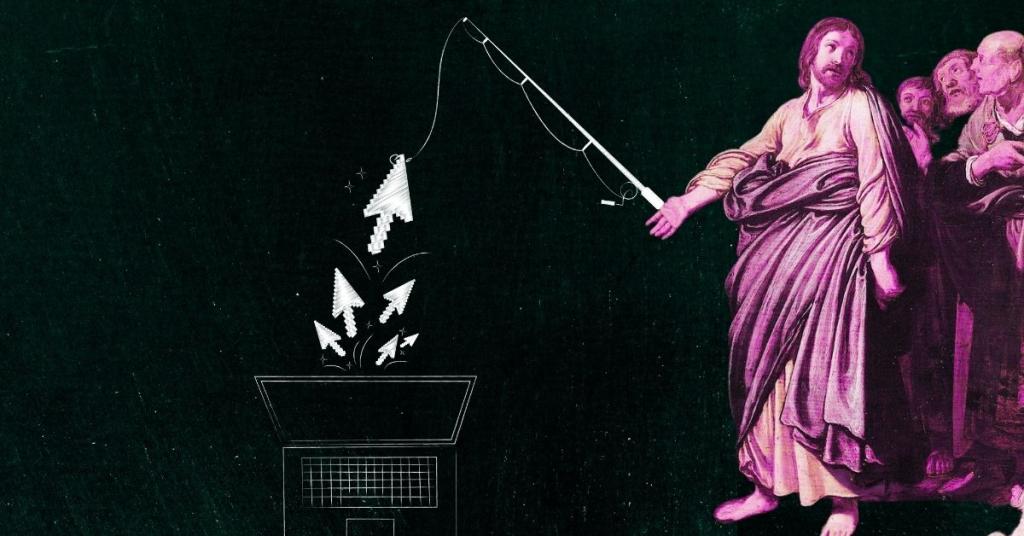
Between John Cooper, The Gospel Coalition and whatever Progressive Christian writer feels like they want to have the sexiest and most provocative title that week, can any of us ever have an honest conversation about true deconstruction? The current dialogue on deconstruction that has been had mostly via online and social media platforms is a vitriolic one. And I get it. A whole generation of people who invested their time, money, energy, relationships – in short, their lives(!), in a form of Christianity that used and abused them are now starting to see what they couldn’t see before. And that is, at the very least, that western Christianity (and western Christianity’s God) simply cannot deliver on its promises. And more than that, depending on one’s church or denominational affiliation, there have been varying degrees of trauma, manipulation, abuse, exploitation, profiteering, and control that continues to be exposed.
In a sense, the vitriol is well deserved. But in another sense, it keeps an open wound open, festering with infection without a way to heal.
There seems to be so much that people are equating with this notion. Are religious trauma and deconstruction the same? Is moving from conservative Christianity to progressive Christianity equivalent to deconstruction? Is a lightbulb moment of one’s initial thoughts of doubt the beginning of deconstruction?
First, let me say this. If you genuinely feel you have experienced trauma, religious or otherwise, you need to find yourself a good therapist specializing in the particular trauma you have experienced. This is not to be minimized in any way.
Secondly, if crimes have been committed and laws were broken, this must be pursued in a court of law. Legal action should be taken, and people must be held accountable.
It is essential to distinguish between mental health and psychological conditions, criminal activity, AND theological movement(s). Often, these things get conflated, and needs aren’t being met appropriately.
The current community claiming the term ‘deconstruction’ is quite opposed to anyone defining the term as they have designated it. However, when we are talking about deconstruction as a theological movement, we must be honest about some things. In the aftermath of this particular deconstruction, there is a reconstruction of another kind of belief. It is usually either a more liberated, inclusive Jesus and/or God, or in some cases agnosticism/atheism, with lots of memes, sarcasm, disdain, and contempt along the way. The issue here is that it is all still on a sliding scale of traditional notions of being and agency, and all one is doing is reacting to whatever else might be on that sliding scale.
Those ‘deconstructing’ are finding more palatable ways of engaging faith that they either don’t want to throw away or they engage it by raging against it. Both are understandable. The issue is neither is deconstruction. If we are serious about deconstruction and if we genuinely want to be radical enough to hop the aforementioned sliding scale, then indeed deconstruction is what we are after, but not as it currently is.
In my last few posts, I’ve written about the post Christian question, l’avenir and event, why a post-secular climate is the hope of the future of God – all of this and more are connected to the event of deconstruction.
There’s so much to say about true deconstruction – as purported and authored by Jacques Derrida and further expanded upon by John Caputo and Mark Taylor. Of course, way too much to give it all up here. And while this concept of deconstruction and all that is (im)possibly connected to it will show up regularly in my writing here, let me say a few things to introduce us further to deconstruction and give us hope in the (im)possibility of its promise (or not).
“Oui, Oui, Sic et non.”[1]
So, a few things Derrida a la Caputo:
“Deconstruction is never merely negative; its desire is never satisfied with “no, no.” Deconstruction is thoroughly mistrustful of discourses that prohibit this and prohibit that, that weigh us down with debts and “don’ts.” Deconstruction is so deeply, and abidingly affirmative – of something new, of something coming – that it finally breaks out in a vast sweeping amen, a great oui, oui – à l’impossible, in a great burst of passion for the impossible.”[2]
Meaning deconstruction is never solely apophatic – it is not exclusively defined by what it is not or even what it interrupts or disrupts. It is highly suspicious of all certainty, epistemology, and knowledge brands. Yet it is always ushering in all that is new, all that is coming – which is all that is impossible.
It is a great risk to wager on the coming of the impossible. But it was Derrida’s wager – the true wager deconstruction asks us to make – the desire for the tout autre – the wholly other. And this goes past and far beyond anything the sliding scale may boast of.
Yet if we desire the wholly other, then “we do not know what we desire.” In fact, “We are all dreaming of an absolute surprise, pondering an absolute secret, all waiting for the tout autre to arrive.”[3]
This is deconstruction – the coming of the waiting and the waiting of the coming of all that is wholly other, which of course, is all that is impossible. Possible has failed, failed utterly and miserably. So, now it is on to the impossible!
To close, Caputo writes, “the business of deconstruction is not to police theologians or anybody else… But to keep things open.” He continues, “deconstruction is not out to undo God or deny faith, or to mock science or make nonsense of literature…”[4]
“Deconstruction is rather the thought, if it is a thought, of an absolute heterogeneity that unsettles all the assurances of the same within which we comfortably ensconce ourselves.”[5]
So, the question then becomes, for me at least, are we brave enough for actual, true deconstruction? Are we courageous enough to approach the coming of the impossible with an openness that will “unsettle all the assurances” of all that we have ever known, surrounded ourselves with, and believed in?
This is the deconstruction wager.
One that is not accepted lightly, and one we find chooses us as much as we think we choose it.
Are you ready to take the wager?
Are you ready to leave the sliding scale in your dust?
Because it is ready when you are.
That’s all for now.
[1] John Caputo, The Prayers and Tears of Jacques Derrida: Religion Without Religion. (Indianapolis: Indiana University Press, 1997) 3.
[2] Ibid.
[3] Ibid.
[4] Ibid, 5.
[5] Ibid, 5.

About Maria Francesca French
Co-Creator of H&Co, the tenure of her career has been in theological education, as both professor and administrator. Maria has also worked in innovative church contexts, church planting and denominational leadership. She is focused on the intersections of faith and culture, offering new forums for faith engagement and theological imaginations that are viable and sustainable for an uncertain future. Find her podcasting on Sacred Anarchies: A Post Church Podcast and curating content and coaching on her Patreon. Check out her website for more. You can read more about the author here.
Previous Post
March 8, 2022
The Hope of god in a Post God World
Next Post

March 22, 2022 Atheism and its Dead God
Browse Our Archives
Select a Category abortion Atheism Bible Christmas colonialism community Culture Current Events Deconstruction Exvangelical Good Friday Hebrew Testament holidays Human Rights Jesus Lent New Testament Palm Sunday Philosophy Politics Post Christian Purity culture Radical Theology Revival seasonal holidays Sex Sexual Ethics Sexuality Spirituality Theology Uncategorized Yahweh
Select a Month March 2024 December 2023 August 2023 June 2023 May 2023 March 2023 February 2023 September 2022 July 2022 April 2022 March 2022 February 2022
Follow Us!
TAKE THE
Religious Wisdom Quiz
In the Parable of the Mustard Seed, what does the seed represent?
Select your answer to see how you score.
Sin The Pharisees Wealth The kingdom of God
Related posts from Maria Francesca French
Lent and Why It Still Might Matter

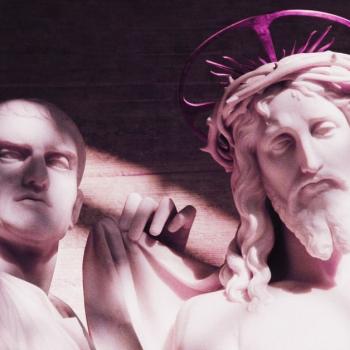
Pilate’s Question: Is It Any Different Than Ours?
TRENDING AT PATHEOS Progressive Christian

The Iron Gates and the Lion of the...
Yesterday, I didn't finish my report about, well, yesterday. So I'll...

Dolly Parton’s Last Song Wins Dove Award with...
Bluegrass band The Grascals, speaking on the red carpet at the 57th...

The Image: On the Horror of Capitalism and...
The Image Then went the Pharisees, and took counsel how they might...

We are approaching the date of our new American national holiday: October...

Letters on Living the Faith by C.S. Lewis
Most of us met C.S. Lewis as a public intellectual. Mere Christianity....

When Halloween Unmasks Married Hearts
Written by Dr. David K. Ewen from Eternal Truth Bible College Behind...
view all Progressive Christian blogs
Ad-Free & Subscriber Log-In Subscription Support
- About Us
- 2026 Calendar
- Videos
- Podcasts
- Library of World Religions
- Faith In Media Tracker
- Advertise With Us
- Write for Us
- Privacy Policy
- Terms of Service
- Do Not Sell My Data
- Contact Us
- Radiant Digital
- Manage Newsletter Subscriptions
- Unsubscribe From Notifications
- Sitemap
Copyright 2008-2026, Patheos. All rights reserved.
Subscription Support Ad-Free & Subscriber Log-In
Follow Patheos