
BuddhistCatholicContemplativeEvangelicalGeneral ChristianHinduJewishLatter-day SaintMuslimNew VisionsProgressive Christian
Beliefs
- Buddhist
- Catholic
- Contemplative
- Evangelical
- General Christian
- Hindu
- Jewish
- Latter-day Saint
- More Voices
- Muslim
- New Visions
- Pagan
- Progressive Christian
Topics
- Religion News
- Food and Religion
- Sports and Religion
- Religious Art
- Religious Music and Entertainment
- Religious Events
- History and Religion
- Style and Religion
- Politics and Religion
- Women in Religion
- Recreation Outdoors and Religion
- Business Finance and Religion
- Careers Workplace and Religion
- Education and Religion
- Family Parenting and Religion
- Health Fitness and Religion
- Home and Religion
- Relationships and Religion
- Technology and Religion
- Travel and Religion
Columnists
- Buddhist Columnists
- Business Finance and Religion Columnists
- Careers Workplace and Religion Columnists
- Catholic Columnists
- Contemplative Columnists
- Education and Religion Columnists
- Evangelists Columnists
- Family Parenting and Religion Columnists
- General Christian Columnists
- Health Fitness and Religion Columnists
- Hindu Columnists
- History and Religion Columnists
- Home and Religion Columnists
- Jewish Columnists
- More Voices Columnists
- Latter Day Columnists
- Muslim Columnists
- New Visions Columnists
- Nonreligious Columnists
- Pagan Columnists
- Politics and Religion Columnists
- Progressive Columnists
- Recreation Outdoors and Religion Columnists
- Relationships and Religion Columnists
- Religion News Columnists
- Religious Art Columnists
- Religious Events Columnists
- Religious Music and Entertainment Columnists
- Sports and Religion Columnists
- Style and Religion Columnists
- Technology and Religion Columnists
- Travel and Religion Columnists
- Women in Religion Columnists
Resource Library
- 2026 Calendar
- Library of World Religions
- The 100 Most Holy Places on Earth
- Patheos Answers
- Podcasts
- Videos
- Faith Leaders Database
- Anglican Episcopalian
- Bahai
- Baptist
- Buddhism
- Christianity
- Confucianism
- Eastern Orthodoxy
- Hinduism
- Holiness and Pentecostal
- ISKCON
- Islam
- Judaism
- Lutheran
- Methodist
- The Church of Jesus Christ of Latter-day Saints
- New Age
- Paganism
- Presbytarian and Reformed
- Protestantism
- Religion Behind the Scenes
- Roman Catholic
- Scientology
- Shia Islam
- Sikhism
- Sufism
- Sunni Islam
- Taoism
- Zen
- See all religions
Research Tools
 Ad-Free & Subscriber Log-In Subscription Support
Ad-Free & Subscriber Log-In Subscription Support
Follow Patheos 

- Trending:
- Forgiveness
- |
- Marriage
- |
- Consciousness
- |
- Death Penalty
- |
- Election
- |
- Halloween
 Maria Francesca French
- Home
- Progressive Christian
- Imminence over Immanence: A Lesson in L’Avenir
Imminence over Immanence: A Lesson in L’Avenir
Last updated on: March 29, 2022 at 9:21 am by Maria Francesca French
Imminence over Immanence: A Lesson in L’Avenir 2022-03-29T09:21:29-08:00 Maria Francesca French
Patheos Explore the world's faith through different perspectives on religion and spirituality! Patheos has the views of the prevalent religions and spiritualities of the world.
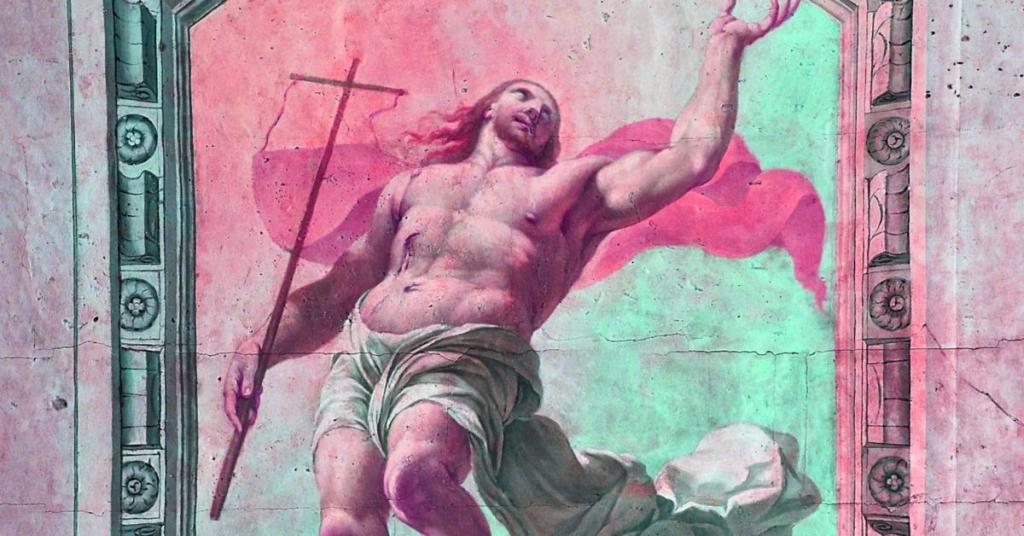
Last week I published my first column here on Patheos, “Our Journey Starts in Paris: A Post Christian Question,” in which I spoke about imminence over transcendence. I, of course, posted the link wherever I thought was appropriate, which included a few theological Facebook groups I’m a part of. A question emerged from one group in particular, and it was a good question at that, and one I’m glad was raised. She asked if I had meant immanence rather than imminence and that perhaps it was ‘editing gone awry.’ It was an excellent question. I engaged it and told her that I would possibly post on it this coming week. So here I am doing just that because I think it is an important distinction to make.
Usually, when transcendence is spoken about within Christian theology (or anything theology for that matter), it is countered by or opposed to the idea of immanence. Immanence, when talked about within the context of god, is meant to express that god is contained within the material world, within the limits of human reason, and within the mores and norms of society, culture and social environment. It means god is contextual and only as good as our experience of said god, and I don’t disagree. One of my most repeated lines in any lecture I have given is that god is only as good as our interpretation of god, Jesus is only as good as our interpretation of Jesus, scripture is only as good as our interpretation of scripture.
This line of thought seems offensive to some: Those who see their construct of god living outside of time and space, a construct defined by absolutes and universals, completely immovable and immaterial. However, god is none of those things. By way of the fact that humans can identify such a god, such a being, such a person, means that god is already contained within history and horizon of a particular time. But I digress.
Immanence has been a much more palatable way to talk about god and all that is impossible, uncontainable, unnamable, unknowable and unconditional.
The term ‘immanent transcendence’ is growing more popular in theological conversations, coined by John Caputo and Mark C. Taylor. It is the process of the transcendent becoming immanent, essentially deconstructing ontology. The death of abstract transcendence gives way to the more temporally located god(s) that we ultimately need our god(s) to be. Perhaps this is one of the many things we can credit Death of God theology with.
So, it was a good question that she had. Don’t I mean immanence???
The answer was that I absolutely did not mean immanence. I am talking imminence over immanence.
So, a short lesson in l’avenir.
Jacques Derrida, the famous French Deconstructionist, lived his life and work by the concept of l’avenir, the French word meaning “to come.” But not in a far off, futuristic way or in a way we can plan for or see coming on the horizon. The French have a word for that understanding of the future… “le futur.” No. L’avenir is imminent! It is the coming of the future but also the arrival of it at the same time. L’avenir is not an epic arrival, and it is not an event with a beginning and ending point. It has zero possibility of being pinned down, it is entirely other, and it will always escape philosophy and mastery. It isn’t a moment. It’s a signal. Derrida spent much of his career devoted to this idea (and reality!) of l’avenir. Speaking of what is impossible, sheltered in our best guesses of the possible. L’avenir unhinges, and it disjoints the movement in question and provokes understanding. This spin around us is coming to us, but already here, but coming to us, and there is nothing we can do to anticipate it.
Jean-Paul Martinon writes, “L’avenir signals that something is afoot.”[1] Indeed it does!
L’avenir goes hand in hand with Derrida’s heralding of ‘event,’ which John Caputo spends a lot of time talking about in his work.
Jacques Derrida, an unknown philosophy Professor, gets a last-minute invitation to the who’s who of modern philosophy, a conference preparing to introduce Structuralism to America back in the 1960s. The last speaker, on the last day, in the last session, in the last hour. He gets up to speak to the French Structuralists, who tout the connectedness of all things. There is no understanding or meaning-making apart from contextual and social-locatedness. Something is defined by the relationships it shares and the structure it finds itself in. Derrida says, structuralism? Sure. Unless event. (My paraphrasing, obvi). And just like that, Derrida completely upended everything everyone thought they knew. A recent biographer of Derrida, Peter Salmon, says it this way: “He spoke for less than half an hour. But by the time he was finished, the entire structuralist project was in doubt, if not dead. An event had occurred: the birth of deconstruction.”[2]
We must make exception for event! We have to anticipate all that which cannot be anticipated, and we must expect all that which cannot be expected! This is what we need in life because this is what life is.
Event is imminently happening but never complete. Never starting, never finishing.
John Caputo says that “the name of God is the name of an event.”[3] Indeed it is.
If it is possible to speak of the Impossible, shouldn’t it sound a bit like this?
To use language so inadequate to try and define all that cannot be spoken about, we actually confine in the process. So if we do make an attempt, and clearly we do(!), might it not be a matter of coming, and going, here but not there and there but not here? It is a matter of transcendence, as it is immanent, but perhaps both are always imminent. It is that breath on your neck. It is that shot in the dark. It is anything but your container and your construct.
But most of us stop at the container and construct. Otherwise, it gets too scary after that. There is the threat of losing our way. But you cannot lose your way if you find yourself traversing the way-less. This is Post Christianity. It isn’t secular, nor is it atheist. Those have ways. They have maps, and they have grids.
If we want god, we want imminence. Exchanging transcendence for imminence exposes us, and lays us bare unto l’avenir, unto event. And what is knowledge in the face of l’avenir? Empirical objectivity, our proud theologies, our gods; what are they in the roars and whispers and teasing and taunting of l’avenir? But we miss this because we are too busy expecting what we know to expect, what we have experienced before and what we long for again.
This is what we want, and this is what we need; Imminence over immanence.
Where transcendence and immanence blur the horizon line, imminence is a horizon with no line. It is all imminently here. Not here, but coming, but here, but coming.
As John Caputo encourages, if one has a prayer to pray…
“Come, to the coming of what we cannot see coming.”[4]
[1] Jean-Paul Martion, On Futurity: Malabou, Nancy and Derrida. (New York: Palgrave MacMillan, 2007).
[2] Peter Salmon, An Event Perhaps: A Biography of Jacques Derrida. (London: Verso, 2020), 3.
[3] John Caputo, The Folly of God: A Theology of the Unconditional. (Salem: Polebridge Press, 2016), 88.
[4] Ibid, 51.

About Maria Francesca French
Co-Creator of H&Co, the tenure of her career has been in theological education, as both professor and administrator. Maria has also worked in innovative church contexts, church planting and denominational leadership. She is focused on the intersections of faith and culture, offering new forums for faith engagement and theological imaginations that are viable and sustainable for an uncertain future. Find her podcasting on Sacred Anarchies: A Post Church Podcast and curating content and coaching on her Patreon. Check out her website for more. You can read more about the author here.
Previous Post

February 22, 2022
Our Journey Starts in Paris: A Post Christian Question
Next Post

March 8, 2022 The Hope of god in a Post God World
Browse Our Archives
Select a Category abortion Atheism Bible Christmas colonialism community Culture Current Events Deconstruction Exvangelical Good Friday Hebrew Testament holidays Human Rights Jesus Lent New Testament Palm Sunday Philosophy Politics Post Christian Purity culture Radical Theology Revival seasonal holidays Sex Sexual Ethics Sexuality Spirituality Theology Uncategorized Yahweh
Select a Month March 2024 December 2023 August 2023 June 2023 May 2023 March 2023 February 2023 September 2022 July 2022 April 2022 March 2022 February 2022
Follow Us!
TAKE THE
Religious Wisdom Quiz
Who was the mother of Samuel?
Select your answer to see how you score.
Hannah Deborah Mary Sarah
Related posts from Maria Francesca French
Lent and Why It Still Might Matter
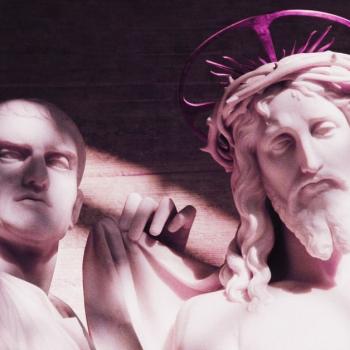
Pilate’s Question: Is It Any Different Than Ours?
TRENDING AT PATHEOS Progressive Christian

Emotion in Early Christianity by Andrew Crislip
Andrew Crislip’s Emotion in Early Christianity examines an often overlooked dimension of...

16 Spiritual Touchstones for a More Grounded Life
After decades of spiritual study, here are 16 principles I try...

Catholic Evangelization: Sharing Your Faith Every Day
Welcome back to the Graceful Awakening mini-series called, “From Faith to Mission.” ...

The Pillar of the Boatmen: the Ancient Monument...
The Pillar of the Boatmen is a Romano-Gaulish sculpture that dates from...

In one sense walking into Westminster Abbey is like walking down the...

'Super Scam Me' Exposes AI Jon Bon Jovi...
Leslie Pickett believed she was in a relationship with Jon Bon Jovi....
view all Progressive Christian blogs
Ad-Free & Subscriber Log-In Subscription Support
- About Us
- 2026 Calendar
- Videos
- Podcasts
- Library of World Religions
- Faith In Media Tracker
- Advertise With Us
- Write for Us
- Privacy Policy
- Terms of Service
- Do Not Sell My Data
- Contact Us
- Radiant Digital
- Manage Newsletter Subscriptions
- Unsubscribe From Notifications
- Sitemap
Copyright 2008-2026, Patheos. All rights reserved.
Subscription Support Ad-Free & Subscriber Log-In
Follow Patheos