
BuddhistCatholicContemplativeEvangelicalGeneral ChristianHinduJewishLatter-day SaintMuslimNew VisionsProgressive Christian
Beliefs
- Buddhist
- Catholic
- Contemplative
- Evangelical
- General Christian
- Hindu
- Jewish
- Latter-day Saint
- More Voices
- Muslim
- New Visions
- Pagan
- Progressive Christian
Topics
- Religion News
- Food and Religion
- Sports and Religion
- Religious Art
- Religious Music and Entertainment
- Religious Events
- History and Religion
- Style and Religion
- Politics and Religion
- Women in Religion
- Recreation Outdoors and Religion
- Business Finance and Religion
- Careers Workplace and Religion
- Education and Religion
- Family Parenting and Religion
- Health Fitness and Religion
- Home and Religion
- Relationships and Religion
- Technology and Religion
- Travel and Religion
Columnists
- Buddhist Columnists
- Business Finance and Religion Columnists
- Careers Workplace and Religion Columnists
- Catholic Columnists
- Contemplative Columnists
- Education and Religion Columnists
- Evangelists Columnists
- Family Parenting and Religion Columnists
- General Christian Columnists
- Health Fitness and Religion Columnists
- Hindu Columnists
- History and Religion Columnists
- Home and Religion Columnists
- Jewish Columnists
- More Voices Columnists
- Latter Day Columnists
- Muslim Columnists
- New Visions Columnists
- Nonreligious Columnists
- Pagan Columnists
- Politics and Religion Columnists
- Progressive Columnists
- Recreation Outdoors and Religion Columnists
- Relationships and Religion Columnists
- Religion News Columnists
- Religious Art Columnists
- Religious Events Columnists
- Religious Music and Entertainment Columnists
- Sports and Religion Columnists
- Style and Religion Columnists
- Technology and Religion Columnists
- Travel and Religion Columnists
- Women in Religion Columnists
Resource Library
- 2026 Calendar
- Library of World Religions
- The 100 Most Holy Places on Earth
- Patheos Answers
- Podcasts
- Videos
- Faith Leaders Database
- Anglican Episcopalian
- Bahai
- Baptist
- Buddhism
- Christianity
- Confucianism
- Eastern Orthodoxy
- Hinduism
- Holiness and Pentecostal
- ISKCON
- Islam
- Judaism
- Lutheran
- Methodist
- The Church of Jesus Christ of Latter-day Saints
- New Age
- Paganism
- Presbytarian and Reformed
- Protestantism
- Religion Behind the Scenes
- Roman Catholic
- Scientology
- Shia Islam
- Sikhism
- Sufism
- Sunni Islam
- Taoism
- Zen
- See all religions
Research Tools
 Ad-Free & Subscriber Log-In Subscription Support
Ad-Free & Subscriber Log-In Subscription Support
Follow Patheos 

- Trending:
- Forgiveness
- |
- Marriage
- |
- Consciousness
- |
- Death Penalty
- |
- Election
- |
- Halloween

- Home
- History and Religion
- Berhampore Theosophical Society
Berhampore Theosophical Society
Last updated on: February 15, 2024 at 9:09 pm by Shawn F. Higgins
Berhampore Theosophical Society 2024-02-15T21:09:30-05:00 Shawn F. Higgins
Patheos Explore the world's faith through different perspectives on religion and spirituality! Patheos has the views of the prevalent religions and spiritualities of the world.
BERHAMPORE THEOSOPHICAL SOCIETY
The ascendency of the Bhadra Lok created a social ecology in Bengal curious about Western scholarship, including Western occultism. Mriganka Mukhopadhay, the leading scholar in the Theosophical Movement in Bengal, who has written much on the subject, states that the first Bengali to become a member of the Theosophical Society was Peary Chandra Mitra (a prominent member of the Young Bengal movement) in 1877. Mitra, an entrepreneur, journalist, and founding member of British Indian Society, developed an interest in Spiritualism after the death of his wife. His articles in the journal The London Spiritualist drew the attention of Colonel Olcott, who sent Mitra a membership diploma to the Theosophical Society. Other leading Bengali Bhadra Lok soon joined the Theosophical Society, such as Raja Shyama Shankar Ray, and Sisir Kumar Ghose, editor of Amrita Bazar Patrika. In March 1882, Olcott established the Berhampore Branch, in Murshidabad, marking the official beginning of the Theosophical Society in Bengal.[1] Nobin Krishna Banerjee, a Deputy Magistrate, and Manager-General of Wards’ Estate of Murshidabad, was named the first President of the Berhampore Branch, also known as The Adhi-Bhoutik Bhratri T.S. (A.B.B.T.S.)
The Secretary of the A.B.B.T.S. was a man named Dinanath Ganguly (????-1904, ) a distinguished scholar of the Old Hindu College. He joined the Berhampore Bar in 1854, and through his ability and advocacy, soon rose in eminence, earning the rank of Government Pleader of Berhampore in 1860, and veteran Vakil of that city. He was the legal advisor of the Nawab of Murshidabad, and for a long time the Vice-Chairman of the Berhampore Municipality. Like other Brahmins of his caliber, he placed a premium on social reform, and introduced the Brahmo Samaj to Murshidabad. He took great interest in female education. The Berhampore Girl’s School owed its existence and prosperity chiefly to his efforts. Though he earned a good deal of money, he “spent every farthing of it in relieving the sufferings of the poor and the needy.”[2] Olcott would state: “It is no exaggeration to say that the stability of our movement in Bengal was largely due to the devoted persistence and zeal displayed by him […] and the other leading men who made the Branch a center, throbbing with life and power.”[3]
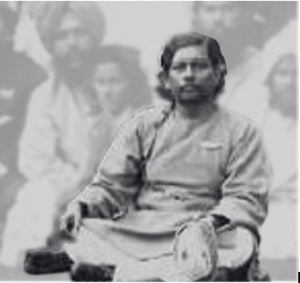
Dinanath Ganguly at the 1883 Convention, Adyar, India.[4]
Dinanath joined the Theosophical Society in 1881 with Nobin Krishna Banerji, with whom he co-founded the (A.B.B.T.S.)[5] Being one of the Trustees in which the stewardship of Grant Hall (the town hall of Berhampore) was vested, Dinanath secured that space for the regular weekly meetings of A.B.B.T.S.[6] Dinanath, who initially served as Secretary of the A.B.B.T.S., became the Branch president in 1885 when Banerji (the inaugural president) passed away.[7] After the (Adyar) Convention of 1888, Dinanath’s Theosophical responsibilities were expanded, and he served as the General Secretary of the new Bengal Section of the Theosophical Society with its Headquarters in Berhampore.[8]
The Theosophists from the Berhampore Branch were known to visit other Branches of Bengal, acting as a central nerve of connectivity. It also had the distinction of being one of the only branches in Bengal that allowed the admittance of Hindu women to its membership. The members of Berhampore Branch were also known for assuming control of local voluntary associations, which influenced many youths in the 1880s.[9] One such example is Kali Prasanna Mukerji, a native of Panchara in the district of Burdwan. (By the time the Johnstons arrived in India, Kali Prasanna was one of the Secretaries of the Adhi-Boutic Bhratru T.S.) Kali Prasanna prosecuted his studies in the late 1870s in Government College, Berhampore, where his late-father held an appointment.[10] Being one of three native pastors for the London Missionary Society (LMS) in Berhampore, Kali Prasanna’s involvement with the Theosophical Society is an interesting one.[11] It was in September 1878, while pursuing his studies (and just four years prior to joining the Theosophical Society) that Kali Prasanna was led to inquire about Christianity at the LMS in Berhampore, and “was convinced of its truth through the instrumentality” of the Reverend Samuel John Hill, and Nanda Lal Das, the Missionaries at Berhampore.[12] Though Kali Prasanna did not join the T.S. until the summer of 1882, he was involved in the discussion of yoga initiated in The Theosophist.[13] It was Kali Prasanna who initiated a wave of articles on Tantra with his discussion in “The Tantric and Puranic Ideas of Deity.” In the article Kali Prasanna emphasized that the unity of all, veiled by Maya, lay at the core of that yogic, esoteric doctrine. He defined Tantra as lying at the root of all Aryan traditions, and as being separated into an esoteric and exoteric part:
The doctrines laid in the “Gnyan Kanda” are called secret doctrines and are supposed to be known and understood by “Yogees” and “Paramahansas” only. They appear unanimously to agree in considering that the universe is not anything separate, created by God, but simply a manifestation of the “Infinite” in different shapes and forms perceived by the senses only through “Maya,” illusion or ignorance, to which they attribute the cause of the phenomenal world. This “Maya” is called the Primitive Force, the “Adi Sakti,” “Prakriti,” the “Adi Nilri,” or the first mother, and is supposed to be the first emanation from the Infinite giving birth to the three deities, “Brahma,” “Vishnu,” and “Shiva,” the supposed principles and causes of creation, preservation, and dissolution. Shiva, although produced from the first force, and represented as “Kal” (time), or “Mahakal” (eternity,) is supposed to be again the husband of “Adi Nari” cooperating with her in first giving rise to the world, and then absorbing everything into themselves. He is without beginning, and his end is not known, and from him the revolutions of creation, continuance aud dissolution unintermittingly succeed. The object of constant meditation of Shiva is “Byom,” Akash (ether.)[14]
← Table Of Contents →
SOURCES:
[1] Strube, Julian. Global Tantra. Oxford University Press. Oxford, England. (2022): 69-95.
[2] “Local Intelligences.’” The Englishman’s Overland Mail. (Calcutta, India) December 1, 1904; Anon. “Report Of Missionary Operations.” The Theistic Quarterly Review. (March 1, 1879): 63-86.
[3] H.S.O. “Death Of Dinanath Ganguly.” Supplement To The Theosophist. Vol. XXVI (November 1904): xii.
[4] Olcott, Henry Steel. Old Diary Leaves: Volume III. Theosophical Publishing Society. London, England. (1904): 91.
[5] Theosophical Society General Membership Register, 1875-1942 at http://tsmembers.org/. See book 1, entry 866. (website file: 1A: 1875-1885) Dina Nath Gangooly. [Berhampur, September 17, 1881]
[6] “Branches of The Theosophical Society—Indian.” General Report of The Thirteenth Convention of The Theosophical Society. (1889): 68-77. Majumdar, Purna Chundra. The Musnud of Murshidabad (1704-1904): Being A Synopsis of The History of Murshidabad for the Last Two Centuries. Saroda Ray. Murshidabad, India. (1905): 235.
[7] Mukhopadhyay, M. “A Short History of The Theosophical Movement in Colonial Bengal.” Paralokatattva. Kolkata: The Bengal Theosophical Society. (2017): 101-134.
[8] Ganguly, Dina Nath “Rules For The Bengal Or North Eastern Section Theosophical Society.” Supplement To The Theosophist, Vol. X (September, 1889): cixiv-cixv.
[9] Mukhopadhyay, M. “A Short History of The Theosophical Movement in Colonial Bengal.” Paralokatattva. Kolkata: The Bengal Theosophical Society. (2017): 101-34.
[10] “Bengal.” The Civil & Military Gazette. (Lahore, Pakistan) September 6, 1878.
[11] Goonewardene, C. P. “Secretaries Report for the Indian Branches.” General Report of The Thirteenth Convention of The Theosophical Society. (1889): 13-23; Walsh, J. H. Tull. A History of Murshidabad District (Bengal): With Biographies of Some of Its Noted Families. Jarrold & Sons. London, England. (1902): 70.
[12] “Bengal.” The Civil & Military Gazette. (Lahore, Pakistan) September 6, 1878.
[13] Theosophical Society General Membership Register, 1875-1942 at http://tsmembers.org/. See book 1, entry 1341. (website file: 1A: 1875-1885) Kali Prasanna Mukherji. (09/18/1882); Johnston, Charles. “A Holy Man: Helping to Govern India” The Atlantic Monthly Vol. 110, No. 5. (November 1912): 653-659; Strube, Julian. Global Tantra. Oxford University Press. Oxford, England. (2022): 110. [69-112.]
[14] Mookerji, Kali Prasanna. “The Tantric and Puranic Ideas of Deity.” The Theosophist. Vol. III, No. 33. (June 1882): 226-227
Previous Post

February 12, 2024
Anglo India
Next Post

February 13, 2024 Sanskrit Examination
Recent Comments
"This is a cool article thanks!"
"Another facet of the Leo Taxil affair is that he, posing as Diana Vaughan, had ..."
Browse Our Archives
Select a Category Uncategorized
Select a Month October 2025 March 2025 February 2025 January 2025 December 2024 November 2024 October 2024 September 2024 August 2024 July 2024 June 2024 May 2024 April 2024 March 2024 February 2024 January 2024 December 2023 November 2023 October 2023 September 2023 August 2023 July 2023 June 2023 May 2023 April 2023 March 2023 February 2023 January 2023 December 2022 November 2022 October 2022
TAKE THE
Religious Wisdom Quiz
What does the Bible say is better than gold?
Select your answer to see how you score.
Bread Wisdom Wine Strength
Related posts from Marginalia
Charles Johnston, Tolstoyans, And "Rambles In Russia."
Occultism And The Irish Literary Society In America
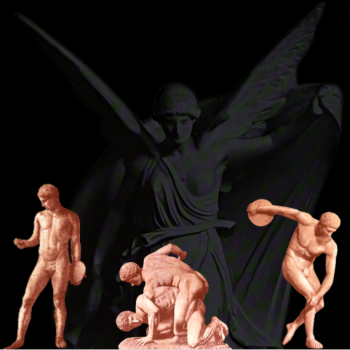
Modern Olympics And Secret Societies
TRENDING AT PATHEOS History and Religion

The Dead Man’s Hand: Appalachian Graveyard Magic
When the Mountains Go Dark: Appalachian Folklore for Spooky Season Installment 3...

Angel Crowns: An Eerie Appalachian Death Tradition
When the Mountains Go Dark: Appalachian Folklore for Spooky Season Angel Crowns:...

Is 'Separation of Church and State' Really a...

There has long been a popular belief that Zen Buddhism is as...

Is Our Spirituality Communal or Individual?
Here, I take swings at sacred cows. I suspect that more sacred...

How Could Christianity be Different?
Christians can no longer plead ignorance. And Christians' reluctance to listen will...
view all History and Religion blogs
What Are Your Thoughts?leave a comment
Ad-Free & Subscriber Log-In Subscription Support
- About Us
- 2026 Calendar
- Videos
- Podcasts
- Library of World Religions
- Faith In Media Tracker
- Advertise With Us
- Write for Us
- Privacy Policy
- Terms of Service
- Do Not Sell My Data
- Contact Us
- Radiant Digital
- Manage Newsletter Subscriptions
- Unsubscribe From Notifications
- Sitemap
Copyright 2008-2026, Patheos. All rights reserved.
Subscription Support Ad-Free & Subscriber Log-In
Follow Patheos