
BuddhistCatholicContemplativeEvangelicalGeneral ChristianHinduJewishLatter-day SaintMuslimNew VisionsProgressive Christian
Beliefs
- Buddhist
- Catholic
- Contemplative
- Evangelical
- General Christian
- Hindu
- Jewish
- Latter-day Saint
- More Voices
- Muslim
- New Visions
- Pagan
- Progressive Christian
Topics
- Religion News
- Food and Religion
- Sports and Religion
- Religious Art
- Religious Music and Entertainment
- Religious Events
- History and Religion
- Style and Religion
- Politics and Religion
- Women in Religion
- Recreation Outdoors and Religion
- Business Finance and Religion
- Careers Workplace and Religion
- Education and Religion
- Family Parenting and Religion
- Health Fitness and Religion
- Home and Religion
- Relationships and Religion
- Technology and Religion
- Travel and Religion
Columnists
- Buddhist Columnists
- Business Finance and Religion Columnists
- Careers Workplace and Religion Columnists
- Catholic Columnists
- Contemplative Columnists
- Education and Religion Columnists
- Evangelists Columnists
- Family Parenting and Religion Columnists
- General Christian Columnists
- Health Fitness and Religion Columnists
- Hindu Columnists
- History and Religion Columnists
- Home and Religion Columnists
- Jewish Columnists
- More Voices Columnists
- Latter Day Columnists
- Muslim Columnists
- New Visions Columnists
- Nonreligious Columnists
- Pagan Columnists
- Politics and Religion Columnists
- Progressive Columnists
- Recreation Outdoors and Religion Columnists
- Relationships and Religion Columnists
- Religion News Columnists
- Religious Art Columnists
- Religious Events Columnists
- Religious Music and Entertainment Columnists
- Sports and Religion Columnists
- Style and Religion Columnists
- Technology and Religion Columnists
- Travel and Religion Columnists
- Women in Religion Columnists
Resource Library
- 2026 Calendar
- Library of World Religions
- The 100 Most Holy Places on Earth
- Patheos Answers
- Podcasts
- Videos
- Faith Leaders Database
- Anglican Episcopalian
- Bahai
- Baptist
- Buddhism
- Christianity
- Confucianism
- Eastern Orthodoxy
- Hinduism
- Holiness and Pentecostal
- ISKCON
- Islam
- Judaism
- Lutheran
- Methodist
- The Church of Jesus Christ of Latter-day Saints
- New Age
- Paganism
- Presbytarian and Reformed
- Protestantism
- Religion Behind the Scenes
- Roman Catholic
- Scientology
- Shia Islam
- Sikhism
- Sufism
- Sunni Islam
- Taoism
- Zen
- See all religions
Research Tools
 Ad-Free & Subscriber Log-In Subscription Support
Ad-Free & Subscriber Log-In Subscription Support
Follow Patheos 

- Trending:
- Forgiveness
- |
- Marriage
- |
- Consciousness
- |
- Death Penalty
- |
- Election
- |
- Halloween

- Home
- Hindu
- History and Religion
- The Reincarnation Of Ma Sa Nyun
The Reincarnation Of Ma Sa Nyun
Last updated on: February 17, 2024 at 4:10 pm by Shawn F. Higgins
The Reincarnation Of Ma Sa Nyun 2024-02-17T16:10:34-05:00 Shawn F. Higgins
Patheos Explore the world's faith through different perspectives on religion and spirituality! Patheos has the views of the prevalent religions and spiritualities of the world.
THE REINCARNATION OF MA SA NYUN
Charles Johnston
June 1889.
Margie and little Theo had been spirited away to Darjeeling to lift up their hearts toward the miraculous snows of Kinchinjunga, to breathe in new life and strength from the vivid mountain air.[1] On the departure of Ritchie, I was left in charge of the District of Murshidabad with its million and a quarter subdued Bengali souls whom I was supposed to govern, and generally keep in the fear of the Lord.[2] The courts were closed, including the tennis court. All the senior civilians were up at Darjeeling, tiptoe on the misty mountain top, and flirting with one another’s wives among the rhododendrons. At least so said Eugène. But, then, he is an inveterate gossip. He and I had the station all to ourselves.

“The Loop, ‘Agony Point’, on Darjeeling Himalayan Railway, 1880s.” (Source: Wiki)

On June 20, began the “great rains,” with rending thunderstorms and crackling violet lights across the cloud curtains, filling the air with steam; through September and October the stifling, muggy days that brought the malarial mosquitoes, whose iniquities were just beginning to be discerned.[3] The rains had come up like thunder, and had continued, once more like thunder, with smothering mists, multitudinous lightnings, reverberant boomings, and white sluicings of water that flushed the earth like an inundation. The Bhagirathi river daily rose in a brown seething flood, upborne by the embankment until it was a dozen feet above the level of the square.[4]
The Ganges all along its lower course flows through an absolutely flat country, so flat that you would thank the gods for even a mole hill, to break the awful monotony of the horizon. Every year the Ganges, flushed with the melting snows of the Himalayas, and later with the rains of the monsoon, used to flood the whole plain with muddy waves. And, indeed, the whole of Bengal was built up of these mud deposits. That is why it is so flat. Well, nature began to alter this state of things by gradually depositing the heaviest of the mud on the river banks, and thus laying the first foundations of a natural embankment. Then man came along, wanting, as he always does, to improve on nature. He built the embankments higher, so that the river could no longer escape. That was a mistake; for, first of all, the annual flood brought fat soil to the fields, for the indigo and mulberry crops, and secondly, the mud was now deposited in the bed of the river itself, and so the river bed was gradually raised, a few inches each year. Then, to keep in the floods, they had to raise the embankment, and so the river and the embankment, and so the river and the embankment each went one better year by year, until at last the Ganges stream was perched high above the plain, at the top of a twenty-foot mound. And this embankment, being only made of sand, kept leaking all the time, and had to be patched; and the fields lost their annual dose of fatness. So that is what comes of improving nature.[5]
The flat cement roof of our bungalow had been seamed and cracked, like a wrinkled face, by the blazing sun of the hot season, and when the thunderclouds of the greater rains burst in cataracts over our devoted heads, there was nothing to keep the water from coming through the ceilings of our rooms. Accordingly it came. Once, in an hour of detached thirst for knowledge, I counted eleven separate streams descending upon our carpets, while the two Poonaswamis and Punagarami rushed wildly about with pans and tubs to catch the drip; and did indeed catch a good deal of it, while the thunder boomed overhead. But the rooms were perpetually damp, full of the sour smell of rotting bamboo matting; and mildew broke out on all sides, over everything. The ants, more provident than ourselves, had made their way up the walls, carrying bag and baggage up well-defined little roads, and were now comparatively dry amid the big beams of the ceiling.[6]
Each afternoon of the rains, Eugène and I were reduced to desultory billiards at the Club, sipping weak beverages flavored with quinine and gin.[7] Neither played well. It took us an hour make fifty. We were getting very used to each other.[8]
The Waldrons were to pass through the station, on their way up to the Hills.
“Colonel Waldron married a native, you know!” gossiped dear old Eugène; “very pretty woman! Took her home, and taught her English!”
“Any kiddies?” I asked.
“No kiddies! and ever so much better though it’s hard on her! That sort of thing often works out alright for the parents. But it’s likely to hit the kiddies hard!”[9]
We gave the Waldrons a dinner at the Club. Everybody liked them both. Colonel Waldron, tanned and iron gray, was fit as a youngster, and told us stories of old-time hunting in the Arakan Hills. Mrs. Waldron had the prettiest manners, and spoke the prettiest English—a little thing, merry, graceful, with just a touch of gray on the temples. Rather becoming, I thought. Not so dark as a Sicilian, and with a touch of Japan in her face, but perfect in all our Western ways.
Old Maung Hkin came with me to the Club dinner, with my knives and forks stuck in his belt, as the custom is, and stood behind my chair.
After the soup, when he should have been supplying me with deliciously flavored, but abominably bony, Gangetic hilsa, I noticed that the old man was absent from my elbow, and looked round the room for him. There he was, in the corner, his eyes riveted on Colonel Waldron’s face. His glance flitted to Mrs. Waldron, then back to the Colonel. With sudden misgiving I saw his face darken, and his fingers played restlessly on the ivory handle of the dinner-knife in his belt. Was the old homicidal fury coming on him again? Then the truth flashed into my mind. We were in the very midst of a tragedy!
I called him sharply. The first time, he hardly heard me. I called him again, imperatively. He winced, rubbed his hand across his eyes, and came slowly over to me, dragging one foot after the other. “That is forgotten!” I said, speaking in his ear. “It was in a former birth!”
The old man shivered, gave himself a spiritual wrench, and answered in a rather shaken voice— “Even so, Sahib! It is of a former birth! It is forgotten!”
Then he went quietly to the kitchen to get me some fish.
He served me sedately, with his wonderful docility, for the rest of the meal. But his eyes were perpetually wandering to Mrs. Waldron’s face.
When dinner was over, the old man did a beautiful thing. We were gathered on the Club veranda. Mrs. Waldron was sitting in a low wicker chair, in a bower of young palm trees. I was talking to her about the Alps. Maung Hkin came over and gave me a light for my cigarette. Then, very quietly, he knelt before Mrs. Waldron, took her hand—she had beautiful hands—and brought it to his forehead. It was his forgiveness of Ma San Nyun. And the full grace of it lay in his silence.[10]
← Table Of Contents →
SOURCES:
[1] Such health resorts and facilities had grown in popularity in both Europe and India. In Darjeeling, Eden Sanitarium (est. 1882) catered to Europeans while the Lowis Jubilee Sanatorium (est. 1887) catered to the natives. [Bhattacharya, Nandini, ‘The Sanatorium of Darjeeling: European Health in a Tropical Enclave’, Contagion and Enclaves: Tropical Medicine in Colonial India (Liverpool, 2012; online edition. Liverpool Scholarship Online. June 20, 2013. https://doi.org/10.5949/UPO9781846317835.002.]
[2] In the “The Reincarnation Of Maung Hkin,” Johnston states that Maung Hkin returned when he was Acting Governor: “Oh, but, my good old friend, that is impossible! You know we got pardoned! You have no more business in jail now than I have! Less, indeed, for just at present I am Acting Governor!” [Johnston, Charles. “The Reincarnation Of Maung Hkin.” The Atlantic Monthly. Vol. CXVI, No. 5. (November 1915): 616-624.]
[3] Johnston, Charles. “A Perspective On India.” The Atlantic Monthly. Vol. CXXXVIII, No. 6. (December 1926): 848-856.
[4] Johnston, Charles. “A Holy Man: Helping To Govern India.” The Atlantic Monthly. Vol. CX, No. 5. (November 1912): 653-659.
[5] Johnston, Charles. “Mussulman Festival.” The Providence Journal. (Providence, Rhode Island) December 4, 1898.
[6] Johnston, Charles. “A Holy Man: Helping To Govern India.” The Atlantic Monthly. Vol. CX, No. 5. (November 1912): 653-659.
[7] Johnston, Charles. “His Highness The Nawab: Helping To Govern India.” The Atlantic Monthly. Vol. CVIII, No. 4. (December, 1911): 797-804.
[8] Johnston, Charles. “A Prince Of India.” The Puritan. Vol. V., No. 2. (March 1899): 309-319.
[9] Johnston, Charles. “The Reincarnation Of Maung Hkin.” The Atlantic Monthly. Vol. CXVI, No. 5. (November 1915): 616-624.
[10] Johnston, Charles. “The Reincarnation Of Maung Hkin.” The Atlantic Monthly. Vol. CXVI, No. 5. (November 1915): 616-624.
Hindu
Politics and Religion
Previous Post

February 14, 2024
Punagarami
Next Post
February 14, 2024 Eastern Gleanings
Recent Comments
"This is a cool article thanks!"
"Another facet of the Leo Taxil affair is that he, posing as Diana Vaughan, had ..."
Browse Our Archives
Select a Category Uncategorized
Select a Month October 2025 March 2025 February 2025 January 2025 December 2024 November 2024 October 2024 September 2024 August 2024 July 2024 June 2024 May 2024 April 2024 March 2024 February 2024 January 2024 December 2023 November 2023 October 2023 September 2023 August 2023 July 2023 June 2023 May 2023 April 2023 March 2023 February 2023 January 2023 December 2022 November 2022 October 2022
TAKE THE
Religious Wisdom Quiz
Who wrote two letters known for emphasizing "truth" and "love"?
Select your answer to see how you score.
Paul Peter John James
Related posts from Marginalia
Charles Johnston, Tolstoyans, And "Rambles In Russia."
Occultism And The Irish Literary Society In America
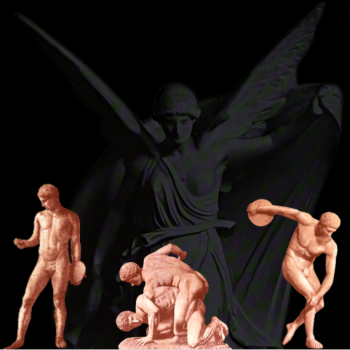
Modern Olympics And Secret Societies
TRENDING AT PATHEOS History and Religion

The Dead Man’s Hand: Appalachian Graveyard Magic
When the Mountains Go Dark: Appalachian Folklore for Spooky Season Installment 3...

Angel Crowns: An Eerie Appalachian Death Tradition
When the Mountains Go Dark: Appalachian Folklore for Spooky Season Angel Crowns:...

Is 'Separation of Church and State' Really a...

There has long been a popular belief that Zen Buddhism is as...

Is Our Spirituality Communal or Individual?
Here, I take swings at sacred cows. I suspect that more sacred...

How Could Christianity be Different?
Christians can no longer plead ignorance. And Christians' reluctance to listen will...
view all History and Religion blogs
What Are Your Thoughts?leave a comment
Ad-Free & Subscriber Log-In Subscription Support
- About Us
- 2026 Calendar
- Videos
- Podcasts
- Library of World Religions
- Faith In Media Tracker
- Advertise With Us
- Write for Us
- Privacy Policy
- Terms of Service
- Do Not Sell My Data
- Contact Us
- Radiant Digital
- Manage Newsletter Subscriptions
- Unsubscribe From Notifications
- Sitemap
Copyright 2008-2026, Patheos. All rights reserved.
Subscription Support Ad-Free & Subscriber Log-In
Follow Patheos