
BuddhistCatholicContemplativeEvangelicalGeneral ChristianHinduJewishLatter-day SaintMuslimNew VisionsProgressive Christian
Beliefs
- Buddhist
- Catholic
- Contemplative
- Evangelical
- General Christian
- Hindu
- Jewish
- Latter-day Saint
- More Voices
- Muslim
- New Visions
- Pagan
- Progressive Christian
Topics
- Religion News
- Food and Religion
- Sports and Religion
- Religious Art
- Religious Music and Entertainment
- Religious Events
- History and Religion
- Style and Religion
- Politics and Religion
- Women in Religion
- Recreation Outdoors and Religion
- Business Finance and Religion
- Careers Workplace and Religion
- Education and Religion
- Family Parenting and Religion
- Health Fitness and Religion
- Home and Religion
- Relationships and Religion
- Technology and Religion
- Travel and Religion
Columnists
- Buddhist Columnists
- Business Finance and Religion Columnists
- Careers Workplace and Religion Columnists
- Catholic Columnists
- Contemplative Columnists
- Education and Religion Columnists
- Evangelists Columnists
- Family Parenting and Religion Columnists
- General Christian Columnists
- Health Fitness and Religion Columnists
- Hindu Columnists
- History and Religion Columnists
- Home and Religion Columnists
- Jewish Columnists
- More Voices Columnists
- Latter Day Columnists
- Muslim Columnists
- New Visions Columnists
- Nonreligious Columnists
- Pagan Columnists
- Politics and Religion Columnists
- Progressive Columnists
- Recreation Outdoors and Religion Columnists
- Relationships and Religion Columnists
- Religion News Columnists
- Religious Art Columnists
- Religious Events Columnists
- Religious Music and Entertainment Columnists
- Sports and Religion Columnists
- Style and Religion Columnists
- Technology and Religion Columnists
- Travel and Religion Columnists
- Women in Religion Columnists
Resource Library
- 2026 Calendar
- Library of World Religions
- The 100 Most Holy Places on Earth
- Patheos Answers
- Podcasts
- Videos
- Faith Leaders Database
- Anglican Episcopalian
- Bahai
- Baptist
- Buddhism
- Christianity
- Confucianism
- Eastern Orthodoxy
- Hinduism
- Holiness and Pentecostal
- ISKCON
- Islam
- Judaism
- Lutheran
- Methodist
- The Church of Jesus Christ of Latter-day Saints
- New Age
- Paganism
- Presbytarian and Reformed
- Protestantism
- Religion Behind the Scenes
- Roman Catholic
- Scientology
- Shia Islam
- Sikhism
- Sufism
- Sunni Islam
- Taoism
- Zen
- See all religions
Research Tools
 Ad-Free & Subscriber Log-In Subscription Support
Follow Patheos 

- Trending:
- Advent
- |
- Forgiveness
- |
- Thanksgiving
- |
- Election
- |
- Seasonal Holidays
- |
- Marriage
 Manic Pagan Dream Grrl
- Home
- Pagan
- Education and Religion
- Working with the Ancestors
Working with the Ancestors
Last updated on: August 3, 2023 at 8:48 am by Katie Gerrard
Working with the Ancestors 2023-08-03T08:48:44+00:00 Katie Gerrard
Patheos Explore the world's faith through different perspectives on religion and spirituality! Patheos has the views of the prevalent religions and spiritualities of the world.

Ancestor work is a two-way process. As spiritual beings, we search for answers from energies outside of ourselves, whilst the ancestors have a special interest in us fulfilling our life’s purpose. Perhaps over and above that of deities, elementals, or fae we may invoke as neo-pagans. Their energy lives in us. We’re often continuing what they started, even if it’s just seeing the energy they created still moving forwards.
The ancestors also rely on us to keep them alive through memories, and stories.
We can ‘feed’ them with offerings of incense and cakes etc but what they really want is for us to remember them, all year round not just at Halloween. They like us to put aside time to say their names, to feel their energy, and to feel that connection.
In return we feel immense love and support from them. Their energy lives within us.
For me the ancestors are more than simply a part of our genetics. We can also find ancestors in those who came before us in our spiritual paths, our professions, or who are linked to our cultures and places we live.
As we nurture the energy they passed to us, we feel our own connection to them, and to each other.
That co-regulation we seek as social beings can be found both within us and outside of us in connection to those who have gone before.
We understand what shaped us, either through repeating of patterns or through distinct decisions we made to move away from those patterns.
Our ancestors know more about our past than we do, but if we believe that time is non-linear, maybe they also know more about our future than we do too?
“Is it right to “call up” your ancestors? Why not let them rest?”
You definitely need to consider consent when calling on ancestors. Is it right for them at this moment to come and talk to you, or would that limit their progression?
If we’re working with ancestors, rather than recent dead they seem to be more settled in their roles. I would personally avoid ‘calling up’ individual ancestors by name to give wisdom, but when we think about the ancestors and tell their stories are we not invoking their energy?
When you start reaching your energy towards the ancestors, you’ll find specific energies are more receptive than others. It’s a good idea, at least when you start, to work with those who come forward rather than seeking out names and identities to learn more about them.
Like other energy work you’d do, always invite rather than invoke.
“But if Aunty Maureen wasn’t that wise in life, how do we expect her to be that useful when dead?”
I always find this a strange concept. Do you feel you’ve learnt more as you’ve got older? Every year I understand more, study more, experience more. Years really do make a difference, especially if you have time during those years to process and sit with your emotions.
And what are we calling wisdom? There are many kinds of intelligence, and ways of looking at problems. If Aunty Maureen didn’t have an accounting qualification we maybe shouldn’t be asking her for help with our taxes, but if we want to know why we feel a particular affinity to oak trees she may have a theory or two.
Besides, I find that ancestors (as opposed to more recently dead) have a different kind of energy and wisdom, there is less personality, less preoccupation with the mundane. I guess, one way to describe this is less emotional clutter.
If we approach the ancestors in ‘self’ energy, we’ll connect with more of their ‘self’ energy
What do I mean by this?
There’s a concept in lots of religions of a person having a ‘higher’ or ‘soul’ version of a person. That could be the version of you where you feel most strongly yourself, or when you are your most calm. For those of us who are practising pagans this could mean our ritual selves or the self we are most likely to be conscious of when we’re in ritual.
IFS Therapy sees the personality as being fragmented into ‘parts’ – different aspects of our personality which come to the front to fulfil different roles. It sees the self as being the core of our personality, non-judgemental, non-blaming, not triggered.
When we work with the ancestors, we want to work with their most authentic, core selves. To bring these energies, we approach them as our core self rather than using a part of us which might be reflected by an aspect of them.
For me, working with the ancestors has always felt very congruent and normalised. It’s a big part of what defines me as a witch.
I’ll be running a four week ‘Working with Ancestors’ course online via Treadwells Bookshop starting in February
Education and Religion
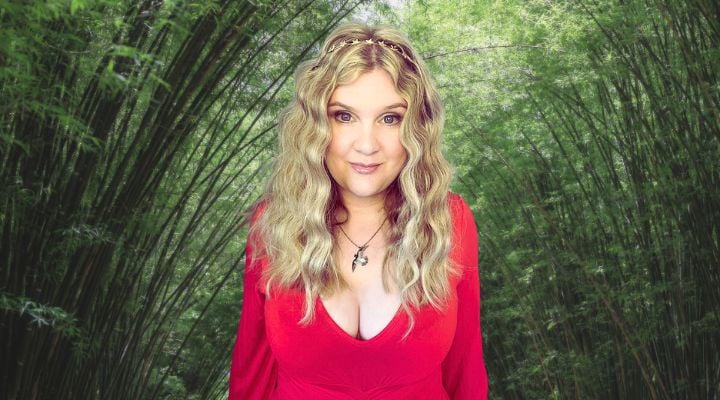
About Katie Gerrard
Author of "Seidr: The Gate is Open" and "Odin’s Gateways", Katie Gerrard is a witch working as a hypnotherapist, yoga teacher and workshop facilitator. You can read more about the author here.
Previous Post

December 29, 2022
New year, new plans? Here are some tips to making changes stick.
Next Post

January 25, 2023 Working with the Ancestors: Healing the Scapegoat
Browse Our Archives
Select a Category Ancestors Doing the work Hypnosis Pagan Groups Shamanism Spiritual Leadership The Pagan Year Uncategorized Yoga
Select a Month June 2024 January 2024 October 2023 September 2023 August 2023 July 2023 June 2023 January 2023 December 2022 September 2022 August 2022 March 2022 February 2022 July 2021 June 2021 April 2021 March 2021 February 2021 January 2021 December 2020 November 2020 October 2020 September 2020
Follow Us!
TAKE THE
Religious Wisdom Quiz
How many years between the exodus of the Children of Israel and construction of the temple?
Select your answer to see how you score.
480 years 450 years 400 years 500 years
Related posts from Manic Pagan Dream Grrl

On spiritual inheritance: What to keep and what...

The importance of spiritual supervision and mentoring

I no longer practise “cord cutting”, here’s what...

How to take your Ancestor Rite online this...
TRENDING AT PATHEOS Pagan

To help with the upcoming holiday season, I'm introducing the Holiday Helper...

10 years of the Power Sigil & Moving...
Last week while reorganizing my studio space, I found the sketchbook that...

Why are younger seekers drawn to Paganism and...
One of the things I've noticed the most is that I'm far...

When we talk about Greek religion, we often begin with the dodekatheion—the...

I was recently chatting with someone on Instagram. She asked me what...

On July 23, I saw Christopher Nolan's The Odyssey which is Homer’s...
view all Pagan blogs
Ad-Free & Subscriber Log-In Subscription Support
- About Us
- 2026 Calendar
- Videos
- Podcasts
- Library of World Religions
- Faith In Media Tracker
- Advertise With Us
- Write for Us
- Privacy Policy
- Terms of Service
- Do Not Sell My Data
- Contact Us
- Radiant Digital
- Manage Newsletter Subscriptions
- Unsubscribe From Notifications
- Sitemap
Copyright 2008-2026, Patheos, part of the Radiant Digital network of media brands. All rights reserved.
Subscription Support Ad-Free & Subscriber Log-In
Follow Patheos