
BuddhistCatholicContemplativeEvangelicalGeneral ChristianHinduJewishLatter-day SaintMuslimNew VisionsProgressive Christian
Beliefs
- Buddhist
- Catholic
- Contemplative
- Evangelical
- General Christian
- Hindu
- Jewish
- Latter-day Saint
- More Voices
- Muslim
- New Visions
- Pagan
- Progressive Christian
Topics
- Religion News
- Food and Religion
- Sports and Religion
- Religious Art
- Religious Music and Entertainment
- Religious Events
- History and Religion
- Style and Religion
- Politics and Religion
- Women in Religion
- Recreation Outdoors and Religion
- Business Finance and Religion
- Careers Workplace and Religion
- Education and Religion
- Family Parenting and Religion
- Health Fitness and Religion
- Home and Religion
- Relationships and Religion
- Technology and Religion
- Travel and Religion
Columnists
- Buddhist Columnists
- Business Finance and Religion Columnists
- Careers Workplace and Religion Columnists
- Catholic Columnists
- Contemplative Columnists
- Education and Religion Columnists
- Evangelists Columnists
- Family Parenting and Religion Columnists
- General Christian Columnists
- Health Fitness and Religion Columnists
- Hindu Columnists
- History and Religion Columnists
- Home and Religion Columnists
- Jewish Columnists
- More Voices Columnists
- Latter Day Columnists
- Muslim Columnists
- New Visions Columnists
- Nonreligious Columnists
- Pagan Columnists
- Politics and Religion Columnists
- Progressive Columnists
- Recreation Outdoors and Religion Columnists
- Relationships and Religion Columnists
- Religion News Columnists
- Religious Art Columnists
- Religious Events Columnists
- Religious Music and Entertainment Columnists
- Sports and Religion Columnists
- Style and Religion Columnists
- Technology and Religion Columnists
- Travel and Religion Columnists
- Women in Religion Columnists
Resource Library
- 2026 Calendar
- Library of World Religions
- The 100 Most Holy Places on Earth
- Patheos Answers
- Podcasts
- Videos
- Faith Leaders Database
- Anglican Episcopalian
- Bahai
- Baptist
- Buddhism
- Christianity
- Confucianism
- Eastern Orthodoxy
- Hinduism
- Holiness and Pentecostal
- ISKCON
- Islam
- Judaism
- Lutheran
- Methodist
- The Church of Jesus Christ of Latter-day Saints
- New Age
- Paganism
- Presbytarian and Reformed
- Protestantism
- Religion Behind the Scenes
- Roman Catholic
- Scientology
- Shia Islam
- Sikhism
- Sufism
- Sunni Islam
- Taoism
- Zen
- See all religions
Research Tools
 Ad-Free & Subscriber Log-In Subscription Support
Follow Patheos 

- Trending:
- Advent
- |
- Forgiveness
- |
- Thanksgiving
- |
- Election
- |
- Seasonal Holidays
- |
- Marriage
 Manic Pagan Dream Grrl
- Home
- Pagan
- I’m Reinventing The Pagan Wheel (Of The Year) To Suit My Own Needs
I’m Reinventing The Pagan Wheel (Of The Year) To Suit My Own Needs
Last updated on: August 3, 2023 at 9:05 am by Katie Gerrard
I’m Reinventing The Pagan Wheel (Of The Year) To Suit My Own Needs 2023-08-03T09:05:43+00:00 Katie Gerrard
Patheos Explore the world's faith through different perspectives on religion and spirituality! Patheos has the views of the prevalent religions and spiritualities of the world.

The Wheel of the Year is an established part of modern pagan practise. It’s something I ponder deeply when thinking about the upcoming festivals. For example I wrote a blog post last year about why the Autumn Equinox has never inspired me. But in general, it’s probably not something I think about too often.
I’m sometimes accused of wanting to reinvent the wheel for no good reason. I’ll admit it’s a habit I have. I look at things and want to pull at the stitching to find out why it was made that way and if it will hold.
Because it’s tradition, is not an answer I accept.
We hear a lot about the wheel of the year, often with criticism of certain authors shoehorning deities or practises into festivals.
However we hear a lot less about why it was conceived in this format.
Gardner first created Wicca with the four fire festivals – Imbolc, Beltane, Lammas, and Samhain. However the existence of the Solstices and Equinoxes wasn’t completely ignored. Later the four cross quarter festivals were added to the calendar.
This may have been to give covens more time to meet since many only got together during the sabbats.
Alexandrian tradition, however, had more of an emphasis on training so covens would meet far more often, some of them weekly.
Some witches choose to celebrate the moon cycles rather than the sabbats, or even to do both.
The coven I ran originally met for all the full moons and all the sabbats. I can tell you that involved a lot of cups to wash. It also meant it just wasn’t possible for every member to attend every event.
Eventually we shortened this to meeting every full moon and celebrating the nearest sabbat where possible on those days. I found this problematic because it meant we only worked at full moons. As a witch, I feel some magical workings need to be done at different moon phases.
More and more, my life dictates celebrating the moon phases or the set Wheel of the Year sabbats doesn’t work for me.
I sat back and thought, what’s stopping me doing it differently?
The only thing, it turned out, was that I had no other system which looked like it would suit me.
The Wheel of the Year was developed within the UK for the UK. That doesn’t mean no one else can use it, there’s no need for gatekeeping here. It just means the times and tides it references are specific to a small region of Europe.
Most antipodean witches have switched the festivals so they’re celebrating the ones which match their seasons rather than the calendar year.
I always wondered if there had been a better way. If rather than just picking it up and working it wholesale, other climates could adapt it to suit their seasons?
This year, with lockdown and a lot of soul searching, I decided I wasn’t going to work with the Wheel of Year anymore.
Instead, I’m going to trial working with a system which suits me better.
Instead of Gardner’s Wheel of the Year, I’ll be working more of a Gardener’s Wheel of the Year
For me, there are distinct times when things happen, and I want to be focused on certain types of mindset.
It’s less days and more seasons. Which means it works better to celebrate the beginning of a season and then use that as a springboard for focused working. Samhain for example has always kicked off a period of work with the dead. Lammas has always kicked off a month of enjoying the weather and relaxation.
The year is already chunked into pieces with the school terms. These originally followed the times when all hands were needed in the fields. You could argue the need for the school holidays to follow this format is also antiquated, but right now it’s easier to work with them than campaign for the whole country to change.
As a gardener, I’m also in touch with the seasons and what needs doing when.
I decided to work with the land and agricultural seasons more than I had been and base my new witch calendar on this.
I tried to create eight perfect seasons, but it just didn’t work.
And instead of making it match-y match-y for the sake of it, I decided to go with what worked.
So we start around now, at the February half term and continue as follows. I’ve used the word moon because I like it, but each time could easily be referred to as tides or phases.
Hungry Moon:
The point where the weather changes in February, usually around the February half term
Time for clearing and ploughing.
In witchcraft we can use this time for banishing, cleansing, tidying, planning, and organising
Seed Moon:
The Easter full moon is such a cultural pin point that I see no reason to not use this as my marker.
Time for planting, painting, and the first sustained outdoors work
This is an active time, taking the first steps to actioning plans, and energetic work
Strawberry Moon:
This is around Midsomar or the Whitsun Bank Holiday. It’s the point when the rains are becoming less regular and the ground is heating up. This is the first harvest – the peas and strawberries. It’s also time for more planting.
Time to take stock of projects, to start the next phase, and to be active, busy, and outside. A time of physical effort and exertion.
Singing Moon:
For me the summer is a time when I don’t do much witchcraft. The last week of July and the first week of August are often periods when I meet with lots of people and am sociable.
It’s a time of togetherness, of community, partying, and learning from each other.
Harvest Moon:
For me September has always been more about the holiday being over and it being time to get back to work. It’s also the time of the fruit and squash harvests. There is more planting to be done now the hottest weather of August is over.
The kinds of workings here are more introspective and intellectual. They involve research and writing and book learning.
Ancestor Moon:
Time to take stock of everything, to store things for winter and pick everything that needs taking out the ground before the first frosts.
For me this time of year will always be about the dead and other realms. It’s a time for communing with spirits, ancestors, and deities.
Yule Moon:
Christmas and New Year always mark the point for me when the weather changes to cold. Apart from the brevity of Christmas, it’s a time when I feel least energetic and motivated.
Instead of fighting the urge to hibernate I’m going to spend this time eating the stored food before it goes off, sleeping, and resting.
This does mean, in general, you’re likely to see silence from me during the Patheos Pagan tradition of writing a blog post for the festival we’re entering.
There will be plenty of festivals I don’t celebrate.
You will instead see posts detailing what I’m doing whilst I follow my own seasons. Which if nothing else will be unique! Hopefully they’ll inspire you to rethink your own celebrations too.
About Katie Gerrard
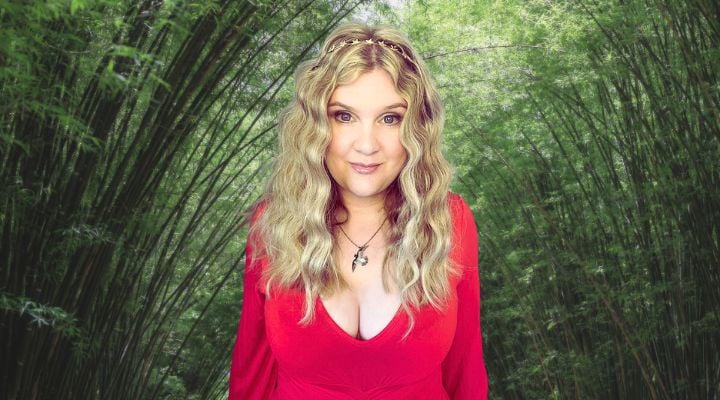
Author of "Seidr: The Gate is Open" and "Odin’s Gateways", Katie Gerrard is a witch working as a hypnotherapist, yoga teacher and workshop facilitator. You can read more about the author here.
Previous Post

February 16, 2021
Working With The Hagalaz Rune During The Winter Lockdown
Browse Our Archives
Select a Category Ancestors Doing the work Hypnosis Pagan Groups Shamanism Spiritual Leadership The Pagan Year Uncategorized Yoga
Select a Month June 2024 January 2024 October 2023 September 2023 August 2023 July 2023 June 2023 January 2023 December 2022 September 2022 August 2022 March 2022 February 2022 July 2021 June 2021 April 2021 March 2021 February 2021 January 2021 December 2020 November 2020 October 2020 September 2020
Follow Us!
TAKE THE
Religious Wisdom Quiz
What was the sign God gave to Noah as a promise to never flood the earth again?
Select your answer to see how you score.
Lightning Fire Rainbow Dove
Related posts from Manic Pagan Dream Grrl

On spiritual inheritance: What to keep and what...
The importance of spiritual supervision and mentoring
I no longer practise “cord cutting”, here’s what...

How to take your Ancestor Rite online this...
TRENDING AT PATHEOS Pagan

To help with the upcoming holiday season, I'm introducing the Holiday Helper...

10 years of the Power Sigil & Moving...
Last week while reorganizing my studio space, I found the sketchbook that...

Why are younger seekers drawn to Paganism and...
One of the things I've noticed the most is that I'm far...

When we talk about Greek religion, we often begin with the dodekatheion—the...

I was recently chatting with someone on Instagram. She asked me what...

On July 23, I saw Christopher Nolan's The Odyssey which is Homer’s...
view all Pagan blogs
Ad-Free & Subscriber Log-In Subscription Support
- About Us
- 2026 Calendar
- Videos
- Podcasts
- Library of World Religions
- Faith In Media Tracker
- Advertise With Us
- Write for Us
- Privacy Policy
- Terms of Service
- Do Not Sell My Data
- Contact Us
- Radiant Digital
- Manage Newsletter Subscriptions
- Unsubscribe From Notifications
- Sitemap
Copyright 2008-2026, Patheos, part of the Radiant Digital network of media brands. All rights reserved.
Subscription Support Ad-Free & Subscriber Log-In
Follow Patheos