
BuddhistCatholicContemplativeEvangelicalGeneral ChristianHinduJewishLatter-day SaintMuslimNew VisionsProgressive Christian
Beliefs
- Buddhist
- Catholic
- Contemplative
- Evangelical
- General Christian
- Hindu
- Jewish
- Latter-day Saint
- More Voices
- Muslim
- New Visions
- Pagan
- Progressive Christian
Topics
- Religion News
- Food and Religion
- Sports and Religion
- Religious Art
- Religious Music and Entertainment
- Religious Events
- History and Religion
- Style and Religion
- Politics and Religion
- Women in Religion
- Recreation Outdoors and Religion
- Business Finance and Religion
- Careers Workplace and Religion
- Education and Religion
- Family Parenting and Religion
- Health Fitness and Religion
- Home and Religion
- Relationships and Religion
- Technology and Religion
- Travel and Religion
Columnists
- Buddhist Columnists
- Business Finance and Religion Columnists
- Careers Workplace and Religion Columnists
- Catholic Columnists
- Contemplative Columnists
- Education and Religion Columnists
- Evangelists Columnists
- Family Parenting and Religion Columnists
- General Christian Columnists
- Health Fitness and Religion Columnists
- Hindu Columnists
- History and Religion Columnists
- Home and Religion Columnists
- Jewish Columnists
- More Voices Columnists
- Latter Day Columnists
- Muslim Columnists
- New Visions Columnists
- Nonreligious Columnists
- Pagan Columnists
- Politics and Religion Columnists
- Progressive Columnists
- Recreation Outdoors and Religion Columnists
- Relationships and Religion Columnists
- Religion News Columnists
- Religious Art Columnists
- Religious Events Columnists
- Religious Music and Entertainment Columnists
- Sports and Religion Columnists
- Style and Religion Columnists
- Technology and Religion Columnists
- Travel and Religion Columnists
- Women in Religion Columnists
Resource Library
- 2026 Calendar
- Library of World Religions
- The 100 Most Holy Places on Earth
- Patheos Answers
- Podcasts
- Videos
- Faith Leaders Database
- Anglican Episcopalian
- Bahai
- Baptist
- Buddhism
- Christianity
- Confucianism
- Eastern Orthodoxy
- Hinduism
- Holiness and Pentecostal
- ISKCON
- Islam
- Judaism
- Lutheran
- Methodist
- The Church of Jesus Christ of Latter-day Saints
- New Age
- Paganism
- Presbytarian and Reformed
- Protestantism
- Religion Behind the Scenes
- Roman Catholic
- Scientology
- Shia Islam
- Sikhism
- Sufism
- Sunni Islam
- Taoism
- Zen
- See all religions
Research Tools
 Ad-Free & Subscriber Log-In Subscription Support
Ad-Free & Subscriber Log-In Subscription Support
Follow Patheos 

- Trending:
- Forgiveness
- |
- Marriage
- |
- Consciousness
- |
- Death Penalty
- |
- Election
- |
- Halloween

- Home
- Progressive Christian
- Recreation, Outdoors and Religion
- When Life Yields Rotten Grapes (And God Isn’t to Blame)
When Life Yields Rotten Grapes (And God Isn’t to Blame)
Last updated on: June 3, 2026 at 12:45 pm by Rob Giannamore
When Life Yields Rotten Grapes (And God Isn’t to Blame) 2026-06-03T12:45:29-04:00 Rob Giannamore
Patheos Explore the world's faith through different perspectives on religion and spirituality! Patheos has the views of the prevalent religions and spiritualities of the world.
When Everything Goes Wrong

I hike a lot. Many of the big trips I plan don’t go the way I originally plan them to go. | Image courtesy of the author.
A Reflection on Isaiah 5:1-4
When we read this passage, we hear the author of Isaiah, who talks about a friend of his who was trying to get a vineyard in order. To no avail, everything went wrong, the grapes rotted and yielded nothing. The closing of this passage has the author asking what more could have been done. When I read this on June 1st, I was immediately struck by how close this feels to the people I serve daily as a therapist and even some of my own struggles in life. Doesn’t it seem sometimes that no matter how hard we try to get things right, everything just turns out wrong?
Your Attitude is the Problem
The wise words of the Pirate Captain Jack Sparrow come to mind when these sorts of things pop up in my life. He was noted to say that “The problem is not the problem. The problem is your attitude about the problem.” I can say that I have had a bit of an attitude problem over the last five years, as I have dealt with very strange long Covid problems. No longer able to enjoy the freedom of running for long hours, I, like the friend in Isaiah’s passage, have tried all the things to make it better, only to continually harvest rotten grapes.
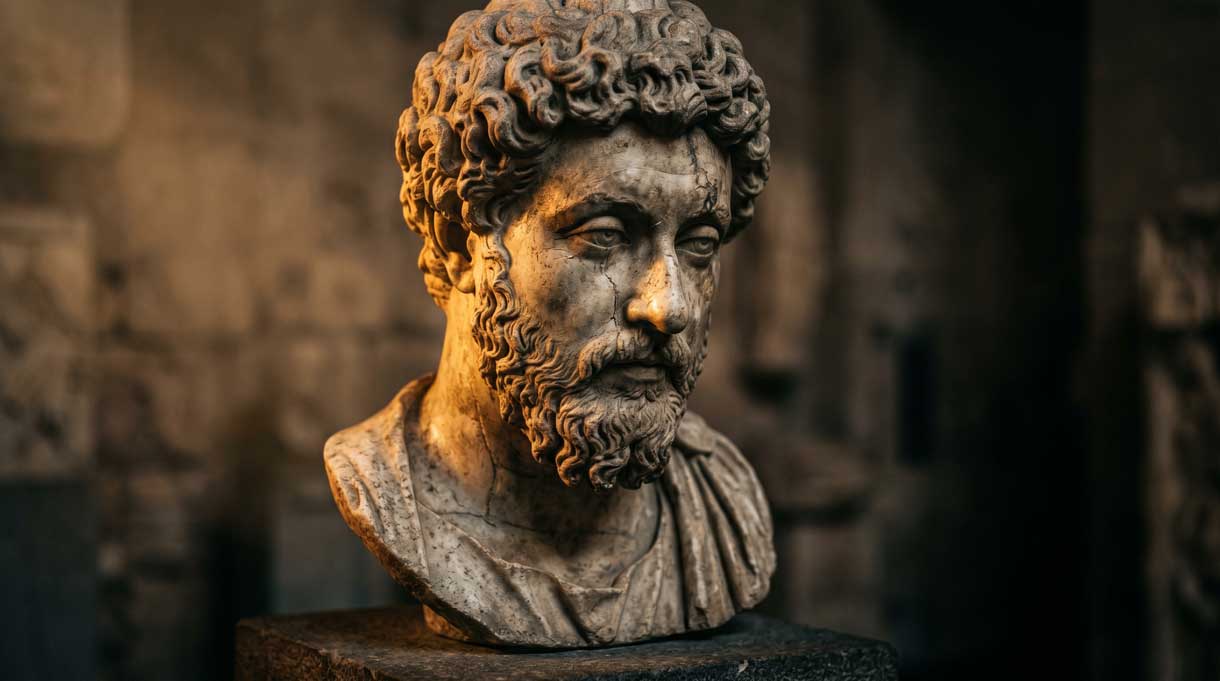
Memento Mori—’you too shall die’—is a motivating statement that helps us realize we only have a short time here.” Marcus Aurelius and Stoic thought offer a steady frame for navigating when everything goes wrong. | File created in Gemini for Patheos.
My mind is drawn to Marcus Aurelius and the entirety of the Stoic thought around issues like this. I am most drawn to the idea of Memento Mori, or translated loosely, “you too shall die”. It is a motivating statement that helps us realize that we only have a short time here. With this in mind, we must begin to understand that setbacks are always opportunities to start over.
I know a lot about starting over again. I was denied ordination back in 2004 and kept that career on life support until 2016 when it finally died altogether. My church called me a failure and told me to leave and not come back (I still stayed in touch and now serve a small church; they still won’t ordain me). In 2008, I made the hard decision to start over with another Master’s degree. With four small children at home, bankruptcy imminent, and our finances in the red more times than they were in the black, this was not how I envisioned my thirties. But, understanding this is what I had to do, I just did it. And succeeded. It took me ten years to complete this “starting over” and my school debt load will forever have me shackled financially, but at least I can pay my bills now.
God Is Not to Blame
The early part of my ministry work straddled the 9/11 disaster and the Hurricane Katrina disaster. In both of these incidents, I often heard people ask why God could let these things happen. This is perhaps the most frustrating misunderstanding of God. I understand shame much better now that I am a therapist and understand how several generations growing up with an angry, wrathful God and bad theology have brought people to the understanding that they are bad and some people deserve the plights that they find themselves in.
The reality is that God is not to blame for our woes, we are. Whether we cause problems directly or other factors like generational dysfunction, greed, selfishness and many others, God is never the factor in why these things happen. God is always present, though, always loving, always rooting for our side, always caring and supporting. God always works for good. It is said in Buddhism that we suffer because we cling. Little children often get irrationally upset because they cling too tightly to expectations and do not take disappointment well. Traditionally, parenting has told parents to holler, cajole and even physically discipline these children when they act this way. I used to parent like this and when I learned about co-regulation and being with my children’s emotions, I created a different relationship with them. When we see God patiently waiting for us to calm and listen to God, for God to co-regulate with us, we will learn fully that God or even our sinfulness is not the source of our problems.
Openness as a Prescription for Cultivating Patience
“The concept of Xu (虛), often translated as ’emptiness, openness, or receptivity, is a fundamental principle in Daoist philosophy. Unlike emptiness in the sense of lack or void, Xu in Daoist thought represents a dynamic state of potential and receptivity. It refers to a quality of being open, flexible, and unburdened by rigid attachments or preconceptions, allowing one to respond to the world effortlessly and harmoniously.”
The spiritual practice of openness is a practice that enhances empathy and flexibility. It then counters or balances attitudes or states of close–mindedness. “Openness is an ability to go with the flow, as Taoism puts it, without expecting predetermined outcomes. It means being receptive to new possibilities, without prejudging them. It is the ability to make yourself available to out-of-the-ordinary opportunities. Indeed, openness to the unknown, the exotic, and the bizarre is usually seen as the mark of a free spirit.”
Isaiah’s listeners feared economic collapse and cultural extinction. The prophet redirects that fear: the true peril is not Assyria but covenant breach. The “hedge removed” (5:5) signals God’s withdrawal of supernatural protection—realized historically in 701 BC when 46 Judean cities fell (Taylor Prism). Isaiah 5:1’s historical matrix—political intrigue, social injustice, covenant neglect—mirrors modern temptations toward self-reliance, systemic sin, and disregard for divine revelation. As then, so now: the Vinedresser seeks fruit in keeping with repentance and faith.
When things don’t go our way, keeping with the faith means hoping in God. This hope does not depend on our circumstances improving by Tuesday. It depends on the God who raised Jesus from the dead. Christian hope is not a prediction that things will get easier; it is confidence that God will be faithful. Repentance is not a vast recounting of our sins and asking strictly for forgiveness; it is recognizing when we have gone astray, held too firmly to our convictions and not relied fully on God’s guidance.
General Christian
Family, Parenting and Religion
Previous Post

May 31, 2026
Growing Disciples in a Fractured World
Next Post

June 14, 2026 "The Only Way Out Is Through": Suffering and Real Hope
Recent Comments
Browse Our Archives
Select a Category Uncategorized
Select a Month October 2026 September 2026 August 2026 July 2026 June 2026 May 2026 April 2026 March 2026 February 2026 January 2026 December 2025 November 2025 October 2025 September 2025 August 2025 July 2025 June 2025 May 2025 April 2025 March 2025 February 2025 January 2025 December 2024 November 2024 October 2024 September 2024 August 2024 July 2024 June 2024 May 2024 April 2024 March 2024 February 2024 January 2024 December 2023 November 2023 October 2023 September 2022 July 2021 June 2021 May 2021 April 2021 March 2021 February 2021 January 2021 December 2020 November 2020 October 2020 February 2020 October 2019 February 2018
TAKE THE
Religious Wisdom Quiz
According to Isaiah 53, how would the Messiah be treated by people?
Select your answer to see how you score.
Worshiped and adored Ignored and forgotten Feared and honored Despised and rejected
Related posts from Love Opens Doors


You Are Enough – The Spiritual Practice of...

Election Fear, Holiday Excess and the Way of...

TRENDING AT PATHEOS Progressive Christian

Letters on Living the Faith by C.S. Lewis
Most of us met C.S. Lewis as a public intellectual. Mere Christianity....

When Halloween Unmasks Married Hearts
Written by Dr. David K. Ewen from Eternal Truth Bible College Behind...

Aristotle. He’s been called the father of logic, the father of the...

Methodist Central Hall and Westminster Abbey
Situated on the same square is Methodist Central Hall and Westminster Abbey. ...

57th Dove Awards Honor Dolly Parton, Crown New...
On gospel music’s biggest night, the 57th annual GMA Dove Awards honored...

The First Eucharistic Controversy: Christ’s Real Presence
For Catholics, the Eucharist is the source and summit of the Christian...
view all Progressive Christian blogs
What Are Your Thoughts?leave a comment
Ad-Free & Subscriber Log-In Subscription Support
- About Us
- 2026 Calendar
- Videos
- Podcasts
- Library of World Religions
- Faith In Media Tracker
- Advertise With Us
- Write for Us
- Privacy Policy
- Terms of Service
- Do Not Sell My Data
- Contact Us
- Radiant Digital
- Manage Newsletter Subscriptions
- Unsubscribe From Notifications
- Sitemap
Copyright 2008-2026, Patheos. All rights reserved.
Subscription Support Ad-Free & Subscriber Log-In
Follow Patheos