
BuddhistCatholicContemplativeEvangelicalGeneral ChristianHinduJewishLatter-day SaintMuslimNew VisionsProgressive Christian
Beliefs
- Buddhist
- Catholic
- Contemplative
- Evangelical
- General Christian
- Hindu
- Jewish
- Latter-day Saint
- More Voices
- Muslim
- New Visions
- Pagan
- Progressive Christian
Topics
- Religion News
- Food and Religion
- Sports and Religion
- Religious Art
- Religious Music and Entertainment
- Religious Events
- History and Religion
- Style and Religion
- Politics and Religion
- Women in Religion
- Recreation Outdoors and Religion
- Business Finance and Religion
- Careers Workplace and Religion
- Education and Religion
- Family Parenting and Religion
- Health Fitness and Religion
- Home and Religion
- Relationships and Religion
- Technology and Religion
- Travel and Religion
Columnists
- Buddhist Columnists
- Business Finance and Religion Columnists
- Careers Workplace and Religion Columnists
- Catholic Columnists
- Contemplative Columnists
- Education and Religion Columnists
- Evangelists Columnists
- Family Parenting and Religion Columnists
- General Christian Columnists
- Health Fitness and Religion Columnists
- Hindu Columnists
- History and Religion Columnists
- Home and Religion Columnists
- Jewish Columnists
- More Voices Columnists
- Latter Day Columnists
- Muslim Columnists
- New Visions Columnists
- Nonreligious Columnists
- Pagan Columnists
- Politics and Religion Columnists
- Progressive Columnists
- Recreation Outdoors and Religion Columnists
- Relationships and Religion Columnists
- Religion News Columnists
- Religious Art Columnists
- Religious Events Columnists
- Religious Music and Entertainment Columnists
- Sports and Religion Columnists
- Style and Religion Columnists
- Technology and Religion Columnists
- Travel and Religion Columnists
- Women in Religion Columnists
Resource Library
- 2026 Calendar
- Library of World Religions
- The 100 Most Holy Places on Earth
- Patheos Answers
- Podcasts
- Videos
- Faith Leaders Database
- Anglican Episcopalian
- Bahai
- Baptist
- Buddhism
- Christianity
- Confucianism
- Eastern Orthodoxy
- Hinduism
- Holiness and Pentecostal
- ISKCON
- Islam
- Judaism
- Lutheran
- Methodist
- The Church of Jesus Christ of Latter-day Saints
- New Age
- Paganism
- Presbytarian and Reformed
- Protestantism
- Religion Behind the Scenes
- Roman Catholic
- Scientology
- Shia Islam
- Sikhism
- Sufism
- Sunni Islam
- Taoism
- Zen
- See all religions
Research Tools
 Ad-Free & Subscriber Log-In Subscription Support
Ad-Free & Subscriber Log-In Subscription Support
Follow Patheos 

- Trending:
- Forgiveness
- |
- Marriage
- |
- Consciousness
- |
- Death Penalty
- |
- Election
- |
- Halloween

- Home
- Progressive Christian
- Recreation, Outdoors and Religion
- Holy Meals Remembering: Jesus’ Last Meal
Holy Meals Remembering: Jesus’ Last Meal
Last updated on: March 27, 2025 at 12:53 pm by Rob Giannamore
Holy Meals Remembering: Jesus’ Last Meal 2025-03-27T12:53:10-04:00 Rob Giannamore
Patheos Explore the world's faith through different perspectives on religion and spirituality! Patheos has the views of the prevalent religions and spiritualities of the world.
An Exploration of Wesleyan Tradition and Theology
This week, in my analysis of Wesley’s Ordinances of God, I aim to reflect on Wesley’s perspectives regarding the Last Supper. As we approach the celebration of Easter, it is essential to contemplate the significance of the Last Supper. When I gather with my family around the kitchen table, I am not only present in their conversations and laughter but also reminded of past family dinners. These reminiscences include my grandfather’s jokes and antics, the disagreements within my father’s family, and the warmth and joy at my great grandmother’s (mother’s) table.
Jesus called us to do in remembrance of him when he broke the bread and lifted his cup to the apostles. Reenacting this act for me is a moment of remembrance – how God became human; how God demonstrated God’s weakness; how God loved unconditionally and kenotically.
Wesleyan Practice of the Last Supper
John Wesley viewed the Last Supper, or the Lord’s Supper, as a vital means of grace and a command from Christ to be observed regularly. He emphasized its importance for spiritual nourishment, forgiveness of sins, and communal worship, urging Christians to partake in it as often as possible to strengthen their faith and relationship with God. The partaking and re-enacting of the Last Supper is a communal event. Steve Harper offers theses point about the importance of the Last Supper in his Book, “Devotional Life in the Wesleyan Tradition”:
- Holy Communion serves as a memorial meal – Not only are we celebrating Jesus, but we are engaging in the practices of faith that were important to Jesus. Jesus was Jewish. The Passover meal was the annual commemoration of the Jews celebrating and remembering God’s dramatic intervention in saving the children of Israel out of the bondage of Egyptian slavery. Here, we are celebrating God’s presence of healing and intervention not only through Jesus’ Jewish lineage but also foreshadowing God’s interventions in our lives through all the tough times.
- The Lord’s Supper is an assurance of future glory – Jesus had announced he will be killed by the Roman regime. All his friends and apostles knew it. But he assured us that he will always be with us. Contextually, we cannot be sure what this meant for those early disciples, but for us today, we can be assured that the presence of the Christ is always here, embodied within us and inviting us into a deeper relationship with our selves and with God.
- Christ is genuinely present each time we partake in the Lord’s Supper – When we take communion, we take communion with Christ Himself, who is mystically present with us. The presence of Christ at the table is what led John Wesley to practice what is known as “open” Communion, meaning anyone can come forward to receive.
- We are instructed by Christ to participate in the Lord’s Supper – For Wesley, insistence on frequent participation in the Lord’s Supper stemmed from his deep conviction that it was a direct command of Christ (Do this in remembrance of me), a crucial means through which God conveys grace, a vital practice for remembering Christ’s sacrifice, a powerful unifier of believers, and a faithful continuation of early church tradition. He believed that neglecting this sacrament would deprive believers of essential spiritual nourishment and hinder their growth in holiness.
- Proper preparation begins with a repentant heart – Chapter 7 of The Rule of Saint Benedict is written to remind Benedictines on the importance and practice of humility. Humility in short is not thinking less of ourselves, it is thinking of ourselves less. When we announce our brokenness to our congregation and to God, we declare our weakness and vulnerability as humans in the face of our creator. It is here that we begin to experience the power of the Lord’s Supper as a converting sacrament. In this space, we are brough to faith. Some people best hear the gospel through words, such as through a sermon, while others hear the gospel through the tangible, physical touch of the bread and wine. Charles Wesley captured this powerfully when he wrote, “Come, Sinners, to the Gospel Feast, let every soul be Jesus’ guest. Ye need not one be left behind, for God hath bid all humankind
- As a means of grace, it is prudent to receive the Lord’s Supper as frequently as possible. – In behavioral work, consistency is key. Most behaviors take 12-18 months to fully solidify into a new behavior. When we take communion frequently, we engage in the full experience of the liturgical reenactment of Jesus’ life and ministry. Engaging regularly becomes a vivid reminder of God’s enduring love and the promise of perpetual presence. In this meal, we celebrate God’s divine reflection and grace and God’s unity with all believers, in the Methodist tradition, our connexion. In doing so, we deepen our spiritual practice and foster a sesne of hope amidst life’s trials.
- Receiving the Lord’s Supper is something we do in communion with God and others, never in isolation. – As we continue to hear about the rise of the “nones” and the loneliness epidemic, I feel that the answer is clear, we need more church in our lives. I don’t mean this in the fundamental idea that you need more Jesus in your life, though I do believe this to be true to a degree, however, I feel that as an institution, the church serves as a beacon for our community. Communion serves as a powerful symbol of our oneness with God and each other.
The Spiritual Practice of Hope
The spiritual practice of Hope is going to be a theme the next couple of weeks as we move into Easter. Sadly, the words I wrote in the post on hope in November 2023 are still true today, “The world is an ugly place right now. Wars, politics, climate change, it is all bad, or so the illusion goes.”
Hope is a fundamental element of optimism, serving as a spiritual energy. In the observance of the Lord’s last supper and the promises he made to us, coupled with God’s unwavering presence each day, our hope is firmly placed in the Lord. The Lord’s Supper instills hope by reminding participants of their need for salvation and the promise of eternal life through Jesus’ sacrifice. It serves as a communal declaration of faith, looking forward to the future fulfillment of God’s promises and the hope of resurrection.
Conclusion
In partaking in the Lord’s Supper, we not only commemorate the sacrifice of Jesus but also embrace a ritual imbued with profound spiritual significance. It is a moment of unity, where individuals, despite our diverse backgrounds and experiences, come together to share in a common faith and purpose. This sacred meal serves as a tangible reminder of God’s grace and enduring presence, offering solace and strength in times of trial. It is through this act of communion that we renew our commitment to live in accordance with Christ’s teachings, fostering a spirit of love, humility, and hope. As we continue to navigate the complexities of our modern world, the Lord’s Supper remains a beacon of light, guiding us towards a deeper connection with the divine and with one another, and reinforcing our collective hope in the promise of salvation and eternal life.

Dinners around the table are times for gathering and fellowship
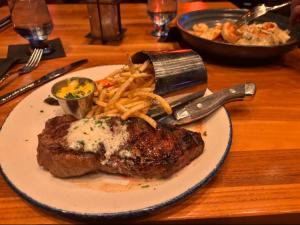
my dinner at my wife’s 50th birthday celebration
General Christian
Previous Post

March 22, 2025
Devotion Beyond Borders: Reading Sacred Texts Deeply
Next Post

March 30, 2025 Did Jesus Become a Myth So Faith Could Survive?
Recent Comments
Browse Our Archives
Select a Category Uncategorized
Select a Month October 2026 September 2026 August 2026 July 2026 June 2026 May 2026 April 2026 March 2026 February 2026 January 2026 December 2025 November 2025 October 2025 September 2025 August 2025 July 2025 June 2025 May 2025 April 2025 March 2025 February 2025 January 2025 December 2024 November 2024 October 2024 September 2024 August 2024 July 2024 June 2024 May 2024 April 2024 March 2024 February 2024 January 2024 December 2023 November 2023 October 2023 September 2022 July 2021 June 2021 May 2021 April 2021 March 2021 February 2021 January 2021 December 2020 November 2020 October 2020 February 2020 October 2019 February 2018
TAKE THE
Religious Wisdom Quiz
Who is the coauthor of some of Paul's epistles and delivered them to churches?
Select your answer to see how you score.
Silas Timothy Andrew Barnabas
Related posts from Love Opens Doors


You Are Enough – The Spiritual Practice of...

Election Fear, Holiday Excess and the Way of...

TRENDING AT PATHEOS Progressive Christian

Letters on Living the Faith by C.S. Lewis
Most of us met C.S. Lewis as a public intellectual. Mere Christianity....

When Halloween Unmasks Married Hearts
Written by Dr. David K. Ewen from Eternal Truth Bible College Behind...

Aristotle. He’s been called the father of logic, the father of the...

Methodist Central Hall and Westminster Abbey
Situated on the same square is Methodist Central Hall and Westminster Abbey. ...

57th Dove Awards Honor Dolly Parton, Crown New...
On gospel music’s biggest night, the 57th annual GMA Dove Awards honored...

The First Eucharistic Controversy: Christ’s Real Presence
For Catholics, the Eucharist is the source and summit of the Christian...
view all Progressive Christian blogs
What Are Your Thoughts?leave a comment
Ad-Free & Subscriber Log-In Subscription Support
- About Us
- 2026 Calendar
- Videos
- Podcasts
- Library of World Religions
- Faith In Media Tracker
- Advertise With Us
- Write for Us
- Privacy Policy
- Terms of Service
- Do Not Sell My Data
- Contact Us
- Radiant Digital
- Manage Newsletter Subscriptions
- Unsubscribe From Notifications
- Sitemap
Copyright 2008-2026, Patheos. All rights reserved.
Subscription Support Ad-Free & Subscriber Log-In
Follow Patheos