
BuddhistCatholicContemplativeEvangelicalGeneral ChristianHinduJewishLatter-day SaintMuslimNew VisionsProgressive Christian
Beliefs
- Buddhist
- Catholic
- Contemplative
- Evangelical
- General Christian
- Hindu
- Jewish
- Latter-day Saint
- More Voices
- Muslim
- New Visions
- Pagan
- Progressive Christian
Topics
- Religion News
- Food and Religion
- Sports and Religion
- Religious Art
- Religious Music and Entertainment
- Religious Events
- History and Religion
- Style and Religion
- Politics and Religion
- Women in Religion
- Recreation Outdoors and Religion
- Business Finance and Religion
- Careers Workplace and Religion
- Education and Religion
- Family Parenting and Religion
- Health Fitness and Religion
- Home and Religion
- Relationships and Religion
- Technology and Religion
- Travel and Religion
Columnists
- Buddhist Columnists
- Business Finance and Religion Columnists
- Careers Workplace and Religion Columnists
- Catholic Columnists
- Contemplative Columnists
- Education and Religion Columnists
- Evangelists Columnists
- Family Parenting and Religion Columnists
- General Christian Columnists
- Health Fitness and Religion Columnists
- Hindu Columnists
- History and Religion Columnists
- Home and Religion Columnists
- Jewish Columnists
- More Voices Columnists
- Latter Day Columnists
- Muslim Columnists
- New Visions Columnists
- Nonreligious Columnists
- Pagan Columnists
- Politics and Religion Columnists
- Progressive Columnists
- Recreation Outdoors and Religion Columnists
- Relationships and Religion Columnists
- Religion News Columnists
- Religious Art Columnists
- Religious Events Columnists
- Religious Music and Entertainment Columnists
- Sports and Religion Columnists
- Style and Religion Columnists
- Technology and Religion Columnists
- Travel and Religion Columnists
- Women in Religion Columnists
Resource Library
- 2026 Calendar
- Library of World Religions
- The 100 Most Holy Places on Earth
- Patheos Answers
- Podcasts
- Videos
- Faith Leaders Database
- Anglican Episcopalian
- Bahai
- Baptist
- Buddhism
- Christianity
- Confucianism
- Eastern Orthodoxy
- Hinduism
- Holiness and Pentecostal
- ISKCON
- Islam
- Judaism
- Lutheran
- Methodist
- The Church of Jesus Christ of Latter-day Saints
- New Age
- Paganism
- Presbytarian and Reformed
- Protestantism
- Religion Behind the Scenes
- Roman Catholic
- Scientology
- Shia Islam
- Sikhism
- Sufism
- Sunni Islam
- Taoism
- Zen
- See all religions
Research Tools
 Ad-Free & Subscriber Log-In Subscription Support
Ad-Free & Subscriber Log-In Subscription Support
Follow Patheos 

- Trending:
- Forgiveness
- |
- Marriage
- |
- Consciousness
- |
- Death Penalty
- |
- Election
- |
- Halloween

- Home
- Progressive Christian
- Recreation, Outdoors and Religion
- Becoming
Becoming
Last updated on: April 8, 2024 at 2:36 pm by Rob Giannamore
Becoming 2024-04-08T14:36:06-04:00 Rob Giannamore
Patheos Explore the world's faith through different perspectives on religion and spirituality! Patheos has the views of the prevalent religions and spiritualities of the world.
The quintessential philosophical argument for me boils down to the notion around whether we are becoming or we are being. I was recently listening to a lecture about the Pre Socratic philosophers Heraclitus and Parmenides who argued these very points. Nietzsche later would take up Hereclitus’ argument and make his case for becoming. This week, I am going to consider becoming as a spiritual practice.
The Pre Socratics
During the 6th century BCE, the Milesians, Pythagoras and Xenophanes were wrestling with the question, “what is the relationship between being and becoming?” Later, Heraclitus and Parmenides would take up these arguments in their philosophic work.
Heraclitus
Heraclitus was the pre-Socratic who is attributed to have said, “It is not possible to step in the same river twice”. And with this, we get the idea of becoming. For Heraclitus, he believed that reality flows like a river. Life is impermanent, always changing, always in flux. Always in the process of becoming. There is no being because for Heraclitus, being was fixed and stable.
Parmenides
Parmenides on the other hand was the champion of being. Parmenides was a rationalist who regarded sensory evidence as untrustworthy and placed an emphasis on logical arguments. The central thesis of Parmenides’ philosophy is “Being is, and Non-Being is not.”. Here, one simply is and simply is not. A thing is and a thing is not. One or a thing do not change because they go in or out of being. For Parmenides, reality was constant.
I Side with Heraclitus
While I may side with Heraclitus, Plato took issue with him. Plato felt that Heraclitus’s views led to relativism. I do not see that this is a problem. I can see why it was a concern for the early Greeks such as Plato and Socrates, but for me, I think it is okay.
In a future essay, I will be talking about Wesley’s quadrilateral: scripture, reason, tradition and experience. I have argued for a long time that reason does not fit anymore, though if you understand historically where Weseley was coming from, you see he is trying to balance rationalist and empiricist sensibilities. Richard Rohr drops reason all together and sees the quadrilateral as a three-legged stool. I then would add back relativism into the mix.
Perhaps one of the more concerning observances I have these days is the polarization of viewpoints. Perhaps if we truly could get our heads around the idea that everything is relative based on your experiences, then maybe we would be a bit happier. Though Descartes, Socrates and Plato may see things differently.
Friedrich Nietzsche
Friedrich Nietzsche was a German philosopher who wrote, studied and taught during the mid 19th century. He was most famous for his uncompromising criticisms of traditional European morality and religion, as well as of conventional philosophical ideas and social and political pieties associated with modernity.
One of the many things Nietzsche was known for was his work on becoming, borrowing on the earlier works of Heraclitus whom we spoke of earlier. Nietzche would write these thoughts a century before modern psychologists came to pinpoint how our beliefs about human nature shape human nature:
Such “free spirits” do not really exist and never did exist. But I stood in need of them, as I have pointed out, in order that some good might be mixed with my evils (illness, loneliness, strangeness, acedia, incapacity): to serve as gay spirits and comrades, with whom one may talk and laugh when one is disposed to talk and laugh, and whom one may send to the devil when they grow wearisome… [And] I see them already coming, slowly, slowly. May it not be that I am doing a little something to expedite their coming when I describe in advance the influences under which I see them evolving and the ways along which they travel?
For Nietzsche, the goal of humanity was to become better versions of themselves. Our purpose is not to be happy all the time and not experience suffering. Borrowing from Buddhist and Stoic thought, our purpose is to think about who we think we are and learn to accept or even embrace suffering and hardships as part of the journey.
Becoming as A Spiritual Practice
Become who you are says Nietzsche. In the funny Star Wars spoof, Spaceballs, Dark Helmet and Colonel Sandurz are having an argument over what is happening on a tv screen depicting now. “Where is this in the movie?” asks Dark Helmet. Sandurz replies, “Now sir, what’s happening now is now.” (see https://www.quotes.net/mquote/89091#google_vignette ) Your life is what is happening now is now. Now, now. When? Now. Every moment is a new now.
It is easy to miss the now if you are focused on the past or perseverating on the future. Jesus encourages us to not worry about tomorrow. Marcus Aurelius challenges us to not let the future disturb us. He tells us that we will meet if we have to, with the same weapons of reason which arm you against the present.
Finally, from Miyamoto Musashi, “Today is victory over yourself of yesterday; tomorrow is your victory over lesser men”. We are all on a path of life, becoming something.
Reference
(2023, December 15). PARMENIDES: UNRAVELING THE MYSTERY OF BEING. The Historyator. Retrieved April 2, 2024, from https://thehistoryator.com/parmenides-unraveling-the-mystery-of-being/
Roochnik, D. (2002). An Introduction to Greek Philosophy. The Great Courses. www.thegreatcourses.com
Contemplative
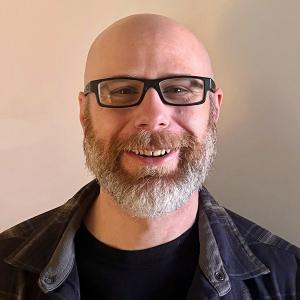
About Rob Giannamore
Rob Giannamore is a modern day contemplative. His formal education includes a Bachelors of Arts in Social Work, a Masers of Divinity and a Masters in Mental Health Counseling. He is a member of the Order of Saint Benedict as an Oblate. Rob is a father of four girls and has been married 23 years to his wonderful bride. He is a martial artist, writer, college professor, endurance athlete and adventurer. You can read more about the author here.
Previous Post

March 30, 2024
The Spiritual Practice of You: Finding Your Center
Next Post

April 7, 2024 Who We Can Love
Recent Comments
Browse Our Archives
Select a Category Uncategorized
Select a Month October 2026 September 2026 August 2026 July 2026 June 2026 May 2026 April 2026 March 2026 February 2026 January 2026 December 2025 November 2025 October 2025 September 2025 August 2025 July 2025 June 2025 May 2025 April 2025 March 2025 February 2025 January 2025 December 2024 November 2024 October 2024 September 2024 August 2024 July 2024 June 2024 May 2024 April 2024 March 2024 February 2024 January 2024 December 2023 November 2023 October 2023 September 2022 July 2021 June 2021 May 2021 April 2021 March 2021 February 2021 January 2021 December 2020 November 2020 October 2020 February 2020 October 2019 February 2018
TAKE THE
Religious Wisdom Quiz
Who said, "Choose for yourselves this day whom you will serve"?
Select your answer to see how you score.
Joshua Moses Gideon Solomon
Related posts from Love Opens Doors


You Are Enough – The Spiritual Practice of...

Election Fear, Holiday Excess and the Way of...

TRENDING AT PATHEOS Progressive Christian

Methodist Central Hall and Westminster Abbey
Situated on the same square is Methodist Central Hall and Westminster Abbey. ...

57th Dove Awards Honor Dolly Parton, Crown New...
On gospel music’s biggest night, the 57th annual GMA Dove Awards honored...

The First Eucharistic Controversy: Christ’s Real Presence
For Catholics, the Eucharist is the source and summit of the Christian...

What a Stop Sign Can Teach Us About...
How to Make a Decision When You Can't Hear God Main point:...

Archdiocese Hosts Military Marriage Retreat in Germany
RASTATT, Germany — The transient military lifestyle, with its frequent deployments and...

Nearly every morning, I make the drive to Detroit with my high-school-age...
view all Progressive Christian blogs
What Are Your Thoughts?leave a comment
Ad-Free & Subscriber Log-In Subscription Support
- About Us
- 2026 Calendar
- Videos
- Podcasts
- Library of World Religions
- Faith In Media Tracker
- Advertise With Us
- Write for Us
- Privacy Policy
- Terms of Service
- Do Not Sell My Data
- Contact Us
- Radiant Digital
- Manage Newsletter Subscriptions
- Unsubscribe From Notifications
- Sitemap
Copyright 2008-2026, Patheos. All rights reserved.
Subscription Support Ad-Free & Subscriber Log-In
Follow Patheos