
BuddhistCatholicContemplativeEvangelicalGeneral ChristianHinduJewishLatter-day SaintMuslimNew VisionsProgressive Christian
Beliefs
- Buddhist
- Catholic
- Contemplative
- Evangelical
- General Christian
- Hindu
- Jewish
- Latter-day Saint
- More Voices
- Muslim
- New Visions
- Pagan
- Progressive Christian
Topics
- Religion News
- Food and Religion
- Sports and Religion
- Religious Art
- Religious Music and Entertainment
- Religious Events
- History and Religion
- Style and Religion
- Politics and Religion
- Women in Religion
- Recreation Outdoors and Religion
- Business Finance and Religion
- Careers Workplace and Religion
- Education and Religion
- Family Parenting and Religion
- Health Fitness and Religion
- Home and Religion
- Relationships and Religion
- Technology and Religion
- Travel and Religion
Columnists
- Buddhist Columnists
- Business Finance and Religion Columnists
- Careers Workplace and Religion Columnists
- Catholic Columnists
- Contemplative Columnists
- Education and Religion Columnists
- Evangelists Columnists
- Family Parenting and Religion Columnists
- General Christian Columnists
- Health Fitness and Religion Columnists
- Hindu Columnists
- History and Religion Columnists
- Home and Religion Columnists
- Jewish Columnists
- More Voices Columnists
- Latter Day Columnists
- Muslim Columnists
- New Visions Columnists
- Nonreligious Columnists
- Pagan Columnists
- Politics and Religion Columnists
- Progressive Columnists
- Recreation Outdoors and Religion Columnists
- Relationships and Religion Columnists
- Religion News Columnists
- Religious Art Columnists
- Religious Events Columnists
- Religious Music and Entertainment Columnists
- Sports and Religion Columnists
- Style and Religion Columnists
- Technology and Religion Columnists
- Travel and Religion Columnists
- Women in Religion Columnists
Resource Library
- 2026 Calendar
- Library of World Religions
- The 100 Most Holy Places on Earth
- Patheos Answers
- Podcasts
- Videos
- Faith Leaders Database
- Anglican Episcopalian
- Bahai
- Baptist
- Buddhism
- Christianity
- Confucianism
- Eastern Orthodoxy
- Hinduism
- Holiness and Pentecostal
- ISKCON
- Islam
- Judaism
- Lutheran
- Methodist
- The Church of Jesus Christ of Latter-day Saints
- New Age
- Paganism
- Presbytarian and Reformed
- Protestantism
- Religion Behind the Scenes
- Roman Catholic
- Scientology
- Shia Islam
- Sikhism
- Sufism
- Sunni Islam
- Taoism
- Zen
- See all religions
Research Tools
 Ad-Free & Subscriber Log-In Subscription Support
Ad-Free & Subscriber Log-In Subscription Support
Follow Patheos 

- Trending:
- Forgiveness
- |
- Marriage
- |
- Consciousness
- |
- Death Penalty
- |
- Election
- |
- Halloween

- Home
- Progressive Christian
- Recreation, Outdoors and Religion
- A Contemplative Life- Deep Conjectures on Life
A Contemplative Life- Deep Conjectures on Life
Last updated on: December 15, 2023 at 8:14 am by Rob Giannamore
A Contemplative Life- Deep Conjectures on Life 2023-12-15T08:14:06-05:00 Rob Giannamore
Patheos Explore the world's faith through different perspectives on religion and spirituality! Patheos has the views of the prevalent religions and spiritualities of the world.
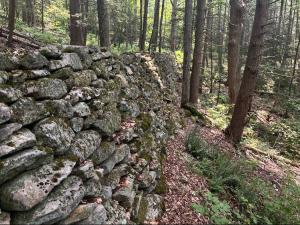
Across New England, you will see these old walls sitting with time
Contemplation and mindfulness offer a deeper relationship with the divine. I have been doing a lot of reading lately as I am getting ready to teach my next class here in a few months. One of the many themes I come back to often in my life are the two years I spent considering the monastic life and priesthood in the Catholic church. Even though I would eventually meet a pretty red head who would feed me tacos and become the mother of our four amazing daughters, those lessons I learned in those two years have stuck with me.
The Backstory
I grew up with several religious orders, most notably the Redemptorists and the Benedictines. The Benedictines had the most impact on my spiritual development. From them, I was exposed to the peace and justice issues that would shape my college career as a social work major and later my work as an itinerant preacher and now as a therapist. It was my exposure and subsequent consideration of this life that would ruin my future as a minister. Not that I am complaining, I deeply love the faith that I have cultivated even though it has put me at odds with most if not all the churches I have worked with.
When I was either a freshman or sophomore in college, I took some course on theology and we had to read Bill Shannon’s book, “Seeking the Face of God”. In this book, I would learn about the four stages of lectio – lectio, meditatio, oratio, and contemplatio. In this post, I want to revisit these lessons and explore how you can engage in a more meaningful relationship with your spiritual life and your walk with God within your faith tradition.
Seeking the Face of God
Quoting Eckhart or Merton, Shannon offers “who once said if he prepared a sermon and went into a church and found it empty, he would nonetheless go ahead and deliver the sermon” (Shannon, 1992, p. 1). This is how prayer (oratio) works, no matter how isolated you feel from God, even if you think God is not listening, go ahead offer your prayer and then see what happens. Perhaps if nothing happens, you are holding too tightly to your expectations of the prayer and not letting the collective work of the divine to intercede at the moment.
Jesus is attributed to have said this about prayer: But when you pray, go into your room, close the door and pray to your Father, who is unseen. Then your Father, who sees what is done in secret, will reward you (Mathew 6:6, NIV). The contemplative life is often one of quietude and thought. You take in more information, you consider meaning more intently and as a result, you live more deeply. There is a danger with the contemplative life, and it is this, it will move you out of a place of believing what you are told to believe into a more experiential faith. These days, this is called deconstruction, but in my day, when I first started this journey 25 years ago, this word did not exist.
Silence according to Shannon, “unless our words are born out of a reflective silence, they are apt to be curtains that cover reality rather than windows that reveal it” (Shannon, 1992, pg. 3). One of the many things that bothered me in the religious traditions that I worked in as a pastor were the long wordy prayers that some offered. Folks would go on and on and make so much noise with their prayers, often seeming to inject their will into the prayer rather than letting God’s will speak. For a different paper, I really do not believe in the idea that God is all controlling.
I reminded of Tibetan singing bowls that when struck, offer a tone that eventually draws your attention inward as it dissipates after being struck. This is what a good prayer does for me. Simply for me, “Come Holy Spirit” or “Come Breath of God” are the beginnings of many of my prayers. These simple openings draw my attention to the presence of the divine and set the intention of my supplication. Back to Shannon, again referring to Merton, he offers this quote from Merton, “Strictly speaking I have a very simple way of prayer. It is centered entirely on attention to the presence of God and to His will and His love” (Shannon, 1992, pg. 10). Reading this possibly 25 years later, this line still tracks for me.
Lectio and the others
There are three other elements of lectio or divine reading that were mentioned at the top of this post. Lectio or divine reading is core to what I learned in those two years of formation. My mentor would give me something to read, and I was charged to read it in such a way that I dwelled on certain words and phrases and then notice what was stirred up in me. Some of the monastics I would run into later in my journey would talk about chewing on a passage as a cow would chew on its cud. This does not have to be done solely with religious texts, this was hugely beneficial later in my career when I was doing my Master’s work.
Part of the work of lectio is the work of contemplation and meditation, two very over used words today, but 25 years ago were vague concepts. Centering prayer had not quite reached the Protestant churches I was working with, in fact, I was deeply criticized for being too Catholic when my first governing board heard me use this language. Now a days, everyone talks about centering prayer. When I first heard of these words 28 years ago, at the very beginning of my journey, I was enamored. To understand why this is so phenomenal is that I was and still am diagnosed with attention deficit hyperactivity disorder. Sitting still is not my strong suit or having a single thought for more than a few seconds can be a real struggle. But, from 18—20, there I found myself every morning from 0600- 0730 in the school chapel or at my local parish praying my rosary and listening to morning mass.
What I learned in those two years of discovery was that lectio divina can enhance one’s prayer life by providing a structured and intentional way of engaging with scriptures, religious text or even the news. This practice brings a contemplative dimension to prayer, allowing for a deeper communion with God. By incorporating the Word of God into our prayers, we are able to bring a greater depth of meaning and connection to their conversations with God. This integration of Scripture and prayer enriches and enlivens one’s prayer life.
Reference:
Shannon, W. H. (1992). Seeking the face of God. Crossroad.
Contemplative
Education and Religion
Previous Post

December 12, 2023
Advent Spiritual Practice: The Act of Being a Loving Person
Next Post

December 18, 2023 Christmas 2023: A Reflection
Recent Comments
Browse Our Archives
Select a Category Uncategorized
Select a Month October 2026 September 2026 August 2026 July 2026 June 2026 May 2026 April 2026 March 2026 February 2026 January 2026 December 2025 November 2025 October 2025 September 2025 August 2025 July 2025 June 2025 May 2025 April 2025 March 2025 February 2025 January 2025 December 2024 November 2024 October 2024 September 2024 August 2024 July 2024 June 2024 May 2024 April 2024 March 2024 February 2024 January 2024 December 2023 November 2023 October 2023 September 2022 July 2021 June 2021 May 2021 April 2021 March 2021 February 2021 January 2021 December 2020 November 2020 October 2020 February 2020 October 2019 February 2018
TAKE THE
Religious Wisdom Quiz
Who said, "What must I do to be saved?"
Select your answer to see how you score.
The Philippian jailer Nicodemus Zacchaeus Peter
Related posts from Love Opens Doors


You Are Enough – The Spiritual Practice of...

Election Fear, Holiday Excess and the Way of...

TRENDING AT PATHEOS Progressive Christian

The Sermon on the Mount, Part I: Matthew...
The Sermon on the Mount, Part I (Matthew 4:12-5:12) St. Matthew moves...

What's up from Crossway: Reviewing some of their latest A few weeks...

Janie Learns the Way of the Cross: A...
Teaching children about Jesus' Passion can be challenging. Many parents and educators...

Looking For Good Catholic Writing - October 2026
He alone extends the heavens, and he walks upon the waves of...

In "Irreplaceable," our book on vocation and technology, Trevor Sutton and I...

I was strolling through the top floor of the brand new Parthenon...
view all Progressive Christian blogs
What Are Your Thoughts?leave a comment
Ad-Free & Subscriber Log-In Subscription Support
- About Us
- 2026 Calendar
- Videos
- Podcasts
- Library of World Religions
- Faith In Media Tracker
- Advertise With Us
- Write for Us
- Privacy Policy
- Terms of Service
- Do Not Sell My Data
- Contact Us
- Radiant Digital
- Manage Newsletter Subscriptions
- Unsubscribe From Notifications
- Sitemap
Copyright 2008-2026, Patheos. All rights reserved.
Subscription Support Ad-Free & Subscriber Log-In
Follow Patheos