
BuddhistCatholicContemplativeEvangelicalGeneral ChristianHinduJewishLatter-day SaintMuslimNew VisionsProgressive Christian
Beliefs
- Buddhist
- Catholic
- Contemplative
- Evangelical
- General Christian
- Hindu
- Jewish
- Latter-day Saint
- More Voices
- Muslim
- New Visions
- Pagan
- Progressive Christian
Topics
- Religion News
- Food and Religion
- Sports and Religion
- Religious Art
- Religious Music and Entertainment
- Religious Events
- History and Religion
- Style and Religion
- Politics and Religion
- Women in Religion
- Recreation Outdoors and Religion
- Business Finance and Religion
- Careers Workplace and Religion
- Education and Religion
- Family Parenting and Religion
- Health Fitness and Religion
- Home and Religion
- Relationships and Religion
- Technology and Religion
- Travel and Religion
Columnists
- Buddhist Columnists
- Business Finance and Religion Columnists
- Careers Workplace and Religion Columnists
- Catholic Columnists
- Contemplative Columnists
- Education and Religion Columnists
- Evangelists Columnists
- Family Parenting and Religion Columnists
- General Christian Columnists
- Health Fitness and Religion Columnists
- Hindu Columnists
- History and Religion Columnists
- Home and Religion Columnists
- Jewish Columnists
- More Voices Columnists
- Latter Day Columnists
- Muslim Columnists
- New Visions Columnists
- Nonreligious Columnists
- Pagan Columnists
- Politics and Religion Columnists
- Progressive Columnists
- Recreation Outdoors and Religion Columnists
- Relationships and Religion Columnists
- Religion News Columnists
- Religious Art Columnists
- Religious Events Columnists
- Religious Music and Entertainment Columnists
- Sports and Religion Columnists
- Style and Religion Columnists
- Technology and Religion Columnists
- Travel and Religion Columnists
- Women in Religion Columnists
Resource Library
- 2026 Calendar
- Library of World Religions
- The 100 Most Holy Places on Earth
- Patheos Answers
- Podcasts
- Videos
- Faith Leaders Database
- Anglican Episcopalian
- Bahai
- Baptist
- Buddhism
- Christianity
- Confucianism
- Eastern Orthodoxy
- Hinduism
- Holiness and Pentecostal
- ISKCON
- Islam
- Judaism
- Lutheran
- Methodist
- The Church of Jesus Christ of Latter-day Saints
- New Age
- Paganism
- Presbytarian and Reformed
- Protestantism
- Religion Behind the Scenes
- Roman Catholic
- Scientology
- Shia Islam
- Sikhism
- Sufism
- Sunni Islam
- Taoism
- Zen
- See all religions
Research Tools
 Ad-Free & Subscriber Log-In Subscription Support
Ad-Free & Subscriber Log-In Subscription Support
Follow Patheos 

- Trending:
- Forgiveness
- |
- Marriage
- |
- Consciousness
- |
- Death Penalty
- |
- Election
- |
- Halloween

- Home
- Nonreligious
- Relationships and Religion
- The Gospel According to the Third Eye
The Gospel According to the Third Eye
Last updated on: June 1, 2026 at 1:59 pm by Derrick Day
The Gospel According to the Third Eye 2026-06-01T13:59:05-07:00 Derrick Day
Patheos Explore the world's faith through different perspectives on religion and spirituality! Patheos has the views of the prevalent religions and spiritualities of the world.
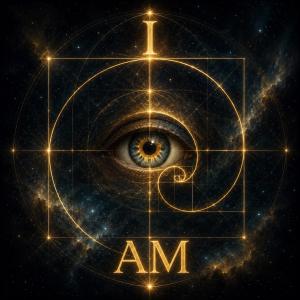
Picture created by DALL-E from a prompt from the author.
What If “I AM” Means Self-Realization?
Christianity has spent two thousand years arguing over who Jesus was while spending remarkably little time asking what Jesus (if he existed) may have actually been trying to awaken in people. Entire denominations have split over metaphysical doctrines, theories of atonement, and debates about the nature of Christ, while often overlooking the possibility that the gospels contain something more than theology. Hidden beneath the doctrines may be a roadmap of consciousness, perception, and transformation.
That possibility creates an intriguing question: what if Jesus was not merely teaching people what to believe, but teaching them how to see?
The dominant interpretation of Christianity says Jesus came primarily to save humanity from sin through belief in him as the divine Son of God. Salvation hinges on faith in Christ’s death and resurrection. The framework is largely external. Believe correctly. Confess correctly. Receive eternal life.
But what if the famous “I AM” statements of Jesus were never intended as declarations of divinity? What if they were also invitations into a state of awakened awareness? What if “I AM” was not merely a title but a clue pointing toward a deeper understanding of consciousness itself?
If that possibility contains even a grain of truth, the gospels begin harmonizing in surprising ways with Christian mysticism, Gnostic teachings, contemplative spirituality, and even modern psychology. Christianity stops looking merely like a religion about believing in Jesus and begins looking like a path toward becoming conscious like Jesus.
The Strange Power of “I AM”
The Gospel of John contains some of the most profound and mysterious statements in Christian scripture. Jesus repeatedly declares, “I am the bread of life,” “I am the light of the world,” “I am the door,” “I am the good shepherd,” “I am the resurrection and the life,” “I am the way, the truth, and the life,” and “I am the true vine” (more on these, later).
Traditionally, these statements are understood as declarations of divinity. Jesus identifies himself with the God who revealed himself to Moses in Exodus 3:14 as “I AM THAT I AM.” Within orthodox Christianity, the implication is clear: Jesus is not merely a teacher but God incarnate.
Yet another possibility exists.
What if “I AM” refers to the deeper reality of consciousness itself? Not the ego. Not personality. Not social identity. Rather, the observing awareness beneath thought, fear, labels, and conditioning. The witness. The inner awareness. What many mystical traditions call the mind’s eye.
Under this interpretation, Jesus is not saying, “Worship me.” He is saying, “Wake up.”
That shift changes the entire center of gravity of the gospel narrative.
What If the “I” Is the Mind’s Eye and the “AM” Is the Affirmation of Self?
Suppose the “I” in “I AM” represents the mind’s eye: the seat of awareness, perception, will, intellect, and emotion. Not the ego. Not the personality. Not the collection of labels we accumulate throughout life. Rather, the observer behind our thoughts, the witness behind our experiences, and the consciousness that remains even as our identities constantly change.
Now consider the “AM.”
What if the “AM” is the affirmation of being itself?
Every statement we make about ourselves begins with “I am.” Before we describe what we do, what we believe, what we fear, or what we desire, we first affirm that we exist. “I am” precedes every identity. The description changes. The existence remains.
Viewed through this lens, “I AM” becomes more than a theological declaration. It becomes the union of awareness and existence. The “I” is the observer. The “AM” is the affirmation that the observer exists. Consciousness recognizes itself. Being becomes aware of being.
This possibility casts a fascinating light on God’s declaration to Moses in Exodus: “I AM THAT I AM.” Perhaps the statement is not merely a divine name but a description of ultimate reality itself: pure awareness, pure being, existence conscious of its own existence.
If so, Jesus’ repeated use of “I AM” throughout the Gospel of John takes on a new dimension. Rather than simply making claims about himself, he may be drawing attention to the deepest level of consciousness available to every human being. The emphasis shifts away from personality and toward presence, away from identity and toward awareness.
Suddenly, some of Jesus’ most mysterious teachings begin sounding remarkably different. Consider his statement, “If thine eye be single, thy whole body shall be full of light.” Rather than a lesson about eyesight, it begins to sound like a lesson about insight. The “single eye” becomes unified awareness, awakened perception, and consciousness free from fragmentation.
Placed alongside statements such as “The kingdom of God is within you,” “Those who have ears, let them hear,” and “Be transformed by the renewing of your mind,” the gospels begin sounding less like doctrinal manuals and more like teachings about consciousness itself. The emphasis shifts from merely believing the right things to seeing differently.
If the “I” is the mind’s eye and the “AM” is the affirmation of self, then “I AM” becomes the meeting point between awareness and existence. It is consciousness awakening to itself. It is being recognizing its own presence.
Under this interpretation, Jesus isn’t telling people to believe in God. He is teaching them how to experience the divine dimension of being directly. The gospel becomes not only a story about salvation, but also a story about awakening.
What If Jesus Meant “I AM Is…”?
Now take the idea one step further.
What if the seven “I AM” statements are not simply Jesus identifying himself as the destination but Jesus pointing toward a deeper reality?
What if, instead of hearing “I am the way,” we heard “I AM is the way”?
The difference may appear subtle, but its implications are enormous. One interpretation centers the messenger. The other centers what the messenger is revealing. Under this framework, the seven “I AM” statements become less about exclusivity and more about awakening.
Jesus shifts from being the object of faith to the revealer of a universal spiritual principle.
I AM Is the Bread of Life
When Jesus says, “I am the bread of life,” traditional Christianity understands the statement to mean that spiritual nourishment comes through Christ. But if we read it as “I AM is the bread of life,” the focus shifts from belief in a person to participation in a deeper reality.
Bread sustains life. Without nourishment, the body weakens and dies. Likewise, without connection to deeper awareness, the soul starves.
Under this interpretation, Jesus is not saying, “Believe in me.” He is inviting people to awaken to the source of life itself. The bread becomes direct spiritual experience rather than secondhand doctrine. Faith becomes participation rather than mere agreement.
I AM Is the Light of the World
Traditionally, Christ is understood as the light that illuminates spiritual darkness. But if “I am the light of the world” becomes “I AM is the light of the world,” then light becomes awareness itself.
Throughout history, darkness has symbolized ignorance as much as evil. Light represents understanding, perception, and insight. Darkness disappears not because it is fought but because it is illuminated.
Viewed through this lens, humanity’s greatest problem may not simply be sin. It may also be unconsciousness. The light Jesus speaks of becomes awakened perception. Spiritual transformation becomes less about acquiring new beliefs and more about seeing reality as it truly is.
I AM Is the Door
The traditional interpretation holds that Jesus describes himself as “the door.” This would make Christ the exclusive gateway to salvation. But if “I AM is the door,” the symbolism becomes deeply internal.
The doorway is not an external figure standing between humanity and God. Instead, awakened consciousness itself becomes the portal.
Every mystical tradition speaks of crossing a threshold. Buddhists call it enlightenment. Sufis speak of annihilation of the ego. Christian mystics describe union with God. In each case, the doorway is not primarily external. It is internal.
Under this interpretation, Jesus is revealing that the entrance into divine reality has always existed within human awareness.
I AM Is the Good Shepherd
The shepherd is one of Christianity’s most beloved symbols. Traditionally, Jesus is the “good shepherd” who guides believers and protects them from danger.
Yet if “I AM is the good shepherd,” the image becomes psychological as well as spiritual. Human beings are prone to fear, confusion, tribalism, and herd behavior. We often follow crowds rather than wisdom.
The shepherd becomes the deeper awareness within us that continually calls us toward truth, integrity, and wholeness. The question shifts from whether we are following an external authority to whether we are listening to the deepest truth within ourselves.
I AM Is the Resurrection and the Life
Perhaps no statement carries greater theological weight than, “I am the resurrection and the life.”
Traditionally, this refers to victory over physical death and eternal life through Christ. But if “I AM is the resurrection and the life,” resurrection becomes something available now, not merely after death.
Every genuine awakening involves a death. Old identities collapse. Illusions disappear. False assumptions dissolve. At the same time, something new emerges. Awareness expands. Perspective deepens. A new self is born.
Under this interpretation, resurrection becomes an ongoing process of transformation rather than merely a future event. Being “born again” becomes less about changing religious affiliations and more about changing consciousness.
I AM Is the Way, the Truth, and the Life
This is the statement that creates the most theological controversy.
Traditional Christianity understands “I am the way, and the truth, and the life” as a declaration of exclusivity. But if “I AM is the way, the truth, and the life,” the focus shifts dramatically.
The way becomes awakened consciousness. The truth becomes direct encounter with reality. The life becomes participation in divine being.
Jesus becomes less a cosmic gatekeeper and more a guide pointing toward a universal spiritual reality. The invitation changes from “Believe in me” to “Understand what I am revealing.”
Such an interpretation does not diminish Jesus. It transforms his role.
I AM Is the True Vine
The final “I AM” statement may be the most mystical of all. Jesus says he is “the true vine” and believers are the branches.
Traditionally, the metaphor emphasizes dependence upon Christ. But if “I AM is the true vine,” the vine becomes divine consciousness itself.
Human beings appear separate just as branches appear distinct. Yet beneath the surface they remain connected to the same source of life. The branch does not create life. It participates in life.
Likewise, perhaps human beings do not generate divine reality. Perhaps they participate in it.
The Gospel of Thomas and the Forgotten Christianity
This interpretation becomes even more intriguing when compared with the Gospel of Thomas and other Gnostic writings discovered at Nag Hammadi.
Unlike the canonical gospels, Thomas focuses very little on crucifixion, resurrection, or atonement. Instead, it emphasizes self-knowledge and awakening. One saying declares, “The Kingdom is inside of you and it is outside of you.” Another says, “Whoever knows himself discovers the All.”
Those statements sound radically different from modern evangelical Christianity. Yet Jesus himself says the kingdom of God is within you.
Suddenly the divide between canonical Christianity and Gnostic spirituality becomes less clear. Orthodoxy emphasized salvation, authority, and doctrine. Gnostic traditions emphasized awakening, illumination, and direct experience. One says, “Believe and be saved.” The other says, “Awaken and remember.”
Christian history has been wrestling with this tension ever since.
Jesus as Savior or Spiritual Prototype?
Modern Christianity often presents Jesus as fundamentally unlike humanity. The mystical interpretation suggests something different.
What if Jesus was not a savior but a prototype? What if he was demonstrating what humanity looks like when fully aligned with divine consciousness?
Viewed through this lens, statements such as “You will do greater works than these,” “Have the mind of Christ,” and “Christ in you, the hope of glory” begin sounding less devotional and more participatory.
Jesus was not asking for worship; he was demonstrating what awakened consciousness looks like.
Carl Jung and the Christ Archetype
The psychologist Carl Jung approached Christ in a fascinating way. For Jung, Christ represented the archetype of the fully integrated Self. Religious stories symbolized profound psychological realities unfolding within human consciousness. Britannica’s discussion of the self in psychology notes Jung’s view of the self as a totality of conscious and unconscious contents, while Britannica’s overview of archetype explains Jung’s influence on the idea of recurring symbolic patterns.
Under this interpretation, crucifixion becomes ego death. Resurrection becomes transformation. Ascension becomes transcendence.
The gospel begins functioning less like a doctrinal manual and more like a map of inner development. The reader is no longer merely observing Jesus. The reader is participating in the journey.
The gospel stops saying, “Admire him.”
And starts whispering, “Recognize yourself.”
Why This Changes Everything
If the seven “I AM” statements become “I AM is…” statements, Christianity undergoes a profound transformation. The focus moves away from external belief and toward internal realization. Spirituality becomes less concerned with doctrinal conformity and more concerned with conscious transformation.
The gospel ceases to be merely a story about what happened to Jesus and becomes a story about what can happen within every human being. The kingdom becomes a present awakening. Salvation becomes realization. Faith becomes perception.
This interpretation will undoubtedly strike many Christians as dangerous, perhaps even heretical. Yet it raises an important question: was Jesus primarily teaching people what to believe, or was he teaching them how to see?
A Final Question Worth Wrestling With
While I certainly do not believe Jesus was exactly who orthodox Christianity claims he was, I do think there are teachings in the Gospels that are relevant as templates or examples but definitely not commands. I think it would be useful to unpack the mystical readings symbolically instead of literally.
That being said, here is a question worth wrestling with:
What if the central purpose of the gospel was never merely to convince you what to think about Jesus, but to transform the way you perceive yourself, others, and reality itself?
What if “I AM” is not just his statement?
What if it is also yours?
Not in the shallow sense of ego inflation or self-deification, but in the deeper realization that consciousness itself may be connected to something profoundly sacred beneath all the noise of fear, identity, dogma, and performance.
Before you automatically repeat another creed, pause. Before you silence another doubt, pause. Before you outsource your spiritual journey to institutions that may themselves still be searching, pause.
Look inward. Read broadly. Question honestly. Think critically. Explore courageously.
Then ask yourself one final question:
Has your faith merely taught you what to believe…
…or has it taught you how to truly see?
I think the teachings of Jesus exist to demonstrate the power within the individual, not how to worship or serve any deity. What do you think? Sound off in the comments below!
Derrick Day is the author of multiple books and the host of The Forward Podcast.
Follow his website or catch him on Facebook, Instagram, TikTok, and YouTube
General Christian
Relationships and Religion
History and Religion
Previous Post
May 27, 2026
Adam > Jesus?
Next Post

June 8, 2026 Can Religion be Intellectually Honest?
Recent Comments
"Excellent, non-partisan explanations. It’s really hard to find that nowadays. Thank you very much for ..."
Oligopoly, Oligarchy, Socialism, and Fascism in ..."
"Charming. Mythicism was always a fringe idea and its brief fad among online atheist a ..."
Did Jesus Exist: The Case of ..."
"I reject Xtianity as scripted in large part because Communism is what is left when ..."
Capitalism, Socialism, and Christians Who Ignore ..."
"Oh please. You make the bog Irish Einsteins."
Did Jesus Exist: The Case of ..."
Browse Our Archives
Select a Category agnostic antitheist antitheist atheistic antitheist atheistic theist gnosticism Love Minus Religion Politics and Policies of Love Uncategorized
Select a Month September 2026 August 2026 July 2026 June 2026 May 2026 March 2026 January 2026 December 2025 October 2025 September 2025 August 2025 July 2025 March 2025 February 2025 January 2025 December 2024 November 2024 October 2024 September 2024 August 2024 July 2024 June 2024 May 2024 April 2024 March 2024 February 2024 January 2024 December 2023 September 2023 November 2022 October 2022 April 2022 February 2022 January 2022 October 2021 May 2021 April 2021 March 2021 January 2021 November 2020 August 2020 July 2020 June 2020 May 2020 April 2020 March 2020 February 2020
Follow Us!
TAKE THE
Religious Wisdom Quiz
In 2 Peter, what did God not spare when he judged the people of Noah's Time?
Select your answer to see how you score.
The ancient world The wicked Sodom and Gomorrah Angels who sinned
Related posts from Love Minus Religion

Do Atheism and Agnosticism Require Faith?
When Faithful People Suffer and God Stays Silent
Dethroning Jesus and Enthroning Yourself

Can Religion be Intellectually Honest?
TRENDING AT PATHEOS Nonreligious

I was strolling through the top floor of the brand new Parthenon...

What Does Gêvâh Mean For Kimberley Guifoyle &...
This week, a lot of the news is focused on Kimberly Guilfoyle....

INNER CIRCLE: Profound Mystery (Of Christ In All...
Ephesians 5:31-32 “For this reason, a man will leave his father and...

Do Not Rejoice When Your Enemy Falls: The...
Turning an execution into a public spectacle is a disturbing expression of...

'The Chosen' S6 Trailer: The Passion Gets Very...
Not many watching 'The Chosen' worry about spoilers, but just because they...

The purpose-driven labor priest
A labor activist reads Rick Warren and it gets me wondering about...
view all Nonreligious blogs
What Are Your Thoughts?leave a comment
Ad-Free & Subscriber Log-In Subscription Support
- About Us
- 2026 Calendar
- Videos
- Podcasts
- Library of World Religions
- Faith In Media Tracker
- Advertise With Us
- Write for Us
- Privacy Policy
- Terms of Service
- Do Not Sell My Data
- Contact Us
- Radiant Digital
- Manage Newsletter Subscriptions
- Unsubscribe From Notifications
- Sitemap
Copyright 2008-2026, Patheos. All rights reserved.
Subscription Support Ad-Free & Subscriber Log-In
Follow Patheos