
BuddhistCatholicContemplativeEvangelicalGeneral ChristianHinduJewishLatter-day SaintMuslimNew VisionsProgressive Christian
Beliefs
- Buddhist
- Catholic
- Contemplative
- Evangelical
- General Christian
- Hindu
- Jewish
- Latter-day Saint
- More Voices
- Muslim
- New Visions
- Pagan
- Progressive Christian
Topics
- Religion News
- Food and Religion
- Sports and Religion
- Religious Art
- Religious Music and Entertainment
- Religious Events
- History and Religion
- Style and Religion
- Politics and Religion
- Women in Religion
- Recreation Outdoors and Religion
- Business Finance and Religion
- Careers Workplace and Religion
- Education and Religion
- Family Parenting and Religion
- Health Fitness and Religion
- Home and Religion
- Relationships and Religion
- Technology and Religion
- Travel and Religion
Columnists
- Buddhist Columnists
- Business Finance and Religion Columnists
- Careers Workplace and Religion Columnists
- Catholic Columnists
- Contemplative Columnists
- Education and Religion Columnists
- Evangelists Columnists
- Family Parenting and Religion Columnists
- General Christian Columnists
- Health Fitness and Religion Columnists
- Hindu Columnists
- History and Religion Columnists
- Home and Religion Columnists
- Jewish Columnists
- More Voices Columnists
- Latter Day Columnists
- Muslim Columnists
- New Visions Columnists
- Nonreligious Columnists
- Pagan Columnists
- Politics and Religion Columnists
- Progressive Columnists
- Recreation Outdoors and Religion Columnists
- Relationships and Religion Columnists
- Religion News Columnists
- Religious Art Columnists
- Religious Events Columnists
- Religious Music and Entertainment Columnists
- Sports and Religion Columnists
- Style and Religion Columnists
- Technology and Religion Columnists
- Travel and Religion Columnists
- Women in Religion Columnists
Resource Library
- 2026 Calendar
- Library of World Religions
- The 100 Most Holy Places on Earth
- Patheos Answers
- Podcasts
- Videos
- Faith Leaders Database
- Anglican Episcopalian
- Bahai
- Baptist
- Buddhism
- Christianity
- Confucianism
- Eastern Orthodoxy
- Hinduism
- Holiness and Pentecostal
- ISKCON
- Islam
- Judaism
- Lutheran
- Methodist
- The Church of Jesus Christ of Latter-day Saints
- New Age
- Paganism
- Presbytarian and Reformed
- Protestantism
- Religion Behind the Scenes
- Roman Catholic
- Scientology
- Shia Islam
- Sikhism
- Sufism
- Sunni Islam
- Taoism
- Zen
- See all religions
Research Tools
 Ad-Free & Subscriber Log-In Subscription Support
Follow Patheos 

- Trending:
- Advent
- |
- Forgiveness
- |
- Thanksgiving
- |
- Election
- |
- Seasonal Holidays
- |
- Marriage

- Home
- Nonreligious
- Did Jesus Exist: The Case of the Vanishing Messiah
Did Jesus Exist: The Case of the Vanishing Messiah
Last updated on: May 18, 2026 at 7:49 pm by Derrick Day
Did Jesus Exist: The Case of the Vanishing Messiah 2026-05-18T19:49:06-07:00 Derrick Day
Patheos Explore the world's faith through different perspectives on religion and spirituality! Patheos has the views of the prevalent religions and spiritualities of the world.
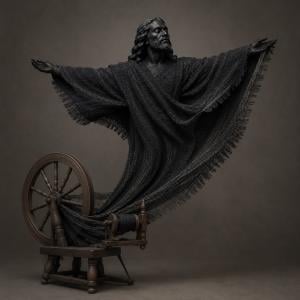
Image by DALL-E from prompt by the author
If You Can’t Carbon-Date It, Don’t Call It History
I’m going to say the quiet part out loud: if it isn’t tangible, measurable, repeatable, or at least mathematically modelable, it probably doesn’t exist outside of storytime. You can call that cold, but history survives on receipts, not vibes. We can’t CSI the first century, but we can compare claims with evidence. And when it comes to “Jesus of Nazareth, miracle worker, executed under Pilate, resurrected on the third day,” the receipts look like a wallet after a Vegas weekend.
Today we take a brisk, irreverent hike through the usual “proofs” for Jesus’ existence. We’ll press on the soft spots: late gospels, interpolated passages, rumor-based Roman mentions, and archaeological fan fiction. We’ll also look at what mythicist scholars argue (and why their arguments keep refusing to die): David Fitzgerald, Richard Carrier, Robert M. Price, Earl Doherty, Raphael Lataster, and G. A. Wells—names that cause apologetic blood pressure to spike like a Pentecostal drum solo.
No appeals to authority. No pious throat-clearing. Just the evidence (or its conspicuous absence) with a dash of blasphemous irreverence. Fair warning: this is a bit longer than my usual work but, I promise, it’s well worth the read.
Saddle up!
Exhibit A: The Gospels Arrive Late to Their Own Party
The earliest gospel we possess, Mark, shows up around 70 CE—four decades after the alleged events. The rest? Cascading copies and reworks: Matthew and Luke remixing Mark (with their own flourishes), and John finally rolling in around 100 CE like the last guest to a potluck who brings only theology.
Forty to seventy years is multiple human generations in an era without hard drives, stenographers, or video. Oral tradition isn’t a USB stick; it’s a game of telephone at a noisy market. Even the most generous defenders admit the gospels are not contemporaneous eyewitness diaries. They’re anonymous Greek prose written long after the fact, stitched together from prior stories, scripture-hunting, and theological agendas.
- G. A. Wells pointed out decades ago that our earliest Christian writings betray no contemporary biographical detail we could hang a hat on; the “earthly preacher” looks suspiciously like a later literary construct built on a mythic template.
- Earl Doherty argues the storytelling sequence runs the opposite way from what churches assume: a mythic/celestial Christ first, then historicizing narratives later. That makes the lateness of the gospels not a bug, but the very mechanism of the myth’s embodiment.
- Robert M. Price delights in showing how gospel episodes look like midrash—creative re-use of earlier scriptures—rather than reportage. Think “Elijah & Elisha Cinematic Universe,” now featuring Jesus, with Old Testament plot points refashioned into New Testament scenes.
- David Fitzgerald catalogs how many “details” dissolve under scrutiny once you stop treating Sunday school as a source library.
Late, anonymous, derivative, theologically driven. If the gospels were crime-scene notes, a judge would send the detective back for a refresher course and a body cam.
Exhibit B: Josephus—That Famous Passage That Isn’t
Flavius Josephus, born 37 CE, couldn’t have witnessed anything Jesus supposedly did. The go-to paragraph in Antiquities of the Jews—the Testimonium Flavianum—glows like a neon sign for interpolation. It reads, in essence, “So there was this Jesus, totally the Christ, did miracles, Pilate killed him, he rose again, followers still around; anyway… back to the prefect’s budget spreadsheet.”
You don’t need to be a stylometrist to feel how that paragraph clunks against Josephus’ usual tone and agenda. For a pious Jew writing under Roman patronage, to declare flatly “He was the Christ” would be like a modern sportswriter randomly inserting, “By the way, my cousin invented baseball.” The surrounding text also flows better if you remove the paragraph—like pulling a thumbtack from a bicycle tire and hearing the hiss stop.
- Fitzgerald and Price both note how the passage mirrors Christian confession far more than Josephus’ voice.
- Many scholars now concede at minimum a heavily edited text; others go further and call it a complete insertion, often pinned on Eusebius, the fourth-century ecclesiastical editor-in-chief.
- Carrier has laid out textual reasons for seeing the paragraph as an invention or, at best, retouched to theological perfection.
Either way, as independent, non-Christian confirmation, the Testimonium is like a witness wearing the defendant’s team jersey.
Exhibit C: Pliny and Tacitus—History’s Most Elegant Hearsay
You often hear: “But Pliny and Tacitus mention Christ!” True; also, welcome to the category called late secondhand notices.
- Pliny the Elder (the encyclopedist) wrote zilch about Christ or Christians.
- Pliny the Younger—born 61 CE—writes a letter around 112 CE asking the emperor how to handle weirdos who sing hymns to “Christ” before dawn and stubbornly won’t sacrifice to Roman gods. Interesting cultural note, yes. Eyewitness to Jesus? No. Eyewitness to Christians in Bithynia eight decades later? Sure.
- Tacitus, born 56 CE, writes in 116 CE that “Christus” suffered under Pilate. Where did he get that? Likely from what Christians themselves were saying by then or from official hearsay—not from a dusty Judean police blotter. Tacitus is far from infallible; he reports rumors elsewhere, too, with that patrician raised eyebrow.
As Carrier and Fitzgerald keep reminding anyone within earshot: late Roman references do not bootstrap gospel tales into history. They show that by the second century, there were Christians with a story about a Christ who’d been executed. That’s sociology, not biography.
Exhibit D: The Ossuary Olympics—Caiaphas, James, and Wishful Thinking
Archaeology is where historical claims go to either grow up or get grounded. On Jesus, it keeps getting grounded.
- The Caiaphas ossuary (bone box) doesn’t identify a high priest. “Caiaphas” wasn’t unique, and the inscription doesn’t give us a LinkedIn line like “Joseph, a.k.a. Caiaphas, High Priest (A.D. 18–36).”
- The famous James ossuary—“James, son of Joseph, brother of Jesus”—has spent more time in court than some crime families. Even if the inscription were 100% authentic, “James,” “Joseph,” and “Jesus” were first-century baby-name-chart toppers. It’s the ancient equivalent of “Mike, son of Dave, brother of John.” Color me unconvinced.
Raphael Lataster has a field day with this category: ambiguous artifacts championed with missionary zeal and statistical naïveté. Archaeology doesn’t care about your altar call; it cares about context, provenance, stratigraphy, inscription standards, and probabilistic reasoning. On that score, the ossuaries fail to move the needle beyond “cute maybe.”
Exhibit E: The Silence of the Contemporaries
If a charismatic miracle worker had toured Galilee and Judea causing scenes, clashing with authorities, drawing crowds, and getting executed in a public Roman spectacle, you’d expect… something. A temple memo. A passing mention in a diary. A snarky line from a satirist. A scribble in a bureaucrat’s “We had to deploy extra guards today because—long story—this guy multiplied bread” report.
Instead we get nothing contemporaneous: no Judean tax receipts noting “wave of healings led to loss of income for physicians,” no Roman docket for a high-profile sedition case that required Pilate’s personal attention and a PR stunt with Barabbas. When no one writing at the time notices, historians call that a problem.
- Price calls it “the dog that didn’t bark.” People who write about much smaller provincial circus acts remain silent about this one.
- Even writers prone to moralizing about weird cults—people like Seneca or Plutarch—fail to register a peep.
Absence of evidence is not always evidence of absence. But in a case where evidence should exist if the claims are true, persistent absence starts to look like a verdict.
Exhibit F: Literary DNA—How Scripture Begets Scripture
You don’t need divine revelation to see how the gospels reuse old stories. They constantly echo the Septuagint (Greek Old Testament):
- Scenes parallel Elijah and Elisha miracles (healings, food multiplications, raising the dead) with eerie specificity.
- Passion details mirror Psalms and Isaiah like a screenplay derived from a beloved book rather than a police report.
- Narrative geography sometimes follows theology more than maps: everything points symbolically to Jerusalem as if drawn by a preacher with a whiteboard.
Price and Doherty have long argued that much of the Jesus narrative reads like midrashic fiction—a legitimate ancient literary technique, but not eyewitness history. Fitzgerald demonstrates how many “unique” elements of the Jesus story have mythic cousins: dying-and-rising motifs, symbolic threes and forties, wilderness temptations, divine sonship declarations—tropes older than the sandals in the story.
Exhibit G: The Criteria of Convenience (a.k.a. “Embarrassment” Isn’t a Time Machine)
Apologists often wheel out “criteria” that supposedly sift history from legend: embarrassment, multiple attestation, dissimilarity, coherence. These can be heuristics, but they’re not cheat codes.
- Embarrassment: “No one would invent something embarrassing (like a crucified messiah), therefore it happened.” Cute theory—until you notice how myths often exalt reversal as their point. Inverting expectations is exactly how religions make theological lemonade.
- Multiple attestation: “Different sources say it; it must be true.” Not if the sources are not independent. If Matthew and Luke copy Mark (and often do), that’s one source with sequels, not three eyewitnesses high-fiving each other.
- Coherence: “This fits the overall picture.” That’s “feels right” in a tuxedo.
Carrier insists on a saner approach: formal Bayesian reasoning. Start with prior probabilities, update with evidence strength and independence. Spoiler: when your “evidence” is late, derivative, conflicted, or interpolated, your posterior probability for historicist claims tends to wobble toward “not proven.”
Exhibit H: The “Itinerant Preacher” Escape Hatch
When cornered, some defenders retreat to the minimalist claim: “Okay, maybe not that Jesus, but surely there was an itinerant preacher named Jesus who got in trouble and died.” That is not a triumph; that’s a concession with a halo.
History already teems with itinerant preachers, miracle claimants, and would-be messiahs. Plucking one at random and pinning the New Testament on him without independent evidence is theological wish-casting. If your thesis can survive the complete removal of every distinctive feature (miracles, teachings, resurrection, trial, specific dates and places), then your thesis explains nothing.
Exhibit I: “But the Locations Are Real!” (Congratulations, So Is Rome in Gladiator)
Pilgrimage tourism loves Nazareth, Capernaum, the Holy Sepulchre, and a swarm of “maybe here?” markers. Real places exist. Real churches got built. Real tour guides say, “And here Jesus ate falafel.” None of that converts later veneration into earlier verification.
As Lataster reminds readers, archaeological reality (there’s a first-century town here) is not the same as biographical confirmation (a particular miracle worker lived here). Otherwise any franchise with dedicated fans could bootstrap its lore into history with enough plaques and candles.
Exhibit J: The Math of Maybe—Why the Mythicist Model Wins the Parsimony Contest
Let’s stack models.
- Historicist model (robust): There was a specific Galilean miracle worker with identifiable teachings, tried under Pilate, executed, resurrected; his words and deeds were recorded decades later by anonymous authors synthesizing oral lore and revelation. Requires explaining away late dates, textual dependence, contradictions, and suspicious interpolations.
- Historicist model (minimalist): There was some obscure preacher named Jesus; the later legends wildly inflated him. Explains nothing about why the legends align so perfectly with earlier scriptures and mythic tropes, nor why contemporaries fail to notice him.
- Mythicist model (various versions from Wells, Doherty, Price, Carrier, Lataster): Early communities revered a celestial or theological figure; over time writers historicized him into narrative form using scripture, liturgy, and midrash; later generations read the stories as biography and went hunting for proof.
Which model requires fewer special pleadings? The mythicist one. Which aligns with the literary nature of the sources we actually have? The mythicist one. Which best explains the chronology (stories grow with time), the intertextuality (Old becomes “background” for New), and the archaeological ambiguity (no smoking ossuary)? Again: mythicism.
None of the scholars cited claim 100% certainty (healthy scholars rarely do), but Carrier makes a strong case that, on Bayesian grounds, the mythicist hypothesis outperforms historicism as an explanation of the data we possess—especially once you stop giving miracle-claims a free evidentiary lunch.
Exhibit K: The Psychology of Certainty (Or, Why “Everyone Knows” Isn’t Evidence)
People don’t merely believe stories; they belong to them. Identity, community, and ritual are sticky. The cost of changing your mind can be social exile. That’s why “every scholar says” often turns out to mean “the guild defaults to” until mavericks force the guild to update.
- Fitzgerald skewers ten popular “everyone knows” claims that crumble under scrutiny.
- Price gleefully deconstructs traditions we assumed were granite.
- Wells asked, long before it was fashionable, whether the Jesus we think we know was ever on the stage of history in the first place.
Consensus is not a sacrament; it’s a snapshot. And snapshots change.
Exhibit L: The “But My Faith!” Clause
If Jesus is mythical in origin, what happens to Christianity? That depends on what you were using Christianity for.
If you need history to validate metaphysics, then a mythic origin is TNT under your foundation. If you’re after ethics, community, music, and snacks, you can keep those without pretending scripture is a documentary. The ancients told myths to convey values; we don’t lose values by insisting on truth in labeling.
Either way, conflating meaning with verification never ends well. Ask astrology fans how their predictions fared against weather satellites.
Cross-Examination: Addressing the Standard Rejoinders
“Oral tradition preserves history accurately.”
It preserves stories memorably, which is not the same thing. Also, we’re still missing contemporary written corroboration for the wildest claims.
“Scholars overwhelmingly accept a historical Jesus.”
Many do—often a minimal one. The moment you define him minimally (“a preacher named Yeshua probably existed”), you’ve quietly abandoned the robust gospel portrait. Mythicist arguments push the conversation by asking whether even the minimal claim is necessary to explain the data.
“Absence of evidence isn’t evidence of absence.”
Correct—unless evidence should be present if the claim were true. Public trials, mass miracles, apocalyptic darkness, zombie saints doing a meet-and-greet—these would leave some trace. They didn’t.
“Miracles are possible.”
Possibility is not probability. In historical method, miracle claims start with a handicap because every competing natural explanation is always more probable. That’s not anti-supernatural bias; it’s how evidence works.
Verdict: The Case Collapses
Here’s a summary checklist for you:
- Earliest gospel (Mark) ~70 CE; John ~100 CE → not contemporaneous, highly literary.
- Josephus (born 37 CE) → not an eyewitness; the Testimonium Flavianum reads like a Christian polaroid stuck into a Jewish album.
- Pliny the Elder → silent. Pliny the Younger (61–112 CE) → late, hearsay about Christians, not Jesus.
- Tacitus (born 56 CE) → late, likely reporting what he’d heard, not what he’d verified.
- Caiaphas ossuary → lacks high-priest title; ambiguous.
- James ossuary → contested inscription; names are common; even authenticity wouldn’t specify that James/Jesus/Joseph.
- Other artifacts & holy sites → devotional value, not biographical proof.
- “Surely someone would have written something” → yes, and they didn’t.
- Archaeology & anthropology → provide no contemporaneous confirmation for a biblical Jesus.
Bottom line: There is no proof. Nada. Zip. Zilch.
That doesn’t mean no one ever lived named Yeshua. It means the specific claims that inflate Yeshua into a miracle-working, prophecy-fulfilling, death-defying figure are unsupported by the standards we demand in any other historical inquiry. The mythicist case explains the evidence better, with fewer narrative acrobatics and less reliance on pious red pens in later centuries.
When a religion’s historical core dissolves under inspection, the theological edifice eventually feels the wobble. Maybe it collapses loudly. Maybe it becomes art—beautiful, moving, and understood as fiction. Either way, truth doesn’t tremble just because a creed does.
TL;DR (Too Long; Didn’t Repent)
- Late, anonymous, derivative gospels ≠ eyewitness history.
- Josephus’ “Testimonium” looks inserted or retouched; at best, it’s compromised.
- Pliny/Tacitus are elegant hearsay—century-late and sociological.
- Ossuaries and shrines are ambiguous at best, tourist traps at worst.
- Contemporary silence screams louder than later sermons.
- Mythicism fits the literary, chronological, and archaeological facts with fewer excuses.
- If it isn’t tangible, measurable, repeatable, or modeled with coherent probabilities—it belongs to myth, not history.
Whether Jesus was a historical figure, a heavily mythologized teacher, or a literary and theological composite is not merely an academic parlor game for scholars with too much coffee and too many footnotes. It is a question that strikes at the load-bearing beam of Christianity itself. If the central character of the faith is historically uncertain, then every doctrine built upon him, virgin birth, atoning death, bodily resurrection, second coming, rests on a foundation that deserves careful inspection rather than automatic devotion. But this inquiry is not intended to destroy meaning. It is intended to separate what is true from what is merely familiar, what is evidence-based from what is inherited, and what is spiritually life-giving from what is accepted by habit, fear, or cultural momentum. Faith that cannot survive honest questions is not faith at all; it is intellectual taxidermy, stuffed, posed, and displayed to look alive. So dare to investigate. Read widely. Question relentlessly. Follow the evidence wherever it leads, even if it marches straight through the stained-glass walls of your most cherished assumptions. If your beliefs are true, critical thinking will refine them like gold in a furnace. If they are not, you will have traded comforting mythology for something infinitely more sacred: the courage to know, the freedom to choose, and the authenticity to build a worldview worthy of both your mind and your soul.
If (or when) public consciousness catches up to the scholarship, Christianity as history will fold into Christianity as myth—and many other religions will find themselves on the same conveyor belt. Ideas that survive that transition will be the ones that don’t require pretending.
Time kills all gods…
References & Further Reading
- Carrier, Richard. On the Historicity of Jesus: Why We Might Have Reason for Doubt. Sheffield Phoenix Press, 2014.
https://www.amazon.com/Historicity-Jesus-Might-Reason-Doubt/dp/1909697494
- Doherty, Earl. The Jesus Puzzle: Did Christianity Begin with a Mythical Christ? Canadian Humanist Publications, 1999.
https://www.amazon.com/Jesus-Puzzle-Christianity-Challenging-Historical/dp/096892591X
- Doherty, Earl. Jesus: Neither God nor Man: The Case for a Mythical Jesus. Age of Reason Publications, 2009.
https://www.goodreads.com/book/show/7646935-jesus
- Fitzgerald, David. Nailed: Ten Christian Myths That Show Jesus Never Existed at All. Lulu Press, 2010.
https://www.goodreads.com/book/show/10377928-nailed
- Lataster, Raphael. Questioning the Historicity of Jesus: Why a Philosophical Analysis Elucidates the Historical Discourse. Brill, 2019.
https://www.brill.com/view/title/55192
- Price, Robert M. Deconstructing Jesus. Prometheus Books, 2000.
https://www.amazon.com/Deconstructing-Jesus-Robert-M-Price/dp/1573927589
- Price, Robert M. The Incredible Shrinking Son of Man: How Reliable Is the Gospel Tradition? Prometheus Books, 2003.
https://www.amazon.com/Incredible-Shrinking-Son-Man-Tradition/dp/1573927317
- Wells, G. A. The Jesus of the Early Christians. Pemberton Books, 1971.
https://www.goodreads.com/book/show/2285683.The_Jesus_of_the_Early_Christians - Wells, G. A. The Jesus Myth. Open Court Publishing, 1999.
https://www.goodreads.com/book/show/2957996-the-jesus-myth
Did Jesus exist? What do you think? I’d love to see your thoughts in the comments below!
Derrick Day is the author of multiple books and the host of The Forward Podcast.
Follow his website or catch him on Facebook, Instagram, TikTok, and YouTube
Previous Post
May 6, 2026
Capitalism, Socialism, and Christians Who Ignore Jesus
Next Post
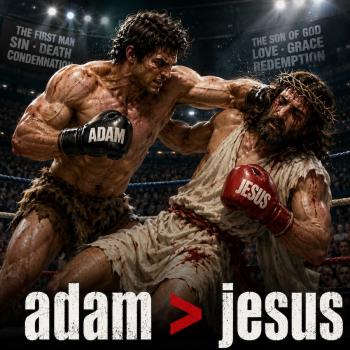
May 27, 2026 Adam > Jesus?
Recent Comments
"Excellent, non-partisan explanations. It’s really hard to find that nowadays. Thank you very much for ..."
Oligopoly, Oligarchy, Socialism, and Fascism in ..."
"Charming. Mythicism was always a fringe idea and its brief fad among online atheist a ..."
Did Jesus Exist: The Case of ..."
"I reject Xtianity as scripted in large part because Communism is what is left when ..."
Capitalism, Socialism, and Christians Who Ignore ..."
"Oh please. You make the bog Irish Einsteins."
Did Jesus Exist: The Case of ..."
Browse Our Archives
Select a Category agnostic antitheist antitheist atheistic antitheist atheistic theist gnosticism Love Minus Religion Politics and Policies of Love Uncategorized
Select a Month September 2026 August 2026 July 2026 June 2026 May 2026 March 2026 January 2026 December 2025 October 2025 September 2025 August 2025 July 2025 March 2025 February 2025 January 2025 December 2024 November 2024 October 2024 September 2024 August 2024 July 2024 June 2024 May 2024 April 2024 March 2024 February 2024 January 2024 December 2023 September 2023 November 2022 October 2022 April 2022 February 2022 January 2022 October 2021 May 2021 April 2021 March 2021 January 2021 November 2020 August 2020 July 2020 June 2020 May 2020 April 2020 March 2020 February 2020
Follow Us!
TAKE THE
Religious Wisdom Quiz
How many books are in the New Testament?
Select your answer to see how you score.
27 22 66 39
Related posts from Love Minus Religion
Why Most Christians are Really Paulians and Jobians
Capitalism, Socialism, and Christians Who Ignore Jesus
When Christian Politics Deport Compassion
TRENDING AT PATHEOS Nonreligious

When Worry Gets You Nowhere, How Can Faith...
Sometimes, we think that by worrying, we can somehow predict the future....

The Wasp And I: Meditations on Repentance
How can we enter the power and joy of the repentant self...

Reflections on the Evangelical Theological Society
As I mentioned before, this year, for the first time since 2005,...

Demmed if it do and demmed if it...
"First Presidency Announces Salt Lake Temple Rededication Date" Apropos of that,...

Stop Making Thanksgiving Problematic And Just Give Thanks
“What if, today, we were grateful for everything?” –Charlie Brown I...

Sunday Readings: Stay Awake and Hope
The First Sunday of Advent begins a new liturgical year, and the...
view all Nonreligious blogs
What Are Your Thoughts?leave a comment
Ad-Free & Subscriber Log-In Subscription Support
- About Us
- 2026 Calendar
- Videos
- Podcasts
- Library of World Religions
- Faith In Media Tracker
- Advertise With Us
- Write for Us
- Privacy Policy
- Terms of Service
- Do Not Sell My Data
- Contact Us
- Radiant Digital
- Manage Newsletter Subscriptions
- Unsubscribe From Notifications
- Sitemap
Copyright 2008-2026, Patheos, part of the Radiant Digital network of media brands. All rights reserved.
Subscription Support Ad-Free & Subscriber Log-In
Follow Patheos