
BuddhistCatholicContemplativeEvangelicalGeneral ChristianHinduJewishLatter-day SaintMuslimNew VisionsProgressive Christian
Beliefs
- Buddhist
- Catholic
- Contemplative
- Evangelical
- General Christian
- Hindu
- Jewish
- Latter-day Saint
- More Voices
- Muslim
- New Visions
- Pagan
- Progressive Christian
Topics
- Religion News
- Food and Religion
- Sports and Religion
- Religious Art
- Religious Music and Entertainment
- Religious Events
- History and Religion
- Style and Religion
- Politics and Religion
- Women in Religion
- Recreation Outdoors and Religion
- Business Finance and Religion
- Careers Workplace and Religion
- Education and Religion
- Family Parenting and Religion
- Health Fitness and Religion
- Home and Religion
- Relationships and Religion
- Technology and Religion
- Travel and Religion
Columnists
- Buddhist Columnists
- Business Finance and Religion Columnists
- Careers Workplace and Religion Columnists
- Catholic Columnists
- Contemplative Columnists
- Education and Religion Columnists
- Evangelists Columnists
- Family Parenting and Religion Columnists
- General Christian Columnists
- Health Fitness and Religion Columnists
- Hindu Columnists
- History and Religion Columnists
- Home and Religion Columnists
- Jewish Columnists
- More Voices Columnists
- Latter Day Columnists
- Muslim Columnists
- New Visions Columnists
- Nonreligious Columnists
- Pagan Columnists
- Politics and Religion Columnists
- Progressive Columnists
- Recreation Outdoors and Religion Columnists
- Relationships and Religion Columnists
- Religion News Columnists
- Religious Art Columnists
- Religious Events Columnists
- Religious Music and Entertainment Columnists
- Sports and Religion Columnists
- Style and Religion Columnists
- Technology and Religion Columnists
- Travel and Religion Columnists
- Women in Religion Columnists
Resource Library
- 2026 Calendar
- Library of World Religions
- The 100 Most Holy Places on Earth
- Patheos Answers
- Podcasts
- Videos
- Faith Leaders Database
- Anglican Episcopalian
- Bahai
- Baptist
- Buddhism
- Christianity
- Confucianism
- Eastern Orthodoxy
- Hinduism
- Holiness and Pentecostal
- ISKCON
- Islam
- Judaism
- Lutheran
- Methodist
- The Church of Jesus Christ of Latter-day Saints
- New Age
- Paganism
- Presbytarian and Reformed
- Protestantism
- Religion Behind the Scenes
- Roman Catholic
- Scientology
- Shia Islam
- Sikhism
- Sufism
- Sunni Islam
- Taoism
- Zen
- See all religions
Research Tools
 Ad-Free & Subscriber Log-In Subscription Support
Ad-Free & Subscriber Log-In Subscription Support
Follow Patheos 

- Trending:
- Forgiveness
- |
- Marriage
- |
- Consciousness
- |
- Death Penalty
- |
- Election
- |
- Halloween

- Home
- Nonreligious
- Relationships and Religion
- Why Gnosticism Beats Mainstream Christianity
Why Gnosticism Beats Mainstream Christianity
Last updated on: January 31, 2025 at 8:29 am by Derrick Day
Why Gnosticism Beats Mainstream Christianity 2025-01-31T08:29:25-07:00 Derrick Day
Patheos Explore the world's faith through different perspectives on religion and spirituality! Patheos has the views of the prevalent religions and spiritualities of the world.
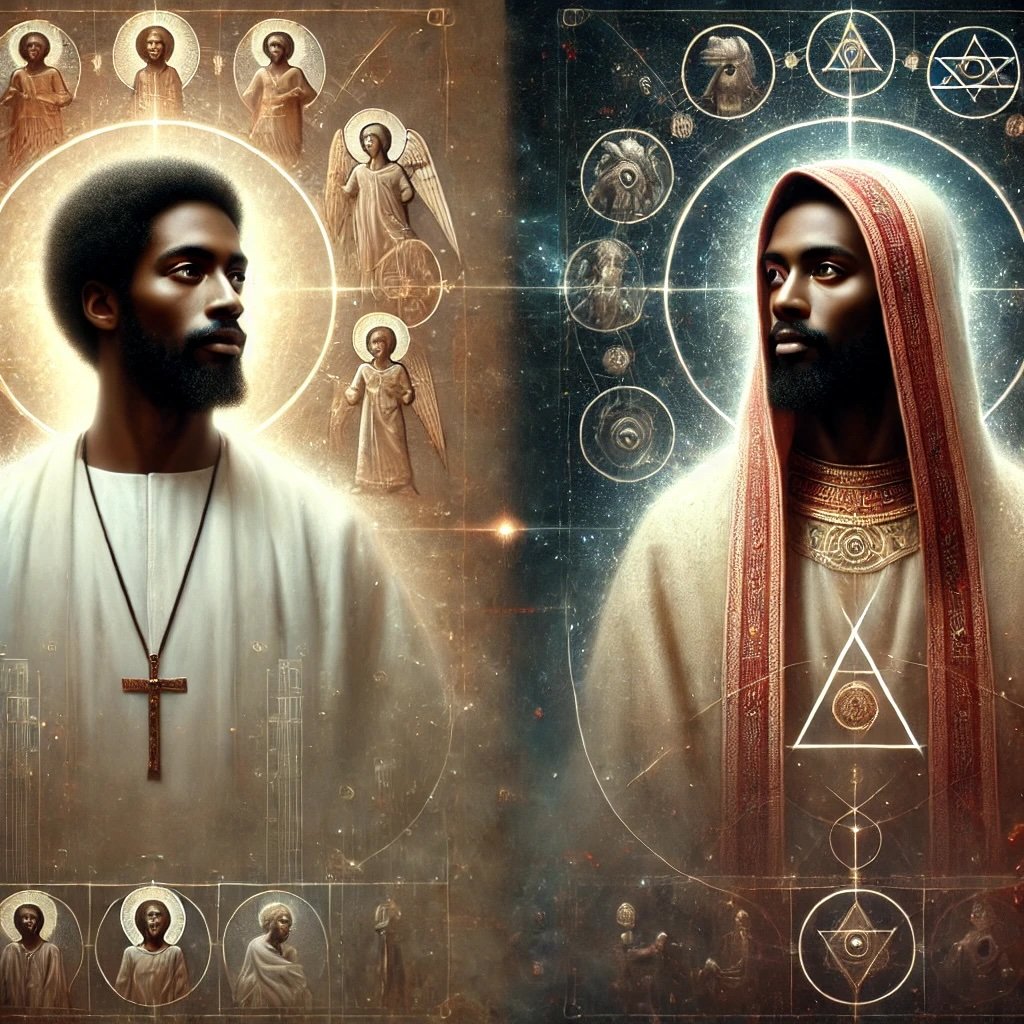
When it comes to religion, Christianity has been the dominant player for centuries. | Image created in Dalle by author.
As a former Christian pastor who later transitioned to atheism, my spiritual journey has been, to put it mildly, a wild ride. I’ve experienced the highs of religious fervor, the soul-crushing lows of doubt, and the liberating freedom of disbelief. But even as an atheist, I’ve always felt a nagging sense of something missing. Like a phantom limb, the yearning for meaning and purpose persisted, even though I no longer believed in a traditional God.
That’s when I decided to take a fresh look at Gnosticism, a long-lost cousin of early Christianity that had been hiding in the theological attic. As I delved into the Gnostic texts, I felt like I’d finally found some of the missing pieces of the puzzle. Gnosticism offered a compelling alternative to mainstream Christianity, one that resonated with my own experiences and questions. It presented a more nuanced understanding of the divine, a greater emphasis on personal spiritual experience, and a refreshing lack of moralistic dogma.
But Gnosticism wasn’t just intellectually stimulating; it also offered clear, practical applications for my life. It emphasized self-knowledge, inner transformation, and the pursuit of wisdom. It was like finding a user manual for my own soul, full of helpful tips and tricks for navigating the complexities of life. And perhaps most importantly, it offered a sense of hope and possibility, a belief that even in a world without a traditional God, there was still meaning to be found and purpose to be pursued.
Gnosticism: The Underrated, Underdog Sibling of Mainstream Christianity
Okay, let’s be real. When it comes to religion, Christianity has been the dominant player for centuries. It’s like the popular kid in school who everyone wants to be friends with. But what if I told you there’s a cooler, more mysterious sibling lurking in the shadows? Enter Gnosticism.
Gnosticism is like that indie band you discover that’s way better than anything on the mainstream charts. It’s got depth, it’s got intrigue, and it’s got a whole different perspective on the universe. While mainstream Christianity is busy preaching about sin and salvation, Gnosticism is all about unlocking the divine spark within you and escaping the Matrix (or, as they call it, the material world).
The Demiurge: Not Your Average Deity
Let’s delve into the divine sitcom that is Gnostic cosmology, where the star of the show (though he doesn’t realize it) is the Demiurge, often identified with the Old Testament’s Yahweh. Mainstream Christianity presents Yahweh as the all-powerful, all-knowing, and benevolent creator God. He’s the one who thunders from mountaintops, delivers commandments written in stone, and generally runs the show with an iron fist (or perhaps a golden scepter). But Gnosticism takes a decidedly different approach, one that might make some Sunday school teachers clutch their pearls.
Instead of this flawlessly competent divine CEO, Gnosticism introduces the Demiurge – a lesser deity, a cosmic architect with a serious case of divine myopia. Imagine him as the enthusiastic but ultimately clueless intern left in charge of the universe while the real boss (the true, transcendent God) is on an infinitely long coffee break. He’s not inherently evil, mind you, just… profoundly ignorant. He’s operating with limited information, like a kid trying to assemble a complex piece of furniture with only a blurry photocopy of the instructions. He genuinely believes he’s the supreme being, completely unaware of the true, ineffable God that exists beyond his limited perception. This is where the identification with Yahweh comes in. Gnostic texts often portray the Demiurge as the creator God of the Old Testament, the one who made the material world.
This identification isn’t arbitrary. Several characteristics attributed to Yahweh in the Old Testament align with the Gnostic portrayal of the Demiurge. For instance, Yahweh is often depicted as a jealous God, demanding exclusive worship and prone to fits of anger. This possessiveness and emotional volatility contrasts sharply with the Gnostic concept of the true God, who is utterly transcendent, peaceful, and beyond such petty human emotions. Yahweh’s focus on law, rules, and external obedience also aligns with the Demiurge’s role as the creator of the material world, a realm of limitations and constraints. He’s the cosmic bureaucrat, obsessed with order and structure, even if that order is ultimately flawed and illusory.
So, according to Gnosticism, Yahweh/the Demiurge, in his cosmic shortsightedness, creates the material world – a realm of suffering, ignorance, and, let’s be honest, an abundance of questionable fashion choices. It’s a world where things break, people get hurt, and you can’t seem to avoid those awkward family gatherings. This world, in Gnostic thought, is not a divine masterpiece but rather a flawed creation, a cosmic fixer-upper in dire need of some serious spiritual renovation.
But here’s the crucial difference: Gnosticism doesn’t simply blame Yahweh/the Demiurge for this mess. It offers a way out. This escape route is gnosis, or inner knowledge. This isn’t about memorizing scripture or blindly following religious dogma. Gnosis is a direct, intuitive understanding of your own divine nature, a realization that you are a spark of the true God trapped within this material realm created by the Demiurge. It’s like discovering you’re not just a character in the Demiurge’s poorly written play, but a divine actor who can break free from the script.
Through gnosis, you can transcend the limitations of the Demiurge’s creation – the laws, the suffering, the illusion – and reunite with the true, transcendent God. It’s like realizing you’ve been watching a low-budget, slightly depressing movie when you could be experiencing the full-color, IMAX version of reality. So, while mainstream Christianity often emphasizes accepting Yahweh’s plan for this world, Gnosticism suggests that there’s a much bigger, more meaningful story, one that begins with recognizing the limitations of the Demiurge and awakening to your own divine potential. It’s a cosmic upgrade, from dial-up to fiber optic, from black and white to technicolor.
Gnosis: Knowledge is Power
Let’s talk about the difference between blind faith and actually, you know, knowing stuff. Mainstream Christianity often emphasizes faith above all else. It’s the spiritual equivalent of those late-night infomercials: “Don’t try to understand it, just believe it!” They present a pre-packaged set of doctrines and expect you to swallow them whole, no questions asked. It’s like being handed a pre-written script for your life and being told, “Just act it out. Don’t worry about the plot holes or the questionable character development.” This approach can be comforting for some, offering a sense of certainty in a chaotic world. But for others, it can feel stifling, like being trapped in a spiritual straightjacket.
Gnosticism, on the other hand, takes a decidedly different tack. It’s not about blind obedience to external authority; it’s about inner exploration and self-discovery. It’s less like following a pre-set GPS route and more like embarking on a thrilling treasure hunt, where the treasure is the knowledge of your own divine nature. Gnosticism encourages questioning, probing, and digging beneath the surface of conventional wisdom. It’s about not taking anything at face value, even (or especially) religious dogma. It’s like being handed a puzzle box, not just being told what picture is inside, but being encouraged to figure out how to open it and see for yourself.
This pursuit of knowledge in Gnosticism isn’t just about accumulating facts or mastering theological jargon. It’s about gnosis – a direct, intuitive understanding of spiritual truth. It’s not simply intellectual knowledge; it’s experiential, transformative, and deeply personal. It’s like the difference between reading a travel brochure about Paris and actually walking the streets of Paris, smelling the fresh-baked bread, and hearing the sounds of the city. One is a secondhand account, the other is a lived experience. Gnosis is that lived experience of the divine within.
And here’s the kicker: Gnosticism teaches that this divine knowledge is already within you. You don’t need a priest, a guru, or a holy book to access it. It’s like having a superpower you never knew you had. You’re not just a lowly sinner, as mainstream Christianity often emphasizes, groveling before a distant and judgmental God. You are a spark of the divine, a fragment of the true, transcendent God trapped in this material world. Gnosis is the key that unlocks that inner divinity, allowing you to remember who you truly are and break free from the illusion of separation. It’s like finally finding the instruction manual to your own soul, realizing you’re not just a cog in the Demiurge’s clunky machine, but a powerful, independent being with the potential for true spiritual liberation.
The Divine Feminine: Not Just a Pretty Face
Another remarkable aspect of Gnosticism is its embrace of the divine feminine, a refreshing contrast to the predominantly masculine focus of mainstream Christianity. In a spiritual landscape where a male God and his band of male apostles hold court, Gnosticism brings a balance to the cosmic scale with its reverence for the feminine principle. This isn’t just about gender equality; it’s about recognizing that the universe’s full complexity cannot be captured by one gender alone. Enter Sophia, the embodiment of divine wisdom. In Gnostic theology, Sophia isn’t a sidelined character; she’s central to the narrative, playing a pivotal role in the creation myth and offering a nuanced portrayal of wisdom and the spiritual journey.
Sophia, whose name itself means “wisdom” in Greek, offers a vibrant tapestry of stories that resonate deeply with those who feel that mainstream religious narratives do not fully address their spiritual needs. In the Gnostic tradition, she is often depicted as having fallen from a higher state of existence, thereby creating or influencing the material world. This narrative explores themes of loss, redemption, and the struggle for a return to a divine state, reflecting the human experience with profound empathy. Her journey is not just a backstory in a cosmic drama; it’s a powerful allegory for self-discovery and the pursuit of knowledge, emphasizing that wisdom often comes from understanding and embracing our vulnerabilities and imperfections.
The inclusion of Sophia in Gnostic texts highlights a broader and more inclusive view of divinity that challenges the patriarchal structures often found in conventional religious doctrines. This portrayal enriches the spiritual dialogue by suggesting that the divine encompasses all aspects of humanity, both male and female. It’s as if Gnosticism invites us to a more colorful and equitable divine feast, where Sophia is the cool aunt who doesn’t just keep the conversation going but changes the whole dynamic of the gathering. She spices up the cosmic kitchen, offering a taste of something that’s not just different, but perhaps more wholesome and reflective of the entire human experience. This recognition of the divine feminine not only diversifies but deepens the spiritual exploration, inviting everyone to the table with a promise of a richer, more integrated understanding of the divine.
The Gnostic Gospels: The Forbidden Fruit of Early Christianity
Now, let’s talk about the Gnostic Gospels. These ancient texts were like the underground mixtapes of early Christianity, offering alternative perspectives on Jesus and his teachings. They were often excluded from the official canon, but that doesn’t mean they’re not worth checking out.
The Gnostic Gospels are like the director’s cut of the Bible. They offer a deeper, more nuanced understanding of Jesus and his message. They’re full of hidden knowledge, mystical insights, and mind-blowing revelations. It’s like finding out that your favorite movie has a whole extra hour of footage that you never knew existed.
Why the Gnostic Gospels Matter
Some scholars argue that the Gnostic Gospels are just as valid and reliable as the canonical Gospels. They may even preserve some authentic traditions about Jesus that were lost or suppressed by the mainstream Church. It’s like finding out that your grandma has a secret stash of love letters from Elvis.
The Gnostic Gospels provide a glimpse into the diversity of early Christian thought. They show us that there wasn’t just one monolithic Christianity from the beginning, but a variety of different beliefs and practices. It’s like discovering that your favorite band has a whole catalog of unreleased albums that you never knew existed.
Now, on to the million-dollar question: Can we trust these Gnostic texts? Here’s the kicker—historically, they’re just as valid as the texts in the New Testament. Both sets of writings were hammered out in the theological forge of the first few centuries AD, amid a whole lot of debate and not a little drama. The books that made it into the New Testament won their spot not because they had divine copyright but because they lined up with the prevailing theological views at the time. It’s a bit like how movie awards sometimes go more to the year’s biggest box-office hits than to the truly best films.
- Historical Snobbery
Let’s face it, calling the Gnostic Gospels “less reliable” is like saying indie films aren’t real movies. Just because something isn’t mainstream doesn’t mean it isn’t true or valuable. Sometimes, the truth is in the indie projects.
- Same Age, Different Stories
Both the New Testament and the Gnostic Gospels were written down centuries after the events they describe. They’re like two people recalling that epic high school party—different perspectives, same event.
- Canon Fodder
The process of canonization (picking what went into the Bible) was as much about politics as it was about piety. If the Gnostic Gospels were the indie films, the canonical texts were the studio blockbusters, backed by the big bucks of early church orthodoxy.
Gnosticism: The Comeback Kid
Although Gnosticism was largely suppressed by the rise of orthodox Christianity, it never completely disappeared. It’s like that old band that reunites for a comeback tour and blows everyone away. Today, there’s a renewed interest in Gnosticism, with many people finding its teachings more relevant than ever.
Gnosticism offers a refreshing alternative to mainstream Christianity. It’s more intellectual, more mystical, and more empowering. It’s like upgrading from a basic cable package to a premium streaming service. You get more content, more variety, and more bang for your buck.
So, if you’re looking for a spiritual path that’s more than just blind faith and dogma, give Gnosticism a try. You might just discover that it’s the spiritual upgrade you’ve been waiting for. It’s like finding out that your favorite coffee shop has a secret menu full of delicious, off-menu drinks. You’ll wonder why you ever settled for plain old Christianity in the first place.
Derrick Day is the author of Deconstructing Religion, Deconstructing Religion 2, The Martial Leader, MetaSpeech, and the host of The Forward Podcast.
Follow him on Facebook, Instagram, Twitter, TikTok, and YouTube
Relationships and Religion
History and Religion

About Derrick Day
Derrick Day is a dynamic speaker, teacher, author, and leadership coach. He is a 30-plus year veteran of Information Technology (IT) consulting and management. Derrick has also been a newspaper columnist with the New Journal and Guide and a former radio talk-show host with WNIS-AM in Norfolk, Virginia. He is also a seven-year veteran of the United States Navy. He is the author of “Deconstructing Religion," "Deconstructing Religion 2," "The Martial Leader," and "MetaSpeech." Derrick is also a former Pastor and ecumenical leader. Derrick has been actively involved with community activism and development. He has also served as a youth sports coach in football, baseball, and basketball. Derrick’s personal mission is demonstrating how Love transforms and impacts every area of life — including relationships, business, education, and government. You can read more about the author here.
Previous Post

November 25, 2024
The Spiritual Leftist’s Post-Election Survival Guide
Next Post

January 10, 2025 The Divine and Sacred Feminine: from God to Quarks
Recent Comments
"Excellent, non-partisan explanations. It’s really hard to find that nowadays. Thank you very much for ..."
Oligopoly, Oligarchy, Socialism, and Fascism in ..."
"Charming. Mythicism was always a fringe idea and its brief fad among online atheist a ..."
Did Jesus Exist: The Case of ..."
"I reject Xtianity as scripted in large part because Communism is what is left when ..."
Capitalism, Socialism, and Christians Who Ignore ..."
"Oh please. You make the bog Irish Einsteins."
Did Jesus Exist: The Case of ..."
Browse Our Archives
Select a Category agnostic antitheist antitheist atheistic antitheist atheistic theist gnosticism Love Minus Religion Politics and Policies of Love Uncategorized
Select a Month September 2026 August 2026 July 2026 June 2026 May 2026 March 2026 January 2026 December 2025 October 2025 September 2025 August 2025 July 2025 March 2025 February 2025 January 2025 December 2024 November 2024 October 2024 September 2024 August 2024 July 2024 June 2024 May 2024 April 2024 March 2024 February 2024 January 2024 December 2023 September 2023 November 2022 October 2022 April 2022 February 2022 January 2022 October 2021 May 2021 April 2021 March 2021 January 2021 November 2020 August 2020 July 2020 June 2020 May 2020 April 2020 March 2020 February 2020
Follow Us!
TAKE THE
Religious Wisdom Quiz
Who betrayed Jesus for thirty pieces of silver?
Select your answer to see how you score.
Saul Peter Judas James
Related posts from Love Minus Religion

Can Religion be Intellectually Honest?

Did Jesus Exist: The Case of the Vanishing...

Church Hypocrisy - Bless the Fetus, Forget the...
TRENDING AT PATHEOS Nonreligious

The Sermon on the Mount, Part I: Matthew...
The Sermon on the Mount, Part I (Matthew 4:12-5:12) St. Matthew moves...

What's up from Crossway: Reviewing some of their latest A few weeks...

Janie Learns the Way of the Cross: A...
Teaching children about Jesus' Passion can be challenging. Many parents and educators...

Looking For Good Catholic Writing - October 2026
He alone extends the heavens, and he walks upon the waves of...

In "Irreplaceable," our book on vocation and technology, Trevor Sutton and I...

I was strolling through the top floor of the brand new Parthenon...
view all Nonreligious blogs
What Are Your Thoughts?leave a comment
Ad-Free & Subscriber Log-In Subscription Support
- About Us
- 2026 Calendar
- Videos
- Podcasts
- Library of World Religions
- Faith In Media Tracker
- Advertise With Us
- Write for Us
- Privacy Policy
- Terms of Service
- Do Not Sell My Data
- Contact Us
- Radiant Digital
- Manage Newsletter Subscriptions
- Unsubscribe From Notifications
- Sitemap
Copyright 2008-2026, Patheos. All rights reserved.
Subscription Support Ad-Free & Subscriber Log-In
Follow Patheos