
BuddhistCatholicContemplativeEvangelicalGeneral ChristianHinduJewishLatter-day SaintMuslimNew VisionsProgressive Christian
Beliefs
- Buddhist
- Catholic
- Contemplative
- Evangelical
- General Christian
- Hindu
- Jewish
- Latter-day Saint
- More Voices
- Muslim
- New Visions
- Pagan
- Progressive Christian
Topics
- Religion News
- Food and Religion
- Sports and Religion
- Religious Art
- Religious Music and Entertainment
- Religious Events
- History and Religion
- Style and Religion
- Politics and Religion
- Women in Religion
- Recreation Outdoors and Religion
- Business Finance and Religion
- Careers Workplace and Religion
- Education and Religion
- Family Parenting and Religion
- Health Fitness and Religion
- Home and Religion
- Relationships and Religion
- Technology and Religion
- Travel and Religion
Columnists
- Buddhist Columnists
- Business Finance and Religion Columnists
- Careers Workplace and Religion Columnists
- Catholic Columnists
- Contemplative Columnists
- Education and Religion Columnists
- Evangelists Columnists
- Family Parenting and Religion Columnists
- General Christian Columnists
- Health Fitness and Religion Columnists
- Hindu Columnists
- History and Religion Columnists
- Home and Religion Columnists
- Jewish Columnists
- More Voices Columnists
- Latter Day Columnists
- Muslim Columnists
- New Visions Columnists
- Nonreligious Columnists
- Pagan Columnists
- Politics and Religion Columnists
- Progressive Columnists
- Recreation Outdoors and Religion Columnists
- Relationships and Religion Columnists
- Religion News Columnists
- Religious Art Columnists
- Religious Events Columnists
- Religious Music and Entertainment Columnists
- Sports and Religion Columnists
- Style and Religion Columnists
- Technology and Religion Columnists
- Travel and Religion Columnists
- Women in Religion Columnists
Resource Library
- 2026 Calendar
- Library of World Religions
- The 100 Most Holy Places on Earth
- Patheos Answers
- Podcasts
- Videos
- Faith Leaders Database
- Anglican Episcopalian
- Bahai
- Baptist
- Buddhism
- Christianity
- Confucianism
- Eastern Orthodoxy
- Hinduism
- Holiness and Pentecostal
- ISKCON
- Islam
- Judaism
- Lutheran
- Methodist
- The Church of Jesus Christ of Latter-day Saints
- New Age
- Paganism
- Presbytarian and Reformed
- Protestantism
- Religion Behind the Scenes
- Roman Catholic
- Scientology
- Shia Islam
- Sikhism
- Sufism
- Sunni Islam
- Taoism
- Zen
- See all religions
Research Tools
 Ad-Free & Subscriber Log-In Subscription Support
Ad-Free & Subscriber Log-In Subscription Support
Follow Patheos 

- Trending:
- Forgiveness
- |
- Marriage
- |
- Consciousness
- |
- Death Penalty
- |
- Election
- |
- Halloween

- Home
- Nonreligious
- Agnostic Antitheist – Esteeming Logic and Reason Over Faith
Agnostic Antitheist – Esteeming Logic and Reason Over Faith
Last updated on: June 5, 2024 at 3:47 pm by Derrick Day
Agnostic Antitheist – Esteeming Logic and Reason Over Faith 2024-06-05T15:47:25-07:00 Derrick Day
Patheos Explore the world's faith through different perspectives on religion and spirituality! Patheos has the views of the prevalent religions and spiritualities of the world.
 In my last blog post, I discussed how navigating the labyrinth of personal belief systems is a deeply individual journey, often marked by introspection, intellectual exploration, and sometimes, significant change. I also mentioned how I now identify as an agnostic antitheist, a stance that esteems logic and reason over faith. In this installment, I want to drill into this further by talking about what an agnostic atheist is. This may seem convoluted at first, but it encapsulates my current worldview and how it influences how I understand the universe, human existence, and our place within the cosmos. This blog post explores what it means to embrace this position and why I prioritize logic and reason over faith.
Understanding Agnostic Antitheism
To grasp what it means to be an agnostic antitheist, it’s essential to break down the term into its constituent parts:
Agnosticism: This aspect of my belief system is rooted in the acknowledgment of uncertainty regarding the existence of deities. Agnosticism posits that the existence or non-existence of a higher power is unknown or unknowable. This doesn’t mean that agnostics reject the idea of a deity outright but rather recognize the limitations of human knowledge and evidence in providing definitive answers about divine beings.
Antitheism: Antitheism goes a step further than atheism. While atheism is the lack of belief in deities, antitheism actively opposes theism, the belief in one or more deities. Antitheists argue that theism, especially organized religion, is detrimental to human progress, freedom, and well-being. Antitheism is a stance against the influence and power of religious institutions and dogmas.
Combining these terms, an agnostic antitheist maintains that the existence of deities is uncertain and probably unknowable, while simultaneously opposing the influence of theistic beliefs and institutions due to their perceived negative impact on society.
The Primacy of Logic and Reason
Central to my worldview as an agnostic antitheist is the primacy of logic and reason. Unlike faith, which often relies on accepting beliefs without empirical evidence, logic and reason demand evidence, critical thinking, and intellectual rigor. Here’s why I esteem logic and reason over faith:
- Empirical Evidence: Logic and reason are grounded in empirical evidence—observable, measurable, and verifiable data. This evidence-based approach is the foundation of scientific inquiry and technological advancement. Through the scientific method, humanity has made remarkable strides in understanding the natural world, from the microscopic building blocks of life to the vast expanses of the universe.
- Critical Thinking: Esteeming logic and reason involves honing critical thinking skills. This means questioning assumptions, evaluating arguments, and recognizing logical fallacies. Critical thinking empowers individuals to make informed decisions, solve problems effectively, and navigate complex issues with clarity and precision.
- Intellectual Honesty: Embracing logic and reason entails intellectual honesty—the willingness to acknowledge and correct mistakes, revise beliefs in light of new evidence, and pursue truth without bias. This contrasts sharply with dogmatic faith, which often resists change and discourages questioning.
- Ethical Foundation: A worldview grounded in logic and reason provides a robust ethical foundation. Secular ethics, based on principles of harm reduction, fairness, and empathy, offer a universal framework for moral behavior that transcends religious boundaries. By focusing on the well-being of individuals and communities, secular ethics promote human flourishing without relying on divine mandates.
The Case Against Faith
Faith, while providing comfort and meaning to many, often stands in opposition to the principles of logic and reason. Here are several reasons why I prioritize logic and reason over faith:
- Lack of Evidence: Faith by definition involves belief without empirical evidence. While faith can inspire hope and resilience, it can also lead to the acceptance of false or unproven claims. Without evidence, faith-based beliefs remain speculative and potentially misleading.
- Dogmatism: Faith often demands adherence to dogma—unquestioned principles and doctrines. This dogmatism can stifle intellectual growth, discourage critical inquiry, and perpetuate harmful practices and beliefs. Historical and contemporary examples abound where dogmatic faith has hindered scientific progress, justified violence, and suppressed dissent.
- Exclusivity: Many faith traditions claim exclusive access to truth and salvation, leading to divisiveness and conflict. These exclusive claims can foster intolerance, discrimination, and even violence against those who hold different beliefs. In contrast, logic and reason promote a more inclusive and harmonious approach to understanding and cooperation.
- Moral Relativism: Faith-based moral systems often derive their principles from religious texts and authorities, which can lead to moral relativism. What is considered morally right or wrong can vary significantly between different religious traditions. Logic and reason, on the other hand, seek to establish universal ethical principles based on human well-being and rational deliberation.
The Benefits of Embracing Agnostic Antitheism
Adopting an agnostic antitheist stance offers several benefits, both personally and societally:
- Intellectual Freedom: Free from the constraints of dogmatic faith, agnostic antitheists enjoy intellectual freedom. This freedom allows for open-ended inquiry, exploration of diverse ideas, and the continuous refinement of understanding.
- Critical Engagement: Agnostic antitheism encourages critical engagement with religious and philosophical ideas. By scrutinizing beliefs and institutions, agnostic antitheists contribute to a more informed and thoughtful discourse on important issues.
- Ethical Consistency: Grounded in secular ethics, agnostic antitheists can develop a consistent and universal moral framework. This framework is based on reasoned principles rather than arbitrary religious dictates, promoting justice, fairness, and empathy.
- Social Progress: By challenging the power and influence of religious institutions, agnostic antitheists advocate for social progress. This includes supporting science and education, defending human rights, and promoting secular governance.
Addressing Common Misconceptions
There are several common misconceptions about agnostic antitheism that warrant clarification:
- Nihilism: Agnostic antitheism is not synonymous with nihilism, the belief that life is meaningless. While agnostic antitheists reject divine purpose, they find meaning in human relationships, personal achievements, and the pursuit of knowledge and justice.
- Moral Anarchy: Contrary to the belief that without religion, there is no morality, agnostic antitheists adhere to secular ethics based on reason, empathy, and the well-being of individuals and communities. These principles provide a robust foundation for moral behavior.
- Hostility: While antitheism opposes the influence of theistic beliefs and institutions, it does not entail hostility towards believers. Agnostic antitheists advocate for respectful dialogue, mutual understanding, and the protection of religious freedom, while also challenging the societal power of religious dogma.
The Path Forward
Embracing agnostic antitheism is not about rejecting spirituality or the quest for meaning. Instead, it is about seeking understanding through evidence, reason, and critical inquiry. Here are some ways to cultivate a worldview that esteems logic and reason:
- Pursue Knowledge: Engage with a wide range of disciplines, including science, philosophy, history, and literature. Continuous learning broadens perspectives and deepens understanding.
- Develop Critical Thinking: Hone critical thinking skills by questioning assumptions, evaluating evidence, and recognizing logical fallacies. Practice intellectual humility and be willing to revise beliefs in light of new evidence.
- Foster Ethical Reflection: Reflect on ethical principles and their application to real-world issues. Consider the impact of actions on individuals and communities, and strive to promote justice, fairness, and empathy.
- Engage in Dialogue: Participate in respectful and open-minded dialogue with people of diverse beliefs. Listen to different perspectives, share your own views, and seek common ground.
- Support Secularism: Advocate for the separation of religion and state, support science and education, and defend human rights. Work towards a society where reason and evidence guide policy and decision-making.
Wrap-Up
Identifying as an agnostic antitheist who esteems logic and reason over faith is a profound commitment to intellectual honesty, critical inquiry, and ethical integrity. It is a journey that prioritizes evidence-based understanding, continuous learning, and the pursuit of justice and well-being for all.
While faith can offer comfort and community, it also has the potential to perpetuate dogmatism, divisiveness, and moral relativism. By contrast, a worldview grounded in logic and reason fosters intellectual freedom, ethical consistency, and social progress.
Embracing agnostic antitheism is not about rejecting the search for meaning but about finding meaning through rational exploration, compassionate action, and a commitment to truth. It is about building a world where knowledge, empathy, and justice guide our actions and shape our shared future.
Derrick Day is the author of Deconstructing Religion, and the host of The Forward Podcast.
Follow him on Facebook, Instagram, Twitter, TikTok, and YouTube
Previous Post

May 21, 2024
Why I Left Christianity and Will Never Return
Next Post

June 25, 2024 Why Third-Party Candidates Won't Win a Presidential Election
Recent Comments
"Excellent, non-partisan explanations. It’s really hard to find that nowadays. Thank you very much for ..."
Oligopoly, Oligarchy, Socialism, and Fascism in ..."
"Charming. Mythicism was always a fringe idea and its brief fad among online atheist a ..."
Did Jesus Exist: The Case of ..."
"I reject Xtianity as scripted in large part because Communism is what is left when ..."
Capitalism, Socialism, and Christians Who Ignore ..."
"Oh please. You make the bog Irish Einsteins."
Did Jesus Exist: The Case of ..."
Browse Our Archives
Select a Category agnostic antitheist antitheist atheistic antitheist atheistic theist gnosticism Love Minus Religion Politics and Policies of Love Uncategorized
Select a Month September 2026 August 2026 July 2026 June 2026 May 2026 March 2026 January 2026 December 2025 October 2025 September 2025 August 2025 July 2025 March 2025 February 2025 January 2025 December 2024 November 2024 October 2024 September 2024 August 2024 July 2024 June 2024 May 2024 April 2024 March 2024 February 2024 January 2024 December 2023 September 2023 November 2022 October 2022 April 2022 February 2022 January 2022 October 2021 May 2021 April 2021 March 2021 January 2021 November 2020 August 2020 July 2020 June 2020 May 2020 April 2020 March 2020 February 2020
Follow Us!
TAKE THE
Religious Wisdom Quiz
What is the biblical view of work?
Select your answer to see how you score.
Work is a curse Only kings should work Avoid work Work hard as for the Lord
Related posts from Love Minus Religion
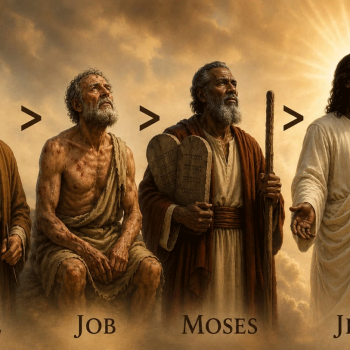
Why Most Christians are Really Paulians and Jobians


Did Jesus Exist: The Case of the Vanishing...

Capitalism, Socialism, and Christians Who Ignore Jesus
TRENDING AT PATHEOS Nonreligious

Pope Leo Celebrates Mass for Nurses & Docs...
I don't have any idea how he did it, but Pope Leo...

The Sermon on the Mount, Part I: Matthew...
The Sermon on the Mount, Part I (Matthew 4:12-5:12) St. Matthew moves...

What's up from Crossway: Reviewing some of their latest A few weeks...

Janie Learns the Way of the Cross: A...
Teaching children about Jesus' Passion can be challenging. Many parents and educators...

Looking For Good Catholic Writing - October 2026
He alone extends the heavens, and he walks upon the waves of...

In "Irreplaceable," our book on vocation and technology, Trevor Sutton and I...
view all Nonreligious blogs
What Are Your Thoughts?leave a comment
Ad-Free & Subscriber Log-In Subscription Support
- About Us
- 2026 Calendar
- Videos
- Podcasts
- Library of World Religions
- Faith In Media Tracker
- Advertise With Us
- Write for Us
- Privacy Policy
- Terms of Service
- Do Not Sell My Data
- Contact Us
- Radiant Digital
- Manage Newsletter Subscriptions
- Unsubscribe From Notifications
- Sitemap
Copyright 2008-2026, Patheos. All rights reserved.
Subscription Support Ad-Free & Subscriber Log-In
Follow Patheos