
BuddhistCatholicContemplativeEvangelicalGeneral ChristianHinduJewishLatter-day SaintMuslimNew VisionsProgressive Christian
Beliefs
- Buddhist
- Catholic
- Contemplative
- Evangelical
- General Christian
- Hindu
- Jewish
- Latter-day Saint
- More Voices
- Muslim
- New Visions
- Pagan
- Progressive Christian
Topics
- Religion News
- Food and Religion
- Sports and Religion
- Religious Art
- Religious Music and Entertainment
- Religious Events
- History and Religion
- Style and Religion
- Politics and Religion
- Women in Religion
- Recreation Outdoors and Religion
- Business Finance and Religion
- Careers Workplace and Religion
- Education and Religion
- Family Parenting and Religion
- Health Fitness and Religion
- Home and Religion
- Relationships and Religion
- Technology and Religion
- Travel and Religion
Columnists
- Buddhist Columnists
- Business Finance and Religion Columnists
- Careers Workplace and Religion Columnists
- Catholic Columnists
- Contemplative Columnists
- Education and Religion Columnists
- Evangelists Columnists
- Family Parenting and Religion Columnists
- General Christian Columnists
- Health Fitness and Religion Columnists
- Hindu Columnists
- History and Religion Columnists
- Home and Religion Columnists
- Jewish Columnists
- More Voices Columnists
- Latter Day Columnists
- Muslim Columnists
- New Visions Columnists
- Nonreligious Columnists
- Pagan Columnists
- Politics and Religion Columnists
- Progressive Columnists
- Recreation Outdoors and Religion Columnists
- Relationships and Religion Columnists
- Religion News Columnists
- Religious Art Columnists
- Religious Events Columnists
- Religious Music and Entertainment Columnists
- Sports and Religion Columnists
- Style and Religion Columnists
- Technology and Religion Columnists
- Travel and Religion Columnists
- Women in Religion Columnists
Resource Library
- 2026 Calendar
- Library of World Religions
- The 100 Most Holy Places on Earth
- Patheos Answers
- Podcasts
- Videos
- Faith Leaders Database
- Anglican Episcopalian
- Bahai
- Baptist
- Buddhism
- Christianity
- Confucianism
- Eastern Orthodoxy
- Hinduism
- Holiness and Pentecostal
- ISKCON
- Islam
- Judaism
- Lutheran
- Methodist
- The Church of Jesus Christ of Latter-day Saints
- New Age
- Paganism
- Presbytarian and Reformed
- Protestantism
- Religion Behind the Scenes
- Roman Catholic
- Scientology
- Shia Islam
- Sikhism
- Sufism
- Sunni Islam
- Taoism
- Zen
- See all religions
Research Tools
 Ad-Free & Subscriber Log-In Subscription Support
Ad-Free & Subscriber Log-In Subscription Support
Follow Patheos 

- Trending:
- Forgiveness
- |
- Marriage
- |
- Consciousness
- |
- Death Penalty
- |
- Election
- |
- Halloween

- Home
- Nonreligious
- Family, Parenting and Religion
- Criticism and Critiques
Criticism and Critiques
Last updated on: March 7, 2024 at 8:21 pm by Derrick Day
Criticism and Critiques 2024-03-07T20:21:32-07:00 Derrick Day
Patheos Explore the world's faith through different perspectives on religion and spirituality! Patheos has the views of the prevalent religions and spiritualities of the world.
 Introduction
It’s been a couple of weeks since I’ve blogged, but I wanted to take some time today to discuss a topic that I believe is relevant to everyone: dealing with criticism and critiques.
Personal Experiences
Recently, I’ve dealt with some situations that have been both challenging and enlightening. I’ve encountered individuals who, upon realizing they couldn’t compete with me intellectually, resorted to personal attacks. These attacks ranged from comments about my physical appearance to insults about my personal choices.
While it’s tempting to take these attacks personally, I’ve chosen not to. Here’s the truth: people often lash out when they feel threatened or insecure. Their words reflect their own limitations, not mine.
I’m comfortable in my own skin, and I’ve achieved a level of success that many can only dream of. That said, there’s always room for improvement, and I’m open to constructive feedback.
Distinguishing Criticism from Critique
It’s crucial to understand the difference between criticism and critique. Criticism is often negative, judgmental, and intended to tear someone down. It offers no valuable insights or suggestions for improvement.
On the other hand, a critique is constructive and focuses on providing feedback that can help someone grow and learn. It’s delivered with the intention of helping, not hurting.
The difference between criticism and critique lies in their intent and delivery:
Criticism:
- Intent: Often negative and judgmental, aiming to tear someone down or point out flaws without offering solutions.
- Delivery: Can be harsh, dismissive, and lack specific details or suggestions for improvement.
- Focus: Primarily on the person or their work, highlighting weaknesses and shortcomings.
- Impact: Usually discouraging, demotivating, and damages self-confidence.
Critique:
- Intent: Constructive and helpful, aiming to provide feedback that assists someone in learning and improving.
- Delivery: Respectful, specific, and offers suggestions for improvement or alternative approaches.
- Focus: Analyzes the strengths and weaknesses of the work itself, providing specific examples and actionable advice.
- Impact: Usually motivating, insightful, and leads to personal and professional growth.
Here’s a table summarizing the key differences:
Feature Criticism Critique Intent Negative, judgmental Constructive, helpful Delivery Harsh, dismissive Respectful, specific Focus Person or work (weaknesses) Work itself (strengths & weaknesses) Impact Discouraging, demotivating Motivating, insightful
In short, criticism attacks, while critique analyzes and guides.
My Approach to Criticism
I don’t accept criticism. I believe that everyone has the right to set boundaries, and I choose not to allow negativity into my life.
Furthermore, most criticism stems from a place of ignorance or insecurity. The people who criticize me often lack the qualifications or experience to offer valuable feedback.
The Cycle of Criticism
Unfortunately, criticism is often passed down through generations. We are criticized by parents, teachers, employers, and even strangers. This constant negativity can create a culture of destruction, hindering personal growth and fostering negativity.
The Power of Critique
I’m a firm believer in the power of critique. My high school English teacher, Mrs. Morenci, played a pivotal role in my development as a writer. She never tore me down; instead, she offered constructive criticism that helped me hone my skills and build confidence.
How to Handle Critics
It’s important to learn to discern between critics offering critiques and those simply aiming to tear you down. The latter group should be promptly disregarded.
For those offering genuine critiques, consider their feedback carefully. If their suggestions hold merit, consider incorporating them into your approach. However, remember that you have the final say in what you accept or reject.
Dealing with Personal Attacks
When faced with personal attacks, remember that they stem from the attacker’s insecurities, not your shortcomings. Don’t allow their negativity to affect you. Instead, focus on your own goals and aspirations.
Why Distinguish Between Criticism and Critique?
Distinguishing between criticism and critique is pivotal for personal and professional development. Criticism often carries a negative tone, emphasizing faults without offering constructive insights. In contrast, critique is a more nuanced approach that combines both positive and negative feedback, providing a comprehensive assessment aimed at improvement.
Understanding this distinction is crucial for effective communication. Criticism can lead to defensiveness and strained relationships, hindering collaboration. On the contrary, critique fosters open dialogue by acknowledging strengths and weaknesses, creating an environment conducive to growth.
The ability to differentiate between the two is instrumental in promoting self-reflection. Criticism may discourage introspection, while critique encourages individuals to thoughtfully analyze their work or behavior, fostering a continuous cycle of learning and improvement.
In professional settings, the impact is profound. Criticism may undermine trust and damage morale, whereas constructive critique builds trust by demonstrating a genuine interest in development. Moreover, mastering this skill contributes to a culture of professionalism, as critique focuses on specific aspects of performance, offering actionable recommendations for advancement.
Ultimately, the distinction between criticism and critique is not merely semantic; it shapes the dynamics of relationships, communication, and personal growth. By cultivating the ability to provide and receive critique effectively, individuals empower themselves to navigate challenges, embrace opportunities for improvement, and foster a positive and collaborative environment in both personal and professional spheres.
Embrace the Challenge
Being criticized or critiqued can be challenging, but it can also be an opportunity for growth. By learning to differentiate between the two and using critiques constructively, you can improve yourself and achieve your full potential.
Conclusion
Thank you for joining me on my journey. I encourage you to share your thoughts and experiences with criticism and critiques in the comments below. Additionally, I’m excited to announce two upcoming initiatives: a mailbag segment in future shows and potential giveaways sponsored by future partners.
Remember, share this content with anyone who might find it helpful, and until next time, may you be happy, well, and filled with peace.
Derrick Day is the author of Deconstructing Religion, and the host of The Forward Podcast.
Follow him on Facebook, Instagram, Twitter, TikTok, and YouTube
Family, Parenting and Religion
Relationships and Religion
Previous Post

February 15, 2024
The Importance of Love
Next Post

April 5, 2024 The Interplay of Faith and Facts
Recent Comments
"Excellent, non-partisan explanations. It’s really hard to find that nowadays. Thank you very much for ..."
Oligopoly, Oligarchy, Socialism, and Fascism in ..."
"Charming. Mythicism was always a fringe idea and its brief fad among online atheist a ..."
Did Jesus Exist: The Case of ..."
"I reject Xtianity as scripted in large part because Communism is what is left when ..."
Capitalism, Socialism, and Christians Who Ignore ..."
"Oh please. You make the bog Irish Einsteins."
Did Jesus Exist: The Case of ..."
Browse Our Archives
Select a Category agnostic antitheist antitheist atheistic antitheist atheistic theist gnosticism Love Minus Religion Politics and Policies of Love Uncategorized
Select a Month September 2026 August 2026 July 2026 June 2026 May 2026 March 2026 January 2026 December 2025 October 2025 September 2025 August 2025 July 2025 March 2025 February 2025 January 2025 December 2024 November 2024 October 2024 September 2024 August 2024 July 2024 June 2024 May 2024 April 2024 March 2024 February 2024 January 2024 December 2023 September 2023 November 2022 October 2022 April 2022 February 2022 January 2022 October 2021 May 2021 April 2021 March 2021 January 2021 November 2020 August 2020 July 2020 June 2020 May 2020 April 2020 March 2020 February 2020
Follow Us!
TAKE THE
Religious Wisdom Quiz
True or False: Mark's Gospel is the shortest of the four Gospels.
Select your answer to see how you score.
FALSE TRUE
Related posts from Love Minus Religion
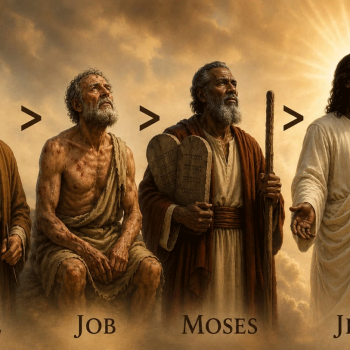
Why Most Christians are Really Paulians and Jobians


Did Jesus Exist: The Case of the Vanishing...

Capitalism, Socialism, and Christians Who Ignore Jesus
TRENDING AT PATHEOS Nonreligious

A new article, written by Jeff Lindsay and Gale L. Pooley,...

Swimfan: Forgotten Aughts Pleasures
This is a recovery effort. In 2002, My Big Fat Greek Wedding...

Top Three Anti-Catholic Lies About Catholicism
This is my initial transcript for the video, "THE 3 WORST...

Pope Leo Celebrates Mass for Nurses & Docs...
I don't have any idea how he did it, but Pope Leo...

The Sermon on the Mount, Part I: Matthew...
The Sermon on the Mount, Part I (Matthew 4:12-5:12) St. Matthew moves...

What's up from Crossway: Reviewing some of their latest A few weeks...
view all Nonreligious blogs
What Are Your Thoughts?leave a comment
Ad-Free & Subscriber Log-In Subscription Support
- About Us
- 2026 Calendar
- Videos
- Podcasts
- Library of World Religions
- Faith In Media Tracker
- Advertise With Us
- Write for Us
- Privacy Policy
- Terms of Service
- Do Not Sell My Data
- Contact Us
- Radiant Digital
- Manage Newsletter Subscriptions
- Unsubscribe From Notifications
- Sitemap
Copyright 2008-2026, Patheos. All rights reserved.
Subscription Support Ad-Free & Subscriber Log-In
Follow Patheos