
BuddhistCatholicContemplativeEvangelicalGeneral ChristianHinduJewishLatter-day SaintMuslimNew VisionsProgressive Christian
Beliefs
- Buddhist
- Catholic
- Contemplative
- Evangelical
- General Christian
- Hindu
- Jewish
- Latter-day Saint
- More Voices
- Muslim
- New Visions
- Pagan
- Progressive Christian
Topics
- Religion News
- Food and Religion
- Sports and Religion
- Religious Art
- Religious Music and Entertainment
- Religious Events
- History and Religion
- Style and Religion
- Politics and Religion
- Women in Religion
- Recreation Outdoors and Religion
- Business Finance and Religion
- Careers Workplace and Religion
- Education and Religion
- Family Parenting and Religion
- Health Fitness and Religion
- Home and Religion
- Relationships and Religion
- Technology and Religion
- Travel and Religion
Columnists
- Buddhist Columnists
- Business Finance and Religion Columnists
- Careers Workplace and Religion Columnists
- Catholic Columnists
- Contemplative Columnists
- Education and Religion Columnists
- Evangelists Columnists
- Family Parenting and Religion Columnists
- General Christian Columnists
- Health Fitness and Religion Columnists
- Hindu Columnists
- History and Religion Columnists
- Home and Religion Columnists
- Jewish Columnists
- More Voices Columnists
- Latter Day Columnists
- Muslim Columnists
- New Visions Columnists
- Nonreligious Columnists
- Pagan Columnists
- Politics and Religion Columnists
- Progressive Columnists
- Recreation Outdoors and Religion Columnists
- Relationships and Religion Columnists
- Religion News Columnists
- Religious Art Columnists
- Religious Events Columnists
- Religious Music and Entertainment Columnists
- Sports and Religion Columnists
- Style and Religion Columnists
- Technology and Religion Columnists
- Travel and Religion Columnists
- Women in Religion Columnists
Resource Library
- 2026 Calendar
- Library of World Religions
- The 100 Most Holy Places on Earth
- Patheos Answers
- Podcasts
- Videos
- Faith Leaders Database
- Anglican Episcopalian
- Bahai
- Baptist
- Buddhism
- Christianity
- Confucianism
- Eastern Orthodoxy
- Hinduism
- Holiness and Pentecostal
- ISKCON
- Islam
- Judaism
- Lutheran
- Methodist
- The Church of Jesus Christ of Latter-day Saints
- New Age
- Paganism
- Presbytarian and Reformed
- Protestantism
- Religion Behind the Scenes
- Roman Catholic
- Scientology
- Shia Islam
- Sikhism
- Sufism
- Sunni Islam
- Taoism
- Zen
- See all religions
Research Tools
 Ad-Free & Subscriber Log-In Subscription Support
Ad-Free & Subscriber Log-In Subscription Support
Follow Patheos 

- Trending:
- Forgiveness
- |
- Marriage
- |
- Consciousness
- |
- Death Penalty
- |
- Election
- |
- Halloween

- Home
- Nonreligious
- The Superhero Narrative
The Superhero Narrative
Last updated on: April 21, 2021 at 7:24 am by Derrick Day
The Superhero Narrative 2021-04-21T07:24:40-07:00 Derrick Day
Patheos Explore the world's faith through different perspectives on religion and spirituality! Patheos has the views of the prevalent religions and spiritualities of the world.
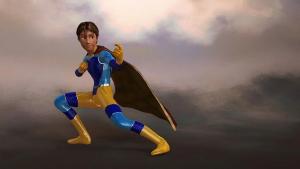 Everyone loves a superhero story. The world is in imminent danger of either being destroyed or overcome by evil and the hero rushes in to save the day. By virtue of superhuman strength and moral fortitude, the world and humanity lives on until the next crisis mounts.
In his book, “The Hero’s Journey,” Joseph Campbell outlines what is commonly known as the “monomyth,” or a story template that involves a hero who goes on an adventure, overcomes a crisis, and returns changed or transformed.
Sound familiar? It should. Because this is the archetype of the Jesus narrative.
Here’s the problem — and it begins, interestingly enough, in the bible. In Genesis, chapter 3, Adam first blames Eve then blames God for eating the forbidden fruit. It’s human nature (mostly) to “pass the buck.” It’s easier to pass responsibility for a transgression than to accept responsibility for it.
Abrogating our responsibility demands our need for a hero. Or a savior.
If you look at humanity through the lens of the bible, we were screwed. “Original sin” separated us from our loving creator and doomed us to the introduction of sickness, suffering, and even death.
Throughout the chapters of biblical history, heroes emerged. Noah, Abraham, Isaac, Jacob, David, Solomon all appeared to whet the appetite of humanity for a global rescue mission. Then you had the prophets, Eli, Samuel, Nathan, Elijah, Elisha, Ezekiel, Jeremiah, and Isaiah came forth as heralds of our impending salvation.
Then an elaborate game of connect-the-dots ensued and along came Yeshua Bar Yusef.
Yeshua was supposed to be the guy who would end Jewish oppression once and for all. He was the prophesied messiah who would put all Israel’s enemies under their feet. He would destroy the Romans and end their occupation and finally rid the land of those pesky Samaritans. He would restore all the religious rituals to their former glory and bring a much needed era of peace and freedom for all of Israel.
Yeshua did none of these things. Indeed, he focused his teaching on showing people they were never separated from source (the Father) and that the power to reshape our reality was already in us. Yeshua demonstrated miracles of healing, feeding, overcoming natural phenomena and resurrection.
He was the first-century equivalent of a superhero. What was really cool is that he taught others how to be superheroes, too!
Yeshua reminded his audience that the Kingdom of God (the power of creation) dwelled within themselves. Mind you, this was all socialized with folks before his crucifixion and resurrection, meaning none of them were “saved” as religion teaches. When Paul (whom I detest) wrote, “the same power that raised Yeshua from the dead dwells in us,” it was an attestation to the superhuman power baked into humanity.
As fate would have it, since Yeshua did not provide the people with the militant messiah they demanded (after all, he was a man of peace), they brought a railing accusation against him that even the Roman empire did not want to pass judgment on.
Instead, they left that job to religion. Let me stop here and say that if humanity ever needed saving from anything, it’s religion. The bible got it wrong about the love of money — I believe religion is the root of all evil.
So Yeshua stood accused, was tried, found guilty, and sentence to death. On the way though, as if to accentuate a point, the religious leaders had him flogged unmercifully.
I’m sure that, at this point, Yeshua wished Superman would swoop in and save him. Well, if he wasn’t into comic books, I’m sure he hoped his Father would step in and rescue him. Instead, adding insult to injury, he was nailed to a cross where he subsequently died.
This, after he actually did ask why his hero had forsaken him. It looked like our hero lost the fight. Stay with me, though, because this is where it gets interesting.
After his death, Yeshua was buried and, after three days, he was resurrected. By this measure, he had completed the hat trick. He hit for the cycle. He nailed a triple-double.
He emerged from the clutches of death. Now, if he was the savior that the Jews were looking for, this was the time to hang his foot in the collective posterior of the Roman empire. Because, you know, “with great power comes great responsibility.”
Now, the common christian narrative is that Yeshua fixed everything that Adam broke. But as I mentioned earlier, “original sin” ostensibly brought sickness, suffering, and death. Yeshua didn’t fix any of this. The common interpretation is that Yeshua repaired us spiritually but left our physical state “as-is” because we live in a “fallen world.” That said, “salvation” was not the main focus of Yeshua’s teaching; understanding who we are, was.
By this measure, Yeshua is a failure as a superhero. Matter of fact, folks were left to suffer by an even greater order of magnitude until Jerusalem was sacked in 70CE. He had just one job — restore the failure of Adam.
Imagine if Superman only addressed our spiritual issues. Suppose the Avengers only took on property damage but left humanity in disarray. That wouldn’t make for good superhero movies, now, would it?
What if Yeshua simply was a guy who had his physical and metaphysical stuff together? What if he was showing humanity how religion disempowered and enslaved us? What if his teaching was simply to show us how to dovetail our divinity with our humanity in such a way that we could perform supernatural (superhero-like) exploits?
If this were the case — and was properly chronicled — imagine the things we could accomplish!
Here’s my point — we don’t need a hero. And here comes the real heresy: we don’t need a savior. What we need to learn is that all we need is in us. We are equipped from the factory with every option necessary to live fully-formed, divine human lives.
I think Yeshua wasn’t illustrating the need for a savior but how we never needed one.
If we start with taking Yeshua out of the superhero narrative, it will mitigate our need or desire for heroes and cause us to see ourselves as our own hero and, ultimately, our own savior.
Superheroes make great movies. They also make for great folklore. They don’t make for sound spirituality. Time to change the paradigm.
Derrick Day is the author of Deconstructing Religion. He is also one of the co-hosts of the Heretic Happy Hour Podcast and the host of The Forward Podcast.
Follow me on Facebook, Instagram, Twitter, and YouTube
Previous Post

April 2, 2021
Easter and the Big Lie
Next Post

May 18, 2021 Agreement is not Essential to Unity
Browse Our Archives
Select a Category agnostic antitheist antitheist atheistic antitheist atheistic theist gnosticism Love Minus Religion Politics and Policies of Love Uncategorized
Select a Month September 2026 August 2026 July 2026 June 2026 May 2026 March 2026 January 2026 December 2025 October 2025 September 2025 August 2025 July 2025 March 2025 February 2025 January 2025 December 2024 November 2024 October 2024 September 2024 August 2024 July 2024 June 2024 May 2024 April 2024 March 2024 February 2024 January 2024 December 2023 September 2023 November 2022 October 2022 April 2022 February 2022 January 2022 October 2021 May 2021 April 2021 March 2021 January 2021 November 2020 August 2020 July 2020 June 2020 May 2020 April 2020 March 2020 February 2020
Follow Us!
TAKE THE
Religious Wisdom Quiz
Which creature deceived Eve into eating the forbidden fruit?
Select your answer to see how you score.
Lion Frog Serpent Raven
Related posts from Love Minus Religion

Do Atheism and Agnosticism Require Faith?
When Faithful People Suffer and God Stays Silent
Dethroning Jesus and Enthroning Yourself

Can Religion be Intellectually Honest?
TRENDING AT PATHEOS Nonreligious

The Sermon on the Mount, Part I: Matthew...
The Sermon on the Mount, Part I (Matthew 4:12-5:12) St. Matthew moves...

What's up from Crossway: Reviewing some of their latest A few weeks...

Janie Learns the Way of the Cross: A...
Teaching children about Jesus' Passion can be challenging. Many parents and educators...

Looking For Good Catholic Writing - October 2026
He alone extends the heavens, and he walks upon the waves of...

In "Irreplaceable," our book on vocation and technology, Trevor Sutton and I...

I was strolling through the top floor of the brand new Parthenon...
view all Nonreligious blogs
Ad-Free & Subscriber Log-In Subscription Support
- About Us
- 2026 Calendar
- Videos
- Podcasts
- Library of World Religions
- Faith In Media Tracker
- Advertise With Us
- Write for Us
- Privacy Policy
- Terms of Service
- Do Not Sell My Data
- Contact Us
- Radiant Digital
- Manage Newsletter Subscriptions
- Unsubscribe From Notifications
- Sitemap
Copyright 2008-2026, Patheos. All rights reserved.
Subscription Support Ad-Free & Subscriber Log-In
Follow Patheos