
BuddhistCatholicContemplativeEvangelicalGeneral ChristianHinduJewishLatter-day SaintMuslimNew VisionsProgressive Christian
Beliefs
- Buddhist
- Catholic
- Contemplative
- Evangelical
- General Christian
- Hindu
- Jewish
- Latter-day Saint
- More Voices
- Muslim
- New Visions
- Pagan
- Progressive Christian
Topics
- Religion News
- Food and Religion
- Sports and Religion
- Religious Art
- Religious Music and Entertainment
- Religious Events
- History and Religion
- Style and Religion
- Politics and Religion
- Women in Religion
- Recreation Outdoors and Religion
- Business Finance and Religion
- Careers Workplace and Religion
- Education and Religion
- Family Parenting and Religion
- Health Fitness and Religion
- Home and Religion
- Relationships and Religion
- Technology and Religion
- Travel and Religion
Columnists
- Buddhist Columnists
- Business Finance and Religion Columnists
- Careers Workplace and Religion Columnists
- Catholic Columnists
- Contemplative Columnists
- Education and Religion Columnists
- Evangelists Columnists
- Family Parenting and Religion Columnists
- General Christian Columnists
- Health Fitness and Religion Columnists
- Hindu Columnists
- History and Religion Columnists
- Home and Religion Columnists
- Jewish Columnists
- More Voices Columnists
- Latter Day Columnists
- Muslim Columnists
- New Visions Columnists
- Nonreligious Columnists
- Pagan Columnists
- Politics and Religion Columnists
- Progressive Columnists
- Recreation Outdoors and Religion Columnists
- Relationships and Religion Columnists
- Religion News Columnists
- Religious Art Columnists
- Religious Events Columnists
- Religious Music and Entertainment Columnists
- Sports and Religion Columnists
- Style and Religion Columnists
- Technology and Religion Columnists
- Travel and Religion Columnists
- Women in Religion Columnists
Resource Library
- 2026 Calendar
- Library of World Religions
- The 100 Most Holy Places on Earth
- Patheos Answers
- Podcasts
- Videos
- Faith Leaders Database
- Anglican Episcopalian
- Bahai
- Baptist
- Buddhism
- Christianity
- Confucianism
- Eastern Orthodoxy
- Hinduism
- Holiness and Pentecostal
- ISKCON
- Islam
- Judaism
- Lutheran
- Methodist
- The Church of Jesus Christ of Latter-day Saints
- New Age
- Paganism
- Presbytarian and Reformed
- Protestantism
- Religion Behind the Scenes
- Roman Catholic
- Scientology
- Shia Islam
- Sikhism
- Sufism
- Sunni Islam
- Taoism
- Zen
- See all religions
Research Tools
 Ad-Free & Subscriber Log-In Subscription Support
Ad-Free & Subscriber Log-In Subscription Support
Follow Patheos 

- Trending:
- Forgiveness
- |
- Marriage
- |
- Consciousness
- |
- Death Penalty
- |
- Election
- |
- Halloween

- Home
- Nonreligious
- Love vs. Like
Love vs. Like
Last updated on: August 26, 2020 at 5:19 pm by Derrick Day
Love vs. Like 2020-08-26T17:19:52-07:00 Derrick Day
Patheos Explore the world's faith through different perspectives on religion and spirituality! Patheos has the views of the prevalent religions and spiritualities of the world.
 “I like your Christ, I do not like your Christians. Your Christians are so unlike your Christ.”
― Mahatma Gandhi
Jesus shared with humanity the importance of love. In fact, I believe that Love is the thing that not only holds everything together, it is the thing that everything is made of. I also believe that the reason most people experience lack is because they misunderstand the power of love.
(That’s another topic for another blog post. Moving on…)
I think the most misunderstood emotion beside love is “like.” If love is the substance of all things, I think “like” is probably the oil that lubricates everything.
Recalling Jesus, again, we are to love one another as we love ourselves. I believe this is literally how we love God. You cannot love anyone if you are unable or unwilling to love yourself. There is, however, no biblical instruction to “like” everyone. I’m going to go out on a limb, here, and actually say it is impossible to “like” everyone.
There are two reasons I think that — preference and compatibility.
Preference simply says there are some things I will — either by nature or by nurture — not like. When I was growing up in Detroit in the 70’s, you fell into one of three automotive camps: GM, Ford, or Chrysler (or, if you were a fringe-dweller, American Motors). Whichever camp you were in, anything outside that group was blasphemous. Then, for each of these, there were GM (Chevy, Pontiac, Olds, Buick, or Cadillac), Ford (Ford, Mercury, or Lincoln) and Chrysler (Plymouth, Dodge, or Chrysler) factions.
Kinda like Baptist, Pentecostal, or Apostolic. But I digress…
The preference was simply what you liked. Whether it was styling, engineering, or reputation, you chose one or the other. For most of my childhood, I was a die-hard Pontiac purist but, once I became an adult, I switched my allegiance to Ford. Later, I became a fan of German marques and that is where I pitch my automotive tent.
Fun fact about me: I hate watermelon. Insert ethnic joke, here. I also hate coconut. I love bacon, wholeheartedly, so I often refer to coconut as the “anti-bacon.” Funny thing is my food preferences were part of my nature but my automotive preferences were determined by my environment and relationships.
For example, no one is born a Packers or Bears fan; someone helped influence that preference.
The second is compatibility. To the untrained eye, two gears may look compatible but one is for an automotive engine and another could be for a jet engine. They may look similar — and may even work together expediently — but they have two distinct purposes.
I am writing this on an Apple MacBook Pro. I happen to like Apple products. They may not be the “best-of-breed” devices but they definitely are “best integrated.” This means they all work well together because in the strictest mechanical sense, they “like” one another.
All of humanity are blessed with diverse gifts and talents. And, while I no longer believe in the proverbial “God-given purpose,” I believe that our gifts, talents, and abilities fall within a certain range. For example, there are people with musical talent but all cannot sing. Or many may be analytical but all not mathematical.
In other words, these distinct parts or abilities must have an affinity for one another in order to work together. People work well together when they are united around common goals like mechanical parts work together when they are designed to.
When it comes to teams — whether they be business, athletic, or community, these teams work best together when there is some “chemistry.” Does this mean that everyone has to like one another individually or consistently? Not necessarily. I, for one, have been part of teams with people I disliked intensely and would not interface with them outside the team construct. However, we all made a collective decision — consciously or subconsciously — that we had affinity for our goal that caused us to subordinate our dislike for each other.
I want to hang my hat here for a minute — because some people will read this as a license to discriminate. It’s one thing to work together with people whom you dislike but it’s another thing entirely to exclude them because of an attribute. Don’t get it twisted!
In my years in ministry, in marital counseling, I’ve often said that Like > Love. I stand by this premise. We can all be dedicated (well, at least try to, anyhow) to the universal principle of love — that is, “love is a choice.”
However, you simply will not like everyone. Far too many of us are smitten with physical attributes. Many of us are take by spiritual attributes. But what about intent preference? What happens when physical appearances change (they do)? What do you do when spiritual growth happens (it does)? Do you fold your tent, douse your fire, and move on?
If you don’t like the person you’re married to, you’re basically sleeping with the enemy. The sex may be great or the income produces good outcomes but when you don’t like the person you’re with, when the fun parts are challenged, the whole tends to stumble.
It’s not my intent to make this a referendum on marriage — the principle of “like” applies to many things. For example, you don’t go to restaurants where you dislike the food. You may dislike a particular brand of car. You may even dislike a certain genre of music. And if you dislike these things, you will not participate in them.
When it comes to people, though, we have to take a slightly different approach. I do my best not to prejudge, so my modus operandi in this case is to extend a certain amount of “like” and “trust” “credit” to people. Like a lending institution (because everything, at the end-of-the-day is borrowed), I extend credit to everyone I meet. How they handle this credit determines if I allot more to them or withdraw it from them. The higher the “score” generally refers to how much I “like” them. This gives me a simplified approach to relationships. Of course, humanity is not quantifiable by simple metrics, so I leave plenty of room for nuance.
When the dust settles, I vibe with my tribe. And my tribe is who I like. I’m not moved by external things by which I may make sweeping judgments; rather, I’m moved by how well we flow together. “Love” makes you a part of the human family; “Like” grants you access into my world.
Tying this back to Gandhi, I love Christ and I like Jesus. I love the people who call themselves “christian” but I don’t like “christianity.” I can comfortably and confidently say this because I know Jesus and I know “christianity.”
That’s a distinction that can only be discerned by be made by knowing nuance.
Derrick Day is the author of Deconstructing Religion. He is also one of the co-hosts of the Heretic Happy Hour Podcast and the host of The Love|Forward Podcast.
Previous Post

August 14, 2020
A Gift to Humanity - Remembering my Father-in-Love
Next Post

November 18, 2020 Jesus - Concept, Prototype, and Production
Browse Our Archives
Select a Category agnostic antitheist antitheist atheistic antitheist atheistic theist gnosticism Love Minus Religion Politics and Policies of Love Uncategorized
Select a Month September 2026 August 2026 July 2026 June 2026 May 2026 March 2026 January 2026 December 2025 October 2025 September 2025 August 2025 July 2025 March 2025 February 2025 January 2025 December 2024 November 2024 October 2024 September 2024 August 2024 July 2024 June 2024 May 2024 April 2024 March 2024 February 2024 January 2024 December 2023 September 2023 November 2022 October 2022 April 2022 February 2022 January 2022 October 2021 May 2021 April 2021 March 2021 January 2021 November 2020 August 2020 July 2020 June 2020 May 2020 April 2020 March 2020 February 2020
Follow Us!
TAKE THE
Religious Wisdom Quiz
Blessed are the peacemakers, for they will be called ____ of God.
Select your answer to see how you score.
Children Servants Disciples Friends
Related posts from Love Minus Religion

Do Atheism and Agnosticism Require Faith?

When Faithful People Suffer and God Stays Silent
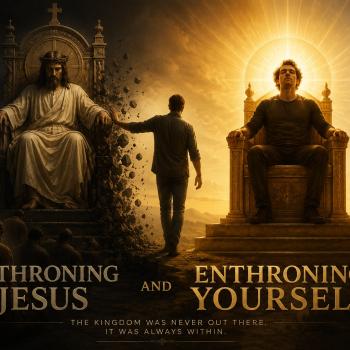
Dethroning Jesus and Enthroning Yourself
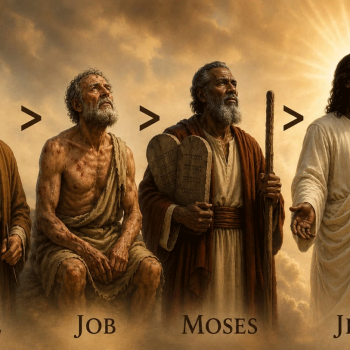
Why Most Christians are Really Paulians and Jobians
TRENDING AT PATHEOS Nonreligious

The Sermon on the Mount, Part I: Matthew...
The Sermon on the Mount, Part I (Matthew 4:12-5:12) St. Matthew moves...

What's up from Crossway: Reviewing some of their latest A few weeks...

Janie Learns the Way of the Cross: A...
Teaching children about Jesus' Passion can be challenging. Many parents and educators...

Looking For Good Catholic Writing - October 2026
He alone extends the heavens, and he walks upon the waves of...

In "Irreplaceable," our book on vocation and technology, Trevor Sutton and I...

I was strolling through the top floor of the brand new Parthenon...
view all Nonreligious blogs
Ad-Free & Subscriber Log-In Subscription Support
- About Us
- 2026 Calendar
- Videos
- Podcasts
- Library of World Religions
- Faith In Media Tracker
- Advertise With Us
- Write for Us
- Privacy Policy
- Terms of Service
- Do Not Sell My Data
- Contact Us
- Radiant Digital
- Manage Newsletter Subscriptions
- Unsubscribe From Notifications
- Sitemap
Copyright 2008-2026, Patheos. All rights reserved.
Subscription Support Ad-Free & Subscriber Log-In
Follow Patheos