
BuddhistCatholicContemplativeEvangelicalGeneral ChristianHinduJewishLatter-day SaintMuslimNew VisionsProgressive Christian
Beliefs
- Buddhist
- Catholic
- Contemplative
- Evangelical
- General Christian
- Hindu
- Jewish
- Latter-day Saint
- More Voices
- Muslim
- New Visions
- Pagan
- Progressive Christian
Topics
- Religion News
- Food and Religion
- Sports and Religion
- Religious Art
- Religious Music and Entertainment
- Religious Events
- History and Religion
- Style and Religion
- Politics and Religion
- Women in Religion
- Recreation Outdoors and Religion
- Business Finance and Religion
- Careers Workplace and Religion
- Education and Religion
- Family Parenting and Religion
- Health Fitness and Religion
- Home and Religion
- Relationships and Religion
- Technology and Religion
- Travel and Religion
Columnists
- Buddhist Columnists
- Business Finance and Religion Columnists
- Careers Workplace and Religion Columnists
- Catholic Columnists
- Contemplative Columnists
- Education and Religion Columnists
- Evangelists Columnists
- Family Parenting and Religion Columnists
- General Christian Columnists
- Health Fitness and Religion Columnists
- Hindu Columnists
- History and Religion Columnists
- Home and Religion Columnists
- Jewish Columnists
- More Voices Columnists
- Latter Day Columnists
- Muslim Columnists
- New Visions Columnists
- Nonreligious Columnists
- Pagan Columnists
- Politics and Religion Columnists
- Progressive Columnists
- Recreation Outdoors and Religion Columnists
- Relationships and Religion Columnists
- Religion News Columnists
- Religious Art Columnists
- Religious Events Columnists
- Religious Music and Entertainment Columnists
- Sports and Religion Columnists
- Style and Religion Columnists
- Technology and Religion Columnists
- Travel and Religion Columnists
- Women in Religion Columnists
Resource Library
- 2026 Calendar
- Library of World Religions
- The 100 Most Holy Places on Earth
- Patheos Answers
- Podcasts
- Videos
- Faith Leaders Database
- Anglican Episcopalian
- Bahai
- Baptist
- Buddhism
- Christianity
- Confucianism
- Eastern Orthodoxy
- Hinduism
- Holiness and Pentecostal
- ISKCON
- Islam
- Judaism
- Lutheran
- Methodist
- The Church of Jesus Christ of Latter-day Saints
- New Age
- Paganism
- Presbytarian and Reformed
- Protestantism
- Religion Behind the Scenes
- Roman Catholic
- Scientology
- Shia Islam
- Sikhism
- Sufism
- Sunni Islam
- Taoism
- Zen
- See all religions
Research Tools
 Ad-Free & Subscriber Log-In Subscription Support
Ad-Free & Subscriber Log-In Subscription Support
Follow Patheos 

- Trending:
- Forgiveness
- |
- Marriage
- |
- Consciousness
- |
- Death Penalty
- |
- Election
- |
- Halloween

- Home
- Nonreligious
- Love|Defined – Empathy and Compassion
Love|Defined – Empathy and Compassion
Last updated on: July 28, 2020 at 6:42 am by Derrick Day
Love|Defined – Empathy and Compassion 2020-07-28T06:42:41-07:00 Derrick Day
Patheos Explore the world's faith through different perspectives on religion and spirituality! Patheos has the views of the prevalent religions and spiritualities of the world.
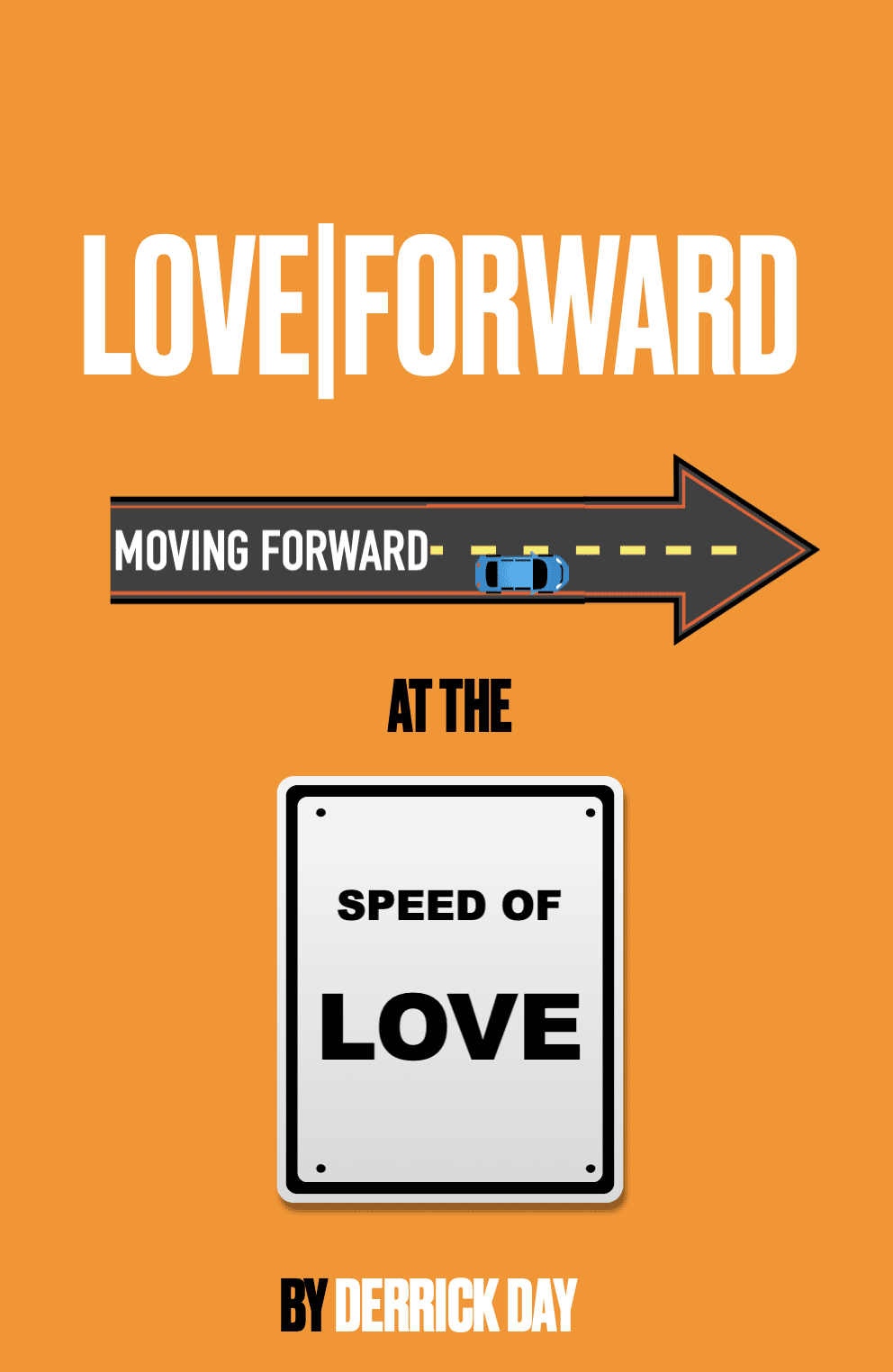 This week’s installment is an excerpt from my upcoming book, “Love|Forward – Moving Forward at the Speed of Love”
As far back as anyone can recall, humanity has sought to define what love is. At its most esoteric, it is the most powerful of human emotions; at its most technical, it’s a chain series of complex chemical and hormonal reactions. To the uninitiated, love is a mere emotion. To the biologist, love is the simply chemical changes in the human body that result in a conditioned response.
Before we can have any meaningful discussion on love, we need to have a working definition of love. It is a very complicated thing but I believe it can be reduced to two simple components:
Empathy and Compassion.
Empathy simply means to see or experience something through the eyes of others. This is one of the simple things that anyone can do to demonstrate love to another. For example, men can only understand the experiences of a woman by seeking to understand what it’s like to be a woman. A desire to experience things as others do is the pinnacle of empathy.
Empathy is the “why” of love. And if you want to get to the root cause of anything, you must either start with or get to “why.” Empathy forces us to understand why do people think what they think, say what they say, and do what they do.
Ask yourself, are you willing to walk a mile in another’s shoes? In the broadest slice of humanity, today, the answer is clearly, “no.” Most people see the plight of others as “not their problem.” In America, this is compounded by the concept of “rugged individualism;” that is, everyone is responsible for their own situations. In other words, “pull yourself up by your bootstraps.” Empathy forces us to see that not everyone has boots!
Empathy is the reminder of the connectedness of humanity. Quantum entanglement holds that once two or more subatomic particles become entangled, a change in the state of one will influence the other — irrespective of time or space. New Age thought calls this the “butterfly effect;” that even our most minute actions have a cascading effect throughout humanity. Empathy, then, is a spiritual explanation of quantum entanglement!
We must be aware of this level of connectedness. It’s easy to accept the removal of economic opportunity and mobility from a community; less so to accept the blight, despair, and crime that accompanies it. It’s easy to demand a lockdown of borders but not easy to see the heartache of the people leaving the only world they ever knew for one where opportunity is said to abound. We must become equally resolute in a desire to address both that which affects us directly and that which doesn’t seem to.
This may be an oversimplification but I believe many of the problems society-at-large faces could be resolved simply by seeing things as another.
Compassion means to care deeply. One of the greatest problems facing modern society is genuine unfeeling. When you have compassion for someone, you concern yourself with what is going on in their lives. Are they happy? Sad? Hurt? Hungry. Compassion also moves us to do something about areas.
In the institutional church, you will hear messages of unconditional love but, given the first opportunity, demonstration of it is lacking. Matter of fact, in many “commuter congregations,” you have to drive by wide swaths of blight, homelessness, and despair just to get to church. In a best-case scenario, the commuter congregants may actually have empathy for these folks (e.g., how did they get there) but lack any genuine concern.
One question we need to ask ourselves is “whom do we really care about?” This is a painful question if properly internalized — especially if you consider yourself a “person of faith.” Why? Because most people don’t care about humanity beyond their own bloodline, race, religion, or community. If processed with anything resembling intellectual honesty, most of us don’t care for anyone outside the aforementioned groups.
Compassion takes empathy a step further. When true compassion is manifest, once we’ve sought the “why” through empathy, we begin to seek out the “who,” “what,” “where,” and “when” do we help. Upon identifying these, we now begin to imagine and craft solutions, turning information, knowledge, understanding, and wisdom into a coherent “how.”
Empathy helps us to see humanity not only as ourselves but as divinity. Compassion honors divine humanity by filling the needs we see.
Before you accuse me of being accusatory, let me say — for the record — that I once felt that way. That is, if it didn’t have a direct impact upon my life or those closest to me, I really didn’t care.
But when I really began to understand what love is, I repented or changed my mind! Love taught me that all humanity — indeed, all creation — is interconnected and interdependent. I now understand that it’s not “there but for the grace of God, go I” but “there go we, together!”
When you truly love, you will go out of your way not to hurt or offend. Not only that, but you will also go out of your way to try and bless them. This isn’t “political correctness,” per se, but exercising true empathy and compassion.
Think about it, if you walk in another’s shoes or see things through the eyes of others, you take the time to try and understand how your actions may impact them. Many times we do and say things unlovingly — that is, we operate purely from our own perspective. When we look at things only from our own point of view, we exclude the viewpoint of others.
Love is inclusive — it invites people to the table; it doesn’t exclude them.
Now that we know what love is, we need to know what love does.
Love goes out of its way to bless (speak well of and do good for) and not to hurt (speak ill of and do bad to) anything or anyone.
If you have any doubt as to what love is or what love does, here’s your metric!
Are you a wanderer in faith? Here’s some good news: NOT ALL WHO WANDER ARE LOST!

That said, I cordially invite you to NOMAD 2020 — a live virtual event featuring Keith Giles, Karl and Laura Forehand, Kyle Butler, Cody and Elaine Johnston, Katy Valentine, Todd Vick, PK Langley, Bill Thrasher. Earlybird discount registration is available now at:
Previous Post

April 30, 2020
Belief and Knowledge
Next Post

May 7, 2020 Don't Be Black - A conversation I hope you never have to have with your kids
Browse Our Archives
Select a Category agnostic antitheist antitheist atheistic antitheist atheistic theist gnosticism Love Minus Religion Politics and Policies of Love Uncategorized
Select a Month September 2026 August 2026 July 2026 June 2026 May 2026 March 2026 January 2026 December 2025 October 2025 September 2025 August 2025 July 2025 March 2025 February 2025 January 2025 December 2024 November 2024 October 2024 September 2024 August 2024 July 2024 June 2024 May 2024 April 2024 March 2024 February 2024 January 2024 December 2023 September 2023 November 2022 October 2022 April 2022 February 2022 January 2022 October 2021 May 2021 April 2021 March 2021 January 2021 November 2020 August 2020 July 2020 June 2020 May 2020 April 2020 March 2020 February 2020
Follow Us!
TAKE THE
Religious Wisdom Quiz
Blessed are the peacemakers, for they will be called ____ of God.
Select your answer to see how you score.
Children Servants Disciples Friends
Related posts from Love Minus Religion

Do Atheism and Agnosticism Require Faith?

When Faithful People Suffer and God Stays Silent

Dethroning Jesus and Enthroning Yourself

Can Religion be Intellectually Honest?
TRENDING AT PATHEOS Nonreligious

The Sermon on the Mount, Part I: Matthew...
The Sermon on the Mount, Part I (Matthew 4:12-5:12) St. Matthew moves...

What's up from Crossway: Reviewing some of their latest A few weeks...

Janie Learns the Way of the Cross: A...
Teaching children about Jesus' Passion can be challenging. Many parents and educators...

Looking For Good Catholic Writing - October 2026
He alone extends the heavens, and he walks upon the waves of...

In "Irreplaceable," our book on vocation and technology, Trevor Sutton and I...

I was strolling through the top floor of the brand new Parthenon...
view all Nonreligious blogs
Ad-Free & Subscriber Log-In Subscription Support
- About Us
- 2026 Calendar
- Videos
- Podcasts
- Library of World Religions
- Faith In Media Tracker
- Advertise With Us
- Write for Us
- Privacy Policy
- Terms of Service
- Do Not Sell My Data
- Contact Us
- Radiant Digital
- Manage Newsletter Subscriptions
- Unsubscribe From Notifications
- Sitemap
Copyright 2008-2026, Patheos. All rights reserved.
Subscription Support Ad-Free & Subscriber Log-In
Follow Patheos