
BuddhistCatholicContemplativeEvangelicalGeneral ChristianHinduJewishLatter-day SaintMuslimNew VisionsProgressive Christian
Beliefs
- Buddhist
- Catholic
- Contemplative
- Evangelical
- General Christian
- Hindu
- Jewish
- Latter-day Saint
- More Voices
- Muslim
- New Visions
- Pagan
- Progressive Christian
Topics
- Religion News
- Food and Religion
- Sports and Religion
- Religious Art
- Religious Music and Entertainment
- Religious Events
- History and Religion
- Style and Religion
- Politics and Religion
- Women in Religion
- Recreation Outdoors and Religion
- Business Finance and Religion
- Careers Workplace and Religion
- Education and Religion
- Family Parenting and Religion
- Health Fitness and Religion
- Home and Religion
- Relationships and Religion
- Technology and Religion
- Travel and Religion
Columnists
- Buddhist Columnists
- Business Finance and Religion Columnists
- Careers Workplace and Religion Columnists
- Catholic Columnists
- Contemplative Columnists
- Education and Religion Columnists
- Evangelists Columnists
- Family Parenting and Religion Columnists
- General Christian Columnists
- Health Fitness and Religion Columnists
- Hindu Columnists
- History and Religion Columnists
- Home and Religion Columnists
- Jewish Columnists
- More Voices Columnists
- Latter Day Columnists
- Muslim Columnists
- New Visions Columnists
- Nonreligious Columnists
- Pagan Columnists
- Politics and Religion Columnists
- Progressive Columnists
- Recreation Outdoors and Religion Columnists
- Relationships and Religion Columnists
- Religion News Columnists
- Religious Art Columnists
- Religious Events Columnists
- Religious Music and Entertainment Columnists
- Sports and Religion Columnists
- Style and Religion Columnists
- Technology and Religion Columnists
- Travel and Religion Columnists
- Women in Religion Columnists
Resource Library
- 2026 Calendar
- Library of World Religions
- The 100 Most Holy Places on Earth
- Patheos Answers
- Podcasts
- Videos
- Faith Leaders Database
- Anglican Episcopalian
- Bahai
- Baptist
- Buddhism
- Christianity
- Confucianism
- Eastern Orthodoxy
- Hinduism
- Holiness and Pentecostal
- ISKCON
- Islam
- Judaism
- Lutheran
- Methodist
- The Church of Jesus Christ of Latter-day Saints
- New Age
- Paganism
- Presbytarian and Reformed
- Protestantism
- Religion Behind the Scenes
- Roman Catholic
- Scientology
- Shia Islam
- Sikhism
- Sufism
- Sunni Islam
- Taoism
- Zen
- See all religions
Research Tools
 Ad-Free & Subscriber Log-In Subscription Support
Ad-Free & Subscriber Log-In Subscription Support
Follow Patheos 

- Trending:
- Forgiveness
- |
- Marriage
- |
- Consciousness
- |
- Death Penalty
- |
- Election
- |
- Halloween
 Love, Joy, Feminism
-
More
- Home
- Nonreligious
- Some Catholics Issue a Call to Contagion–and Death
Some Catholics Issue a Call to Contagion–and Death
Last updated on: March 30, 2020 at 10:49 am by Libby Anne
Some Catholics Issue a Call to Contagion–and Death 2020-03-30T10:49:12-04:00 Libby Anne
Patheos Explore the world's faith through different perspectives on religion and spirituality! Patheos has the views of the prevalent religions and spiritualities of the world.
This week, an article by Matthew Schmitz, senior editor of the conservative religious journal First Things, made the rounds on twitter. Church as a Non-Essential Service, warned its heading.
Schmitz, a conservative Catholic, wrote as follows:
Judging by the response of many religious leaders, church is a non-essential service. We are capable of taking prudent measures to keep our supermarkets open, but not our sanctuaries.
Coronavirus has shown what we value. In Pennsylvania, beer distrubutors are deemed essential. In San Francisco and New York, cannabis dispensaries are. The rules vary by jurisdiction, but they all aim at one overriding goal: the preservation of physical health.
Important as health is, things begin to look strange when it is valued above all else.
Just as you can’t have jobs without lives, even so you can’t have souls to minister to without lives. Health is pretty important if it means the difference between life and death—between existing in this world and not.
And here we come to an interesting point. I grew up in an evangelical home, not a Catholic one, but there are some similarities. I learned, as the Catholic church holds, that abortion was murder, that the lives of zygotes and fetuses were worth saving at all causes. But I also learned that heaven is a better place than earth, and that we should not fear death. I also learned that when it is our time to go, God will take us whether we will or no.
These teachings can create a sort of carelessness toward life. After all, death leads only to life eternal, with no sorrow or pain. Of course, even people who believe that death is merely a gateway to heaven don’t typically want to die, and the loss of loved ones is still accompanied by deep grief. They are human, after all. Still, this way of viewing the world—this way of viewing life and death—can lead to an almost indifferent sentiment that “if I die, I die.”
It is somewhat ironic that this sometimes careless indifference toward life coincides with a “pro-life” opposition to abortion. Evangelicals typically hold that those who die before the age of accountability—some ambiguous point between six and ten—go straight to heaven. This is why Andrea Yates killed her five young children—because if they died as children they would go to heaven, but if they lived to grow up they might not. In this framework—this way of understanding of life and death and eternity and salvation—abortion would seem to be a good thing. After all, fetuses that die in the womb go to heaven, while if they had lived to grow up, many would wind up in hell.
While I won’t get into the theological details, Catholics have not historically held that infants go straight to heaven on death—it has often depended on whether they are baptized. I bring up the comparison to abortion, with reference to Schmitz’ piece, only to point out that Catholics like Schmitz do tend to value life in that area, if not—apparently—here. Perhaps the problem is that Schmitz believes he can write of health without writing of life.
Remember, Schmitz wrote as follows:
Important as health is, things begin to look strange when it is valued above all else.
But this is about life, not simply about health. In early March, sixty people attended a choir practice in Washington. Nearly all fell ill. Two are now dead. In South Korea, the majority of cases originated with a megachurch that chose to stay open and continue services, even as the government discouraged large gatherings. Parishioners didn’t just fall ill, they also spread the disease to others. 158 people died. More might have, without the country’s active contact tracing, case identification, and testing. This isn’t about health. It’s about life and death.
When I was a teen growing up in an evangelical family, the deaths that felt most horrifying to me were those of the unsaved. While we could be reasonably sure that those who died in Christ went to heaven—where we would see them again in bliss—this was not the case for the unsaved, who faced only eternal torture and damnation in hell upon death. God wanted all to be saved; this was why we had missionaries, and why were called on to evangelize those around us. For the unsaved, death felt so final. It couldn’t be undone.
When COVID-19 spreads through churches, it doesn’t stay in those churches. Newly infected parishioners go on to affect those around them in their homes, in their places of work, and in the supermarket.
None of us should ever want to be responsible for another’s death, even through our own carelessness. I once knew a man who hit a young person on a motorcycle, killing him instantly. Being responsible for this young person’s death, even through an act so unintentional, crushed this man. It completely upended his life. No one of us should ever want to be in this situation—even by accidentally transmitting a virus we may not know we are carrying.
How can conservative Catholics like Schmitz, so concerned about the life of the unborn, be at once so careless of life in the face of a deadly pandemic? It boggles the mind. It is easy to wonder, in the face of such inconsistency, whether conservative Catholic opposition to abortion really is about saving a life—and not about controlling women.
Note: For an interesting takedown of a similar article in the same publication—complete with historical comparison to the 1918 Spanish Flu pandemic—see Warren Throckmorton’s post here.
I have a Patreon! Please support my writing!
Previous Post

March 29, 2020
Lesbian Duplex 266: An Open Thread
Next Post

March 31, 2020 Is COVID-19 a Biblical Plague?
Browse Our Archives
Select a Category Atheism Evangelicalism/Fundamentalism Family Feminism Homeschool Meta Parenting Patriarchy Politics Purity Quiverfull Social Justice Uncategorized Worthwhile reads
Select a Month February 2021 January 2021 December 2020 November 2020 October 2020 September 2020 August 2020 July 2020 June 2020 May 2020 April 2020 March 2020 February 2020 January 2020 December 2019 November 2019 October 2019 September 2019 August 2019 July 2019 June 2019 May 2019 April 2019 March 2019 February 2019 January 2019 December 2018 November 2018 October 2018 September 2018 August 2018 July 2018 June 2018 May 2018 April 2018 March 2018 February 2018 January 2018 December 2017 November 2017 October 2017 September 2017 August 2017 July 2017 June 2017 May 2017 April 2017 March 2017 February 2017 January 2017 December 2016 November 2016 October 2016 September 2016 August 2016 July 2016 June 2016 May 2016 April 2016 March 2016 February 2016 January 2016 December 2015 November 2015 October 2015 September 2015 August 2015 July 2015 June 2015 May 2015 April 2015 March 2015 February 2015 January 2015 December 2014 November 2014 October 2014 September 2014 August 2014 July 2014 June 2014 May 2014 April 2014 March 2014 February 2014 January 2014 December 2013 November 2013 October 2013 September 2013 August 2013 July 2013 June 2013 May 2013 April 2013 March 2013 February 2013 January 2013 December 2012 November 2012 October 2012 September 2012 August 2012 July 2012 June 2012 May 2012 April 2012 March 2012 February 2012 January 2012 December 2011 November 2011 October 2011 September 2011 August 2011 July 2011 June 2011
Follow Us!
TAKE THE
Religious Wisdom Quiz
In Hebrews, what did Moses consider more valuable than the treasures of Egypt?
Select your answer to see how you score.
The promised land Eternal life Disgrace for the sake of Christ God's covenant
Related posts from Love, Joy, Feminism

The Vaccine Distribution Is Going to Go GREAT
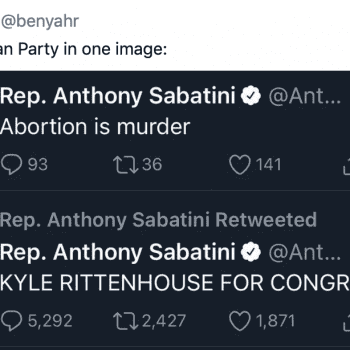
Well, which is it? Airing some double standards.

Politicians' Lies No Longer Matter in a Post-Truth...

TRENDING AT PATHEOS Nonreligious

Dethroning Jesus and Enthroning Yourself
Jesus Never Asked to Be Worshipped. He Asked to Be Understood. Christianity...

Why Most Christians are Really Paulians and Jobians
I Don't Care, But It Matters Let's get this out of the...

Essential Tips to Successfully Navigate the Selling Process
Selling a house can feel overwhelming, but it doesn’t have to be....

To Make Remote Work Effective, Think About Others
The COVID-19 pandemic forced many companies to rapidly transition to remote work....

Flexibility Is Key to Solving Problems of Tomorrow
The world of work is undergoing a dramatic transformation. The COVID-19 pandemic...
view all Nonreligious blogs
Ad-Free & Subscriber Log-In Subscription Support
- About Us
- 2026 Calendar
- Videos
- Podcasts
- Library of World Religions
- Faith In Media Tracker
- Advertise With Us
- Write for Us
- Privacy Policy
- Terms of Service
- Do Not Sell My Data
- Contact Us
- Radiant Digital
- Manage Newsletter Subscriptions
- Unsubscribe From Notifications
- Sitemap
Copyright 2008-2026, Patheos. All rights reserved.
Subscription Support Ad-Free & Subscriber Log-In
Follow Patheos