
BuddhistCatholicContemplativeEvangelicalGeneral ChristianHinduJewishLatter-day SaintMuslimNew VisionsProgressive Christian
Beliefs
- Buddhist
- Catholic
- Contemplative
- Evangelical
- General Christian
- Hindu
- Jewish
- Latter-day Saint
- More Voices
- Muslim
- New Visions
- Pagan
- Progressive Christian
Topics
- Religion News
- Food and Religion
- Sports and Religion
- Religious Art
- Religious Music and Entertainment
- Religious Events
- History and Religion
- Style and Religion
- Politics and Religion
- Women in Religion
- Recreation Outdoors and Religion
- Business Finance and Religion
- Careers Workplace and Religion
- Education and Religion
- Family Parenting and Religion
- Health Fitness and Religion
- Home and Religion
- Relationships and Religion
- Technology and Religion
- Travel and Religion
Columnists
- Buddhist Columnists
- Business Finance and Religion Columnists
- Careers Workplace and Religion Columnists
- Catholic Columnists
- Contemplative Columnists
- Education and Religion Columnists
- Evangelists Columnists
- Family Parenting and Religion Columnists
- General Christian Columnists
- Health Fitness and Religion Columnists
- Hindu Columnists
- History and Religion Columnists
- Home and Religion Columnists
- Jewish Columnists
- More Voices Columnists
- Latter Day Columnists
- Muslim Columnists
- New Visions Columnists
- Nonreligious Columnists
- Pagan Columnists
- Politics and Religion Columnists
- Progressive Columnists
- Recreation Outdoors and Religion Columnists
- Relationships and Religion Columnists
- Religion News Columnists
- Religious Art Columnists
- Religious Events Columnists
- Religious Music and Entertainment Columnists
- Sports and Religion Columnists
- Style and Religion Columnists
- Technology and Religion Columnists
- Travel and Religion Columnists
- Women in Religion Columnists
Resource Library
- 2026 Calendar
- Library of World Religions
- The 100 Most Holy Places on Earth
- Patheos Answers
- Podcasts
- Videos
- Faith Leaders Database
- Anglican Episcopalian
- Bahai
- Baptist
- Buddhism
- Christianity
- Confucianism
- Eastern Orthodoxy
- Hinduism
- Holiness and Pentecostal
- ISKCON
- Islam
- Judaism
- Lutheran
- Methodist
- The Church of Jesus Christ of Latter-day Saints
- New Age
- Paganism
- Presbytarian and Reformed
- Protestantism
- Religion Behind the Scenes
- Roman Catholic
- Scientology
- Shia Islam
- Sikhism
- Sufism
- Sunni Islam
- Taoism
- Zen
- See all religions
Research Tools
 Ad-Free & Subscriber Log-In Subscription Support
Ad-Free & Subscriber Log-In Subscription Support
Follow Patheos 

- Trending:
- Forgiveness
- |
- Marriage
- |
- Consciousness
- |
- Death Penalty
- |
- Election
- |
- Halloween
 Love, Joy, Feminism
-
More
- Home
- Nonreligious
- Love Comes Softly: The Perfect Homestead
Love Comes Softly: The Perfect Homestead
Last updated on: February 8, 2019 at 9:06 am by Libby Anne
Love Comes Softly: The Perfect Homestead 2019-02-08T09:06:41-04:00 Libby Anne
Patheos Explore the world's faith through different perspectives on religion and spirituality! Patheos has the views of the prevalent religions and spiritualities of the world.
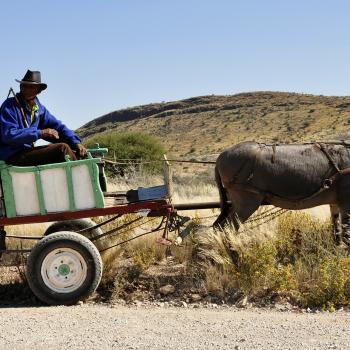
Marty rides in Clark’s wagon to the Grahams’ home, where the preacher is.
Marty sat stiff and mute beside him as the wagon jostled on. She struggled to lift a hand and push breeze-tossed hair back from her hot face. He looked at her with concern in his eyes.
“Won’t be too long now. It’s powerful hot in the sun. Ya be needin’ a bonnet to shade yer head.”
I quote this bit to highlight two things: First, this feels like confirmation that Marty and Clem came out here completely unprepared. What did she do during the weeks she spent on the wagon trail? Burn? Second, Clark is genuinely concerned about her. He’s a genuinely good person—he thinks of others, he cares, he’s sensitive to her loss.
Marty, though? Marty doesn’t care.
She wanted no sympathy from this stubborn man beside her.
So, they get to the Grahams. Here I want to note two things. First, when Clark tells the preacher and the Grahams that “we’ve decided to marry up” Marty gets all angry:
“We! she stormed within herself. Ya mean you.”
Marty has gone through a severe trauma in the past twenty-four hours. Being upset with Clark seems almost like a coping mechanism. It gives her an emotion other than grief to feel—anger. And in that sense it feels very, very real. Marty is wrong, in a technical sense—she was part of this decision—but her response is understandable. She needs to feel angry.
Second, Clark and Marty don’t tell anyone about the deal they’ve made—that Clark will give Marty the money to head back east come spring. Instead, the revelation goes like this:
“It will mean a home for Mrs. Claridge here an’ a mama for my Missie.”
She heard Mrs. Graham’s “It’s the only sensible thing to be a doin'” and the preacher’s “Yes, yes, of course.”
Like I mentioned last week, the deal where Marty gets to leave in the spring makes no sense. This? This makes a lot more sense. It does make me super curious whether Clark is hiding those aspects of his bargain with Marty—does he not want anyone else to know?
It feels like we have two competing stories sort of clumped together that don’t quite fit. Everyone else thinks Marty is here to stay—a storyline which makes sense. Between the two of them, at the same time, Clark and Marty have a different storyline going on—one where she can leave come spring (and boy does she plan to).
Marty, by the way, seems to disassociate here:
She must have uttered her own responses at the proper times, for the preachers words came through the haze, “… now pronounce you man and wife.”
And then, when they sit down to eat after the ceremony:
She felt like a puppet, moving, even speaking automatically—being controlled by something quite outside of herself.
If this were Farris, I might assume that there was some intentional removal of agency here. If this were Rivers, with her history in this area, I’d definitely think that. But this is Oke, and what she’s been describing seems more real than either of their writing.
And hey look, I found this on a government health website:
People who experience a traumatic event will often have some degree of dissociation during the event itself or in the following hours, days or weeks. For example, the event seems ‘unreal’ or the person feels detached from what’s going on around them as if watching the events on television.
One quick complaint about the Grahams’ though. I forgot to check when this book was written when I did my first re-read last month, and it was this bit that brought me up and made me go check:
Children seemed to be all around. She didn’t even try to ascertain how many.
It turns out that the book was written in 1979, but this line feels like something out of a fecundity-focused fundamentalist Christian homeschool culture, perhaps written in the late 1990s, not something written in 1979.
And it happens over and over. When Marty and the other adults sit down to eat after the ceremony, we get this random statement:
The children must have been fed by the older girls before the grown-ups arrived home from the funeral.
Okay, confession time: these lines could have been pulled verbatim from a book I wrote when I was about 13. It was fiction. In it, a kid from the ordinary present gets shipwrecked on an island populated by fundamentalist homeschooling families who have left the mainland to run their own secret colony. (I was inspired by The Twenty-One Balloons.)
In my story, each family on the island had an average of around a dozen kids, all of whom were raised to do copious amounts of chores. Our protagonist is taken aback by the multitudes of children underfoot, and shocked to find that the older kids clear the tables after meals without being asked, while the adults are still socializing.
Perhaps that is why Oke’s random references to Ma Graham’s large number of children and their helpfulness around the house feel to me like an attempt to make some kind of point: when I wrote a book full of similar lines, I absolutely was trying to make a point.
What’s that? You want to read my whole story? Nope. Not happening. But, fine: I’ll spoil the ending: our protagonist is impressed by how orderly and obedient the children are, by how little rebellion or bad behavior there is, by how perfect and godly everything is. He converts, and returns to the mainland to bring his parents to the island.
No, I know. That would never happen.
Ever.
What can I say. I was 13.
And yes I’m kind of horrified now.
Okay, we’re moving on now.
As Clark and Marty prepare to leave, Ma Graham tells Sally Anne to go wake Missie from her nap. Sally Anne returns with “a slightly rumpled little figure” who reaches out to Clark “with a glad cry and outstretched arms.” Clark “swept her up against his chest and for a moment placed a cheek against hers.” Clark is a loving, involved father.
A loving, involved father who has just promised to hand Missie off to a stranger and never see her again come spring. Yes, I’m still on about the fact that that does not make sense.
As they leave, Marty notes that Ma Graham doesn’t congratulate her on her marriage or make any other such statement. She’s grateful, because she’d pretty sure that if anyone said anything at this point she’d burst into tears. But no-one does.
These pioneer people were sensitive to the feelings of others.
Marty later learns that Ma Graham herself “married up” in circumstances very similar to Marty’s. Ma Graham is sensitive to what Marty is going through because she went through something similar herself. And though Marty hasn’t really put it together yet, the same is true for Clark, who lost his own wife only about six months before.
These pioneer people are sensitive to the feelings of others because they’ve been there themselves, and they remember how it felt.
As they leave, Ma Graham tells Marty she’ll visit in a few days. Clark, Marty, and Missy get in the wagon and head to Clark’s homestead, which is close by.
Clark’s homestead has a “small but tidy cabin,” a “sturdy log barn,” a “chicken house,” and a variety of other outbuildings, as well as horses, cattle, and pigs. Marty muses that “it looked os much like the dreams that she and Clem had shared,” which is a very painful thought, but I’m left thinking, no, sorry Marty, but you and Clem would never have made it.
I don’t know much about Clem, but everything I do know suggests that he was not prepared for the realities of the West. I mean good grief, Marty didn’t even have a bonnet.
One of the mysteries about this book—for me at least—is how Clark managed to set himself up so successfully. Life on the frontier was hard. His cabin, by the way, has a kitchen, a sitting room, and a bedroom, each distinct from the other. This is not the first cabin those on the frontier tended to construct. Cattle, horses, pigs, chickens—this is a lot.
Pa Wilder was never this successful.
This story could have gone in several different directions here. Marty could have gone with Clark to his homestead to find that it consisted of a run-down sod house, a horse, a few chickens, and some fields half-broken for planting. Instead, she comes to Clark’s homestead to find a fully mature, extremely successful farm in perfect working order.
We’re not told how old Clark is—or, indeed, anything about his background. We learn that Ellen, his first wife, died when she was only twenty. I’m no expert on farming in the American West, but this homestead doesn’t sound like something built in two or three years. Perhaps Clark is significantly older than Ellen and started his homestead long before meeting her. Where did Ellen come from, then? It’s never suggested that Missie has any maternal relatives in the area. While I don’t think it’s ever stated directly, I got the impression that Clark and Ellen came on a wagon train, like Marty and Clem did.
Clark’s extreme success makes little sense unless he’s been at it for a decade already—and had financing for getting started. You can construct a backstory where this is the case. Perhaps Clark had humble but hard-working roots, was gifted a large inheritance by a maternal great-aunt, and then decided to prove to himself that he could make it as his own person, outside of his father’s humble but hard-working success in the east.
In this scenario, you might imagine that Clark had a younger sweetheart who wasn’t old enough to come West yet, whom he later sent for to join him. She’d have had to be much younger—perhaps she was a young second-cousin, or someone else he felt an obligation or attachment to and turned to when he eventually needed a wife. Or maybe he just asked his parents to choose and send him someone, not having time to court himself.
I want a backstory very, very badly, and Oke never, ever offers one. It’s driving me batty. All we know is that Clark has a very, very nice homestead and is very, very successful. Cool. And Marty has now arrived at his very-successful homestead.
Clark helped Marty down and spoke gently. “Ya best git ya in out of the sun and lay yerself down a spell. Ya’ll find the bedroom off’n the sittin’ room. I’ll take charge of Missie an’ anything’ else thet be needin’ carin’ fer.”
I mentioned earlier that Oke could have had Marty come home to a sod house and a hard dose of reality about life in the West, which could have gone in interesting directions. Oke has made other choices as well. She could have made Clark a fairly distant father, leaving Marty to find ways to turn Clark’s heart toward Missie (that might have made the deal they struck make more sense too). She could hve made Clark gruff in general, and given Marty the role of breaking through his defenses and softening him.
It’s not like there aren’t a million and one romance novels laid out that way, after all.
Instead, Oke chose to create a person who is sensitive, gentle, and caring. If I expressed concern about what fangirls of Rivers’ Voice in the Wind series might be looking for in a man after swooning over Marcus, there is no such concern here. Clark may have married Marty to get someone else to handle the childcare and cooking, but it’s not because he’s not completely capable of doing those things himself. He is, and then some.
I have a Patreon! Please support my writing!
Previous Post

February 7, 2019
1980s Anti-Porn Crusaders: Smut Caused the French Revolution
Next Post

February 9, 2019 Saturday Link Love: Kamala Harris, Testing, and Measles
Browse Our Archives
Select a Category Atheism Evangelicalism/Fundamentalism Family Feminism Homeschool Meta Parenting Patriarchy Politics Purity Quiverfull Social Justice Uncategorized Worthwhile reads
Select a Month February 2021 January 2021 December 2020 November 2020 October 2020 September 2020 August 2020 July 2020 June 2020 May 2020 April 2020 March 2020 February 2020 January 2020 December 2019 November 2019 October 2019 September 2019 August 2019 July 2019 June 2019 May 2019 April 2019 March 2019 February 2019 January 2019 December 2018 November 2018 October 2018 September 2018 August 2018 July 2018 June 2018 May 2018 April 2018 March 2018 February 2018 January 2018 December 2017 November 2017 October 2017 September 2017 August 2017 July 2017 June 2017 May 2017 April 2017 March 2017 February 2017 January 2017 December 2016 November 2016 October 2016 September 2016 August 2016 July 2016 June 2016 May 2016 April 2016 March 2016 February 2016 January 2016 December 2015 November 2015 October 2015 September 2015 August 2015 July 2015 June 2015 May 2015 April 2015 March 2015 February 2015 January 2015 December 2014 November 2014 October 2014 September 2014 August 2014 July 2014 June 2014 May 2014 April 2014 March 2014 February 2014 January 2014 December 2013 November 2013 October 2013 September 2013 August 2013 July 2013 June 2013 May 2013 April 2013 March 2013 February 2013 January 2013 December 2012 November 2012 October 2012 September 2012 August 2012 July 2012 June 2012 May 2012 April 2012 March 2012 February 2012 January 2012 December 2011 November 2011 October 2011 September 2011 August 2011 July 2011 June 2011
Follow Us!
TAKE THE
Religious Wisdom Quiz
Who predicted Persia's rise?
Select your answer to see how you score.
Jeremiah Daniel Isaiah Ezekiel
Related posts from Love, Joy, Feminism

Love Comes Softly: A Panicked Rush into Town

Love Comes Softly: Laura Is Dead, Long Live...

Love Comes Softly: The Conversion and the Fall;...
TRENDING AT PATHEOS Nonreligious

Dethroning Jesus and Enthroning Yourself
Jesus Never Asked to Be Worshipped. He Asked to Be Understood. Christianity...

Why Most Christians are Really Paulians and Jobians
I Don't Care, But It Matters Let's get this out of the...

Essential Tips to Successfully Navigate the Selling Process
Selling a house can feel overwhelming, but it doesn’t have to be....

To Make Remote Work Effective, Think About Others
The COVID-19 pandemic forced many companies to rapidly transition to remote work....

Flexibility Is Key to Solving Problems of Tomorrow
The world of work is undergoing a dramatic transformation. The COVID-19 pandemic...
view all Nonreligious blogs
Ad-Free & Subscriber Log-In Subscription Support
- About Us
- 2026 Calendar
- Videos
- Podcasts
- Library of World Religions
- Faith In Media Tracker
- Advertise With Us
- Write for Us
- Privacy Policy
- Terms of Service
- Do Not Sell My Data
- Contact Us
- Radiant Digital
- Manage Newsletter Subscriptions
- Unsubscribe From Notifications
- Sitemap
Copyright 2008-2026, Patheos. All rights reserved.
Subscription Support Ad-Free & Subscriber Log-In
Follow Patheos