
BuddhistCatholicContemplativeEvangelicalGeneral ChristianHinduJewishLatter-day SaintMuslimNew VisionsProgressive Christian
Beliefs
- Buddhist
- Catholic
- Contemplative
- Evangelical
- General Christian
- Hindu
- Jewish
- Latter-day Saint
- More Voices
- Muslim
- New Visions
- Pagan
- Progressive Christian
Topics
- Religion News
- Food and Religion
- Sports and Religion
- Religious Art
- Religious Music and Entertainment
- Religious Events
- History and Religion
- Style and Religion
- Politics and Religion
- Women in Religion
- Recreation Outdoors and Religion
- Business Finance and Religion
- Careers Workplace and Religion
- Education and Religion
- Family Parenting and Religion
- Health Fitness and Religion
- Home and Religion
- Relationships and Religion
- Technology and Religion
- Travel and Religion
Columnists
- Buddhist Columnists
- Business Finance and Religion Columnists
- Careers Workplace and Religion Columnists
- Catholic Columnists
- Contemplative Columnists
- Education and Religion Columnists
- Evangelists Columnists
- Family Parenting and Religion Columnists
- General Christian Columnists
- Health Fitness and Religion Columnists
- Hindu Columnists
- History and Religion Columnists
- Home and Religion Columnists
- Jewish Columnists
- More Voices Columnists
- Latter Day Columnists
- Muslim Columnists
- New Visions Columnists
- Nonreligious Columnists
- Pagan Columnists
- Politics and Religion Columnists
- Progressive Columnists
- Recreation Outdoors and Religion Columnists
- Relationships and Religion Columnists
- Religion News Columnists
- Religious Art Columnists
- Religious Events Columnists
- Religious Music and Entertainment Columnists
- Sports and Religion Columnists
- Style and Religion Columnists
- Technology and Religion Columnists
- Travel and Religion Columnists
- Women in Religion Columnists
Resource Library
- 2026 Calendar
- Library of World Religions
- The 100 Most Holy Places on Earth
- Patheos Answers
- Podcasts
- Videos
- Faith Leaders Database
- Anglican Episcopalian
- Bahai
- Baptist
- Buddhism
- Christianity
- Confucianism
- Eastern Orthodoxy
- Hinduism
- Holiness and Pentecostal
- ISKCON
- Islam
- Judaism
- Lutheran
- Methodist
- The Church of Jesus Christ of Latter-day Saints
- New Age
- Paganism
- Presbytarian and Reformed
- Protestantism
- Religion Behind the Scenes
- Roman Catholic
- Scientology
- Shia Islam
- Sikhism
- Sufism
- Sunni Islam
- Taoism
- Zen
- See all religions
Research Tools
 Ad-Free & Subscriber Log-In Subscription Support
Ad-Free & Subscriber Log-In Subscription Support
Follow Patheos 

- Trending:
- Forgiveness
- |
- Marriage
- |
- Consciousness
- |
- Death Penalty
- |
- Election
- |
- Halloween
 Love, Joy, Feminism
-
More
- Home
- Nonreligious
- Forbid Them Not: The Weird, Weird Supreme Court
Forbid Them Not: The Weird, Weird Supreme Court
Last updated on: January 11, 2019 at 5:00 am by Libby Anne
Forbid Them Not: The Weird, Weird Supreme Court 2019-01-10T17:52:29-04:00 Libby Anne
Patheos Explore the world's faith through different perspectives on religion and spirituality! Patheos has the views of the prevalent religions and spiritualities of the world.
At this point, I’m not sure how many people are still following this review series. The entire story sort of went up in smoke and became extremely repetitive, at the same time. We’re extremely close to the end now, and I’m open to suggestions for what I should do next.
For those maybe not quite following, the children’s rights activist/U.S. ambassador who pushed for the ratification of the U.N. Convention on the Rights of the Child went rogue after deciding that the U.N. Committee on the Rights of the Child cared only about power, not about children, and found herself dodging bullets as the committee chair sought to assassinate her (weirdly, she didn’t tell the press about this). This same committee chair had a Supreme Court Justice assassinated, and no one even noticed.
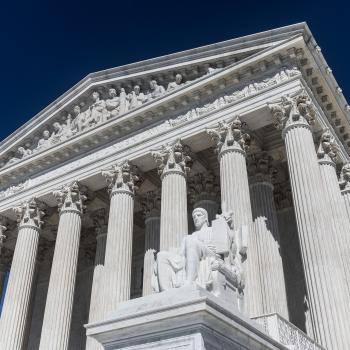
So now we come to the hearing before the U.S. Supreme Court, which is composed of only eight sitting justices (four liberal, three conservative, and one swing vote). This might have been interesting except that the only issue actually in play here is standing—whether two nonprofit agencies in the U.S. can sue on behalf of a child’s rights under the U.N. Committee on the Rights of the Child.
But hey, we still get stuff like this:
Every seat in the historic marble chamber was filled. … Cooper, dressed in a new black suit that Laura’s father had bought him or the occasion, was joined by Scott Gordon and Marian Nellis.
Is your fiancé’s father buying you a suit some sort of tradition I missed? Or are we just hammering again on how poor Cooper is, despite being a lawyer? Perhaps he shouldn’t have bought a new car using the blowout promised by Randall (his anonymous funder), before having a more secure cash flow?
I don’t even know anymore.
Suskins speaks first.
“The question before the Court today is whether the Supremacy Clause of the Constitution will be given the full dignity that its language demands. Treaties ratified by the Constitution are to be a part of the supreme law of the land,” he began.
Everything about this framing is wrong. This is not how this case would be argued. Unfortunately, this is now this whole chapter is written.
Well, that and things like this:
His hand wanted to flip his hair out of his eyes, but VanLandingham had gone to the two other name partners in the firm and gotten them to force Suskins to use some hairspray.
What. No she did not.
How do you force someone to wear hairspray? Wait—I just realized I don’t actually want to know.
Next, we get this whole bit, starting with a question from one of the justices:
“How can any component of your case survive unless we reverse Yoder?”
“There are three components of our case, and each will survive if we should prevail even if Yoder were retained as the prevailing law.
This book does not sound like it was written to be interesting to laypeople.
First, nothing in Yoder speaks to a parents’ ability to beat their child. And this Court has never upheld parental so-called spanking—”
“Council,” Justice Kurlowich interrupted, “you say ‘s0-called spanking.’ Did you ever get a spanking when you were a child?”
I’m sorry, why is this relevant?
“Yes, Your Honor, I did. But those were different times.”
The correct answer is: “Yes, Your Honor, I was spanked as a child. Over the last few decades, however, science has made clear that spanking causes children harm. Just as our nation once recognized that women should have the vote and that Jim Crow laws were unjust, it is time for us as a nation to adjust our views on the discipline of children. This understanding was at the heart of the Senate’s decision to ratify the U.N. Convention on the Rights of the Child.” But no, we don’t get any of that.
Suskins is horrible at persuasion. .
“Perhaps they were different times, but I am wondering if your family spoke a different language. When your father spanked you, did he call it a ‘spanking’?”
“Yes, he did, Your Honor. But I fail to see the point,” Suskins replied with a furrowed brow.
“The point is, Mr. Suskins, that you are trying to persuade us to your position by verbal tricks. Spanking is either constitutionally protected or it is not. Using the term ‘so-called spanking’ adds nothing to the strength of your argument, and in fact, your confession that your own parents spanked you highlights the long-standing nature of this parental tradition, which has been protected in law for more than four hundred years of Anglo-American jurisprudence.”
What in the blazes is this. Suskins would never have said “so-called spanking” to begin with. He would have said “corporal punishment” throughout. Beyond that, I thought it was common knowledge that different people and different communities use different terms to refer to corporal punishment. In African American communities, spanking is often referred to as giving “whooping”, but that’s not the only area different terms are used. Even Michael Pearl doesn’t always use the term “spanking.”
From Michael Pearl’s book:
We have progressed to the place where a discussion of the use of the rod is in order. Let’s talk about spankings–sometimes called “whippings.”
And indeed, Michael does use the term “whipping” in other areas of his book, as a synonym (one can assume) for spanking. “Spanking” is not some sort of universally correct and recognized term for corporal punishment. Farris likely prefers the term “spanking” because to him it feels sanitized—removed from terms like “whipping.” Fine. But Suskins should be using a term like “corporal punishment” or “physical discipline,” not “so-called spanking,” and no justice should be insisting that he say “spanking.”
This whole book is just ridiculously sloppy.
Next, Suskins says this:
“[W]e contend that the Constitution is a living document, and if long experience shows that child discipline practices become inextricably intertwined with child abuse and neglect, it is within the province of the United States Senate, by treaty, to ban abusive practices.”
That is also not how he would be arguing this. “[I]f long experience shows that child discipline practices become inextricably intertwined with child abuse and neglect”—what does that even mean? What child discipline practices? Presumably Farris means for Suskins to argue that corporal punishment has become “intertwined” with child abuse and that’s why it needs to be banned.
First, this isn’t the core point Suskins would make, the core point he would make is that no spanking is healthy for a child. Second, to the extent that this is a point made by children’s rictus activists—and it is—it needs to be explained in more detail. The argument, when not filtered through Farris’ mouth, is that as long as any form of corporal punishment is allowed, it will serve as a shield for abuse—abusive parents can claim they were only “spanking” their child, abused children may think that every child is beaten like they are because their friends also mention being “spanked” (without knowing that what their friends experience is light years from the abuse they experience), and so forth.
Instead, all we get is a truncated suggestion at a maybe-argument. For being such an elevated lawyer, Suskins is doing a horrible job. Anyway, moving on. There is more repetition. Lots more repetition.
The only thing particularly interesting that Farris puts in Suskins’ mouth is a reference to Prince v. Massachusetts, in which the Supreme Court barred Jehovah’s Witness children, but not their parents, from soliciting funds while passing out literature. Suskins argues that it is within the rights laid out in the Constitution to bar parents from teaching certain religion doctrines to their children, provided adults themselves are not barred from holding those beliefs. That is an actual relevant point.
And then there’s this:
“Counsel,” Justice McNeil interjected, “isn’t it a fact that the vast majority of religious groups who have filed amicus briefs in this matter supported your position?”
This is just bizarre. I cannot imagine a situation in which the “vast majority” of religious groups sign on with regulating what children may be taught in Sunday School. Even the ACLU would be all over this, submitting an amicus brief on behalf of the parents. Farris has no idea what people on the liberal end of the religious spectrum (or progressives in general) actually believe.
We also get lots of sentences like this:
Suskins sparred effectively with the conservatives on the Court and skillfully employed the friendly questions from the liberals to advance his argument for the remainder of his thirty minutes.
Finally, it’s Cooper’s turn. Once again, there is so much repetition.
The problem is that there are three court hearings, and in each case Farris chooses to cover them in full, outlining their entire oral arguments. But neither side changes what they are arguing. The result is that there is complete repetition of the exact same legal arguments each time. That makes for boring reading.
The only new thing here is this argument:
“Third, and this would be the ultimate disposition we desire, [for the Court] to rule that the original intent of the framers of the Constitution forbids the use of international treaties to govern America’s domestic’s policy. This use of the treaty power effectively trumps the principle of self-government. If unelected officials in Geneva are afforded the ability to control America’s domestic policy, constitutional government has been bargained away.”
Even here, it’s not that Farris has never said these things before. It’s just that here, he’s actually asking the Supreme Court to rule on this, because as the Supreme Court, they can.
Several justices note that the Court has never ruled anything close to this; Farris argues that this is a unique circumstance: “Our government has never before given away this much control over our internal affairs.” There’s lots more back and forth. What about NAFTA? Doesn’t that speak to domestic things as well, indirectly—doesn’t it give national sovereignty away too? Oh, but those are legislation, not treaties.
And so on and so forth.
“An argument worthy of the Senate, Counsel. But you are across the street in the Supreme Court of the United States.”
I feel like we’ve heard this line before, Oh wait, we have. This was stated in at least one—if not both—of the past two court hearings. Cool.
Cooper is adamant:
“This treaty doesn’t just violate one part of the Constitution; it violates the entire structure of the Constitution by allowing ten people in Geneva to decide that all the votes of all the voters in the United States do not matter, whether the ballots are cast for state or federal office holders.”
Cooper is also wrong. Because Farris is wrong.
The U.N. Committee on the Rights of the Child does not make decisions for the countries that have signed the treaty. It makes recommendations. Countries party to the treaty can choose whether and how to implement those recommendations. None of this is how any of this works.
And that’s the end of oral arguments. That very afternoon, the justices come together to vote on the case.
“Any discussion before we vote?” the chief justice asked.
“Suskins was his normal self, expect did anyone notice he didn’t flip his hair at all today? What was up with that? Hurter asked.
“I have to say that you had a feisty young man on your side of the case,” VonDuyke said with a grin.
This … what.
No. Just no.
So then they immediately go around the circle, and come up with a 4-4 split vote. Each justice offers a couple sentence justifying their position (well, most do; some don’t), but there is no discussion at all. No one tries to convince anyone else. No one weighs or considers their decision. The result is an affirmation of lower court’s decision. This means that the case is thrown out on standing—but could easily be brought again by a government agency, such as the National Commission on Children led by Nora Stoddard.
But let’s dwell for a moment on how odd it is that the justices went back to their chambers the moment the oral arguments finished and immediately took a vote on how to rule on the case. I did a bit of googling just now, and it appears that there is some variation—some cases take longer for the justices to decide than others—these conversations don’t typically occur the day of, and they typically involve arguments and attempts to persuade fellow justices, and, well, a bit more time.
If I were in the room, that feels like it would be the thing to question. Why the rush to vote now, today? Why can’t we have some time to try to persuade our fellows, and some back and forth, as is typical?
This is not, however, the critique the liberal justices raise. Instead, they raise a different critique. A bizarre critique. Justice McNeil addresses his question to Chief Justice Thomson, and this back and forth ensues:
“Can’t we just wait for Congressman Farenholt to be confirmed and then reschedule oral argument?” McNeil asked.
“No, Justice McNeil. We will not. We are an evenly decided court, and the decision of the Supreme Court of Virginia will be affirmed without an opinion of the Court.”
Is this even a thing—throwing out oral arguments after the fact and re-hearing the case? This suggestion is bizarre. It was perhaps worth asking, before the oral arguments, whether it made sense to have the case in the docket when it was—actually, I take that back. The Supreme Court doesn’t just stop hearing cases when it’s not a justice. Even before the oral arguments, that would have been a silly question.
This, though, is just ridiculous. And perhaps that’s how Farris sees liberals: as so ridiculous and unprofessional that they wouldn’t think twice about making a suggestion like this.
Justice McNeil makes one last attempt to stall:
“It will take me at least a month to prepare my dissent, and that will take me until Farenholt is confirmed. Then we’ll have his potential vote and we will have to do it again. So what’s the difference?”
Again, that does not make sense. It always takes time to prepare decisions and dissents, and there’s a process of drafts and editing—there will be many cases where a case is heard when the court is down one justice, and the decision is announced after a new justice is seated. That is simply how it works—and how else could it? Deciding cases and writing opinions takes time; Supreme Court decisions are frequently not announced until months after they are heard. This delay between oral arguments and the announcement is so large that most of the Supreme Court’s decisions aren’t released until the end of the term in June.
Chief Justice Thomson doesn’t go over any of this, though. He doesn’t point out that this is just how it works: sometimes you have only eight justices, and you don’t pause all proceedings until you have a ninth. Instead, Chief Justice Tomson treats the timing of the decision like some sort of power game:
“The difference is that I am the chief justice of the United States, and I control the docket of the Court unless there are five votes to overturn me. You have forty-eight hours to prepare your dissent. I will prepare the per curium decision that simply announces that we affirm without opinion. Nothing concerning this case will remain on our docket when Farenholt is confirmed. See you tomorrow at 9:30. Good day.”
I don’t think this is how it works.
None of this is how this works.
I have a Patreon! Please support my writing!
Previous Post

January 10, 2019
A Catholic Priest's Bizarre Eulogy for Atheism
Next Post

January 12, 2019 Saturday Link Love: Der Spiegel, Terrorism, and Flouride
Browse Our Archives
Select a Category Atheism Evangelicalism/Fundamentalism Family Feminism Homeschool Meta Parenting Patriarchy Politics Purity Quiverfull Social Justice Uncategorized Worthwhile reads
Select a Month February 2021 January 2021 December 2020 November 2020 October 2020 September 2020 August 2020 July 2020 June 2020 May 2020 April 2020 March 2020 February 2020 January 2020 December 2019 November 2019 October 2019 September 2019 August 2019 July 2019 June 2019 May 2019 April 2019 March 2019 February 2019 January 2019 December 2018 November 2018 October 2018 September 2018 August 2018 July 2018 June 2018 May 2018 April 2018 March 2018 February 2018 January 2018 December 2017 November 2017 October 2017 September 2017 August 2017 July 2017 June 2017 May 2017 April 2017 March 2017 February 2017 January 2017 December 2016 November 2016 October 2016 September 2016 August 2016 July 2016 June 2016 May 2016 April 2016 March 2016 February 2016 January 2016 December 2015 November 2015 October 2015 September 2015 August 2015 July 2015 June 2015 May 2015 April 2015 March 2015 February 2015 January 2015 December 2014 November 2014 October 2014 September 2014 August 2014 July 2014 June 2014 May 2014 April 2014 March 2014 February 2014 January 2014 December 2013 November 2013 October 2013 September 2013 August 2013 July 2013 June 2013 May 2013 April 2013 March 2013 February 2013 January 2013 December 2012 November 2012 October 2012 September 2012 August 2012 July 2012 June 2012 May 2012 April 2012 March 2012 February 2012 January 2012 December 2011 November 2011 October 2011 September 2011 August 2011 July 2011 June 2011
Follow Us!
TAKE THE
Religious Wisdom Quiz
True or False: Ezra read the Book of the Law to the people from morning until noon.
Select your answer to see how you score.
FALSE TRUE
Related posts from Love, Joy, Feminism

Forbid Them Not: Part Spy Novel, Part Sunday...
Forbid Them Not: A Man, a Plan, Stalling...


Forbid Them Not: The Media Circus and the...
TRENDING AT PATHEOS Nonreligious

Dethroning Jesus and Enthroning Yourself
Jesus Never Asked to Be Worshipped. He Asked to Be Understood. Christianity...

Why Most Christians are Really Paulians and Jobians
I Don't Care, But It Matters Let's get this out of the...

Essential Tips to Successfully Navigate the Selling Process
Selling a house can feel overwhelming, but it doesn’t have to be....

To Make Remote Work Effective, Think About Others
The COVID-19 pandemic forced many companies to rapidly transition to remote work....

Flexibility Is Key to Solving Problems of Tomorrow
The world of work is undergoing a dramatic transformation. The COVID-19 pandemic...
view all Nonreligious blogs
Ad-Free & Subscriber Log-In Subscription Support
- About Us
- 2026 Calendar
- Videos
- Podcasts
- Library of World Religions
- Faith In Media Tracker
- Advertise With Us
- Write for Us
- Privacy Policy
- Terms of Service
- Do Not Sell My Data
- Contact Us
- Radiant Digital
- Manage Newsletter Subscriptions
- Unsubscribe From Notifications
- Sitemap
Copyright 2008-2026, Patheos. All rights reserved.
Subscription Support Ad-Free & Subscriber Log-In
Follow Patheos