
BuddhistCatholicContemplativeEvangelicalGeneral ChristianHinduJewishLatter-day SaintMuslimNew VisionsProgressive Christian
Beliefs
- Buddhist
- Catholic
- Contemplative
- Evangelical
- General Christian
- Hindu
- Jewish
- Latter-day Saint
- More Voices
- Muslim
- New Visions
- Pagan
- Progressive Christian
Topics
- Religion News
- Food and Religion
- Sports and Religion
- Religious Art
- Religious Music and Entertainment
- Religious Events
- History and Religion
- Style and Religion
- Politics and Religion
- Women in Religion
- Recreation Outdoors and Religion
- Business Finance and Religion
- Careers Workplace and Religion
- Education and Religion
- Family Parenting and Religion
- Health Fitness and Religion
- Home and Religion
- Relationships and Religion
- Technology and Religion
- Travel and Religion
Columnists
- Buddhist Columnists
- Business Finance and Religion Columnists
- Careers Workplace and Religion Columnists
- Catholic Columnists
- Contemplative Columnists
- Education and Religion Columnists
- Evangelists Columnists
- Family Parenting and Religion Columnists
- General Christian Columnists
- Health Fitness and Religion Columnists
- Hindu Columnists
- History and Religion Columnists
- Home and Religion Columnists
- Jewish Columnists
- More Voices Columnists
- Latter Day Columnists
- Muslim Columnists
- New Visions Columnists
- Nonreligious Columnists
- Pagan Columnists
- Politics and Religion Columnists
- Progressive Columnists
- Recreation Outdoors and Religion Columnists
- Relationships and Religion Columnists
- Religion News Columnists
- Religious Art Columnists
- Religious Events Columnists
- Religious Music and Entertainment Columnists
- Sports and Religion Columnists
- Style and Religion Columnists
- Technology and Religion Columnists
- Travel and Religion Columnists
- Women in Religion Columnists
Resource Library
- 2026 Calendar
- Library of World Religions
- The 100 Most Holy Places on Earth
- Patheos Answers
- Podcasts
- Videos
- Faith Leaders Database
- Anglican Episcopalian
- Bahai
- Baptist
- Buddhism
- Christianity
- Confucianism
- Eastern Orthodoxy
- Hinduism
- Holiness and Pentecostal
- ISKCON
- Islam
- Judaism
- Lutheran
- Methodist
- The Church of Jesus Christ of Latter-day Saints
- New Age
- Paganism
- Presbytarian and Reformed
- Protestantism
- Religion Behind the Scenes
- Roman Catholic
- Scientology
- Shia Islam
- Sikhism
- Sufism
- Sunni Islam
- Taoism
- Zen
- See all religions
Research Tools
 Ad-Free & Subscriber Log-In Subscription Support
Ad-Free & Subscriber Log-In Subscription Support
Follow Patheos 

- Trending:
- Forgiveness
- |
- Marriage
- |
- Consciousness
- |
- Death Penalty
- |
- Election
- |
- Halloween
 Love, Joy, Feminism
-
More
- Home
- Nonreligious
- Why Did Baltimore Even Have Confederate Statues?
Why Did Baltimore Even Have Confederate Statues?
Last updated on: August 29, 2017 at 5:00 am by Libby Anne
Why Did Baltimore Even Have Confederate Statues? 2017-08-28T14:26:25-04:00 Libby Anne
Patheos Explore the world's faith through different perspectives on religion and spirituality! Patheos has the views of the prevalent religions and spiritualities of the world.
I find it confusing when I hear people say that we shouldn’t take down Confederate monuments, because that would be erasing history. Let me illustrate. Earlier this month Baltimore quietly removed four Confederate statues in the middle of the night. I’m left wondering: Why did Baltimore even have Confederate monuments? Maryland didn’t secede. Maryland was a border state. While some Maryland residents left the state and enlisted in the Confederacy, the majority of those who fought enlisted in the Union army. Having Confederate monuments in Maryland is, if anything, ahistorical.
These monuments, you see, weren’t actually about history. They were about showing who was in charge. Most were erected between 1900 and 1920, during a period of Jim Crow laws, lynching, and voter suppression.
Have a look at this chart:
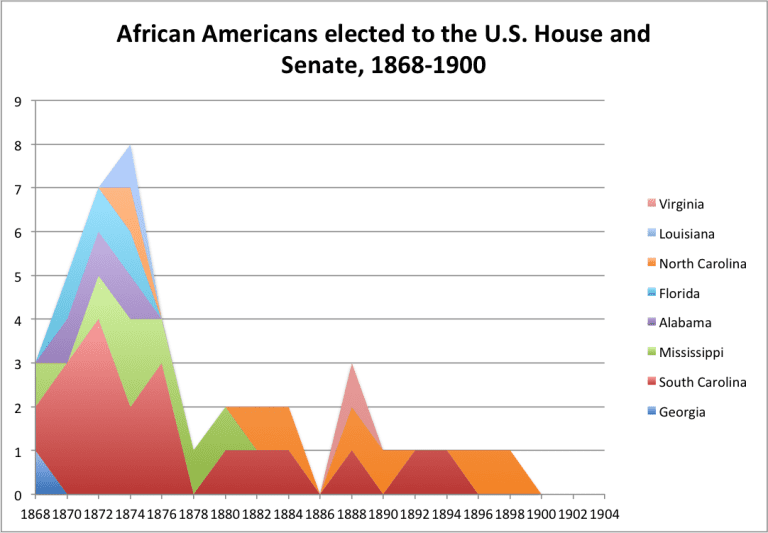
This chart flatlines in 1900—when a full third of the population of the South was black, but the region’s U.S. Congressmen and Senators were universally white. After this, there wasn’t another African American elected to the U.S. House or Senate for a full thirty years.
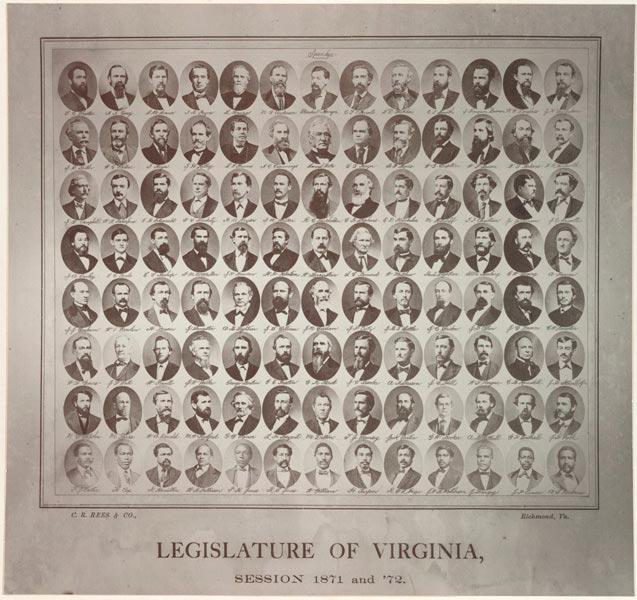
If African Americans in the South were shut out on the federal level, what do you think happened in state and local elections? In 1871 and 1872 the Virginia legislature had a handful of black members. By 1900 it was lily white, despite the state’s population being over one-third black. Who do you think was putting up these monuments at courthouses and other government locations?
During and after Reconstruction, racist white southerners seized control of local and state governments, massacred African Americans who fought for the right to vote and live as free and equal people, and imposed a harsh regime of segregation, repression, and violence on the region’s African American population. It was these individuals, and their children—raised on tales of the “Lost Cause” that glorified the “Old South”—who erected the region’s Confederate monuments.
It wasn’t about history. It was about asserting dominance.
The South was not a good place for African Americans from the late nineteenth century and well into the twentieth century. Many of those who could left, fleeing oppression and looking for a better life in the North and the West, often settling in cities like Chicago, Detroit, or New York. This “Great Migration” of African Americans from the South to the North was sizable:
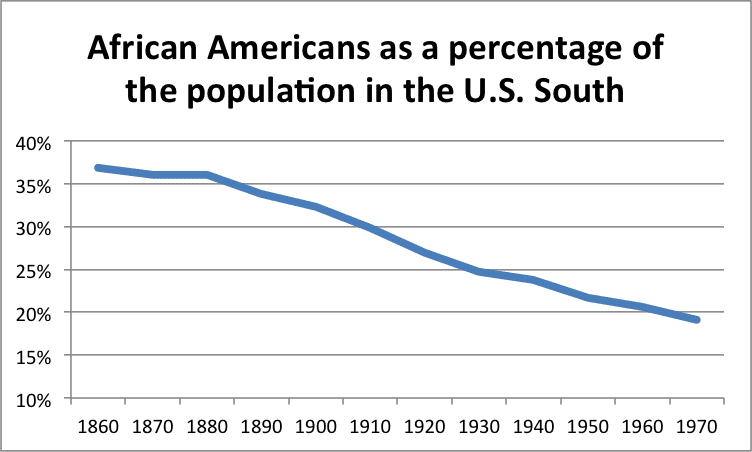
The first African American to enter U.S. Congress in the twentieth century did so from the North: Oscar De Priest was elected in 1928 in Chicago, Illinois. De Priest passed his seat on to others, but African Americans didn’t add a second seat until Adam Powell, Jr., was elected in 1944 in New York City. Next came a seat in Michigan in 1954, a seat in Pennsylvania in 1956, and a seat in California in 1962, each time in urban areas.
Despite the South continued to be home to the greatest concentration of African Americans in the nation, the first African American to enter U.S. Congress in the twentieth century from the South was not elected until 1972.
Let me pose a question. If these Confederate monuments are about history rather than propaganda, where are the monuments to those African Americans elected to local, state, and federal office before blacks in the South had their voting rights terminated? Where are the monuments to antebellum slaves, or to those who resisted and fought back?
Where is the monuments to Gabriel Prosser, mastermind of a failed rebellion planned to bring freedom to the slaves of Virginia? There’s a bland historical marker, but no monument. Why? There’s a story there.
In 2000, bicentennial celebrations stirred fresh controversy: the Caroline County Board of Supervisors rejected a petition from Gabriel’s supporters to honor him on a courthouse monument, stating that any memorialization would glorify violence.
Yes, really.
Erecting a monument to a slave who plotted to capture James Monroe, the Governor of Virginia, and demand freedom for his people would be “glorifying violence,” but Confederate monuments are a-okay. Just so we’re clear, there is a Confederate monument at the Caroline County courthouse. “Erected by the people of Caroline County,” it reads, “to Commemorate the Valor and Endurance of its soldiers furnished to the Army of the Confederate States of America.” So much for not glorifying violence.
This isn’t about history. It never was about history. The Confederate monuments that dot the South have always been about propaganda and white supremacy.
Previous Post

August 28, 2017
This Feminist's Disquiet at Game of Thrones Season 7

Browse Our Archives
Select a Category Atheism Evangelicalism/Fundamentalism Family Feminism Homeschool Meta Parenting Patriarchy Politics Purity Quiverfull Social Justice Uncategorized Worthwhile reads
Select a Month February 2021 January 2021 December 2020 November 2020 October 2020 September 2020 August 2020 July 2020 June 2020 May 2020 April 2020 March 2020 February 2020 January 2020 December 2019 November 2019 October 2019 September 2019 August 2019 July 2019 June 2019 May 2019 April 2019 March 2019 February 2019 January 2019 December 2018 November 2018 October 2018 September 2018 August 2018 July 2018 June 2018 May 2018 April 2018 March 2018 February 2018 January 2018 December 2017 November 2017 October 2017 September 2017 August 2017 July 2017 June 2017 May 2017 April 2017 March 2017 February 2017 January 2017 December 2016 November 2016 October 2016 September 2016 August 2016 July 2016 June 2016 May 2016 April 2016 March 2016 February 2016 January 2016 December 2015 November 2015 October 2015 September 2015 August 2015 July 2015 June 2015 May 2015 April 2015 March 2015 February 2015 January 2015 December 2014 November 2014 October 2014 September 2014 August 2014 July 2014 June 2014 May 2014 April 2014 March 2014 February 2014 January 2014 December 2013 November 2013 October 2013 September 2013 August 2013 July 2013 June 2013 May 2013 April 2013 March 2013 February 2013 January 2013 December 2012 November 2012 October 2012 September 2012 August 2012 July 2012 June 2012 May 2012 April 2012 March 2012 February 2012 January 2012 December 2011 November 2011 October 2011 September 2011 August 2011 July 2011 June 2011
Follow Us!
TAKE THE
Religious Wisdom Quiz
Jesus' earthly father, who was a carpenter, was named what?
Select your answer to see how you score.
Joseph Jonathan Jacob Zechariah
Related posts from Love, Joy, Feminism


Lesbian Duplex 310: An Open Thread

The Vision: NASA Is On the Case

Lesbian Duplex 309: An Open Thread
TRENDING AT PATHEOS Nonreligious

Dethroning Jesus and Enthroning Yourself
Jesus Never Asked to Be Worshipped. He Asked to Be Understood. Christianity...

Why Most Christians are Really Paulians and Jobians
I Don't Care, But It Matters Let's get this out of the...

Essential Tips to Successfully Navigate the Selling Process
Selling a house can feel overwhelming, but it doesn’t have to be....

To Make Remote Work Effective, Think About Others
The COVID-19 pandemic forced many companies to rapidly transition to remote work....

Flexibility Is Key to Solving Problems of Tomorrow
The world of work is undergoing a dramatic transformation. The COVID-19 pandemic...
view all Nonreligious blogs
Ad-Free & Subscriber Log-In Subscription Support
- About Us
- 2026 Calendar
- Videos
- Podcasts
- Library of World Religions
- Faith In Media Tracker
- Advertise With Us
- Write for Us
- Privacy Policy
- Terms of Service
- Do Not Sell My Data
- Contact Us
- Radiant Digital
- Manage Newsletter Subscriptions
- Unsubscribe From Notifications
- Sitemap
Copyright 2008-2026, Patheos. All rights reserved.
Subscription Support Ad-Free & Subscriber Log-In
Follow Patheos