
BuddhistCatholicContemplativeEvangelicalGeneral ChristianHinduJewishLatter-day SaintMuslimNew VisionsProgressive Christian
Beliefs
- Buddhist
- Catholic
- Contemplative
- Evangelical
- General Christian
- Hindu
- Jewish
- Latter-day Saint
- More Voices
- Muslim
- New Visions
- Pagan
- Progressive Christian
Topics
- Religion News
- Food and Religion
- Sports and Religion
- Religious Art
- Religious Music and Entertainment
- Religious Events
- History and Religion
- Style and Religion
- Politics and Religion
- Women in Religion
- Recreation Outdoors and Religion
- Business Finance and Religion
- Careers Workplace and Religion
- Education and Religion
- Family Parenting and Religion
- Health Fitness and Religion
- Home and Religion
- Relationships and Religion
- Technology and Religion
- Travel and Religion
Columnists
- Buddhist Columnists
- Business Finance and Religion Columnists
- Careers Workplace and Religion Columnists
- Catholic Columnists
- Contemplative Columnists
- Education and Religion Columnists
- Evangelists Columnists
- Family Parenting and Religion Columnists
- General Christian Columnists
- Health Fitness and Religion Columnists
- Hindu Columnists
- History and Religion Columnists
- Home and Religion Columnists
- Jewish Columnists
- More Voices Columnists
- Latter Day Columnists
- Muslim Columnists
- New Visions Columnists
- Nonreligious Columnists
- Pagan Columnists
- Politics and Religion Columnists
- Progressive Columnists
- Recreation Outdoors and Religion Columnists
- Relationships and Religion Columnists
- Religion News Columnists
- Religious Art Columnists
- Religious Events Columnists
- Religious Music and Entertainment Columnists
- Sports and Religion Columnists
- Style and Religion Columnists
- Technology and Religion Columnists
- Travel and Religion Columnists
- Women in Religion Columnists
Resource Library
- 2026 Calendar
- Library of World Religions
- The 100 Most Holy Places on Earth
- Patheos Answers
- Podcasts
- Videos
- Faith Leaders Database
- Anglican Episcopalian
- Bahai
- Baptist
- Buddhism
- Christianity
- Confucianism
- Eastern Orthodoxy
- Hinduism
- Holiness and Pentecostal
- ISKCON
- Islam
- Judaism
- Lutheran
- Methodist
- The Church of Jesus Christ of Latter-day Saints
- New Age
- Paganism
- Presbytarian and Reformed
- Protestantism
- Religion Behind the Scenes
- Roman Catholic
- Scientology
- Shia Islam
- Sikhism
- Sufism
- Sunni Islam
- Taoism
- Zen
- See all religions
Research Tools
 Ad-Free & Subscriber Log-In Subscription Support
Ad-Free & Subscriber Log-In Subscription Support
Follow Patheos 

- Trending:
- Forgiveness
- |
- Marriage
- |
- Consciousness
- |
- Death Penalty
- |
- Election
- |
- Halloween
 Love, Joy, Feminism
-
More
- Home
- Nonreligious
- From Patheos Atheist to Patheos Nonreligious
From Patheos Atheist to Patheos Nonreligious
Last updated on: December 22, 2016 at 6:48 am by Libby Anne
From Patheos Atheist to Patheos Nonreligious 2016-12-22T06:48:02-04:00 Libby Anne
Patheos Explore the world's faith through different perspectives on religion and spirituality! Patheos has the views of the prevalent religions and spiritualities of the world.
I’ve been blogging for over half a decade now. From time to time, I revise my blog’s “about” page. It’s interesting, looking back, to note how my terminology has changed. “I am today an atheist, a feminist, and a progressive,” my “about” page declared in 2012. “I am today a feminist, a progressive, and a nonbeliever,” it read in 2014. At that point, the term “atheist” disappeared completely from my “about” page. Then, earlier this year, 2016, my wording changed yet again: “I write about religion as someone who grew up evangelical but is no longer religious,” it now reads.
All of this is to say that I am not surprised that the name of the Patheos Atheist channel (where my blog is hosted) changed to Patheos Nonreligious earlier this month, and that I support this change 100%. Dale McGowan does an excellent job explaining the channel’s name change in his announcement post. Rather than explore the reasons he lays out there, I thought I’d take some time to look at the reasons for my own shifting terminology.
I grew up in a Christian home. I didn’t leave Christianity because I was angry with God or because I was hurt by individuals bearing the label. In fact, I didn’t initially intend to leave Christianity at all. I became disillusioned with evangelicalism while in college, partly because of problems with young earth creationism but also because I became uncomfortable with evangelical teachings about salvation and evangelicals’ one-dimensional approach to the Bible. I didn’t leave Christianity, though, I converted to Catholicism. The Catholic Church today accepts evolution, encompasses a more liberal approach to salvation, and teaches higher criticism of the Bible.
Then, shortly after starting graduate school, my belief in God vanished. No one was more surprised than me. It didn’t leave because I wanted it to leave; I didn’t. It left nonetheless. I could no longer believe in a God—and believe me, I tried. I wrestled with the problem for some time before finally accepting that I was no longer religious.
A year or so later, as I sought to understand some of the esoteric aspects of my upbringing—I was homeschooled, and grew up in a home that could be loosely termed quiverfull—I came upon a collection of atheist blogs. I read, and I read, and I read. At the time, I was feeling especially frustrated with the limits I had experienced growing up female in a conservative evangelical home. I had experienced some of these same limitations within Catholicism, and, when combined with other problems I’d identified, I began to feel that religion itself was a problem. At this point, I fit well within an online atheist community that set its targets on religion—all religion.
Then two things happened.
First, Rebecca Watson said something about an elevator, and all hell broke loose in the atheist community. It quickly became obvious that the same flagrant sexism I’d experienced in religious circles was alive and well in atheist circles as well. In fact, it felt worse in some respects, because while evangelicalism and Catholicism placed women on a pedestal, sexist atheists did not. I’ve got real problems with the pedestal evangelicals and Catholics create for women, believe me, and I’ve blogged about this many times; still, the things I was seeing within the atheist community felt worse, somehow.
Second, one of my professors in graduate school assigned me to write a paper about the ways religion had been used, in a specific historical context, to expand underprivileged groups’ roles and influence and to push back against patriarchy and other barriers. I was fascinated by what I found. Around the same time I made several new liberal religious friends. At first I simply avoided the topic of religion, not wanting them to be offended by my assertion that the world would be better off without their beliefs, but ultimately I found that that was not sustainable, and my views shifted.
I stopped using the term “atheist” because I no longer felt I fit within the online atheist community I had once felt a part of. Oh certainly, I wasn’t religious, and in that sense I was still technically an atheist—that is, of one defines “atheist” merely as a person who does not believe in the supernatural. But when people use the term “atheist” they frequently mean more than that. For many people, the term “atheist” has become synonymous with the term “anti-theist,” and I am not an anti-theist. And so I let the term “atheist” drop from my vocabulary.
Today, if someone asks, I tell them that I am not religious, or that I attend a Unitarian Universalist church (belief in God is not required to attend this church; instead, the congregation is unified by shared progressive values). To me, this feels more accurate; after all, if I tell someone I am an atheist they will likely assume I am also an anti-theist, and I am not. I don’t want people to be turned off by a label.
To be sure, there are some who argue passionately in favor of using the label “atheist” in an attempt to reclaim it from negative stereotypes. They frequently argue that anti-theists shouldn’t own the term, or that anti-thiests are not the grinches they’re often portrayed as. To them, the label is important—and that’s fine! But it isn’t to me, and it’s not a battle I feel drawn to fight. I don’t feel I need the label; I’m fine without it.
Over the last few years, I’ve felt a bit pigeonholed having my blog in a channel titled “Patheos Atheist.” I’ve wondered whether the grouping might make some less inclined to listen to me; I’ve wondered if I fit in the channel, given the range of topics on which I blog. I’ve sometimes felt a bit like an outsider. This move reaffirms that I do belong. This channel isn’t just for discussing atheism or pointing to problems with religion; it’s for the whole range of perspectives and life experiences that fit under the “nonreligious” umbrella. And that’s powerful.
I have a Patreon! Please support my writing!
Previous Post
December 21, 2016
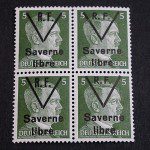
This Is How Evangelicals Defended Hitler in 1935
Next Post

December 23, 2016 Anonymous Tip: Instant Distrust
Browse Our Archives
Select a Category Atheism Evangelicalism/Fundamentalism Family Feminism Homeschool Meta Parenting Patriarchy Politics Purity Quiverfull Social Justice Uncategorized Worthwhile reads
Select a Month February 2021 January 2021 December 2020 November 2020 October 2020 September 2020 August 2020 July 2020 June 2020 May 2020 April 2020 March 2020 February 2020 January 2020 December 2019 November 2019 October 2019 September 2019 August 2019 July 2019 June 2019 May 2019 April 2019 March 2019 February 2019 January 2019 December 2018 November 2018 October 2018 September 2018 August 2018 July 2018 June 2018 May 2018 April 2018 March 2018 February 2018 January 2018 December 2017 November 2017 October 2017 September 2017 August 2017 July 2017 June 2017 May 2017 April 2017 March 2017 February 2017 January 2017 December 2016 November 2016 October 2016 September 2016 August 2016 July 2016 June 2016 May 2016 April 2016 March 2016 February 2016 January 2016 December 2015 November 2015 October 2015 September 2015 August 2015 July 2015 June 2015 May 2015 April 2015 March 2015 February 2015 January 2015 December 2014 November 2014 October 2014 September 2014 August 2014 July 2014 June 2014 May 2014 April 2014 March 2014 February 2014 January 2014 December 2013 November 2013 October 2013 September 2013 August 2013 July 2013 June 2013 May 2013 April 2013 March 2013 February 2013 January 2013 December 2012 November 2012 October 2012 September 2012 August 2012 July 2012 June 2012 May 2012 April 2012 March 2012 February 2012 January 2012 December 2011 November 2011 October 2011 September 2011 August 2011 July 2011 June 2011
Follow Us!
TAKE THE
Religious Wisdom Quiz
Who said: "If we confess our sins, he is faithful and just and will forgive us our sins"?
Select your answer to see how you score.
John Jesus Peter Paul
Related posts from Love, Joy, Feminism

A Catholic Priest's Bizarre Eulogy for Atheism

Odd Priorities: A Nativity Scene 'Miraculously' Survived the...

Answers in Genesis: Be Careful, Wayward Adult Children...
How Should Churches Respond When People Leave?
TRENDING AT PATHEOS Nonreligious

Dethroning Jesus and Enthroning Yourself
Jesus Never Asked to Be Worshipped. He Asked to Be Understood. Christianity...

Why Most Christians are Really Paulians and Jobians
I Don't Care, But It Matters Let's get this out of the...

Essential Tips to Successfully Navigate the Selling Process
Selling a house can feel overwhelming, but it doesn’t have to be....

To Make Remote Work Effective, Think About Others
The COVID-19 pandemic forced many companies to rapidly transition to remote work....

Flexibility Is Key to Solving Problems of Tomorrow
The world of work is undergoing a dramatic transformation. The COVID-19 pandemic...
view all Nonreligious blogs
Ad-Free & Subscriber Log-In Subscription Support
- About Us
- 2026 Calendar
- Videos
- Podcasts
- Library of World Religions
- Faith In Media Tracker
- Advertise With Us
- Write for Us
- Privacy Policy
- Terms of Service
- Do Not Sell My Data
- Contact Us
- Radiant Digital
- Manage Newsletter Subscriptions
- Unsubscribe From Notifications
- Sitemap
Copyright 2008-2026, Patheos. All rights reserved.
Subscription Support Ad-Free & Subscriber Log-In
Follow Patheos