
BuddhistCatholicContemplativeEvangelicalGeneral ChristianHinduJewishLatter-day SaintMuslimNew VisionsProgressive Christian
Beliefs
- Buddhist
- Catholic
- Contemplative
- Evangelical
- General Christian
- Hindu
- Jewish
- Latter-day Saint
- More Voices
- Muslim
- New Visions
- Pagan
- Progressive Christian
Topics
- Religion News
- Food and Religion
- Sports and Religion
- Religious Art
- Religious Music and Entertainment
- Religious Events
- History and Religion
- Style and Religion
- Politics and Religion
- Women in Religion
- Recreation Outdoors and Religion
- Business Finance and Religion
- Careers Workplace and Religion
- Education and Religion
- Family Parenting and Religion
- Health Fitness and Religion
- Home and Religion
- Relationships and Religion
- Technology and Religion
- Travel and Religion
Columnists
- Buddhist Columnists
- Business Finance and Religion Columnists
- Careers Workplace and Religion Columnists
- Catholic Columnists
- Contemplative Columnists
- Education and Religion Columnists
- Evangelists Columnists
- Family Parenting and Religion Columnists
- General Christian Columnists
- Health Fitness and Religion Columnists
- Hindu Columnists
- History and Religion Columnists
- Home and Religion Columnists
- Jewish Columnists
- More Voices Columnists
- Latter Day Columnists
- Muslim Columnists
- New Visions Columnists
- Nonreligious Columnists
- Pagan Columnists
- Politics and Religion Columnists
- Progressive Columnists
- Recreation Outdoors and Religion Columnists
- Relationships and Religion Columnists
- Religion News Columnists
- Religious Art Columnists
- Religious Events Columnists
- Religious Music and Entertainment Columnists
- Sports and Religion Columnists
- Style and Religion Columnists
- Technology and Religion Columnists
- Travel and Religion Columnists
- Women in Religion Columnists
Resource Library
- 2026 Calendar
- Library of World Religions
- The 100 Most Holy Places on Earth
- Patheos Answers
- Podcasts
- Videos
- Faith Leaders Database
- Anglican Episcopalian
- Bahai
- Baptist
- Buddhism
- Christianity
- Confucianism
- Eastern Orthodoxy
- Hinduism
- Holiness and Pentecostal
- ISKCON
- Islam
- Judaism
- Lutheran
- Methodist
- The Church of Jesus Christ of Latter-day Saints
- New Age
- Paganism
- Presbytarian and Reformed
- Protestantism
- Religion Behind the Scenes
- Roman Catholic
- Scientology
- Shia Islam
- Sikhism
- Sufism
- Sunni Islam
- Taoism
- Zen
- See all religions
Research Tools
 Ad-Free & Subscriber Log-In Subscription Support
Ad-Free & Subscriber Log-In Subscription Support
Follow Patheos 

- Trending:
- Forgiveness
- |
- Marriage
- |
- Consciousness
- |
- Death Penalty
- |
- Election
- |
- Halloween
 Love, Joy, Feminism
-
More
- Home
- Nonreligious
- The United States Is Not a Special Snowflake
The United States Is Not a Special Snowflake
Last updated on: July 7, 2016 at 3:18 pm by Libby Anne
The United States Is Not a Special Snowflake 2016-07-07T15:18:04-04:00 Libby Anne
Patheos Explore the world's faith through different perspectives on religion and spirituality! Patheos has the views of the prevalent religions and spiritualities of the world.
I recently came upon an article in The American Thinker, written Steve McCann and titled “The Left Has Won.” The entire article is surreal. To those actually on the Left, it’s almost laughable—to say that the Left “has won,” in a country without universal healthcare or equal rights for LGBTQ people, is the ultimate absurdity. But I want to zero in on one specific bit of the article—a piece that points to some serious problems with the ways conservative view our country and its place in history.
[The United States] stands alone in history as: 1) a nation founded in revolution, 2) a country with a 240-year history of individual freedom and free enterprise and, 3) as a political entity with overwhelming ethnic diversity.
Let’s take it from the top, shall we?
Let’s start by talking about Mexico. Like the territory that is now the United States, the territory that is now Mexico has a long and vibrant history going back many thousands of years. Also like the United States, Mexico was colonized by a European country. The timeframe was similar. Thirty-five years after the Battles of Lexington and Concord sparked the American Revolution, the “Grito de Delores” sparked Mexico’s battle for independence. In 1821, Spain at last recognized Mexico’s independence, after a long-fought insurgency carried out by the Mexican people. If that’s not founded in revolution, I’m not sure what is.
The idea that the United States stands alone in history as a nation founded in revolution is utter nonsense. What of India? Was that country not founded as the result of a popular uprising by the people against their British colonizers? What about the Haitian Revolution of 1791 to 1804, in which the island’s black African slave population rose up against their French colonial masters and successfully seized control? In fact, many modern nations were founded through popular uprisings against colonial control—or in other words, revolution may be the most common way our world’s former colonial territories became the modern nation states they are today. One need only recall the name Simon Bolivar to understand how obvious this is.
What’s that? You don’t remember hearing the name Simon Bolivar in your high school history textbooks? That may be because history as taught in the U.S. today tends to be very narrowly focused on the U.S. and Europe, at the expense of other regions of the world. And yes, that means you may have missed out on learning about some of our world’s greatest revolutionaries. It is a sad testament to the inadequacy of our nation’s popular history textbooks that individuals like McCann can, with a straight face, claim that the United states “stands alone in history as . . . a nation founded in revolution.” The rest of the world can see that for the lie it is.
Perhaps McCann would argue, when faced with these facts, that he means the only nation that was originally founded through a revolution, not the only nation that has ever experienced a revolution. This argument fails on several levels. First, there were governmental systems and bodies in place before the American Revolution. The United States as a nation was of necessity founded on that infrastructure. Second, there are a multitude of other countries that did not exist in their modern form before a founding revolution, often against colonial control. Haiti is an example of this. Third, Oxford English Dictionary defines “revolution” as “a forcible overthrow of a government or social order in favor of a new system.” In other words, the USSR was founded by means of a revolution, even though the country Russia had already existed.
Now let’s look at McCann’s second claim—that the United States “stands alone in history as “a country with a 240-year history of individual freedom and free enterprise.” Has McCann forgotten about slavery? Or the fact that women couldn’t vote 100 years ago? Or about Jim Crow? Or about how our nation’s native population was treated? Or about the Japanese internment? The law of coverture, under which women ceased to exist as legal entities upon marriage? I really could go on. I mean for god’s sake, remember that when the U.S. was first founded, only white men who owned property could vote. Even universal white male suffrage took time. That our nation as a 240-year history of individual freedom would be news to a lot of groups who certainly did not experience that freedom.
Furthermore, inasmuch as our nation has championed individual freedom, it is not alone. Indeed, the ideas of individual freedom many of our founding fathers embraced (though often in word only) were not developed in what would become the United States—they were developed in Europe. Great Britain, the homeland of famous philosopher John Locke, abolished slavery three decades before the U.S. did. Indeed, England passed a Bill of Rights in 1689. Great Britain’s record on individual rights is no more perfect than that of the United States, but the claim that the United States is unique in the world in its treatment of individual freedom is simplistic and reductionist and suffers from a lack of knowledge of the rest of the world. What about France’s 1789 Declaration of the Rights of Man and Citizen?
As for free enterprise, the United States did not invent capitalism—nor has our economic history been without its bumps. What of the early American struggle over the national bank, and the creation and sustaining of currency? Similarly, as anyone who has studied U.S. history knows, the Progressive Era (roughly 1880 to 1920) is replete with stories of economic monopolies and government trust busting. Some industrialists created “factory towns” and required their workers to live in their housing and buy from their stores, generally at inflated prices. And while we’re on the topic—can any business model based on slavery truly be described as “free enterprise”? This is all without getting into questions of tariffs, which were often geared toward protecting specific industries—to me such practices look more like “guided enterprise” than “free enterprise”—and the “crony capitalism” that has existed for much of our history. Our economic system is not as unique (or as free) as McCann would have his readers think.
Now we reach McCann’s third claim—that the United States “stands alone in history as . . . a political entity with overwhelming ethnic diversity.” Now I don’t know about you, but when I look up countries to learn more about them, almost the first thing I inevitably read is that the country is made up of multiple different ethnic groups. For example, Iraq is made up of Shiites, Sunnis, and Kurds. This kind of ethnic and religious diversity is typical of many countries around the world.
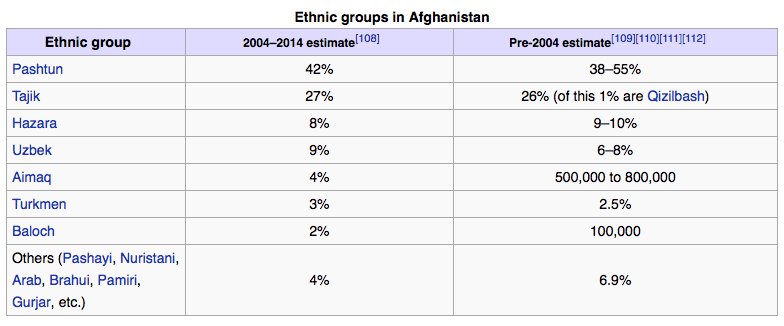
The Democratic Republic of the Congo is made up of over 200 ethnic groups, of which the four largest constitute 45% of the nation’s total population of 66 million. The Congolese people speak hundreds of local languages; the nation has one official language (French) and four national languages (Kituba, Lingala, Swahili, and Tshiluba). If that’s not diverse, I don’t know what is! The truth is that there are a multitude of political entities more ethnically and religiously diverse than the United States, both today and in the past. Think of the Roman Empire, for example. The idea that the United States is somehow unique in its diversity is utter nonsense.
I have become increasingly convinced that history as taught in our nation’s schools is fundamentally flawed, and for me, McCann’s flat-out false claims about the United States’ history, freedoms, and diversity only drives that home. Our children are taught that the United States is unique and special, but are not taught enough about other countries to determine whether this claim is accurate. We live in an increasingly global world. Earlier this week, a woman’s memoir of her gap year in Zambia was called into question after Africans took to twitter to point out glaring inaccuracies. We don’t live in a bubble anymore, and we need to stop acting like we do.
It’s time we stopped thinking about how very special the United States is and took some time to learn about the rest of the world. Are there ways in which the United States does stand alone in history? Almost certainly! But we can’t even begin to pinpoint those ways if we don’t know enough about the world’s history and present to avoid the sort of mistakes McCann makes.

Next Post

July 7, 2016 Is the Second Amendment Only for White People?
Browse Our Archives
Select a Category Atheism Evangelicalism/Fundamentalism Family Feminism Homeschool Meta Parenting Patriarchy Politics Purity Quiverfull Social Justice Uncategorized Worthwhile reads
Select a Month February 2021 January 2021 December 2020 November 2020 October 2020 September 2020 August 2020 July 2020 June 2020 May 2020 April 2020 March 2020 February 2020 January 2020 December 2019 November 2019 October 2019 September 2019 August 2019 July 2019 June 2019 May 2019 April 2019 March 2019 February 2019 January 2019 December 2018 November 2018 October 2018 September 2018 August 2018 July 2018 June 2018 May 2018 April 2018 March 2018 February 2018 January 2018 December 2017 November 2017 October 2017 September 2017 August 2017 July 2017 June 2017 May 2017 April 2017 March 2017 February 2017 January 2017 December 2016 November 2016 October 2016 September 2016 August 2016 July 2016 June 2016 May 2016 April 2016 March 2016 February 2016 January 2016 December 2015 November 2015 October 2015 September 2015 August 2015 July 2015 June 2015 May 2015 April 2015 March 2015 February 2015 January 2015 December 2014 November 2014 October 2014 September 2014 August 2014 July 2014 June 2014 May 2014 April 2014 March 2014 February 2014 January 2014 December 2013 November 2013 October 2013 September 2013 August 2013 July 2013 June 2013 May 2013 April 2013 March 2013 February 2013 January 2013 December 2012 November 2012 October 2012 September 2012 August 2012 July 2012 June 2012 May 2012 April 2012 March 2012 February 2012 January 2012 December 2011 November 2011 October 2011 September 2011 August 2011 July 2011 June 2011
Follow Us!
TAKE THE
Religious Wisdom Quiz
Who anointed David as king as a boy?
Select your answer to see how you score.
Nathan Saul Samuel Moses
Related posts from Love, Joy, Feminism

"Liberal" and "Conservative" Have Actual Meanings

It's not about the economy, it's about being...


Impeachment Could Have Been a Gift to Republicans
TRENDING AT PATHEOS Nonreligious

Dethroning Jesus and Enthroning Yourself
Jesus Never Asked to Be Worshipped. He Asked to Be Understood. Christianity...

Why Most Christians are Really Paulians and Jobians
I Don't Care, But It Matters Let's get this out of the...

Essential Tips to Successfully Navigate the Selling Process
Selling a house can feel overwhelming, but it doesn’t have to be....

To Make Remote Work Effective, Think About Others
The COVID-19 pandemic forced many companies to rapidly transition to remote work....

Flexibility Is Key to Solving Problems of Tomorrow
The world of work is undergoing a dramatic transformation. The COVID-19 pandemic...
view all Nonreligious blogs
Ad-Free & Subscriber Log-In Subscription Support
- About Us
- 2026 Calendar
- Videos
- Podcasts
- Library of World Religions
- Faith In Media Tracker
- Advertise With Us
- Write for Us
- Privacy Policy
- Terms of Service
- Do Not Sell My Data
- Contact Us
- Radiant Digital
- Manage Newsletter Subscriptions
- Unsubscribe From Notifications
- Sitemap
Copyright 2008-2026, Patheos. All rights reserved.
Subscription Support Ad-Free & Subscriber Log-In
Follow Patheos