
BuddhistCatholicContemplativeEvangelicalGeneral ChristianHinduJewishLatter-day SaintMuslimNew VisionsProgressive Christian
Beliefs
- Buddhist
- Catholic
- Contemplative
- Evangelical
- General Christian
- Hindu
- Jewish
- Latter-day Saint
- More Voices
- Muslim
- New Visions
- Pagan
- Progressive Christian
Topics
- Religion News
- Food and Religion
- Sports and Religion
- Religious Art
- Religious Music and Entertainment
- Religious Events
- History and Religion
- Style and Religion
- Politics and Religion
- Women in Religion
- Recreation Outdoors and Religion
- Business Finance and Religion
- Careers Workplace and Religion
- Education and Religion
- Family Parenting and Religion
- Health Fitness and Religion
- Home and Religion
- Relationships and Religion
- Technology and Religion
- Travel and Religion
Columnists
- Buddhist Columnists
- Business Finance and Religion Columnists
- Careers Workplace and Religion Columnists
- Catholic Columnists
- Contemplative Columnists
- Education and Religion Columnists
- Evangelists Columnists
- Family Parenting and Religion Columnists
- General Christian Columnists
- Health Fitness and Religion Columnists
- Hindu Columnists
- History and Religion Columnists
- Home and Religion Columnists
- Jewish Columnists
- More Voices Columnists
- Latter Day Columnists
- Muslim Columnists
- New Visions Columnists
- Nonreligious Columnists
- Pagan Columnists
- Politics and Religion Columnists
- Progressive Columnists
- Recreation Outdoors and Religion Columnists
- Relationships and Religion Columnists
- Religion News Columnists
- Religious Art Columnists
- Religious Events Columnists
- Religious Music and Entertainment Columnists
- Sports and Religion Columnists
- Style and Religion Columnists
- Technology and Religion Columnists
- Travel and Religion Columnists
- Women in Religion Columnists
Resource Library
- 2026 Calendar
- Library of World Religions
- The 100 Most Holy Places on Earth
- Patheos Answers
- Podcasts
- Videos
- Faith Leaders Database
- Anglican Episcopalian
- Bahai
- Baptist
- Buddhism
- Christianity
- Confucianism
- Eastern Orthodoxy
- Hinduism
- Holiness and Pentecostal
- ISKCON
- Islam
- Judaism
- Lutheran
- Methodist
- The Church of Jesus Christ of Latter-day Saints
- New Age
- Paganism
- Presbytarian and Reformed
- Protestantism
- Religion Behind the Scenes
- Roman Catholic
- Scientology
- Shia Islam
- Sikhism
- Sufism
- Sunni Islam
- Taoism
- Zen
- See all religions
Research Tools
 Ad-Free & Subscriber Log-In Subscription Support
Follow Patheos 

- Trending:
- Advent
- |
- Forgiveness
- |
- Thanksgiving
- |
- Election
- |
- Seasonal Holidays
- |
- Marriage
 Love, Joy, Feminism
-
More
- Home
- Nonreligious
- “Ghost” Rapes in Mennonite Bolivia
“Ghost” Rapes in Mennonite Bolivia
Last updated on: August 11, 2013 at 5:19 am by Libby Anne
“Ghost” Rapes in Mennonite Bolivia 2013-08-10T00:04:25-04:00 Libby Anne
Patheos Explore the world's faith through different perspectives on religion and spirituality! Patheos has the views of the prevalent religions and spiritualities of the world.
Any time someone says “oh, but they’re such good Christians, they could never do XYZ,” I just want to bang my head against a wall. This is especially true with groups like the Amish and the Mennonites, and also in how I’ve seen people react to the Duggars’ TLC show. “Look at them, raising big families, praying together, going back to the solid way things were in the good old days, not dependent on anyone—aren’t they quaint and sweet and wholesome?” Look, no one is immune to doing terrible things, and the idea that we should give a group a pass because they are Christian or wholesome or whatever is silly at best and toxic at worst.
Am I saying every person in an especially Christian or “wholesome” group or sect should be assumed to be a terrible person with skeletons in the closet? No, absolutely not. I’m not a big fan of stereotyping. What I am saying is that people shouldn’t let down their guard just because a group has Bibles and wears old-fashioned dresses—and also that these sorts of communities and groups are ripe breeding grounds for abuse because of the emphasis on conformity, respect for leaders, and keeping your mouth shut about things that might harm the public image.
Anyway, this is how I would introduce a recent and completely horrifying story about “ghost” rape in a Mennonite community in Bolivia.
***ten thousand trigger warnings for rape***
THE GHOST RAPES OF BOLIVIA
All photos by Noah Friedman-Rudovsky. Noah Friedman-Rudovsky also contributed reporting to this article.For a while, the residents of Manitoba Colony thought demons were raping the town’s women. There was no other explanation. No way of explaining how a woman could wake up with blood and semen stains smeared across her sheets and no memory of the previous night. No way of explaining how another went to sleep clothed, only to wake up naked and covered by dirty fingerprints all over her body. No way to understand how another could dream of a man forcing himself onto her in a field—and then wake up the next morning with grass in her hair.
For Sara Guenter, the mystery was the rope. She would sometimes wake up in her bed with small pieces of it tied tightly to her wrists or ankles, the skin beneath an aching blue. Earlier this year, I visited Sara at her home, simple concrete painted to look like brick, in Manitoba Colony, Bolivia. Mennonites are similar to the Amish in their rejection of modernity and technology, and Manitoba Colony, like all ultraconservative Mennonite communities, is a collective attempt to retreat as far as possible from the nonbelieving world. A slight breeze of soy and sorghum came off the nearby fields as Sara told me how, in addition to the eerie rope, on those mornings after she’d been raped she would also wake to stained sheets, thunderous headaches, and paralyzing lethargy.
Her two daughters, 17 and 18 years old, squatted silently along a wall behind her and shot me fierce blue-eyed stares. The evil had penetrated the household, Sara said. Five years ago, her daughters also began waking up with dirty sheets and complaints of pain “down below.”
The family tried locking the door; some nights, Sara did everything she could to keep herself awake. On a few occasions, a loyal Bolivian worker from the neighboring city of Santa Cruz would stay the night to stand guard. But inevitably, when their one-story home—set back and isolated from the dirt road—was not being watched, the rapes continued. (Manitobans aren’t connected to the power grid, so at night the community is submerged in total darkness.) “It happened so many times, I lost count,” Sara said in her native Low German, the only language she speaks, like most women in the community.
Mennonite children attend school in Manitoba Colony, Bolivia.In the beginning, the family had no idea that they weren’t the only ones being attacked, and so they kept it to themselves. Then Sara started telling her sisters. When rumors spread, “no one believed her,” said Peter Fehr, Sara’s neighbor at the time of the incidents. “We thought she was making it up to hide an affair.” The family’s pleas for help to the council of church ministers, the group of men who govern the 2,500-member colony, were fruitless—even as the tales multiplied. Throughout the community, people were waking to the same telltale morning signs: ripped pajamas, blood and semen on the bed, head-thumping stupor. Some women remembered brief moments of terror: for an instant they would wake to a man or men on top of them but couldn’t summon the strength to yell or fight back. Then, fade to black.
Some called it “wild female imagination.” Others said it was a plague from God. “We only knew that something strange was happening in the night,” Abraham Wall Enns, Manitoba Colony’s civic leader at the time, said. “But we didn’t know who was doing it, so how could we stop it?”
No one knew what to do, and so no one did anything at all. After a while, Sara just accepted those nights as a horrific fact of life. On the following mornings, her family would rise despite the head pain, strip the beds, and get on with their days.


To find out what was actually going on and how it came to light, read the rest of the story. If you read the rest, you’ll find that this community was run by a heavy dose of patriarchy—throughout the community women are expected to submit to their husbands and fathers, leadership is firmly in male hands, and even schooling is gendered. In fact, the plaintiffs in the rapists’ trials were male relatives of the victims, not the victims themselves. But also, in a pattern we’ve seen elsewhere, you’ll find that sexual abuse and rape were not new to this community—and that both had long been mishandled. In fact, this article is really a painful case study in how to do everything wrong when it comes to sexual abuse and rape.
I had come to talk to Agnes about other painful parts of her past—namely incest—the origins of which aren’t even clear. “They kind of mesh together,” she said of her earliest childhood memories, which include being fondled by several of her eight older brothers. “I don’t know when [the incest] started.”
One of 15 children, growing up in the Old Colony of Riva Palacios (her family moved to neighboring Manitoba Colony when she was eight), Agnes said the abuse would happen in the barn, in the fields, or in the siblings’ shared bedroom. She didn’t realize it was inappropriate behavior until the age of ten, when she was given a stern beating after her father found her brother fondling her. “My mother could never find the words to tell me that I was being wronged or that it was not my fault,” she recalled.
After that, the molestation continued but Agnes was too scared to go to anyone for help. When she was 13 and one of her brothers tried to rape her, Agnes warily notified her mom. She wasn’t beaten this time, and for a while her mom did her best to keep the two apart. But the brother eventually found her alone and raped her.
The sibling assaults became increasingly commonplace, but there was nowhere for Agnes to turn. Old Colonies have no police force. Ministers deal with wrongdoing directly but because youth are not technically members of the church until they are baptized (often in their early 20s), bad behavior is handled inside the home.
Seeking help outside the colony would have never entered Agnes’s mind: from her first day on earth, she, like all Old Colony children, was taught that the outside world holds evil. And even if someone managed to reach out, there is virtually no way for a child or woman to contact or communicate with the surrounding non–Low German world.
“I just learned to live with it,” Agnes said haltingly. She apologized for her stops and starts, for her tears. It was the first time she had ever fully told her story. She said the incest stopped when boys began courting Agnes, and she filed it away in her mind as a thing of the past.
But when she got married, moved into her own house in Manitoba, and gave birth to two daughters, family members began molesting her children during visits. “It was starting to happen to them, too,” she told me, her eyes following the movements of her two young platinum-blond girls darting past the windows as they played outside. One day, her eldest daughter, not yet four at the time, told Agnes that the girls’ grandpa had asked her to put her hands down his pants. Agnes said that her father never molested her or her sisters, but that he allegedly routinely abused his grandchildren until Agnes fled Manitoba with her daughters (and still allegedly abuses her nieces, who remain in the Colony). Another day, she caught her nephew fondling her youngest daughter. “It happens all the time,” she said. “It’s not just my family.”
Indeed, for a long time now there has been a muffled yet heated discussion in the international Mennonite community about whether Old Colonies have a rampant incest problem. Some defend the Old Colonists, insisting that sexual abuse happens everywhere and that its occurrence in places like Manitoba only proves that any society, no matter how upright, is susceptible to social ills.
But others, like Erna Friessen, a Canadian-Mennonite woman who introduced me to Agnes, insist, “The scope of sexual violence within Old Colonies is really huge.” Erna and her husband helped found Casa Mariposa(Butterfly House), a shelter for abused Old Colony women and girls. Located near the town of Pailon in the heart of Bolivian Old Colony territory, they have a continuous influx of Low German-speaking missionaries ready to help, but the number of women who have made it there are few. Aside from the challenges of making women aware of this space and convincing them that it’s in their best interest to seek help, Erna told me that “coming to Casa Mariposa often means leaving their families and the only world they’ve ever known.”
While Erna admits that exact figures are impossible to calculate due to the insular nature of these communities, she is adamant that rates of sexual abuse are higher in the Old Colonies than in the US, for example, where one in four women will be sexually abused before the age of 18. Erna’s whole life has been among these groups—she was born on a Mennonite Colony in Paraguay, raised in Canada, and has spent the past eight years in Bolivia. Of all the Old Colony women she has met over the years, she says, “more have been victims of abuse than not.” She considers the Colonies “a breeding ground for sexual abuse,” in part because most Old Colony women grow up believing they must accept it. “The first step is always to get them to recognize that they have been wronged. It happened to them, it happened to their mom and their grandmother, so they’ve always been told [to] just deal with it.”
Others who work on the issue of abuse in the Old Colonies are hesitant to pinpoint incidence rates, but say that the way abuse is experienced within an Old Colony makes it a more acute problem than in other places in the world. “These girls or women have no way out,” said Eve Isaak, a mental health clinician and addictions and bereavement counselor who caters to Old Colony Mennonite communities in Canada, US, Bolivia, and Mexico. “In any other society, by elementary school a child knows that if they are being abused they can, at least in theory, go to the police or a teacher or some other authority. But who can these girls go to?”
. . .
The Old Colony leaders I spoke with denied that their communities have an ongoing sexual abuse problem and insisted that incidents are dealt with internally when they arise. “[Incest] almost never happens here,” Minister Jacob Fehr told me one evening as we chatted on his porch at dusk. He said that in his 19 years as a minister, Manitoba had only one case of incestuous rape (father to daughter). Another minister denied that even this episode had happened.
. . .
Agnes thinks the two crimes are flipsides of the same coin. “The rapes, the abuse, it’s all intertwined,” she said. “What made the rapes different is that they didn’t come from within the family and that’s why the Ministers took the actions they did.”
Of course, leaders do attempt to correct bad behavior. Take the case of Agnes’s father: at some point, his fondling of his granddaughters was called out by church leaders. As procedure dictates, he went before the ministers and bishop, who asked him to confess. He did, and was “excommunicated,” or temporarily expelled from the church for a week, after which he was offered a chance to return based on a promise that he would never do it again.
“Of course it continued after that,” Agnes said of her father. “He just learned to hide it better.” She told me she doesn’t have faith “in anyone who after one week says they have turned their life around,” before adding, “I have no faith in a system that permits that.”
Younger perpetrators have it even easier; according to Agnes, the brother who raped her admitted his sins when he was baptized and was immediately expunged in the eyes of God. He now lives in the neighboring Old Colony, Riva Palacios, with young daughters of his own.
Once an abuser has been excommunicated and readmitted, church leadership assumes the matter has been put to rest. If an abuser flagrantly continues his behavior and refuses to repent, he is once again excommunicated and this time permanently shunned. Leaders instruct the rest of the colony to isolate the family; the general store will refuse to sell to anyone in the household, kids will be banned from school. Eventually the family has no choice but to leave. This, of course, also means that the victims leave with their abusers.
Perhaps the saddest part of the article was that even though the original perpetrators were caught, the rapes are ongoing. And in this last little quote, we can see the influence of the group’s religious beliefs in enabling them to continue:
Those I spoke with said they have no way to stop the alleged attacks. There is still no police force in the area, and there never will be any proactive element or investigatory force that can look into accusations of crimes. Anyone is free in the colonies to report somebody else to the Ministers, but crimes are addressed on the honor system: if a perpetrator is not ready to admit his sins, the question is whether the victim or accuser will be believed… and women in Manitoba already know how that goes.
The only defense, residents told me, is to install better locks or bars on the windows, or big steel doors like the one I slept behind each night during my trip. “We can’t put in streetlights or video cameras,” the husband of a victim of the rapes told me—two technologies not allowed. For it to stop, they believe they must, as before, catch someone in the act. “So we will just have to wait,” he said.
That last day, before leaving Manitoba, I returned to visit Sara, the woman who woke up with rope around her wrists nearly five years ago. She said she’d also heard the rumors of ongoing rapes, and breathed a heavy sigh. She and her family had moved to a new house after the gang of nine was captured in 2009. The old house held too many demon-filled memories. She said she felt badly if others were now living her past horrors, but she didn’t know what could be done. After all, her time on earth, like that of all her fellow Mennonites, was meant for suffering. Before I left, she offered what she considered words of solace: “Maybe this is God’s plan.”
This fatalistic approach to “God’s plan,” combined with the idea that this life is meant to be one of suffering, keeps people from actually trying to enact change. In some sense, their religious beliefs are stifling their ability and desire to take action to improve the lives they are living and bring justice to the world in the here and now. And that’s more than a little horrifying. But then, where do you think this woman has gotten these religious ideas? Unless I very much miss my guess, it is the leadership in the community, the very leadership that has long turned a blind eye to problems of incest in the community, that is telling women like this one that our current lives are meant to be ones of suffering. How very convenient.
Previous Post

August 10, 2013
TTUAC: Laying out the Goal
Next Post
August 12, 2013 TTUAC: The Promise of Perfection
Browse Our Archives
Select a Category Atheism Evangelicalism/Fundamentalism Family Feminism Homeschool Meta Parenting Patriarchy Politics Purity Quiverfull Social Justice Uncategorized Worthwhile reads
Select a Month February 2021 January 2021 December 2020 November 2020 October 2020 September 2020 August 2020 July 2020 June 2020 May 2020 April 2020 March 2020 February 2020 January 2020 December 2019 November 2019 October 2019 September 2019 August 2019 July 2019 June 2019 May 2019 April 2019 March 2019 February 2019 January 2019 December 2018 November 2018 October 2018 September 2018 August 2018 July 2018 June 2018 May 2018 April 2018 March 2018 February 2018 January 2018 December 2017 November 2017 October 2017 September 2017 August 2017 July 2017 June 2017 May 2017 April 2017 March 2017 February 2017 January 2017 December 2016 November 2016 October 2016 September 2016 August 2016 July 2016 June 2016 May 2016 April 2016 March 2016 February 2016 January 2016 December 2015 November 2015 October 2015 September 2015 August 2015 July 2015 June 2015 May 2015 April 2015 March 2015 February 2015 January 2015 December 2014 November 2014 October 2014 September 2014 August 2014 July 2014 June 2014 May 2014 April 2014 March 2014 February 2014 January 2014 December 2013 November 2013 October 2013 September 2013 August 2013 July 2013 June 2013 May 2013 April 2013 March 2013 February 2013 January 2013 December 2012 November 2012 October 2012 September 2012 August 2012 July 2012 June 2012 May 2012 April 2012 March 2012 February 2012 January 2012 December 2011 November 2011 October 2011 September 2011 August 2011 July 2011 June 2011
Follow Us!
TAKE THE
Religious Wisdom Quiz
What is the "WCC," an international Christian organization founded in 1948?
Select your answer to see how you score.
World College of Catholics World Clergy Conference World Council of Churches World Christian Crusade
Related posts from Love, Joy, Feminism
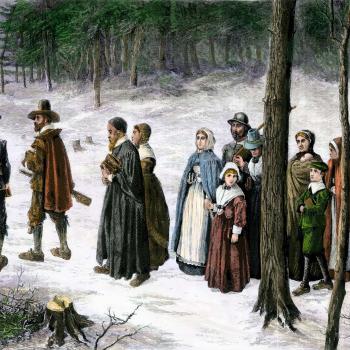
Maybe Let's Not Read More Puritans


"So Your Problem with Christianity is the Jesus...

TRENDING AT PATHEOS Nonreligious

Dethroning Jesus and Enthroning Yourself
Jesus Never Asked to Be Worshipped. He Asked to Be Understood. Christianity...

Why Most Christians are Really Paulians and Jobians
I Don't Care, But It Matters Let's get this out of the...

Essential Tips to Successfully Navigate the Selling Process
Selling a house can feel overwhelming, but it doesn’t have to be....

To Make Remote Work Effective, Think About Others
The COVID-19 pandemic forced many companies to rapidly transition to remote work....

Flexibility Is Key to Solving Problems of Tomorrow
The world of work is undergoing a dramatic transformation. The COVID-19 pandemic...
view all Nonreligious blogs
Ad-Free & Subscriber Log-In Subscription Support
- About Us
- 2026 Calendar
- Videos
- Podcasts
- Library of World Religions
- Faith In Media Tracker
- Advertise With Us
- Write for Us
- Privacy Policy
- Terms of Service
- Do Not Sell My Data
- Contact Us
- Radiant Digital
- Manage Newsletter Subscriptions
- Unsubscribe From Notifications
- Sitemap
Copyright 2008-2026, Patheos, part of the Radiant Digital network of media brands. All rights reserved.
Subscription Support Ad-Free & Subscriber Log-In
Follow Patheos