
BuddhistCatholicContemplativeEvangelicalGeneral ChristianHinduJewishLatter-day SaintMuslimNew VisionsProgressive Christian
Beliefs
- Buddhist
- Catholic
- Contemplative
- Evangelical
- General Christian
- Hindu
- Jewish
- Latter-day Saint
- More Voices
- Muslim
- New Visions
- Pagan
- Progressive Christian
Topics
- Religion News
- Food and Religion
- Sports and Religion
- Religious Art
- Religious Music and Entertainment
- Religious Events
- History and Religion
- Style and Religion
- Politics and Religion
- Women in Religion
- Recreation Outdoors and Religion
- Business Finance and Religion
- Careers Workplace and Religion
- Education and Religion
- Family Parenting and Religion
- Health Fitness and Religion
- Home and Religion
- Relationships and Religion
- Technology and Religion
- Travel and Religion
Columnists
- Buddhist Columnists
- Business Finance and Religion Columnists
- Careers Workplace and Religion Columnists
- Catholic Columnists
- Contemplative Columnists
- Education and Religion Columnists
- Evangelists Columnists
- Family Parenting and Religion Columnists
- General Christian Columnists
- Health Fitness and Religion Columnists
- Hindu Columnists
- History and Religion Columnists
- Home and Religion Columnists
- Jewish Columnists
- More Voices Columnists
- Latter Day Columnists
- Muslim Columnists
- New Visions Columnists
- Nonreligious Columnists
- Pagan Columnists
- Politics and Religion Columnists
- Progressive Columnists
- Recreation Outdoors and Religion Columnists
- Relationships and Religion Columnists
- Religion News Columnists
- Religious Art Columnists
- Religious Events Columnists
- Religious Music and Entertainment Columnists
- Sports and Religion Columnists
- Style and Religion Columnists
- Technology and Religion Columnists
- Travel and Religion Columnists
- Women in Religion Columnists
Resource Library
- 2026 Calendar
- Library of World Religions
- The 100 Most Holy Places on Earth
- Patheos Answers
- Podcasts
- Videos
- Faith Leaders Database
- Anglican Episcopalian
- Bahai
- Baptist
- Buddhism
- Christianity
- Confucianism
- Eastern Orthodoxy
- Hinduism
- Holiness and Pentecostal
- ISKCON
- Islam
- Judaism
- Lutheran
- Methodist
- The Church of Jesus Christ of Latter-day Saints
- New Age
- Paganism
- Presbytarian and Reformed
- Protestantism
- Religion Behind the Scenes
- Roman Catholic
- Scientology
- Shia Islam
- Sikhism
- Sufism
- Sunni Islam
- Taoism
- Zen
- See all religions
Research Tools
 Ad-Free & Subscriber Log-In Subscription Support
Ad-Free & Subscriber Log-In Subscription Support
Follow Patheos 

- Trending:
- Forgiveness
- |
- Marriage
- |
- Consciousness
- |
- Death Penalty
- |
- Election
- |
- Halloween
 Love, Joy, Feminism
-
More
- Home
- Nonreligious
- Can’t You Say Anything Good about Homeschooling?
Can’t You Say Anything Good about Homeschooling?
Last updated on: April 1, 2013 at 7:20 am by Libby Anne
Can’t You Say Anything Good about Homeschooling? 2013-04-01T07:20:19-04:00 Libby Anne
Patheos Explore the world's faith through different perspectives on religion and spirituality! Patheos has the views of the prevalent religions and spiritualities of the world.
I’ve been fairly critical of homeschooling in a good number of blog posts over the past two years. One thing I’ve been asked a number of times is whether, looking back, there was anything about my homeschooling experience that was positive. It’s true that Sierra of the Phoenix an the Olive Branch and Lana of Wide Open Ground, while generally critical of many things about homeschooling and their own homeschool background, have both written posts outlining the things they found positive about their homeshooling experience. Can’t I do the same? So here it is, my attempt to write about the positives side of my homeschool experience, but I’m going to warn you up front that I don’t think this is going to go all that smoothly.
1. Self motivation.
I’ve always been a very self-motivated person. There were some years I worked ahead in my subjects and finished all of my schoolwork for the entire year by the end of March. I was always extremely hard working and driven, and this followed me into college as well. No one had to make me study. My parents have always chalked my self motivation up to the fact that I was homeschooled—and I used to do the same. Indeed, self-motivation is one thing I always see listed as a benefit of having been homeschooled. But I’m afraid I no longer buy this—at the very least, it’s not this simple.
Even as I was self-motivated, many of my siblings weren’t. I watched many of my siblings procrastinate and drag their feet and sometimes flat out lie about whether or not they were doing their work. I watched them work all summer trying to catch up for everything they’d fallen behind on during the school year. There were several years when my siblings literally finished their math textbooks for the previous year a week or two before the next school year started. Even today, I see this same thing happening with some of my siblings who are still at home, being homeschooled. Some of them seem to lack self motivation entirely, and will only do their work when there is the threat of losing some privilege over their head.
Now after high school I attended a state university on scholarship. Because of my grades, I was enrolled in the university’s honor college and lived in the honors dorms. I suddenly found myself surrounded by a cohort of extremely self-motivated public school graduates. This confused me. I honestly had not expected to see that level of self motivation in the products of public schools. I had thought they all just did the bare minimum to pass standardized tests, because of the way public schools were set up, and that they weren’t self motivated like us homeschoolers. I was wrong. Yes, I know that these kids were honors kids, and thus not representative of the public school population as a whole, but still, they proved to me that you absolutely didn’t have to be homeschooled to be self-motivated.
So did homeschooling make me self-motivated? After thinking about it, I doubt it. Some homeschoolers are self-motivated. Some aren’t. Some public schoolers are self-motivated. Some aren’t. I have no idea what makes people self motivated, or what part is simply innate, a chance of birth. But I can say with confidence that, if the family and homeschool community I grew up in is any indicator, being homeschooled does not automatically make someone self-motivated. So yes, I was homeschooled and I ended up being self-motivated. But does that really mean anything? Probably not.
2. Love of Learning
As a child, I loved learning. I checked out books from the library, explored the fields beckoning from my back door, and taught myself to knit. The world was my textbook, and I loved it. At the time, I was taught to chalk my love of learning up to being homeschooled. And for a long time, I thought there was a connection. But I don’t anymore, and for—I think—good reason.
For one thing, being homeschooled does not guarantee that you will end up with a love of learning. I know a guy who was homeschooled K-12, and his experience actually stunted his love of learning. For him, homeschooling consisted of sitting at the kitchen table, or at a desk in his room, filling out workbooks. And that’s it. Every day for twelve years—thirteen if you count kindergarten. Nothing interactive, nothing collaborative, just workbooks. To this day, thinking of school or any sort of formal learning gives him mild PTSD symptoms. So this idea that being homeschooled automatically makes one love learning? Yeah, that’s absolutely false.
Further, the friends I made in my honors college dorm in college all shared the same passion and love for learning that I had—even though almost every one of them had attended public school. They didn’t just study what they had to for their classes, or just do their homework because they were required to. They went above and beyond and loved learning for its own sake, whether it was required or not. And they didn’t limit learning to their academic coursework, either. For them, learning was a part of life, as natural as breathing. Once again, this confused me. I had been taught that public schools stunt children’s love of learning, and also that attending public school causes a person to divide their life into learning—i.e. formal school—and not learning—i.e. everything else. But I found that, for these honors kids at least, this was absolutely not the case.
So did homeschooling give me a love of learning? In the end, I don’t think so. I think my love of learning came from my parents, not from being homeschooled. They made it obvious that they loved learning, and they sought to make every moment a teachable moment—and in a fun way. We were always learning things, whether it be gardening or carpentry or zoology or the culinary arts, and my parents encouraged us to love learning, and worked to make learning fun. If I’d attended public school, my parents still would have taught me to love learning. They wouldn’t have suddenly stopped making every moment of life interesting and teachable. They wouldn’t have stopped encouraging us to learn, and teaching us to see learning as enjoyable and just a part of life. In the end, I honestly don’t think gaining a love of learning is determined by the method of education..
3. Freedom
One thing both Sierra and Lana hammered on in their discussion of the positive aspects of homeschooling was the sense of freedom it gave them—freedom to follow their own interests and study at their own paces, and freedom from the constriction of a public school schedule. When I look back on being homeschooled, this is indeed what I look on most fondly.
In elementary school, my mom set my schedule, including what I studied and when I studied it. However, homeschooling did allow the flexibility for spontaneous trips to the zoo, or spur of the moment park dates. In middle and high school my mom still set the subjects I studied each year—always asking me for input first—but I was free to determine when to study and for how long. I wasn’t required to have fixed hours, I was merely required to complete the textbooks I’d been given by the end of the year. I loved this—like I said above, I sometimes rushed through and finished some or all of the subjects early.
 I loved the flexibility of choosing when to study, and in what order to study. I frequently got up early in the morning and would set myself the challenge of finishing all of my seatwork—meaning things like math and science and vocab, but not things like free reading or debate research or music—by breakfast time. I wasn’t usually able to fit quite everything into that time, but I was always finished by lunch time, leaving me the afternoon free for reading or sewing projects or digging for medicinal herbs or baking a pie.
But—and this but is important—this freedom was limited to choosing when and at what speed and in what order to do my academic work. I wasn’t free to go to the mall with friends, or free to have a part time job, or free to randomly go over to a friend’s house. I wasn’t free to go anywhere at all. Because I was homeschooled I didn’t have an outlet away from my family. Instead, I was home all of the time, both home to have my comings and goings and friendships micromanaged and home to be on call as a junior mom 24/7. As I’ve mentioned before, my parents didn’t believe in teenagers. They expected me to go straight from child to adult, and I wasn’t allowed to do the sort of things normal teenagers do. In some sense, was given the freedom of a two year old and the responsibility of a thirty year old.
I grew up as the oldest of twelve children. There was always a baby in the house, and there were always toddlers and preschoolers who needed constant attention and help. When I think back on my time spent doing school work, the image I get is of sitting at the desk in my room doing math problems while also supervising two or three toddler and preschool age siblings playing nearby, because mom needed them out of her way so that she could teach the middle ones. For several years I was also in charge of all of the laundry for the family, and for a while I was in charge of all—yes, all—of the cooking. I was also expected to teach some subjects to my younger siblings, as a sort of tutor. My mom figured that teaching the subjects would help cement them in my mind, and also that helping with the children and housework was good practice for my future, when I would be a homemaker and stay at home homeschool mom.
All of this responsibility also meant that I rarely got to actually spend time alone with friends, or out of the house—in fact, when I think back on hanging out with friends, the image I get is of chatting with a friend while making mountains of peanut butter sandwiches and watching our 15+ collective younger siblings, our mothers having gone out for lunch together. I don’t want to give the impression that I begrudge my mother these lunches out—she needed them for her sanity! And besides, by that time watching kids came as second nature, and I savored what time I did have with friends, so the memories I have of chatting over mountains of sandwiches and quick roll counts of children to make sure we hadn’t lost any are actually pleasant ones.
So did homeschooling give me more freedom? In the end, I think it was a wash. Yes, I had more freedom to set my academic schedule—when to study and what to study and how to study—and I thoroughly enjoyed that. But at the same time, because I was always at home under my mother’s watchful eye and able to be on call to help with whatever needed doing, be it children or food or housework, I had much less personal freedom than I would have had I attended public school. And when I compare my thoughts here to those of Sierra and Lana, I am reminded that Sierra was an only child and Lana was one of only four. So it’s not surprising that my experience here might be a bit different.
Conclusion
So, are there positive things I can say about my homeschooling experience? Sure. But every time I locate one, I end up find a negative flip side. And maybe that’s why I haven’t spend a lot of time trying to draw out the positives. I simply don’t feel that I can discuss them outside of the more nuanced context.
Homeschooling can help students develop self-motivation and a love of learning—or it can limit both of these. Some kids simply work best with formal teachers for each subjects, and with the firm academic deadlines formal schools provide. I’ve also seen cases where homeschool kids end up well educated in the subjects their parents find interesting, and not well educated at all in other subject—and this is something having the variety of teachers formal schools offer serves to counteract. Homeschooling frees kids from the formal schedule of the public school—but it also places them 24/7 under the complete control of their parents, who may give them personal freedom or may, well, not. And besides that, some homeschool parents—like the parents of the young man I mentioned—simply reconstruct the formal schedule of the public school at home, just without the same level of peer interaction.
In the end, it’s complicated.
Previous Post

March 31, 2013
The Three Weavers, part V: The Princes Come Riding
Next Post
April 1, 2013 I Was Grace Evans; Or, Using Children as Political Props
Browse Our Archives
Select a Category Atheism Evangelicalism/Fundamentalism Family Feminism Homeschool Meta Parenting Patriarchy Politics Purity Quiverfull Social Justice Uncategorized Worthwhile reads
Select a Month February 2021 January 2021 December 2020 November 2020 October 2020 September 2020 August 2020 July 2020 June 2020 May 2020 April 2020 March 2020 February 2020 January 2020 December 2019 November 2019 October 2019 September 2019 August 2019 July 2019 June 2019 May 2019 April 2019 March 2019 February 2019 January 2019 December 2018 November 2018 October 2018 September 2018 August 2018 July 2018 June 2018 May 2018 April 2018 March 2018 February 2018 January 2018 December 2017 November 2017 October 2017 September 2017 August 2017 July 2017 June 2017 May 2017 April 2017 March 2017 February 2017 January 2017 December 2016 November 2016 October 2016 September 2016 August 2016 July 2016 June 2016 May 2016 April 2016 March 2016 February 2016 January 2016 December 2015 November 2015 October 2015 September 2015 August 2015 July 2015 June 2015 May 2015 April 2015 March 2015 February 2015 January 2015 December 2014 November 2014 October 2014 September 2014 August 2014 July 2014 June 2014 May 2014 April 2014 March 2014 February 2014 January 2014 December 2013 November 2013 October 2013 September 2013 August 2013 July 2013 June 2013 May 2013 April 2013 March 2013 February 2013 January 2013 December 2012 November 2012 October 2012 September 2012 August 2012 July 2012 June 2012 May 2012 April 2012 March 2012 February 2012 January 2012 December 2011 November 2011 October 2011 September 2011 August 2011 July 2011 June 2011
Follow Us!
TAKE THE
Religious Wisdom Quiz
According to the Beatitudes, who will be blessed?
Select your answer to see how you score.
The wealthiest The strongest The most powerful The merciful
Related posts from Love, Joy, Feminism

Homeschooled Congressman Urged Conservatives to "Lightly Threaten" Their...
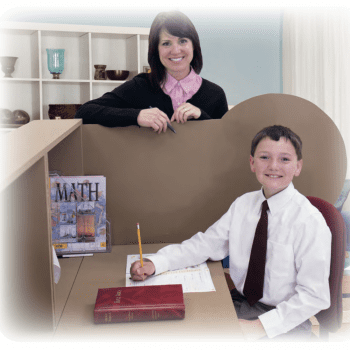
This Homeschool Program Replicates the Office, Not School

Blogger: COVID-19 Has Shown SAHMs and Homeschooling Are...
Homeschool Girls and Elizabeth Bennet's Subtle Acts of...
TRENDING AT PATHEOS Nonreligious

Dethroning Jesus and Enthroning Yourself
Jesus Never Asked to Be Worshipped. He Asked to Be Understood. Christianity...

Why Most Christians are Really Paulians and Jobians
I Don't Care, But It Matters Let's get this out of the...

Essential Tips to Successfully Navigate the Selling Process
Selling a house can feel overwhelming, but it doesn’t have to be....

To Make Remote Work Effective, Think About Others
The COVID-19 pandemic forced many companies to rapidly transition to remote work....

Flexibility Is Key to Solving Problems of Tomorrow
The world of work is undergoing a dramatic transformation. The COVID-19 pandemic...
view all Nonreligious blogs
Ad-Free & Subscriber Log-In Subscription Support
- About Us
- 2026 Calendar
- Videos
- Podcasts
- Library of World Religions
- Faith In Media Tracker
- Advertise With Us
- Write for Us
- Privacy Policy
- Terms of Service
- Do Not Sell My Data
- Contact Us
- Radiant Digital
- Manage Newsletter Subscriptions
- Unsubscribe From Notifications
- Sitemap
Copyright 2008-2026, Patheos. All rights reserved.
Subscription Support Ad-Free & Subscriber Log-In
Follow Patheos