
BuddhistCatholicContemplativeEvangelicalGeneral ChristianHinduJewishLatter-day SaintMuslimNew VisionsProgressive Christian
Beliefs
- Buddhist
- Catholic
- Contemplative
- Evangelical
- General Christian
- Hindu
- Jewish
- Latter-day Saint
- More Voices
- Muslim
- New Visions
- Pagan
- Progressive Christian
Topics
- Religion News
- Food and Religion
- Sports and Religion
- Religious Art
- Religious Music and Entertainment
- Religious Events
- History and Religion
- Style and Religion
- Politics and Religion
- Women in Religion
- Recreation Outdoors and Religion
- Business Finance and Religion
- Careers Workplace and Religion
- Education and Religion
- Family Parenting and Religion
- Health Fitness and Religion
- Home and Religion
- Relationships and Religion
- Technology and Religion
- Travel and Religion
Columnists
- Buddhist Columnists
- Business Finance and Religion Columnists
- Careers Workplace and Religion Columnists
- Catholic Columnists
- Contemplative Columnists
- Education and Religion Columnists
- Evangelists Columnists
- Family Parenting and Religion Columnists
- General Christian Columnists
- Health Fitness and Religion Columnists
- Hindu Columnists
- History and Religion Columnists
- Home and Religion Columnists
- Jewish Columnists
- More Voices Columnists
- Latter Day Columnists
- Muslim Columnists
- New Visions Columnists
- Nonreligious Columnists
- Pagan Columnists
- Politics and Religion Columnists
- Progressive Columnists
- Recreation Outdoors and Religion Columnists
- Relationships and Religion Columnists
- Religion News Columnists
- Religious Art Columnists
- Religious Events Columnists
- Religious Music and Entertainment Columnists
- Sports and Religion Columnists
- Style and Religion Columnists
- Technology and Religion Columnists
- Travel and Religion Columnists
- Women in Religion Columnists
Resource Library
- 2026 Calendar
- Library of World Religions
- The 100 Most Holy Places on Earth
- Patheos Answers
- Podcasts
- Videos
- Faith Leaders Database
- Anglican Episcopalian
- Bahai
- Baptist
- Buddhism
- Christianity
- Confucianism
- Eastern Orthodoxy
- Hinduism
- Holiness and Pentecostal
- ISKCON
- Islam
- Judaism
- Lutheran
- Methodist
- The Church of Jesus Christ of Latter-day Saints
- New Age
- Paganism
- Presbytarian and Reformed
- Protestantism
- Religion Behind the Scenes
- Roman Catholic
- Scientology
- Shia Islam
- Sikhism
- Sufism
- Sunni Islam
- Taoism
- Zen
- See all religions
Research Tools
 Ad-Free & Subscriber Log-In Subscription Support
Ad-Free & Subscriber Log-In Subscription Support
Follow Patheos 

- Trending:
- Forgiveness
- |
- Marriage
- |
- Consciousness
- |
- Death Penalty
- |
- Election
- |
- Halloween
 Love, Joy, Feminism
-
More
- Home
- Nonreligious
- Raised Quiverfull: Homeschooling, Academics, and Socialization
Raised Quiverfull: Homeschooling, Academics, and Socialization
Last updated on: August 28, 2012 at 11:35 am by Libby Anne
Raised Quiverfull: Homeschooling, Academics, and Socialization 2012-08-28T11:35:00-04:00 Libby Anne
Patheos Explore the world's faith through different perspectives on religion and spirituality! Patheos has the views of the prevalent religions and spiritualities of the world.
Briefly describe your experience being homeschooled, including the amount of interaction you had with other homeschoolers or non-homeschoolers (socialization) and what sorts of textbooks or homeschool program your family used (academics).
Joe:
Not being homeschooled, I have no experience with it at all. But, we churched exclusively with homeschoolers. We never had friends outside of this church and, if we did, were banned from them immediately. Homeschooling was God’s plan for everyone and public school was the evil spawn of Satan’s semi-eternal plan. We socialized with only these homeschoolers and, even though we went to government schools for our whole schooling career, we told everyone we were missionaries there and they believed the lie.
Regarding academics, my mom was very careful in planning our curriculum for each year; she never became overly reliant on one source or publisher. Almost all the materials that she chose were promoting a conservative Christian worldview, such as our history, literature, and science materials from A Beka and Bob Jones. For math, we used Saxon. From my observation, she prepared a much more academic and structured education for us than many other homeschooling families seemed capable of.
In terms of socialization, when I was young, we had regular activities with other local homeschoolers such a weekly park days, monthly roller-skating days, and occasional field trips. We also participated in some community-based activities such as gymnastics. But as I got older, there were fewer homeschooled kids my age, and our participation in outside activities started to decrease.
As I reached my teens, my parents bought into Reb Bradley’s idea that teenage rebellion was a recent American trend due to indulgent parenting and peer pressure. So, for most of my teen years, my main opportunity for social interaction came once a week at church. However, it wasn’t much of an opportunity because I wasn’t allowed to join a youth group at our churches (and later, our homeschooling church Hope Chapel didn’t even allow a youth group to exist). At my high school graduation ceremony, which was attended by hundreds of local homeschooling families, I had only briefly met one of the other 12 graduates before.
I was involved in a number of homeschool groups, though which varied by year. We had a circle of other like-minded homeschool families that we associated with regularly, and that, combined with at least one homeschool co-op a year and also a weekly Bible club, is where we got the majority of our socialization. This meant that literally all of my socialization took place with people who shared my parents’ beliefs, and I was never exposed to people who believed anything different.
As for academics, my mother used a hybrid approach with us, choosing different textbooks for each subject. We did apologia for science, for instance. Our history and science curricula were religious while our math and grammar curricula were not.
From K-8, mom was pretty good at making sure to work with us one-on-one. Especially early on, there were a lot of hands-on activities, and the education I received during my elementary school years was really pretty top-notch. This hands-on and one-on-one approach began to change during the last couple years of this period as we worked more independently, but even then mom made sure to at least supervise our work. Once we reached high school, we studied on our own full time. Mom would give us the textbooks to complete at the beginning of the year, and then we’d give them back at the end of the year. For a few subjects, like languages, we sometimes (though not always) had tutors.
Lisa:
I hated school more than anything. I mean, when I was really small and the others weren’t old enough for school yet (many of them weren’t born yet!), it was nice that my mom would spend so much time with me and it was fun, I enjoyed learning something. But the older I got and the more kids my Mom had to tutor, the less fun I had. My Mom had little time for each individual kid and at some point, I guess it was when I was 12, 13, I felt like it wasn’t so important what I had to study, it was more important to help the smaller ones do their studies. My Mom had some tougher pregnancies as well, which put her out of the picture for weeks and months. Those were the times where I was the one responsible for teaching the others. I basically didn’t do much myself since I also had the house to manage and the smaller kids to look after. It was horrible, trying to keep the toddlers satisfied while cleaning and cooking and at the same time looking after the boys who were just screaming and not concentrating.
At one point, once I turned 14, scientific studies lost their importance. My Dad felt it would do no good to teach a girl too much science. So the kitchen became my classroom and, even though I could already manage a house better than most 20 year olds, my Mom made me her fellow “help-meet.” I tried to get in some more math and that, but I didn’t get far. When I was 16 I realized that I wasn’t going to get any sort of degree anyway. My Dad didn’t want me to take SATs – not that I would’ve passed them anyway – and so I settled on studying the “important” things with some other women we knew – sewing, flower arranging. I also read a lot of the P/QF books that were coming out – the Ludy books, Harris, Pride, Pearl and so on. My Dad was torn. At some point, he wanted us to be smarter than kids from public schools and I think that somewhere he hoped I would have finished high school earlier than most people do, but then again, he took pride in the fact that his daughters were so “biblical.” I never quite understood what he wanted us to do.
We didn’t have much contact with other homeschoolers. We went to conventions where we met mostly other Christian homeschoolers, but never many who lived close enough to actually have vivid contact with them. Having friends wasn’t as important anyway, your siblings were supposed to be your best friends.
Since my mother was such a great fan of Mary Pride, Pride’s books on homeschooling were her major resource on how to structure the classes as well as which textbooks to use. We tried out different curricula and different systems, but online-learning wasn’t our major way of studying. I guess we were just too many kids and had too little money to buy the technical necessities for that.
My dad once said with some disdain that homeschoolers who participated in homeschool co-ops and group classes were “faux-schoolers.” However, we did have some small group classes for extracurriculars and I took French and art from local women who taught classes in their homes. Our family friends were almost always other Christian homeschoolers, and we were fairly well-socialized [albeit primarily within that demographic]. When we took ballet or gymnastics or martial arts, we made friends with the other kids and didn’t seem to have any socialization issues beyond general pop culture ignorance.
Early on we had a consistent schedule each day, I usually did handwriting reading and math, I remember enjoying different school projects we tried. When I was aged 7-9 we periodically attended a homeschool co-op where we participated in an arts and music program, we were also part of a conservative homeschoool girls club called “Keepers at Home” which I enjoyed. As there were more and more children involved, things got less consistent. The older kids were expected to cover much of their work on there own in independent study. We did not have much interaction outside the home when I was in my teens. I don’t remember having a consistent curriculum. My mom tried many different ones, and sometimes we would start and stop different programs in one year.
My parents used a very eclectic curriculum. They used different systems for different subjects. One year, my mom tried out a series that covered all the main subjects in one massive book. That year we read a lot and made fun science projects. I learned a lot that year. But the more kids my mom had, the less involved she became in our school work. By the time I was 11, I was completely responsible for my own education. I would create my own schedules and do my very best to stick to it. Every week or so I would update my mom on how I was doing. It is very hard to be self-motivated when you are so young. Especially while being required to do so much house work. I never really completed any of my goals, and was constantly lagging behind. During my second year of high school we joined a homeschool co-op at our church that met once a week. I probably accomplished more academically in the two years we were involved with co-op than at any other time.
My mother tried out a lot of different curricula with me. We started out using Bob Jones, Abeka, Rod and Staff, and others I can’t remember. I hated all of them. They were boring and their religious message was painfully overt. Eventually we settled on Sonlight, which both of us liked for academic content and for the creativity of their approach. I generally did my school work in the morning, finished up at noon and went outside to play. I saw other children 3-4 times a week at church, homeschool meetups, visits between stay-at-home moms, field trips and days at the park. I’m an introvert, so I never felt like going a day or two without another child around was a hardship. I read for pleasure, did creative writing of my own, and generally entertained myself. When I got to college, I needed remedial math and never went beyond geometry and algebra II. My verbal skills were always off the charts, however, from all of my writing and reading.
<<< Previous Question ———————————— Next Question >>>
Raised Quiverfull Introduction — Homeschooling Summary
Previous Post

May 21, 2012
Worthwhile Reads: The Modesty Myth
Next Post
May 22, 2012 On Positive Parenting and Saying "I'm Sorry"
Browse Our Archives
Select a Category Atheism Evangelicalism/Fundamentalism Family Feminism Homeschool Meta Parenting Patriarchy Politics Purity Quiverfull Social Justice Uncategorized Worthwhile reads
Select a Month February 2021 January 2021 December 2020 November 2020 October 2020 September 2020 August 2020 July 2020 June 2020 May 2020 April 2020 March 2020 February 2020 January 2020 December 2019 November 2019 October 2019 September 2019 August 2019 July 2019 June 2019 May 2019 April 2019 March 2019 February 2019 January 2019 December 2018 November 2018 October 2018 September 2018 August 2018 July 2018 June 2018 May 2018 April 2018 March 2018 February 2018 January 2018 December 2017 November 2017 October 2017 September 2017 August 2017 July 2017 June 2017 May 2017 April 2017 March 2017 February 2017 January 2017 December 2016 November 2016 October 2016 September 2016 August 2016 July 2016 June 2016 May 2016 April 2016 March 2016 February 2016 January 2016 December 2015 November 2015 October 2015 September 2015 August 2015 July 2015 June 2015 May 2015 April 2015 March 2015 February 2015 January 2015 December 2014 November 2014 October 2014 September 2014 August 2014 July 2014 June 2014 May 2014 April 2014 March 2014 February 2014 January 2014 December 2013 November 2013 October 2013 September 2013 August 2013 July 2013 June 2013 May 2013 April 2013 March 2013 February 2013 January 2013 December 2012 November 2012 October 2012 September 2012 August 2012 July 2012 June 2012 May 2012 April 2012 March 2012 February 2012 January 2012 December 2011 November 2011 October 2011 September 2011 August 2011 July 2011 June 2011
Follow Us!
TAKE THE
Religious Wisdom Quiz
Like a sheep led to slaughter, silent before shearers, this servant was pierced for our transgressions. What chapter foretells this suffering?
Select your answer to see how you score.
Isaiah 7 Isaiah 9 Isaiah 61 Isaiah 53
Related posts from Love, Joy, Feminism

Homeschooled Congressman Urged Conservatives to "Lightly Threaten" Their...
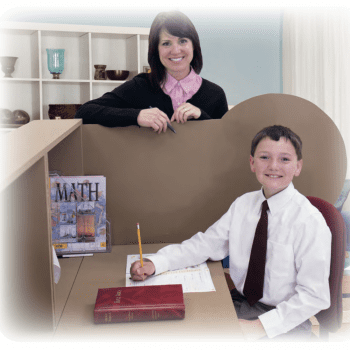
This Homeschool Program Replicates the Office, Not School

Blogger: COVID-19 Has Shown SAHMs and Homeschooling Are...
Homeschool Girls and Elizabeth Bennet's Subtle Acts of...
TRENDING AT PATHEOS Nonreligious

Dethroning Jesus and Enthroning Yourself
Jesus Never Asked to Be Worshipped. He Asked to Be Understood. Christianity...

Why Most Christians are Really Paulians and Jobians
I Don't Care, But It Matters Let's get this out of the...

Essential Tips to Successfully Navigate the Selling Process
Selling a house can feel overwhelming, but it doesn’t have to be....

To Make Remote Work Effective, Think About Others
The COVID-19 pandemic forced many companies to rapidly transition to remote work....

Flexibility Is Key to Solving Problems of Tomorrow
The world of work is undergoing a dramatic transformation. The COVID-19 pandemic...
view all Nonreligious blogs
Ad-Free & Subscriber Log-In Subscription Support
- About Us
- 2026 Calendar
- Videos
- Podcasts
- Library of World Religions
- Faith In Media Tracker
- Advertise With Us
- Write for Us
- Privacy Policy
- Terms of Service
- Do Not Sell My Data
- Contact Us
- Radiant Digital
- Manage Newsletter Subscriptions
- Unsubscribe From Notifications
- Sitemap
Copyright 2008-2026, Patheos. All rights reserved.
Subscription Support Ad-Free & Subscriber Log-In
Follow Patheos