
BuddhistCatholicContemplativeEvangelicalGeneral ChristianHinduJewishLatter-day SaintMuslimNew VisionsProgressive Christian
Beliefs
- Buddhist
- Catholic
- Contemplative
- Evangelical
- General Christian
- Hindu
- Jewish
- Latter-day Saint
- More Voices
- Muslim
- New Visions
- Pagan
- Progressive Christian
Topics
- Religion News
- Food and Religion
- Sports and Religion
- Religious Art
- Religious Music and Entertainment
- Religious Events
- History and Religion
- Style and Religion
- Politics and Religion
- Women in Religion
- Recreation Outdoors and Religion
- Business Finance and Religion
- Careers Workplace and Religion
- Education and Religion
- Family Parenting and Religion
- Health Fitness and Religion
- Home and Religion
- Relationships and Religion
- Technology and Religion
- Travel and Religion
Columnists
- Buddhist Columnists
- Business Finance and Religion Columnists
- Careers Workplace and Religion Columnists
- Catholic Columnists
- Contemplative Columnists
- Education and Religion Columnists
- Evangelists Columnists
- Family Parenting and Religion Columnists
- General Christian Columnists
- Health Fitness and Religion Columnists
- Hindu Columnists
- History and Religion Columnists
- Home and Religion Columnists
- Jewish Columnists
- More Voices Columnists
- Latter Day Columnists
- Muslim Columnists
- New Visions Columnists
- Nonreligious Columnists
- Pagan Columnists
- Politics and Religion Columnists
- Progressive Columnists
- Recreation Outdoors and Religion Columnists
- Relationships and Religion Columnists
- Religion News Columnists
- Religious Art Columnists
- Religious Events Columnists
- Religious Music and Entertainment Columnists
- Sports and Religion Columnists
- Style and Religion Columnists
- Technology and Religion Columnists
- Travel and Religion Columnists
- Women in Religion Columnists
Resource Library
- 2026 Calendar
- Library of World Religions
- The 100 Most Holy Places on Earth
- Patheos Answers
- Podcasts
- Videos
- Faith Leaders Database
- Anglican Episcopalian
- Bahai
- Baptist
- Buddhism
- Christianity
- Confucianism
- Eastern Orthodoxy
- Hinduism
- Holiness and Pentecostal
- ISKCON
- Islam
- Judaism
- Lutheran
- Methodist
- The Church of Jesus Christ of Latter-day Saints
- New Age
- Paganism
- Presbytarian and Reformed
- Protestantism
- Religion Behind the Scenes
- Roman Catholic
- Scientology
- Shia Islam
- Sikhism
- Sufism
- Sunni Islam
- Taoism
- Zen
- See all religions
Research Tools
 Ad-Free & Subscriber Log-In Subscription Support
Ad-Free & Subscriber Log-In Subscription Support
Follow Patheos 

- Trending:
- Forgiveness
- |
- Marriage
- |
- Consciousness
- |
- Death Penalty
- |
- Election
- |
- Halloween
 Love, Joy, Feminism
-
More
- Home
- Nonreligious
- Tarot Cards and Me
Tarot Cards and Me
Last updated on: August 10, 2012 at 12:16 am by Libby Anne
Tarot Cards and Me 2012-08-10T00:16:10-04:00 Libby Anne
Patheos Explore the world's faith through different perspectives on religion and spirituality! Patheos has the views of the prevalent religions and spiritualities of the world.
I feel like this blog has been too serious lately. So, time for a more light-hearted topic!
Growing up, I was always afraid to look at tarot cards. Not that I came in contact with them much, of course, but I’d see them for sale at a local bookstore and stay far, far away. I’d read Frank Peretti and other authors talking about witchcraft and tarot cards and the like, and the demonic influence these things invited. In Peretti, the demons were real and physical, plaguing people and looking for anything they could find to invite themselves into people’s homes.
One of my parents’ friends spoke of confronting a physical demon in her house in the middle of the night, casting it out and concluding that it must have been invited in by her daughter’s rock music. So yes, I stayed far, far away from tarot cards. I did not want to invite any sort of demonic influence or possession!

Once I left my parents’ beliefs, I was still afraid of tarot cards. I knew it was irrational, but these thought patterns can be hard to kick. At the same time, I was fascinated by tarot cards, curious about these things my parents and others like them considered so evil. Finally, a few months ago, I bought a deck of tarot cards. Yes, I really did! The pictures and designs are really pretty, the meanings are fascinating, and the history is interesting.
Yet that first night, as I went to bed knowing there were tarot cards in my bedroom, I was afraid. I knew it was irrational, but I was afraid nonetheless. But nothing happened. Nothing seemed changed. I had brought tarot cards into the house, and yet even after a few days nothing was different. There was no oppressive force, no sudden failure of school or family, no inability to concentrate, not feelings of hatred or anger. Now of course I didn’t expect any of these things – I am an atheist, after all – but my fear of the tarot cards only disappeared as I truly came to see tarot cards as simply pieces of card stock with pictures printed on them, nothing more, nothing less.
I’ve actually learned something from tarot cards that I didn’t expect to learn. You see, it seems to me that the way people tell fortunes with tarot cards is the same way people find pertinent advice for their lives in passages of the Bible. Growing up, I would read a passage of the Bible and it would almost without fail mysteriously seem to relate directly to my life and what I was going through at the time. Clearly the Bible was divine! How else could this happen? Yet after learning the cards, I have read my fortune several times (very badly, I’m sure), and each time I’ve been astonished at how closely it seems to apply to what I’m going through. It’s not that I think either actually work or anything. It’s just that our brains are somehow hardwired to find patterns and applications, and so they do. If you want to argue that this happens because there is something divine or spiritual going on here, you’ve got to argue that it’s going on in both cases, and probably also in the case of the Koran and other religious texts, which I suppose it what my parents do when the link tarot cards and the Koran to demons.

There’s a similar point, too. When I was a Christian, I used to pick one verse and meditate on it, trying to see what I could learn from it that day. And there was always something, something I could work on or some promise I could claim. For me, this helped confirm the divine nature of the Bible. But you can do the same thing with tarot cards. This card, for example, is the page of wands. The wands stand for passion and energy, and pages indicate youth (sometimes foolish, sometimes innocent and idealistic). So a page of wands essentially stands for childlike energy and optimism. It’s easy to see how you could meditate on this – thinking about how you need to approach issues in your life like this, or perhaps thinking about the pros and cons of such childlike optimism as it applies to your life, or perhaps thinking about the fact that this childlike energy can be foolish as well as optimistic. Really, wherever you are in life, you can find some way to apply it and have it mean something to you, something to encourage you throughout the day and help you to better yourself. This is just like how I used to mediate on individual Bible verses.
I’m glad I bought this deck of tarot cards. First, it’s helped me face my fears of demons and face them down (what could be worse than owning a deck of tarot cards, after all?), and second, it’s given me interesting food for thought about religion, patterns, and the human mind. And, if I ever miss having a Bible passage to meditate on, I can always use a tarot card instead!
Note: To those of you who may be pagan, I apologize – I’ve probably butchered this explanation!
Previous Post

September 8, 2011
An Ideological Straight-Jacket
Next Post
September 9, 2011 Michael Pearl on children who leave
Browse Our Archives
Select a Category Atheism Evangelicalism/Fundamentalism Family Feminism Homeschool Meta Parenting Patriarchy Politics Purity Quiverfull Social Justice Uncategorized Worthwhile reads
Select a Month February 2021 January 2021 December 2020 November 2020 October 2020 September 2020 August 2020 July 2020 June 2020 May 2020 April 2020 March 2020 February 2020 January 2020 December 2019 November 2019 October 2019 September 2019 August 2019 July 2019 June 2019 May 2019 April 2019 March 2019 February 2019 January 2019 December 2018 November 2018 October 2018 September 2018 August 2018 July 2018 June 2018 May 2018 April 2018 March 2018 February 2018 January 2018 December 2017 November 2017 October 2017 September 2017 August 2017 July 2017 June 2017 May 2017 April 2017 March 2017 February 2017 January 2017 December 2016 November 2016 October 2016 September 2016 August 2016 July 2016 June 2016 May 2016 April 2016 March 2016 February 2016 January 2016 December 2015 November 2015 October 2015 September 2015 August 2015 July 2015 June 2015 May 2015 April 2015 March 2015 February 2015 January 2015 December 2014 November 2014 October 2014 September 2014 August 2014 July 2014 June 2014 May 2014 April 2014 March 2014 February 2014 January 2014 December 2013 November 2013 October 2013 September 2013 August 2013 July 2013 June 2013 May 2013 April 2013 March 2013 February 2013 January 2013 December 2012 November 2012 October 2012 September 2012 August 2012 July 2012 June 2012 May 2012 April 2012 March 2012 February 2012 January 2012 December 2011 November 2011 October 2011 September 2011 August 2011 July 2011 June 2011
Follow Us!
TAKE THE
Religious Wisdom Quiz
What language was most of the Old Testament written in?
Select your answer to see how you score.
Hebrew Greek Latin Aramaic
Related posts from Love, Joy, Feminism

A Catholic Priest's Bizarre Eulogy for Atheism
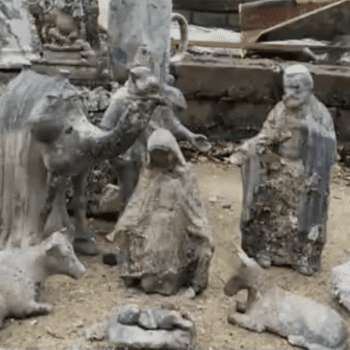
Odd Priorities: A Nativity Scene 'Miraculously' Survived the...

Answers in Genesis: Be Careful, Wayward Adult Children...

How Should Churches Respond When People Leave?
TRENDING AT PATHEOS Nonreligious

Dethroning Jesus and Enthroning Yourself
Jesus Never Asked to Be Worshipped. He Asked to Be Understood. Christianity...

Why Most Christians are Really Paulians and Jobians
I Don't Care, But It Matters Let's get this out of the...

Essential Tips to Successfully Navigate the Selling Process
Selling a house can feel overwhelming, but it doesn’t have to be....

To Make Remote Work Effective, Think About Others
The COVID-19 pandemic forced many companies to rapidly transition to remote work....

Flexibility Is Key to Solving Problems of Tomorrow
The world of work is undergoing a dramatic transformation. The COVID-19 pandemic...
view all Nonreligious blogs
Ad-Free & Subscriber Log-In Subscription Support
- About Us
- 2026 Calendar
- Videos
- Podcasts
- Library of World Religions
- Faith In Media Tracker
- Advertise With Us
- Write for Us
- Privacy Policy
- Terms of Service
- Do Not Sell My Data
- Contact Us
- Radiant Digital
- Manage Newsletter Subscriptions
- Unsubscribe From Notifications
- Sitemap
Copyright 2008-2026, Patheos. All rights reserved.
Subscription Support Ad-Free & Subscriber Log-In
Follow Patheos