
BuddhistCatholicContemplativeEvangelicalGeneral ChristianHinduJewishLatter-day SaintMuslimNew VisionsProgressive Christian
Beliefs
- Buddhist
- Catholic
- Contemplative
- Evangelical
- General Christian
- Hindu
- Jewish
- Latter-day Saint
- More Voices
- Muslim
- New Visions
- Pagan
- Progressive Christian
Topics
- Religion News
- Food and Religion
- Sports and Religion
- Religious Art
- Religious Music and Entertainment
- Religious Events
- History and Religion
- Style and Religion
- Politics and Religion
- Women in Religion
- Recreation Outdoors and Religion
- Business Finance and Religion
- Careers Workplace and Religion
- Education and Religion
- Family Parenting and Religion
- Health Fitness and Religion
- Home and Religion
- Relationships and Religion
- Technology and Religion
- Travel and Religion
Columnists
- Buddhist Columnists
- Business Finance and Religion Columnists
- Careers Workplace and Religion Columnists
- Catholic Columnists
- Contemplative Columnists
- Education and Religion Columnists
- Evangelists Columnists
- Family Parenting and Religion Columnists
- General Christian Columnists
- Health Fitness and Religion Columnists
- Hindu Columnists
- History and Religion Columnists
- Home and Religion Columnists
- Jewish Columnists
- More Voices Columnists
- Latter Day Columnists
- Muslim Columnists
- New Visions Columnists
- Nonreligious Columnists
- Pagan Columnists
- Politics and Religion Columnists
- Progressive Columnists
- Recreation Outdoors and Religion Columnists
- Relationships and Religion Columnists
- Religion News Columnists
- Religious Art Columnists
- Religious Events Columnists
- Religious Music and Entertainment Columnists
- Sports and Religion Columnists
- Style and Religion Columnists
- Technology and Religion Columnists
- Travel and Religion Columnists
- Women in Religion Columnists
Resource Library
- 2026 Calendar
- Library of World Religions
- The 100 Most Holy Places on Earth
- Patheos Answers
- Podcasts
- Videos
- Faith Leaders Database
- Anglican Episcopalian
- Bahai
- Baptist
- Buddhism
- Christianity
- Confucianism
- Eastern Orthodoxy
- Hinduism
- Holiness and Pentecostal
- ISKCON
- Islam
- Judaism
- Lutheran
- Methodist
- The Church of Jesus Christ of Latter-day Saints
- New Age
- Paganism
- Presbytarian and Reformed
- Protestantism
- Religion Behind the Scenes
- Roman Catholic
- Scientology
- Shia Islam
- Sikhism
- Sufism
- Sunni Islam
- Taoism
- Zen
- See all religions
Research Tools
 Ad-Free & Subscriber Log-In Subscription Support
Ad-Free & Subscriber Log-In Subscription Support
Follow Patheos 

- Trending:
- Forgiveness
- |
- Marriage
- |
- Consciousness
- |
- Death Penalty
- |
- Election
- |
- Halloween
 Love, Joy, Feminism
-
More
- Home
- Nonreligious
- Feminism AND Motherhood
Feminism AND Motherhood
Last updated on: August 7, 2012 at 4:01 pm by Libby Anne
Feminism AND Motherhood 2012-08-07T16:01:22-04:00 Libby Anne
Patheos Explore the world's faith through different perspectives on religion and spirituality! Patheos has the views of the prevalent religions and spiritualities of the world.
Fellow blogger Shadowspring has discussed on her blog her experience of being essentially abandoned as a child by her mother, who used feminism to denigrate motherhood and treated her children as a unwanted burden. I think I had the opposite experience. Because my mother made motherhood her entire identity, giving up completely any independent life she might have had, I experience guilt when I think about how much I have disappointed her through my choices. I feel like my failure (in her eyes, at least) has invalidated her life, because being a proper stay-at-home-mother is her life. Just like Shadowspring lived with serious rejection, I have lived with serious guilt. I think what you have here are two extremes that mothers can take, and neither is healthy.
My mother has her outlets here and there, but she has shaped her entire identity around her role as wife and mother in pursuing the ideal of Christian Patriarchy and Quiverfull. It is who she is. She believes that it is her god-given role to spend her life raising us, homeschooling us, shaping us, so that we can go out into the world and retake it for Christ, and that is what she has done for two and a half decades. Being a mother is who she is.
And so, when I disappoint my mother, I feel guilt. When I go in a direction different from what she wants for me, I feel like I invalidate her life, because, motherhood was and is her life. She sacrificed for us children in numerous ways, often doing things she didn’t want to do because she believed that this was what she was meant to be. She made her life about us. The guilt I feel when I disappoint her, after all she sacrificed to raise me, is palpable. And it’s not easy to shake, either. I feel like she gave up everything – everything – for me, and I threw it all back in her face.
Interestingly enough, in previous historical eras it wasn’t like this. Women were mothers, yes, but that was never their entire identity. As historian Julie Grant explains, “For sixteenth- and seventeenth-century colonial American women, child rearing was only one of a multitude of tasks shared by neighbors and kin.” Even as they raised large numbers of children, women worked in shops alongside their husbands, in the fields on the family farm, and in the home sewing, preparing food, washing, and caring for the sick. Even when the nineteenth century separated work from the home for many families, sending the father off to the office or the factory, the wife did far more than simply raise children. Many women took in extra work, supplementing the family income with laundry or sewing. Others threw themselves into reform issues, working with other women to close saloons and improve conditions in the slums. For those who did neither, simply running a house in the nineteenth century, with no running water or electricity, remained an absorbing task.
During this whole time children fit into their parents lives rather than the parents shaping their lives around the children. Children played on their own while their mothers churned butter and made soap, or sat beside their mothers and helped make paper flowers to sell. Rather than completely disrupting them, the child fit neatly into his parents’ lives. This changed with the development of the child centered family. The child centered family had its beginnings among the middle class in the nineteenth century and from there grew and spread to the rest of society. In the late nineteenth and early twentieth century, children were increasingly barred from the workforce and school attendance became compulsory. Families had fewer children but at the same time invested more into raising them. When a growing number of middle class women moved to the suburbs in the 1950s and made being a wife and mother the whole of their identities, this new phenomenon of the child centered family, where the parents, and especially the mothers, remade their entire lives around their children and their children’s needs, hit its zenith.
Second wave feminism emerged in reaction to the suffocation many women felt in the 1950s as they found that making motherhood the sole of their identities was not all that they were told it would be. Sometimes, in their zeal to fix the problems of the fifties, second wave feminists went too far and treated motherhood and housework as the problem. Others, though, did not see a contradiction between motherhood and feminism. Some argued that housework and motherhood should be seen as labor and valued as an economic contribution. Others embraced “woman power” and saw women’s ability to procreate as central to their beings. Still others embraced breastfeeding and midwifery, seeking to dethrone male child-rearing experts and elevate women’s knowledge and intuition in pregnancy and child rearing. Today’s third wave feminists generally embrace female choice, whether that choice is to be a stay at home mother, to be a childless career woman, or to have both a job and children. Feminism is simultaneously about expanding women’s choices and reminding women not to sublimate themselves and their own fulfillment to the expectations that surround them.
But how does this relate to how I started this post, you may ask? Well, Shadowspring’s mother put herself and her personal needs ahead of everything else to the extent that she made her own children feel unwanted. In contrast, my mother, just like many other mothers who embrace the Quiverfull idea, sublimated herself and her personal needs to the extent that her entire identity revolved around her role as wife and mother. Interestingly, both of these extremes are particularly modern, rather than historical, problems. And as should be apparent by now, neither extreme is healthy for either the children, or, I would argue, the mother. No mother should embrace her own fulfillment to the extent that she forgets about or resents her children, and no mother should embrace her own children to the extent that she forgets about her own fulfillment and personhood.
Thus I would argue that to achieve any sort of healthy balance any woman who chooses to have children needs to throw herself into both motherhood and feminism – embracing her children and their needs, and, at the same time, herself and her needs. These two are by no means contradictory, either today or in the past. And that is why I confidently declare that I am a feminist and a mother, and I take pride in both.
Previous Post

July 12, 2011
The Fruit of Spanking: Rage and Shame
Next Post
July 14, 2011 Children Are Not Trophies
Browse Our Archives
Select a Category Atheism Evangelicalism/Fundamentalism Family Feminism Homeschool Meta Parenting Patriarchy Politics Purity Quiverfull Social Justice Uncategorized Worthwhile reads
Select a Month February 2021 January 2021 December 2020 November 2020 October 2020 September 2020 August 2020 July 2020 June 2020 May 2020 April 2020 March 2020 February 2020 January 2020 December 2019 November 2019 October 2019 September 2019 August 2019 July 2019 June 2019 May 2019 April 2019 March 2019 February 2019 January 2019 December 2018 November 2018 October 2018 September 2018 August 2018 July 2018 June 2018 May 2018 April 2018 March 2018 February 2018 January 2018 December 2017 November 2017 October 2017 September 2017 August 2017 July 2017 June 2017 May 2017 April 2017 March 2017 February 2017 January 2017 December 2016 November 2016 October 2016 September 2016 August 2016 July 2016 June 2016 May 2016 April 2016 March 2016 February 2016 January 2016 December 2015 November 2015 October 2015 September 2015 August 2015 July 2015 June 2015 May 2015 April 2015 March 2015 February 2015 January 2015 December 2014 November 2014 October 2014 September 2014 August 2014 July 2014 June 2014 May 2014 April 2014 March 2014 February 2014 January 2014 December 2013 November 2013 October 2013 September 2013 August 2013 July 2013 June 2013 May 2013 April 2013 March 2013 February 2013 January 2013 December 2012 November 2012 October 2012 September 2012 August 2012 July 2012 June 2012 May 2012 April 2012 March 2012 February 2012 January 2012 December 2011 November 2011 October 2011 September 2011 August 2011 July 2011 June 2011
Follow Us!
TAKE THE
Religious Wisdom Quiz
Who did God call to lead the Israelites out of Egypt?
Select your answer to see how you score.
David Moses Joseph Aaron
Related posts from Love, Joy, Feminism



No, the "Second Shift" Isn't Feminism's Fault
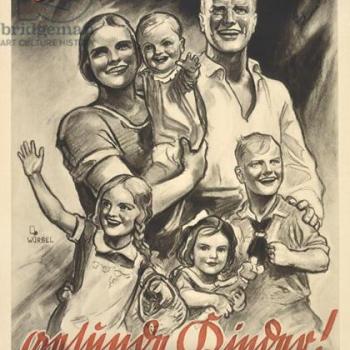
What do evangelicals and Nazis have in common?
TRENDING AT PATHEOS Nonreligious

Dethroning Jesus and Enthroning Yourself
Jesus Never Asked to Be Worshipped. He Asked to Be Understood. Christianity...

Why Most Christians are Really Paulians and Jobians
I Don't Care, But It Matters Let's get this out of the...

Essential Tips to Successfully Navigate the Selling Process
Selling a house can feel overwhelming, but it doesn’t have to be....

To Make Remote Work Effective, Think About Others
The COVID-19 pandemic forced many companies to rapidly transition to remote work....

Flexibility Is Key to Solving Problems of Tomorrow
The world of work is undergoing a dramatic transformation. The COVID-19 pandemic...
view all Nonreligious blogs
Ad-Free & Subscriber Log-In Subscription Support
- About Us
- 2026 Calendar
- Videos
- Podcasts
- Library of World Religions
- Faith In Media Tracker
- Advertise With Us
- Write for Us
- Privacy Policy
- Terms of Service
- Do Not Sell My Data
- Contact Us
- Radiant Digital
- Manage Newsletter Subscriptions
- Unsubscribe From Notifications
- Sitemap
Copyright 2008-2026, Patheos. All rights reserved.
Subscription Support Ad-Free & Subscriber Log-In
Follow Patheos