
BuddhistCatholicContemplativeEvangelicalGeneral ChristianHinduJewishLatter-day SaintMuslimNew VisionsProgressive Christian
Beliefs
- Buddhist
- Catholic
- Contemplative
- Evangelical
- General Christian
- Hindu
- Jewish
- Latter-day Saint
- More Voices
- Muslim
- New Visions
- Pagan
- Progressive Christian
Topics
- Religion News
- Food and Religion
- Sports and Religion
- Religious Art
- Religious Music and Entertainment
- Religious Events
- History and Religion
- Style and Religion
- Politics and Religion
- Women in Religion
- Recreation Outdoors and Religion
- Business Finance and Religion
- Careers Workplace and Religion
- Education and Religion
- Family Parenting and Religion
- Health Fitness and Religion
- Home and Religion
- Relationships and Religion
- Technology and Religion
- Travel and Religion
Columnists
- Buddhist Columnists
- Business Finance and Religion Columnists
- Careers Workplace and Religion Columnists
- Catholic Columnists
- Contemplative Columnists
- Education and Religion Columnists
- Evangelists Columnists
- Family Parenting and Religion Columnists
- General Christian Columnists
- Health Fitness and Religion Columnists
- Hindu Columnists
- History and Religion Columnists
- Home and Religion Columnists
- Jewish Columnists
- More Voices Columnists
- Latter Day Columnists
- Muslim Columnists
- New Visions Columnists
- Nonreligious Columnists
- Pagan Columnists
- Politics and Religion Columnists
- Progressive Columnists
- Recreation Outdoors and Religion Columnists
- Relationships and Religion Columnists
- Religion News Columnists
- Religious Art Columnists
- Religious Events Columnists
- Religious Music and Entertainment Columnists
- Sports and Religion Columnists
- Style and Religion Columnists
- Technology and Religion Columnists
- Travel and Religion Columnists
- Women in Religion Columnists
Resource Library
- 2026 Calendar
- Library of World Religions
- The 100 Most Holy Places on Earth
- Patheos Answers
- Podcasts
- Videos
- Faith Leaders Database
- Anglican Episcopalian
- Bahai
- Baptist
- Buddhism
- Christianity
- Confucianism
- Eastern Orthodoxy
- Hinduism
- Holiness and Pentecostal
- ISKCON
- Islam
- Judaism
- Lutheran
- Methodist
- The Church of Jesus Christ of Latter-day Saints
- New Age
- Paganism
- Presbytarian and Reformed
- Protestantism
- Religion Behind the Scenes
- Roman Catholic
- Scientology
- Shia Islam
- Sikhism
- Sufism
- Sunni Islam
- Taoism
- Zen
- See all religions
Research Tools
 Ad-Free & Subscriber Log-In Subscription Support
Ad-Free & Subscriber Log-In Subscription Support
Follow Patheos 

- Trending:
- Forgiveness
- |
- Marriage
- |
- Consciousness
- |
- Death Penalty
- |
- Election
- |
- Halloween
 Love is an Orientation
- Home
- Evangelical
- Getting Over the Church
Getting Over the Church
Last updated on: October 1, 2014 at 1:19 pm by Andrew Marin
Getting Over the Church 2014-10-01T13:19:02-05:00 Andrew Marin
Patheos Explore the world's faith through different perspectives on religion and spirituality! Patheos has the views of the prevalent religions and spiritualities of the world.
The following post is from Laura Statesir, Director of Family and Youth at The Marin Foundation.
I was sitting at a table in the food court enjoying some Chinese food when a friend of mine posed this question to the group, “How do you get over someone?” After a short pause in which most of us recalled the pain of past loves and how we moved on, my friends began blurting out responses like, “Give it time,” “Stop talking to them,” and “Go on a hot date.”
If you’ve been alive long enough and if you’ve ever loved someone, you’ve probably also experienced the heartache of breaking up. When a relationship ends it can be paralyzing. Grief, anger, and hurt can consume your every thought. Almost all of us can relate to the difficulty of getting over someone. There is practically an entire bookcase in the self-help section devoted just to this question.
But what do you do if it is the Church that has broken your heart? How do you get over that? This is the question that many in the LGBTQ community are asking, having been harmed, judged, condemned and simply not loved well by imperfect human beings in their churches. And they are not the only ones asking this question. Parents of LGBTQ children who have been criticized for loving their children or blamed for causing them to be gay experience this heartbreak. Divorced men and women, unmarried pregnant women… there are many who want to know how to get over their church wounds.
What do you do when your church breaks up with you? When you feel like you are receiving more damage than love from the Church? How do you heal from this hurt? How do you get over this offense without losing your faith? What can you do so that one day you can experience a healthy relationship with the Church or that church again?
I think my friends were on to something:
Give it Time – As they say, “Time heals all wounds.” With each passing day the pain should fade and become less acute. However, the key is to use that time wisely. Use it to examine your feelings. Identify and meditate on the reasons why you feel what you feel. Allow yourself to be angry, sad, confused, hurt, and the alphabet of other emotions. Pour out your sorrows and questions to God. Let yourself journey through the grief process, the back and forth. Don’t run from your feelings, embrace them.
Stop talking to Them – Sometimes it is best to stay in and wrestle with your church. If all LGBTQ Christians who are harmed by the Church leave then we lose our ability to be a voice in the Church. However, sometimes a full break is necessary for your own mental and spiritual health. Continuing to interact with those who have hurt you could simply wound you more. Keeping ties with the Body of believers that has harmed you might slow down or halt your healing. I am not suggesting you abandon your faith or to never go to church again. There may be a time in the future where you are strong enough to interact with and form friendships with that church again, but in the meantime take care of your heart and protect it from further damage. Do not return until God leads you and you feel safe. Take refuge in the Lord and allow God to fill the vacuum those relationships leave behind.
Before you stop interacting with the broader Church or the specific church that has hurt you, it can be cathartic to get some “closure”. Letting your church know why you are leaving or taking a break may not change their hearts but it will allow you to know you’ve been heard. Express your feelings and be honest but try not to start an argument. Again, it’s not about changing them, it’s about opening a door to understanding by sharing what you’ve experienced. Perhaps in that honesty and vulnerability, your church will begin to recognize how they have wounded you and God may have more room to work.
Go on a Date – This response from my friend was given mostly in jest but there is an essential truth nonetheless. While rebound relationships tend to be a hot mess, it is important to hope that you will be loved again and to open yourself up to that love. For those harmed by the Church, the hope is that there is a place where you can belong and a group of Christians who will love you for who you are. So find a new Christian community that does support you. Take your time to look, to test, and to make sure it’s a safe place. Don’t rush into a new relationship but do take that risk. If you don’t, you may build walls that can never be knocked down.
On the other hand, if you seek validation and love only from the Church, you will be hurt time and time again. In a romantic relationship we seek validation and love from that one special person. In the Church, many LGBTQ Christians fall into a trap of seeking validation from others, specifically the straight Christian community. Instead, seek your validation from God and from those who are willing to truly journey with you in this.
Maybe the final step is one that my friends failed to mention, which is to find a way to empathize and forgive. Try to understand why the members of the church who failed to love you acted the way they did. Put yourself in their shoes and ask where they are coming from. Were they intentionally trying to harm you or are they simply acting out of what they genuinely believe is the best way to love you? Once we begin to see the factors that led to someone’s actions, we can more easily understand those actions and eventually forgive them.
Getting over someone is really about allowing yourself to love again. For Christians, getting over the Church and the ways it has hurt you is really about allowing yourself to engage with and be loved by other Christians again. In the end, I have found that both of these are worth the time and effort.
Much love.
Previous Post

September 29, 2014
Labels
Next Post
October 6, 2014 Living in the Tension - October 6
Browse Our Archives
Select a Category Book Reviews Bridging Opposing Worldviews Culture Don't Drink and Drive Faith Guest Posts I'm Sorry Campaign Interviews Language Laura Statesir LGBT Living in the Tension Living in the Tension Gatherings Love Is an Orientation Love Is an Orientation Blog Love Is an Orientation Book Love Is an Orientation DVD Melinda Guerra Memory My One Sentence Bible Newsletter Our Last Option Parents & Families Politics Quick Quotes Quotes ReEngaging Civility Sexuality Speaking The Marin Foundation Theology Uncategorized Us Versus Us Videos Warren Perry Youth and Campus Ministry
Select a Month June 2016 May 2016 December 2015 June 2015 May 2015 April 2015 March 2015 February 2015 January 2015 December 2014 November 2014 October 2014 September 2014 August 2014 July 2014 June 2014 May 2014 April 2014 March 2014 February 2014 January 2014 December 2013 November 2013 October 2013 September 2013 August 2013 July 2013 June 2013 May 2013 April 2013 March 2013 February 2013 January 2013 December 2012 November 2012 October 2012 September 2012 August 2012 July 2012 June 2012 May 2012 April 2012 March 2012 February 2012 January 2012 December 2011 November 2011 October 2011 September 2011 August 2011 July 2011 June 2011 May 2011 April 2011 March 2011 February 2011 January 2011 December 2010 November 2010 October 2010 September 2010 August 2010 July 2010 June 2010 May 2010 April 2010 March 2010 February 2010 January 2010 December 2009 November 2009 October 2009 September 2009 August 2009 July 2009 June 2009 May 2009 April 2009 March 2009 February 2009 January 2009 December 2008 November 2008 October 2008 September 2008
Follow Us!
TAKE THE
Religious Wisdom Quiz
What is the meaning of Emmanuel?
Select your answer to see how you score.
Praise the Lord God with Us Jehovah Saves Messiah
Related posts from Love is an Orientation

Don't Let Your Anger Turn Into Their Hate

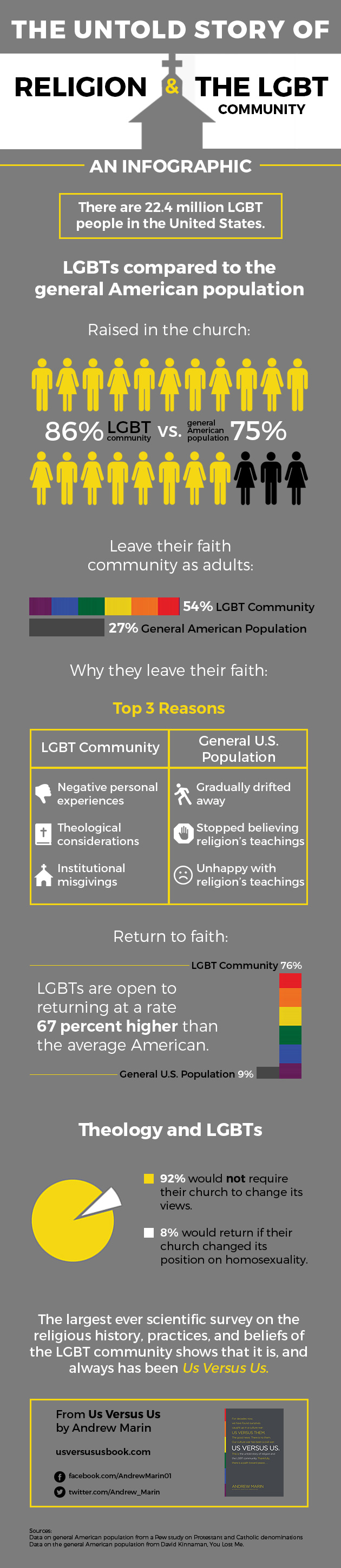
Great Infographic for Research Findings in Us Versus...

My ebook, Our Last Option, is Patheos Book...
TRENDING AT PATHEOS Evangelical

The REST of Your Life: A Creative Wrestles...
This week I had a conversation with a good friend from church....

How the author of the world's best hymn...
I've been working with John Newton for a while now. This makes...

Long before this Lectio Divina, Psalm 130 - the song - started...

What About the Trees? Another Living Parable
After I finished writing the last article about falling leaves as a...

Why Classical Education Is a Conversation, Not a...
Come and Read: Joy in Classical Education When I was a little...

Cornell University has received a great deal of negative publicity and intense...
view all Evangelical blogs
Ad-Free & Subscriber Log-In Subscription Support
- About Us
- 2026 Calendar
- Videos
- Podcasts
- Library of World Religions
- Faith In Media Tracker
- Advertise With Us
- Write for Us
- Privacy Policy
- Terms of Service
- Do Not Sell My Data
- Contact Us
- Radiant Digital
- Manage Newsletter Subscriptions
- Unsubscribe From Notifications
- Sitemap
Copyright 2008-2026, Patheos. All rights reserved.
Subscription Support Ad-Free & Subscriber Log-In
Follow Patheos