
BuddhistCatholicContemplativeEvangelicalGeneral ChristianHinduJewishLatter-day SaintMuslimNew VisionsProgressive Christian
Beliefs
- Buddhist
- Catholic
- Contemplative
- Evangelical
- General Christian
- Hindu
- Jewish
- Latter-day Saint
- More Voices
- Muslim
- New Visions
- Pagan
- Progressive Christian
Topics
- Religion News
- Food and Religion
- Sports and Religion
- Religious Art
- Religious Music and Entertainment
- Religious Events
- History and Religion
- Style and Religion
- Politics and Religion
- Women in Religion
- Recreation Outdoors and Religion
- Business Finance and Religion
- Careers Workplace and Religion
- Education and Religion
- Family Parenting and Religion
- Health Fitness and Religion
- Home and Religion
- Relationships and Religion
- Technology and Religion
- Travel and Religion
Columnists
- Buddhist Columnists
- Business Finance and Religion Columnists
- Careers Workplace and Religion Columnists
- Catholic Columnists
- Contemplative Columnists
- Education and Religion Columnists
- Evangelists Columnists
- Family Parenting and Religion Columnists
- General Christian Columnists
- Health Fitness and Religion Columnists
- Hindu Columnists
- History and Religion Columnists
- Home and Religion Columnists
- Jewish Columnists
- More Voices Columnists
- Latter Day Columnists
- Muslim Columnists
- New Visions Columnists
- Nonreligious Columnists
- Pagan Columnists
- Politics and Religion Columnists
- Progressive Columnists
- Recreation Outdoors and Religion Columnists
- Relationships and Religion Columnists
- Religion News Columnists
- Religious Art Columnists
- Religious Events Columnists
- Religious Music and Entertainment Columnists
- Sports and Religion Columnists
- Style and Religion Columnists
- Technology and Religion Columnists
- Travel and Religion Columnists
- Women in Religion Columnists
Resource Library
- 2026 Calendar
- Library of World Religions
- The 100 Most Holy Places on Earth
- Patheos Answers
- Podcasts
- Videos
- Faith Leaders Database
- Anglican Episcopalian
- Bahai
- Baptist
- Buddhism
- Christianity
- Confucianism
- Eastern Orthodoxy
- Hinduism
- Holiness and Pentecostal
- ISKCON
- Islam
- Judaism
- Lutheran
- Methodist
- The Church of Jesus Christ of Latter-day Saints
- New Age
- Paganism
- Presbytarian and Reformed
- Protestantism
- Religion Behind the Scenes
- Roman Catholic
- Scientology
- Shia Islam
- Sikhism
- Sufism
- Sunni Islam
- Taoism
- Zen
- See all religions
Research Tools
 Ad-Free & Subscriber Log-In Subscription Support
Ad-Free & Subscriber Log-In Subscription Support
Follow Patheos 

- Trending:
- Forgiveness
- |
- Marriage
- |
- Consciousness
- |
- Death Penalty
- |
- Election
- |
- Halloween
 Love is an Orientation
- Home
- Evangelical
- Bi the Way :: Some Helpful Tips for Christians on Bisexuality
Bi the Way :: Some Helpful Tips for Christians on Bisexuality
Last updated on: September 24, 2014 at 11:19 am by Andrew Marin
Bi the Way :: Some Helpful Tips for Christians on Bisexuality 2014-09-24T11:19:42-05:00 Andrew Marin
Patheos Explore the world's faith through different perspectives on religion and spirituality! Patheos has the views of the prevalent religions and spiritualities of the world.

Today’s post comes from our friend Eliel Cruz. Eliel is a bisexual Christian covering bisexuality for The Advocate and is the co-founder of The Intercollegiate Adventist GSA Coalition.
As yesterday was Bisexual Visibility Day, The Marin Foundation wanted to take the opportunity to platform Eliel’s post to increase awareness and, hopefully, educate our readers. We hope you find it helpful and informative.
Eliel frequently writes on the topics of sexuality, religion, and media at The Huffington Post, Believe Out Loud, and Mic. You can follow Eliel on Twitter or on Facebook.
***
“Are you full blown gay yet?”
My friend, who I hadn’t seen in years, asked me this question no less than five minutes into our lunch date. I was looking forward to catching up, but the question was like a punch in the gut. No longer was I excited to see her. During our transition from teen years to young adults, she apparently hadn’t changed her misconceptions on bisexuality. Like her misconceptions, my identity hadn’t changed either.
Bisexuality is misunderstood by both the gay and straight community—and is even less understood in the Christian community where sexuality is often limited to binary straight/gay and male/female.
When you’re bisexual, gender isn’t a deciding factor in romantic attraction. Bisexual activist Robyn Ochs has a commonly used definition saying, “I call myself bisexual because I acknowledge that I have in myself the potential to be attracted – romantically and/or sexually – to people of more than one sex and/or gender, not necessarily at the same time, not necessarily in the same way, and not necessarily to the same degree.”
I never identified as gay. I grew up thinking that you actually had to choose to be straight or gay, never realizing that sexuality and gender can be incredibly fluid. When I found the term bisexual, I’m pretty sure the heavens opened up and the angels sang. That word made sense to me. I was sexually and romantically attracted to both men and women. I came out to friends and family and began my life of being questioned for my sexuality.
We live in a world where it’s easier to deal with the black and white, one or the other, the binary. But the truth is, that’s not how God created us. We are more complex than that. God’s creation is nothing close to binary.
The Church rarely discusses bisexuality, (though we rarely touch asexuality or the transgender community either). The conversation has been centered on the gay community as a “Gay vs. Christian debate,” leaving a large portion of the LGBT community out of the conversation. That’s a huge disservice to the conversation and that disservice is perpetuated by gay and straight Christians alike. So here are 7 tips to be inclusive while discussing the LGBT community.
1. Don’t assume someone’s gay.
This has happened to me many times. I’ll be discussing someone of the same sex and assumed to be gay. Or when I write about an experience of religious homophobia, I’m labeled gay. I distinctly remember Huffington Post tweeting a piece I wrote for them and saying it was from a “gay Seventh-day Adventist.” Assuming someone who is attracted to the same sex is gay can erase someone’s identity.
2. “Gay” is not an inclusive term.
Language is important, especially for writers; it’s the foundation of our profession. “Gays” is not an inclusive term as it only refers only to people exclusively attracted to the same gender and leaves out those of us attracted to multiple genders. It also leaves out the transgender community. Gay has never been an inclusive term. Using “LGBT” or writing it out would be inclusive. If that’s too “long”, I would say our identities are worth the extra characters.
3. Stop calling it “gay marriage.”
This one is common and it leads to the erasure of bisexual identities. Bisexual people get married to people of the same sex, but they are not in a gay or straight marriage. When we use blanket terms like “gay marriage” we assume that both people in the relationship are Gay and many times that’s not the case.An alternative to “gay marriage” is “marriage equality” or “same-sex marriage.”
4. Just because someone is bisexual, doesn’t mean they can just ‘choose’ a gender.
Many Christians believe that bisexual people can just choose one gender over another. This is usually prescribed as the alternative to a “sinful life” of being romantically involved with someone of the same-sex. While some may think it would just be the preferable, and easier, road for bisexual people—it’s not that easy.
Like most people, I don’t merely fall in love with a gender, I fall in love with a person— a unique individual. For me, this has less to do with sex and more to do with finding a true partner in life. I may end up spending the rest of my life with a woman or a man, but either way, I am still bisexual. Because sexuality isn’t determined by the gender of your partner.
5. Bisexuals is not synonymous with polyamorous.
The usual scare I get from Christians when I say I’m bisexual is the flawed idea that I’m going to need both a male and female partner. No, bisexual people don’t necessarily need a man AND a woman to be fulfilled. There are some people, just like in the straight community, that feel the need to have more than one partner. But it is not an attribute specific to bisexuality any more than polygamy is to Mormonism.
6. If you say “LGBT,” mean it.
There are too many times the acronym LGBT is used, yet the specific needs and concerns for those of us that are “B” or “T”, or even “L”, are not as well represented. We are pushed aside, forgotten, or not even known. Our community is diverse. If you’re going to write, discuss, or interact with the LGBT community—actually include all of us.
If you’re an LGBT affirming church or organization, have specific programs for the bisexual community. If you write about LGBT people but only end up using gay and lesbians as examples, find bisexual and transgender examples.
7. Raise up bisexual Christian voices.
There are a lot of stories from gay Christians that have received significant attention in both mainstream and Christian media. But how many times have you seen stories from bisexual Christians? Or transgender Christians? While they’re definitely out there, they can be harder to find, since they’re not being published as frequently on large platforms.
Stories are agents for change. They help us humanize the topic we talk about in a theoretical fashion. They’re an important reminder that we’re talking about is people—and in this community, we’re talking about Christians. So when you look for stories for your events, platforms, or just your individual education; seek us out. We are Christians that also have stories which need to be heard.
We have to start approaching this discussion in its full diversity, and that means including the bisexual community. There’s a thriving bisexual community even within the religious community. It’s time the church began interacting with us.
Previous Post

September 22, 2014
On Listening
Next Post
September 26, 2014 Taking Small Steps
Browse Our Archives
Select a Category Book Reviews Bridging Opposing Worldviews Culture Don't Drink and Drive Faith Guest Posts I'm Sorry Campaign Interviews Language Laura Statesir LGBT Living in the Tension Living in the Tension Gatherings Love Is an Orientation Love Is an Orientation Blog Love Is an Orientation Book Love Is an Orientation DVD Melinda Guerra Memory My One Sentence Bible Newsletter Our Last Option Parents & Families Politics Quick Quotes Quotes ReEngaging Civility Sexuality Speaking The Marin Foundation Theology Uncategorized Us Versus Us Videos Warren Perry Youth and Campus Ministry
Select a Month June 2016 May 2016 December 2015 June 2015 May 2015 April 2015 March 2015 February 2015 January 2015 December 2014 November 2014 October 2014 September 2014 August 2014 July 2014 June 2014 May 2014 April 2014 March 2014 February 2014 January 2014 December 2013 November 2013 October 2013 September 2013 August 2013 July 2013 June 2013 May 2013 April 2013 March 2013 February 2013 January 2013 December 2012 November 2012 October 2012 September 2012 August 2012 July 2012 June 2012 May 2012 April 2012 March 2012 February 2012 January 2012 December 2011 November 2011 October 2011 September 2011 August 2011 July 2011 June 2011 May 2011 April 2011 March 2011 February 2011 January 2011 December 2010 November 2010 October 2010 September 2010 August 2010 July 2010 June 2010 May 2010 April 2010 March 2010 February 2010 January 2010 December 2009 November 2009 October 2009 September 2009 August 2009 July 2009 June 2009 May 2009 April 2009 March 2009 February 2009 January 2009 December 2008 November 2008 October 2008 September 2008
Follow Us!
TAKE THE
Religious Wisdom Quiz
What is the Christian approach to enemies?
Select your answer to see how you score.
Pray for them Curse them Fight with them Avoid them
Related posts from Love is an Orientation

Don't Let Your Anger Turn Into Their Hate

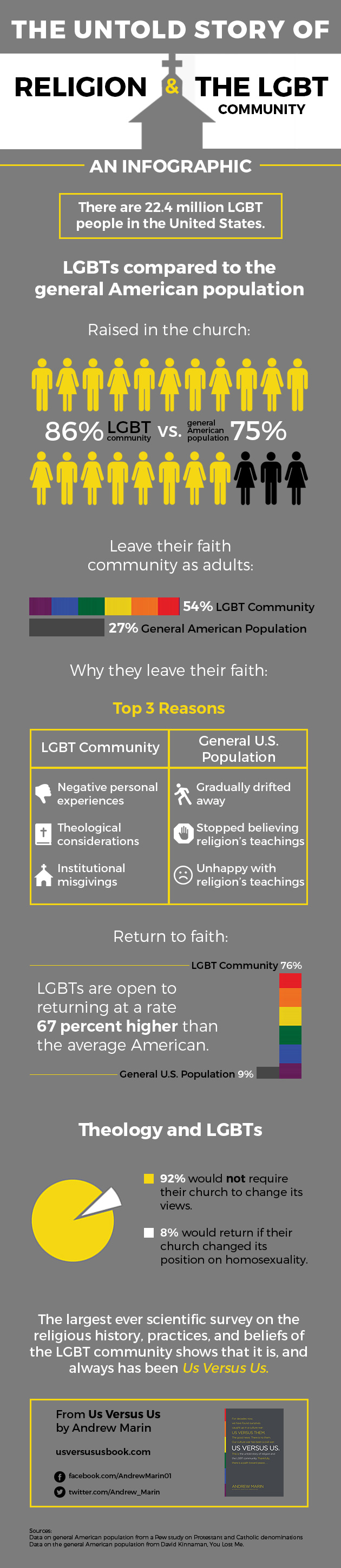
Great Infographic for Research Findings in Us Versus...

My ebook, Our Last Option, is Patheos Book...
TRENDING AT PATHEOS Evangelical

How the author of the world's best hymn...
I've been working with John Newton for a while now. This makes...

Long before this Lectio Divina, Psalm 130 - the song - started...

What About the Trees? Another Living Parable
After I finished writing the last article about falling leaves as a...

Why Classical Education Is a Conversation, Not a...
Come and Read: Joy in Classical Education When I was a little...

Falling Leaves: A Living Parable on Letting Go
I’ve spent the vast majority of my life in the southeast corner...

Cornell University has received a great deal of negative publicity and intense...
view all Evangelical blogs
Ad-Free & Subscriber Log-In Subscription Support
- About Us
- 2026 Calendar
- Videos
- Podcasts
- Library of World Religions
- Faith In Media Tracker
- Advertise With Us
- Write for Us
- Privacy Policy
- Terms of Service
- Do Not Sell My Data
- Contact Us
- Radiant Digital
- Manage Newsletter Subscriptions
- Unsubscribe From Notifications
- Sitemap
Copyright 2008-2026, Patheos. All rights reserved.
Subscription Support Ad-Free & Subscriber Log-In
Follow Patheos