
BuddhistCatholicContemplativeEvangelicalGeneral ChristianHinduJewishLatter-day SaintMuslimNew VisionsProgressive Christian
Beliefs
- Buddhist
- Catholic
- Contemplative
- Evangelical
- General Christian
- Hindu
- Jewish
- Latter-day Saint
- More Voices
- Muslim
- New Visions
- Pagan
- Progressive Christian
Topics
- Religion News
- Food and Religion
- Sports and Religion
- Religious Art
- Religious Music and Entertainment
- Religious Events
- History and Religion
- Style and Religion
- Politics and Religion
- Women in Religion
- Recreation Outdoors and Religion
- Business Finance and Religion
- Careers Workplace and Religion
- Education and Religion
- Family Parenting and Religion
- Health Fitness and Religion
- Home and Religion
- Relationships and Religion
- Technology and Religion
- Travel and Religion
Columnists
- Buddhist Columnists
- Business Finance and Religion Columnists
- Careers Workplace and Religion Columnists
- Catholic Columnists
- Contemplative Columnists
- Education and Religion Columnists
- Evangelists Columnists
- Family Parenting and Religion Columnists
- General Christian Columnists
- Health Fitness and Religion Columnists
- Hindu Columnists
- History and Religion Columnists
- Home and Religion Columnists
- Jewish Columnists
- More Voices Columnists
- Latter Day Columnists
- Muslim Columnists
- New Visions Columnists
- Nonreligious Columnists
- Pagan Columnists
- Politics and Religion Columnists
- Progressive Columnists
- Recreation Outdoors and Religion Columnists
- Relationships and Religion Columnists
- Religion News Columnists
- Religious Art Columnists
- Religious Events Columnists
- Religious Music and Entertainment Columnists
- Sports and Religion Columnists
- Style and Religion Columnists
- Technology and Religion Columnists
- Travel and Religion Columnists
- Women in Religion Columnists
Resource Library
- 2026 Calendar
- Library of World Religions
- The 100 Most Holy Places on Earth
- Patheos Answers
- Podcasts
- Videos
- Faith Leaders Database
- Anglican Episcopalian
- Bahai
- Baptist
- Buddhism
- Christianity
- Confucianism
- Eastern Orthodoxy
- Hinduism
- Holiness and Pentecostal
- ISKCON
- Islam
- Judaism
- Lutheran
- Methodist
- The Church of Jesus Christ of Latter-day Saints
- New Age
- Paganism
- Presbytarian and Reformed
- Protestantism
- Religion Behind the Scenes
- Roman Catholic
- Scientology
- Shia Islam
- Sikhism
- Sufism
- Sunni Islam
- Taoism
- Zen
- See all religions
Research Tools
 Ad-Free & Subscriber Log-In Subscription Support
Ad-Free & Subscriber Log-In Subscription Support
Follow Patheos 

- Trending:
- Forgiveness
- |
- Marriage
- |
- Consciousness
- |
- Death Penalty
- |
- Election
- |
- Halloween
 Love is an Orientation
- Home
- Evangelical
- How to Talk to Young Kids About Same-Sex Relationships
How to Talk to Young Kids About Same-Sex Relationships
Last updated on: April 23, 2014 at 3:53 pm by Andrew Marin
How to Talk to Young Kids About Same-Sex Relationships 2014-04-23T15:53:21-05:00 Andrew Marin
Patheos Explore the world's faith through different perspectives on religion and spirituality! Patheos has the views of the prevalent religions and spiritualities of the world.

The following post is by Jason Bilbrey, our Director of Pastoral Care here at The Marin Foundation. You can read more from Jason at his blog, www.jasonbilbrey.com.
It’s been a few years since our daughter, Norah, first encountered boys holding hands and girls kissing. That was in the summer of 2011, when our family moved from seminary housing out in California to a little place above a gay bar in Chicago’s Boystown neighborhood. Exposure was just unavoidable, from the very kind, affectionate gay couple living downstairs (“the boys,” as Norah referred to them), to the colorful window display at the shop across the street featuring toys that were decidedly not for kids…and of course the prayer circles formed by suburban high schoolers on the sidewalk outside our building, asking God to “reclaim his territory.”
Norah saw all of this with wide little eyes. We weren’t trying to avoid exposure, but we weren’t seeking it out, either. Moving to Boystown presented my wife and I with a question we hadn’t yet considered as parents: How and when would we step in to explain to our daughter what she was seeing? What was the healthiest way to introduce Norah to the concept of same-sex relationships, and the debate surrounding them, in a way that didn’t demonize anyone–neither her gay neighbors nor her traditionalist grandparents?
As a write this, I realize what a luxury it is for us to decide how she encounters all this. My friends who have children with a same-sex partner, or whose own child identifies as gay, don’t have this luxury. Their kids encounter and perhaps pay special attention to conflicting and often antagonistic views of homosexuality all the time: on the news, on vacation, at school, on the internet, at church. Like a Palestinian girl living in Israel, they don’t have the luxury of blissful ignorance. And they’ll contend with messages and ideas from society that are way beyond their ability to process. (Though I should say here that I know many, many families with queer members who have done an amazing job of insulating their children from persecution and reinforced the bonds of love within their homes.)
I’ve seen how this challenge has played out in conservative circles as well. Some discussions of how to peacefully and confidently engage in conversation with the LGBTQ community are preceded by a nervous disclaimer to parents: “This might not be suitable for young ears. How about we send the kids to play in another room.” The question often posed by parents in these groups is, “How do I communicate my values to my kids–that we believe same-sex relationships are wrong–while also communicating that this is a touchy issue, and that they shouldn’t just repeat those beliefs willy-nilly?”
This concern is completely justified. With the national epidemic of school-aged bullying and suicide today, it seems increasingly clear that the messages heard at the dinner table and from the pulpit are processed, expressed and received with a heightened sense of significance by kids on the bus ride to school. Stigma is especially internalized, by both the oppressed and the oppressor, at that age. At the same time, conservative parents often feel a responsibility to “train up their child in the way they should go,” and not shy away from teaching difficult or counter-cultural values.
With all these concerns in mind, here’s the playbook my wife and I are working from with our own daughter:
1. There’s a big difference between communicating reality and value. That question I phrased at the beginning, “What was the healthiest way to introduce my daughter to the concept of same-sex relationships, and the debate surrounding them, in a way that didn’t demonize anyone?” is probably misleading because it implies that you have to introduce the concept and the debate at the same time. But you don’t. You can say, “there are some kids with two mommies or two daddies instead of a mom and a dad.” That’s just a reality. Whether it should be a reality is a totally different conversation. But communicating a reality without attaching value enables parents to introduce things to kids in an age-appropriate way without closing the door to further conversation. This is something that we do all the time with other difficult or nuanced situations. We say “this classmate lives with grandma and grandpa instead of mom and dad” when, say, both parents have died. Your children don’t need to have their perceptions of reality loaded with heavy meaning at an early age.
2. Kids are really good at observation. Check any parent’s Facebook page for a list of their child’s observational comedy. (Our latest entry with Norah, remarking on her Easter basket: “I know that its from you, not the Easter Bunny. And I know that its all stuff from the Dollar Tree.”) And with that observation comes questions. It’s obviously still up to parents to know how much information to give when they ask, but letting kids set the pace for their own exposure to the world is, I think, a good rule of thumb.
On a long car trip the other day, my daughter and I recently talked about what would happen if her mother and I both died, who she would live with, how she would get there and what would happen to all our stuff. Really heavy. I wasn’t prepared to have that conversation, but Norah made it very clear that she was. I wonder if it might have been more disturbing for her if I myself had introduced the topic a week prior.
That being said, I also have a responsibility as a parent to monitor what my child is allowed to observe. I briefly debated whether to bring Norah to last years Gay Pride Parade here in Chicago, where we do our I’m Sorry Campaign, wearing shirts and holding signs apologizing for our individual sins against the LGBTQ community. There were so many messages going on, from the celebration we shared in hugging the paraders to the sobering conversations we had with individual attendees wondering why we were sorry to the protest group behind us with their signs and megaphones. It was a lot to process, even for me, and I’m glad I didn’t bring her.
But some year I will bring her. And someday my wife and I will tell her about how mommy is bisexual, and what that means (just as she told it to me). Someday I’ll explain what I do for a living and the difficult conversations I have with people and what it means to “come out.” Not yet, though. I think she’ll tell us when she’s ready.
3. When they are finally ready, it’s a conversation that deserves nuance and balance, no matter how firm your convictions are. I certainly have firm convictions myself. I believe, for example, that a person can absolutely be both gay and Christian, that the two identities do not at all stand in contradiction. And I will certainly tell Norah that. But I’m going to do my best not to do so in a way that unfairly maligns those who don’t believe this.
That’s how we’re going about things with our child. How about you? I’d love to hear your comments about what has worked, not worked, and what remains a mystery for you as a parent talking to your son or daughter about same-sex relationships.
Much Love.
Previous Post

April 18, 2014
The Culture War Curriculum
Next Post

May 1, 2014 Living in the Tension Gathering 5/5
Browse Our Archives
Select a Category Book Reviews Bridging Opposing Worldviews Culture Don't Drink and Drive Faith Guest Posts I'm Sorry Campaign Interviews Language Laura Statesir LGBT Living in the Tension Living in the Tension Gatherings Love Is an Orientation Love Is an Orientation Blog Love Is an Orientation Book Love Is an Orientation DVD Melinda Guerra Memory My One Sentence Bible Newsletter Our Last Option Parents & Families Politics Quick Quotes Quotes ReEngaging Civility Sexuality Speaking The Marin Foundation Theology Uncategorized Us Versus Us Videos Warren Perry Youth and Campus Ministry
Select a Month June 2016 May 2016 December 2015 June 2015 May 2015 April 2015 March 2015 February 2015 January 2015 December 2014 November 2014 October 2014 September 2014 August 2014 July 2014 June 2014 May 2014 April 2014 March 2014 February 2014 January 2014 December 2013 November 2013 October 2013 September 2013 August 2013 July 2013 June 2013 May 2013 April 2013 March 2013 February 2013 January 2013 December 2012 November 2012 October 2012 September 2012 August 2012 July 2012 June 2012 May 2012 April 2012 March 2012 February 2012 January 2012 December 2011 November 2011 October 2011 September 2011 August 2011 July 2011 June 2011 May 2011 April 2011 March 2011 February 2011 January 2011 December 2010 November 2010 October 2010 September 2010 August 2010 July 2010 June 2010 May 2010 April 2010 March 2010 February 2010 January 2010 December 2009 November 2009 October 2009 September 2009 August 2009 July 2009 June 2009 May 2009 April 2009 March 2009 February 2009 January 2009 December 2008 November 2008 October 2008 September 2008
Follow Us!
TAKE THE
Religious Wisdom Quiz
Who was the first Christian martyr mentioned in Acts?
Select your answer to see how you score.
Philip Stephen Barnabas James
Related posts from Love is an Orientation

Don't Let Your Anger Turn Into Their Hate

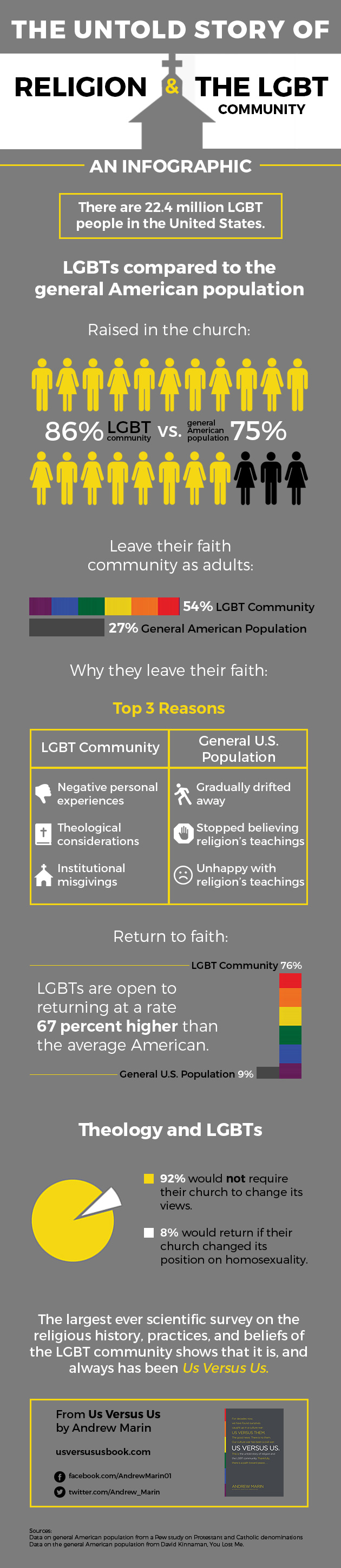
Great Infographic for Research Findings in Us Versus...

My ebook, Our Last Option, is Patheos Book...
TRENDING AT PATHEOS Evangelical

The REST of Your Life: A Creative Wrestles...
This week I had a conversation with a good friend from church....

How the author of the world's best hymn...
I've been working with John Newton for a while now. This makes...

Long before this Lectio Divina, Psalm 130 - the song - started...

What About the Trees? Another Living Parable
After I finished writing the last article about falling leaves as a...

Why Classical Education Is a Conversation, Not a...
Come and Read: Joy in Classical Education When I was a little...

Cornell University has received a great deal of negative publicity and intense...
view all Evangelical blogs
Ad-Free & Subscriber Log-In Subscription Support
- About Us
- 2026 Calendar
- Videos
- Podcasts
- Library of World Religions
- Faith In Media Tracker
- Advertise With Us
- Write for Us
- Privacy Policy
- Terms of Service
- Do Not Sell My Data
- Contact Us
- Radiant Digital
- Manage Newsletter Subscriptions
- Unsubscribe From Notifications
- Sitemap
Copyright 2008-2026, Patheos. All rights reserved.
Subscription Support Ad-Free & Subscriber Log-In
Follow Patheos